
Wuyuan owns more villages than any list can rank, so this line picks one representative per type: the commercial water village at Likeng, hall architecture at Wangkou and Jiangwan, scholar gardens at Xiaoqi, the drying-rack theater at Huangling, merchant mansions at Sixi-Yancun, the officials' village at northern Likeng.
Three days split east, Huangling, north, with clean flow and few backtrack miles. Villages read clearest in the morning, light frontal and crowds thin, so every afternoon goes to driving and rest, a tempo that lasts.
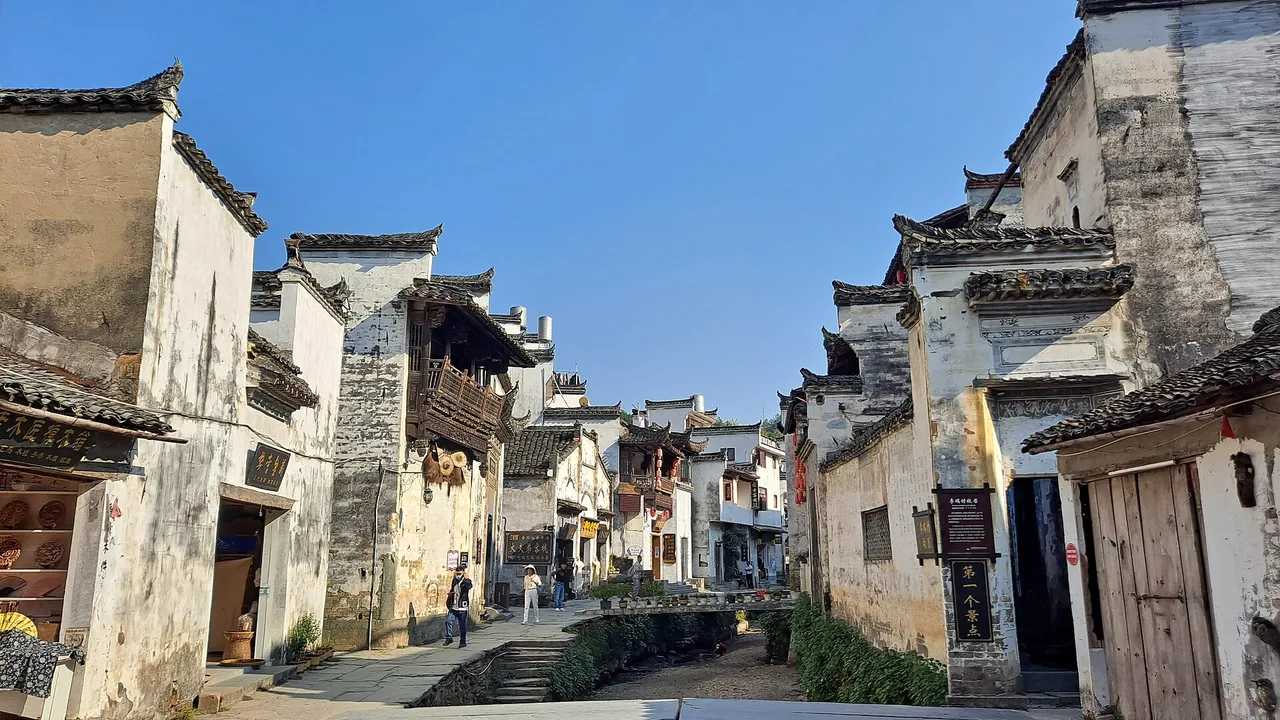
Itinerary at a glance
| 08:30 | Likeng: The Water Village at Dawn |
| 11:00 | Wangkou: A Lesson in the Yu Hall's Woodcarving |
| 14:00 | Jiangwan: The Eastern Gatehouse and Its Old Street |
| 16:00 | Xiaoqi: Scholar's Air and Ancient Camphors |
| 09:00 | Huangling: A Whole Morning of Drying Racks |
| 14:30 | Sixi-Yancun: A Merchant-Scholar Afternoon |
| 09:00 | The Rainbow Bridge: The Northern Line's Cover |
| 11:30 | Qinghua Lunch and the Transfer |
| 14:00 | Likeng (North): The Officials' Village Finale |
The route, stop by stop
Likeng: The Water Village at Dawn
The eastern line opens at Likeng, entering early. The Shenming stream threads stone bridges while villagers beat laundry at the landings and shops swing their shutters, the village at its best hour.
See the Shenming pavilion, the Dafu mansion and the lanes in two hours. Likeng's value is the standard portrait: once it is read, the grammar of Wuyuan's water villages is learned, and every later village plays a variation.
Wangkou: A Lesson in the Yu Hall's Woodcarving
Second stop of the morning, Wangkou. The Yu clan hall's carving density crowns Wuyuan, beams, braces and caisson ceilings carved without pause, experts calling it an art trove. One slow look up from the light well beats ten pages of architectural notes.
The riverside landings form the village's other half, the old wharf functions still legible. Wangkou runs slow, so plan lunch in the village.
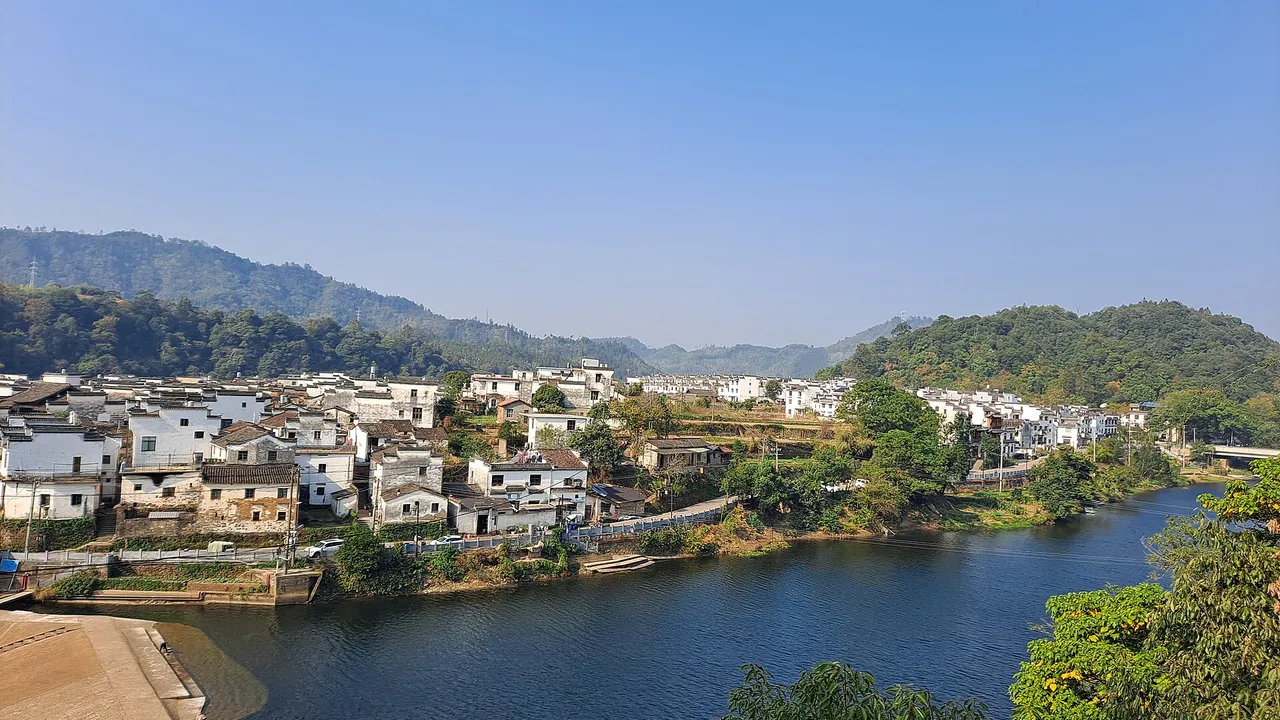
Jiangwan: The Eastern Gatehouse and Its Old Street
The afternoon reaches Jiangwan. The Xiaojiang ancestral hall sets the eastern line's ceiling in scale and ritual order, beams and caissons worth slow study, while the town's old street keeps its tea-house and cloth-shop frontage, century osmanthus against old walls, camera-ready.
Jiangwan draws the east's biggest crowds, which thin after three as tour groups withdraw and the experience recovers. Two hours suffice, and Xiaoqi lies ten-odd minutes on.
Xiaoqi: Scholar's Air and Ancient Camphors
Reach Xiaoqi before dusk. Upper and Lower Xiaoqi link as one, the entrance grove of thousand-year camphors living relics, while the Jixu and Ligeng halls carry the scholar's line, carving and paint finer than neighbors.
The golden chrysanthemum fields sit outside the village, gold across the flats in Oct-Nov. Dusk light slants into the entrance and the camphors lay shadows over the field paths, the day's loosest frame.
Huangling: A Whole Morning of Drying Racks
Give all of day two's morning to Huangling. Ride up and run Sky Street, the drying terraces, the Wugui mansion and the Leixin bridge in order, the rack colors most saturated at nine or ten. The village's content justifies half a day or more.
Sky Street's tea rooms and snacks solve lunch. Drive north after descending, an hour or so, and sleep near Sixi-Yancun by evening.
Sixi-Yancun: A Merchant-Scholar Afternoon
The afternoon enters Sixi and Yancun, neighboring villages of clustered merchant mansions, where the Jingxu hall's light wells, lattice doors and inscriptions spell out merchant-scholar in concrete terms. Classic films shot here, and the mansions' shadows carry a screenplay of their own.
Crowds run low, and when afternoon light slants down the light wells the carving layers deepen. Sleep in Yancun or back in Qinghua, the northern day's departure point.
The Rainbow Bridge: The Northern Line's Cover
Day three's morning belongs to the Rainbow bridge. The Southern Song gallery strings eleven rooms into one timber corridor, pointed piers shrugging off eight centuries of floods, from the bank pound and wheel to the window openings, every detail a live answer in old hydraulics and timber.
The bridge empties early and mist makes it better. Forty minutes on the bridge plus ten on the old street complete the northern morning.
Qinghua Lunch and the Transfer
Lunch in Qinghua, the usual thick tofu soup and rice-flour pork, or a bowl of bamboo-shoot and pork noodles when pressed. This is the northern line's lunch base, with prices and quality both above standard.
Afterward drive toward Likeng (north), forty winding minutes. It is the deepest village on the northern line, so reserve the full afternoon.
Likeng (North): The Officials' Village Finale
Northern Likeng shares a sound with eastern Likeng but not a fate: a village of Ming-Qing officials, where mansions like the Minister's and the Marshal's map their rank onto layout, the strongest sense of hierarchy in any Wuyuan gate tower or plaque.
The village stays quiet and lightly commercial, lanes built for slow walking. Finishing here has one virtue: from the busiest village to the stillest, both extremes of the Wuyuan system are seen, and its outline completes. Town lies an hour and a half back.
| Getting around |
|
| Budget | The area pass (about RMB 210) plus the Huangling combo (about RMB 145) make a three-day spend of RMB 700-1100 pp before lodging. |
| Best time | Year-round; autumn's racks and spring's field blooms add color, while summer noons bake the lanes. |
FAQs
Do nine villages blur into fatigue?
Yes, if undifferentiated. The cure is giving each village one exam question: water at Likeng, carving at Wangkou, ritual scale at Jiangwan, scholar's air at Xiaoqi, theater at Huangling, merchant mansions at Sixi, official rank at northern Likeng. With a question per village, none repeats. Truly tired legs can drop Xiaoqi or eastern Likeng without breaking the frame.
Can the area pass and the Huangling ticket be bought together?
No, they are separate systems: the area pass (about RMB 210) covers a dozen-plus village sights, while Huangling sells its own entry-plus-cableway combo (about RMB 145). Platforms can order both in one cart, verified separately at gates. This route needs both, so buy them together on day one.
Is the village line good for photography, and how should hours be set?
Yes, with shooting pushed to the edges: dawn for empty lanes and smoke, dusk for side-lit gate towers and drying terraces, noon for drives and meals. Three windows are must-wins, Huangling's morning, the Rainbow bridge at dawn, and northern Likeng at dusk; everywhere else takes frontal light gracefully.
How does the village line adapt to rain?
Light rain changes nothing and flatters the villages: reflective flagstones, dripping light wells, half the crowds. Shift time from view decks into halls and mansions, which shelter and reward detail. In heavy rain favor mansion-dense Sixi-Yancun and northern Likeng, and remember Huangling's cableway may stop in strong wind, so check notices before setting out.