
Xiamen's flavors run on a strict clock: morning belongs to the market's rice-noodle paste and griddle cakes, noon to a shacha broth simmered for years, afternoon tea bridges through heritage dishes of sweet-sour pork and taro paste, and after dark the soy-water seafood stalls take over. Follow the local meal clock and one day eats like two.
The route is not long, but its stops straddle old town and new, linked most easily by bus and taxi. Two warnings: shacha noodles belong to small shops, and the mall-chain versions miss the point; and stall seafood prices by weight, so watch the scale and unit price when ordering, the one moment demanding sobriety.
Itinerary at a glance
| 08:00 | Eighth Market Breakfast: Rice-Noodle Paste and Griddle Cakes |
| 12:00 | Sili Shacha Noodles: The Old Broth of the Sili Blocks |
| 15:30 | Lin Sixi Minnan Cuisine: A Proper Seated Meal |
| 19:00 | Xiaoyanjing Seafood Dapaidang: Home of Soy-Water Fish |
The route, stop by stop
Eighth Market Breakfast: Rice-Noodle Paste and Griddle Cakes
Breakfast happens in the Eighth Market. Mee suah paste is a bowl of rice vermicelli cooked down to silk, topped with pork intestine, vinegared meat or oysters, dusted with pepper and chopped celery, a bowl that warms you from inside; beside it, peanut-candy-filled griddle cakes brown on the iron plate, crisp at the rim and soft within, perfect with soy milk. Eating it standing at the curb is the proper entry into a Xiamen morning.
Afterward walk the market to digest, eye the day's landings, and mentally draft your evening seafood order. The glass counters of the pork-floss and pastry veterans deserve a look too, flavors polished over decades.
Sili Shacha Noodles: The Old Broth of the Sili Blocks
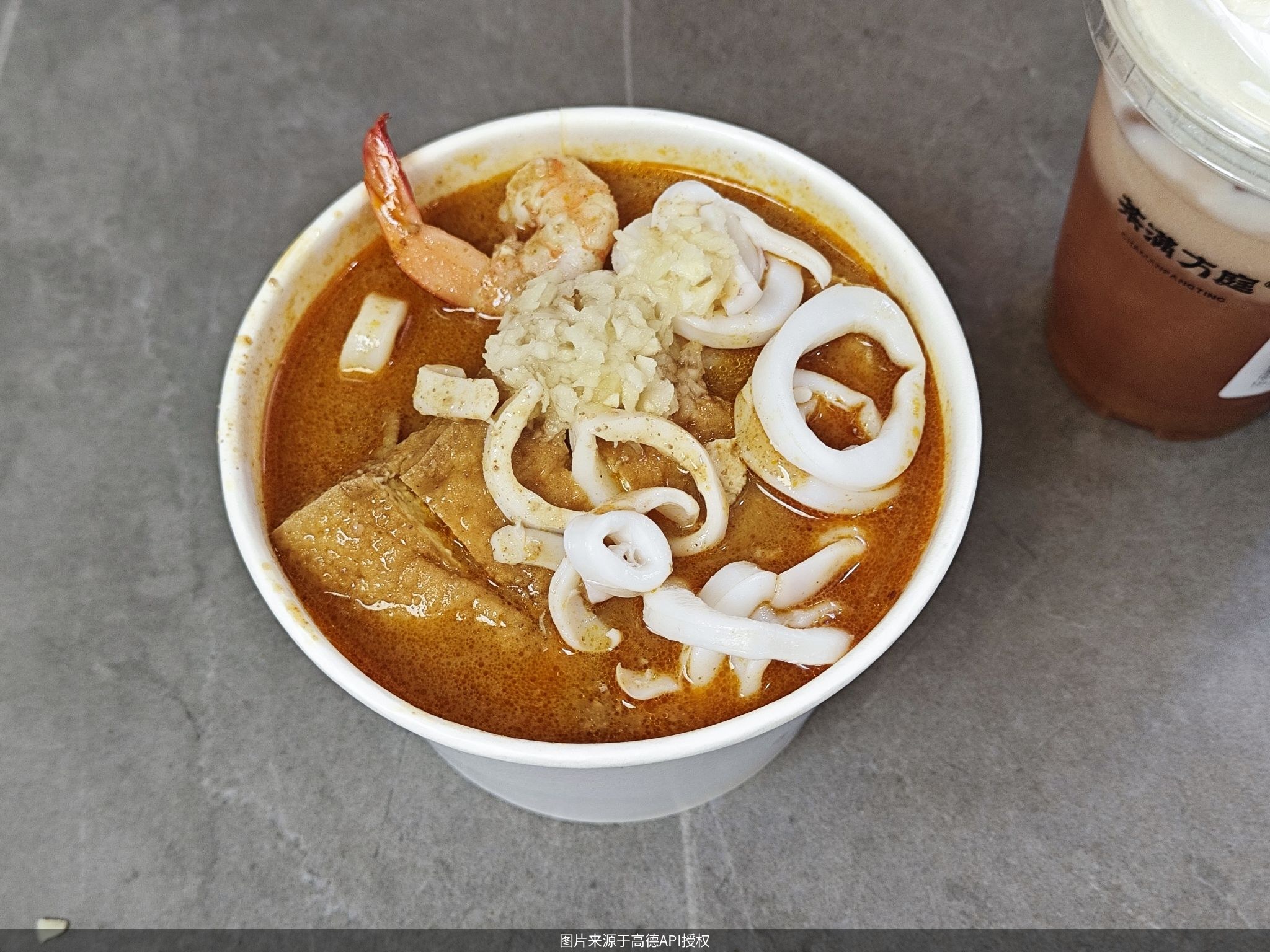
Cross to the Sili blocks near Hubin at noon, where the shacha noodles locals trust run old school: a broth built on shacha paste, peanut paste and bone stock, sweet and hot in careful balance, over alkaline oil noodles blanched to order. Ordering means choosing toppings, tofu, duck gizzard, pork liver, shrimp laid into the bowl one by one, then a ladle of broth drowned over all.
Sili is an old neighborhood and the shops feed locals like a canteen. Add a bowl of fresh-simmered pork trotter soup or a plate of five-spice rolls, and this is the standard lunch of old Xiamen.
Lin Sixi Minnan Cuisine: A Proper Seated Meal
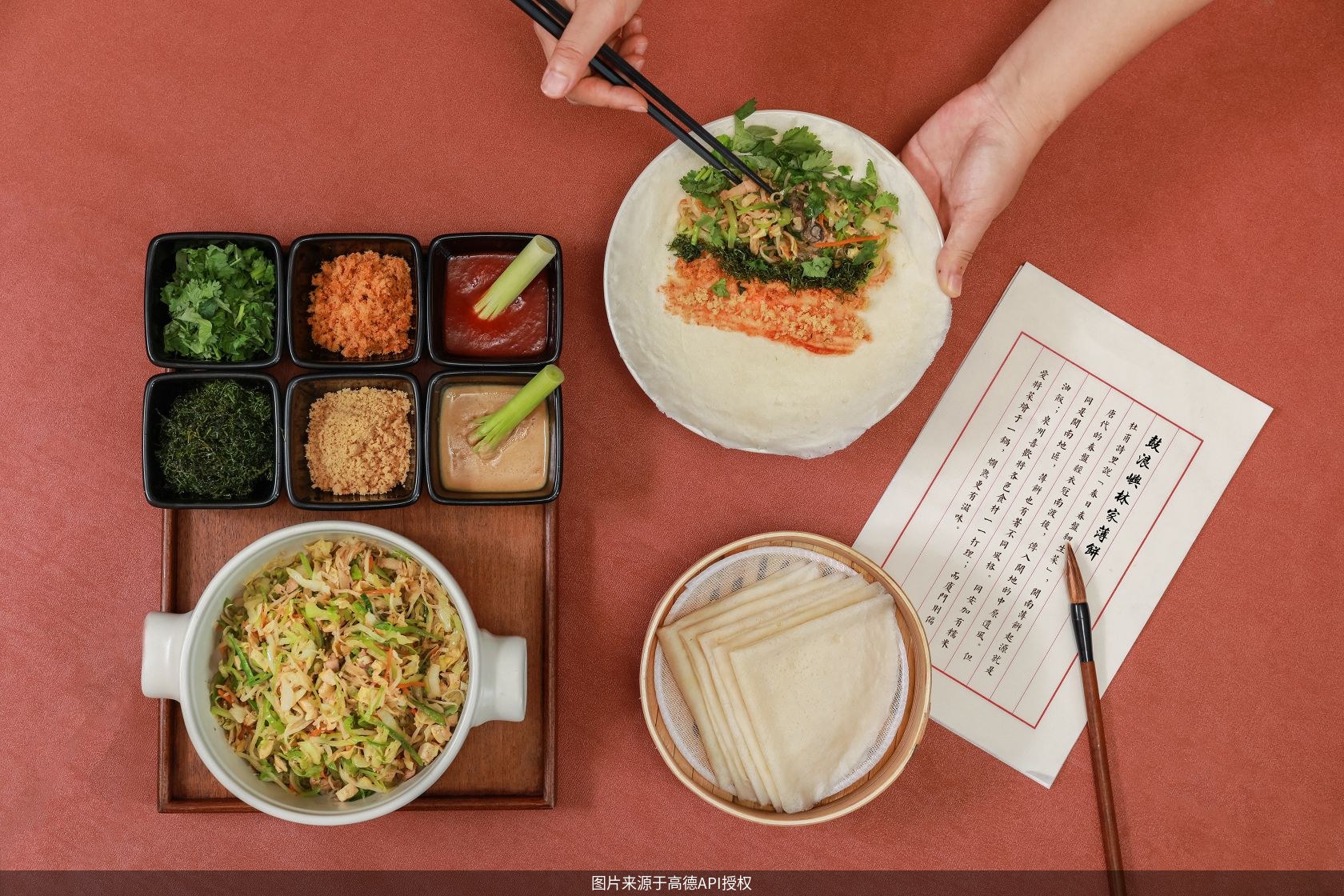
Past three, downshift into Lin Sixi on Zhenbang Road in the Zhongshan Road blocks, a house of heritage Minnan cooking: popiah skins rolled fresh for wrapping at the table, vinegared pork, oyster omelet and braised duck with ginger and sesame oil laid out dish by dish, closing with taro paste sweet without cloying. Compared with street snacks, this is the grammar of a Minnan family banquet.
Mid-afternoon thins the room, so take your time. Save the ginger duck for last; when the claypot lands, the sesame oil aroma arrives first and the duck slides off the bone, the full stop of the meal.
Xiaoyanjing Seafood Dapaidang: Home of Soy-Water Fish
The night shift belongs to Xiaoyanjing, a flagship of Xiamen's open-air stall culture. Soy-water is the fishermen's ancestral way with fish: a little soy with ginger, scallion and a splash of water, brought to a boil before the fish goes in, flavoring without burying the freshness. Mixed fish in soy-water, blanched octopus and blood cockles form the usual trio, closed with blanched greens and sweet-potato congee.
The ritual is the racket: plastic stools, round tables, fish picked live from the tanks. Order by weight once everyone arrives, watch the scale, hear the unit price, settle the sum, all in one motion. After ten the room still runs full; Xiamen's night grows out of stall light.
| Getting around |
|
| Budget | Morning to night runs about RMB 150-280 pp, with stall seafood priced by weight the widest swing. |
| Best time | Any season; the market thins after nine while the stalls fill after six in the evening, so time both ends. |
FAQs
Can one person finish this entire route?
No, and no need. The right way is small at each stop: a small bowl of mee suah, light toppings on the noodles, two or three shared dishes at the restaurant, and under three catties of seafood at the stall. Two travelers cover more; solo grudge-eating only fights your own stomach.
Is shacha noodles the same thing as shacha hotpot?
The base is shared but the eating differs: the noodles use a sweet-hot broth poured directly over blanched noodles, while the hotpot serves the paste as a dip beside a clear pot. One day calls for the noodles; save the hotpot for a group dinner and do not repeat the base flavor twice in a day.
What is sea worm jelly, and what can non-seafood eaters have?
Sea worm jelly is a set aspic boiled from sandworms, textured like a slightly crisp jelly, eaten with mustard and soy. Land-lubbers have plenty: griddle cakes, taro paste, peanut soup and five-spice rolls are all carbohydrate and pork, and the sweet side of Minnan food alone fills a day.
How do I avoid being overcharged at the seafood stalls?
Three rules: check the posted board at the door for market price and unit price; watch the scale and repeat the unit price and weight aloud when ordering; reconcile the bill against the list when paying. Shops full of locals beat pretty decor, and anywhere with a queue rarely cheats.