
Three days in Xi'an is an allocation problem: underground (the warriors and imperial tombs), the old city (wall, steles, the quarter) and the collections (history museum, Xi'an Museum). The steadiest split gives each day one theme: east out of the city for the Qin, inside the walls for Han and Tang, and a soft close at Daming Palace with street life, with intensity tapering day by day.
The structure tolerates weather and fatigue: rain swaps day two's museums with day three; tired legs still suit day three, since Daming Palace is an open archaeological park that rewards slow walking. Only two hard bookings exist, the warriors and the history museum, locked in three to five days ahead. On budget, the ticket backbone of three days is the 120 yuan warriors plus a combined hundred or so for the Beilin and Daming Palace sites, with metro and buses covering transport; the real variables are hotels and shows. Deciding on big-ticket items like the Changhen Ge performance before you arrive beats buying mid-trip.
Itinerary at a glance
| DAY1 08:30 | Day One: The Terracotta Army and Huaqing Palace in Lintong |
| DAY2 09:00 | Day Two: The History Museum and the Wall, Han and Tang in Duet |
| DAY3 09:30 | Day Three: Daming Palace Ruins and a Slow Quarter Close |
The route, stop by stop
Day One: The Terracotta Army and Huaqing Palace in Lintong
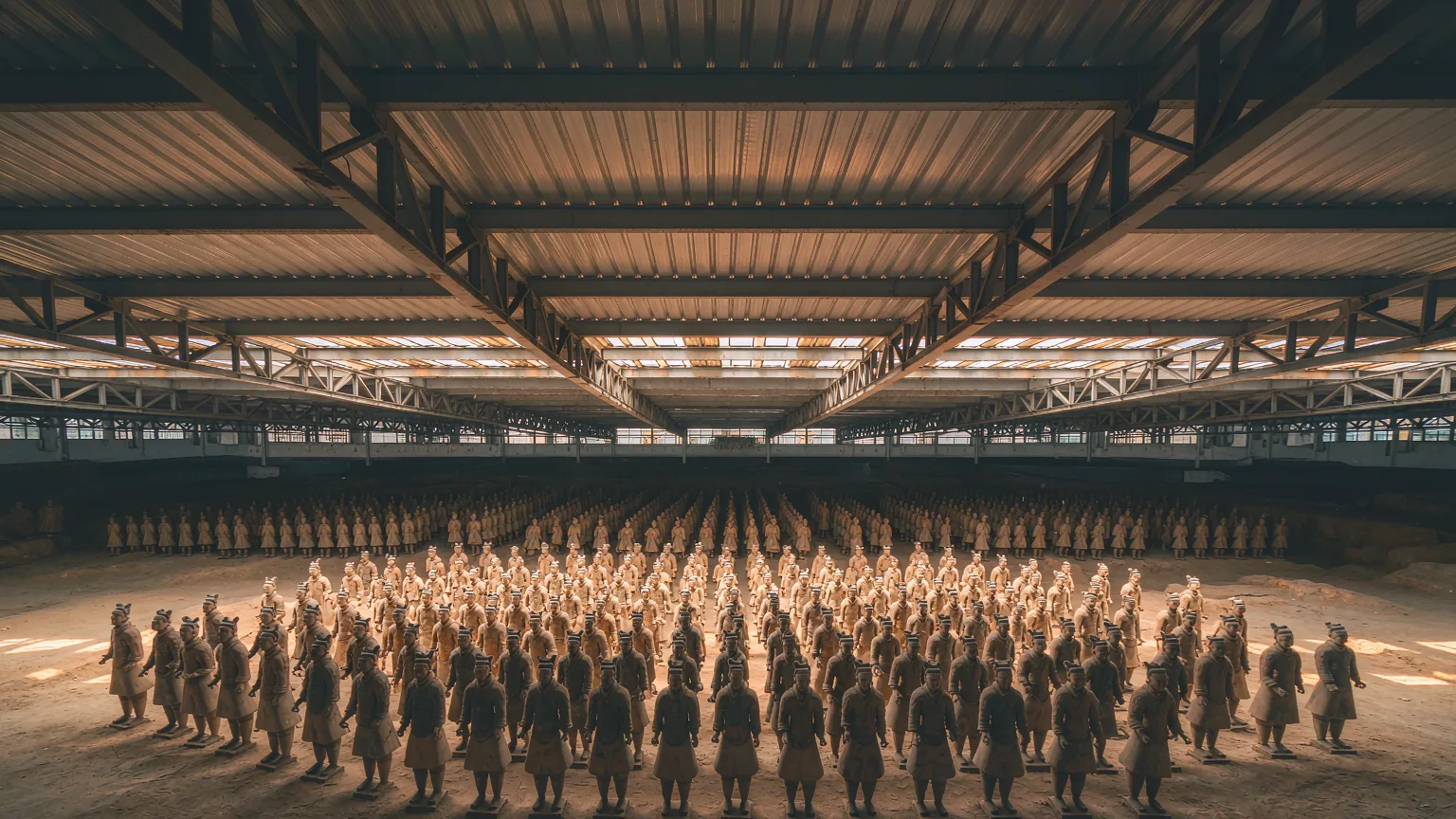
Day one follows the classic Lintong structure at a kinder pace: enter at 8:30, work the pits in order, shuttle to the mausoleum park, lunch in Lintong, then give Huaqing Palace a full three hours, including the cableway up Lishan to the Incident Pavilion, spending the energy a one-day version never has.
In show season, Chang Hen Ge justifies a schedule built around it: the real mountain of Lishan as a stage set, tickets from RMB 298, good seats gone a week ahead. No ticket, no problem: the wall's evening light show at Yongningmen makes a worthy substitute.
Families with elders or kids can split Huaqing Palace in two: see the imperial baths in the morning, retreat for a midday nap, and return in the late afternoon for the Wujianting halls and the sunset on Li Mountain, confirming same-day re-entry at the ticket window. The Lintong sun is fierce after noon, so bring hats and water from the start; supplies cluster near the entrance and the lines deepen as you go further in.

Day Two: The History Museum and the Wall, Han and Tang in Duet
Day two's morning belongs entirely to the history museum: treasury hall at opening, then the chronological galleries, two and a half to three hours being the sane ceiling. Lunch at Xiaozhai, then reach the Forest of Steles by 2 pm to finish what the wall day started: two hours with the stones, a stroll down Shuyuanmen, and a dusk half-loop on the wall from Wenchangmen to Yongningmen for sunset.
The day's theme is seeing the artifacts by day and the city that made them by evening: the words pulled at the steles and the bricks underfoot share authors. That resonance is a grammar only Xi'an offers.
There is an ordering trick to pairing the Beilin with the wall: stones first, ramparts after. Reading the steles and then touching the bricks lets each deepen the other; done in reverse, the afternoon slump dilutes the density of the carvings. From Wenchang Gate it is only a twenty-minute ride south to Yongning at dusk, saving your legs for the stretch of wall before sunset.
Day Three: Daming Palace Ruins and a Slow Quarter Close
The last morning goes to Daming Palace National Heritage Park, the Tang palace's footprint now a vast open park with the Danfeng Gate museum and a miniature model as its cores. Standing on the Hanyuan Hall platform, the scale behind that verse about palace gates opening through nine heavens finally lands. The park's perimeter is free, by bike or sightseeing cart, entirely at your own pace.
The afternoon returns to the quarter to settle scores with the food list: Ding's crispy pork, Sheng Zhiwang's sesame noodles, Jia San's soup dumplings. Climb the Drum Tower at dusk if day one skipped it, a period on three days from the city's center. Leave two honest hours for packing; Xianyang airport security queues in season.
The scale of Daming Palace is easy to underestimate: it is more than two kilometers straight from Danfeng Gate to Taiye Pool, so take the sightseeing cart to Hanyuan Hall and walk back rather than marching the axis on foot. Arrive before ten and the crowds have not formed; the simulated dig at the archaeology center gives kids an hour of play and a certificate to take home, which they will remember longer than any souvenir.
| Getting around |
|
| Budget | About RMB 900-1500 pp for three days, excluding hotels and long-haul transport. |
| Best time | Apr-May and Sep-Nov; avoid Golden Week and midsummer, and book the history museum 3-5 days out. |
FAQs
Is three days enough for Xi'an?
For a first visit, just right: the five cores, warriors, wall, history museum, pagoda, quarter, all covered without rushing. The regrets will be Huashan, Famen Temple and the steles' depths, which is exactly what a second trip is for. Xi'an's density of museums and ruins ranks top three nationally; three days is where understanding starts, not where it ends.
Where should I stay for this route?
The Bell Tower and Yongningmen zone is the all-purpose pick: the line 2 hub, walking distance to the quarter, direct runs everywhere. Higher budgets look near SKP or to boutique guesthouses inside the wall; tighter budgets take chains near Beidajie station. Skip Lintong unless catching the night show, and the pagoda area unless you enjoy evening transfers.
Which day has the most flex?
Day three flexes most: an open park that can shrink to two hours or drop out without breaking the trip, and the quarter inserts into any evening. Days one and two carry hard bookings, so lock them the moment dates are set.
On a tight budget, what gets cut?
Cut the night show (RMB 298-980) and the wall bike (a free half-loop walk delivers eighty percent), keep the warriors' shared guide (RMB 20). Food is friendly here: proper meals of paomo, liangpi and roujiamo at RMB 30-50 pp. A hard RMB 500 still walks this route respectably.