
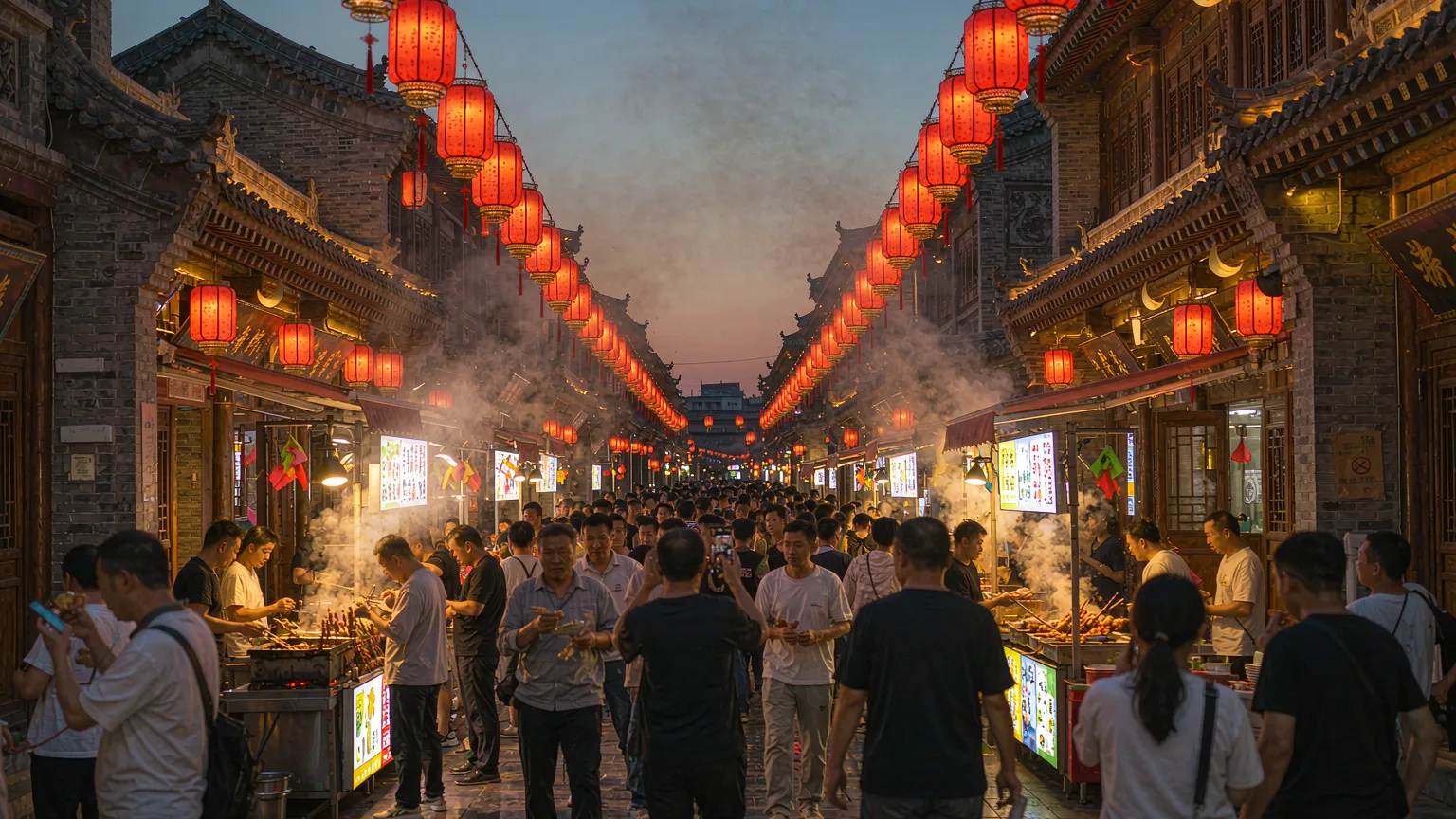
Xi'an wakes up inside a bowl of hu spicy soup. The city's street food runs on a strict clock: meatball hu soup owns the morning market, paomo holds noon as a proper meal, the afternoon belongs to the quarter's sweets and stuffed buns, and only after 9 pm do the skewer grills under the wall fill up. Follow the meal clock and one day eats like three.
No rushing here, just two districts swapped back and forth: the morning market on Sajinqiao, midday in the Muslim Quarter, an afternoon to digest, and back to Sajinqiao for the night close. Walking plus metro, under four kilometers total; your stomach's capacity is the only constraint.
Itinerary at a glance
| 07:30 | Sajinqiao Morning Market: Hu Spicy Soup and Rock Bread |
| 10:00 | Quarter Morning: Zenggao Cake and Persimmon Fritters as Intermission |
| 12:00 | Paomo, the Proper Meal: Forty Minutes of Tearing Bread |
| 15:00 | Roujiamo and Liangpi: The Guanzhong Afternoon Tea |
| 18:30 | Sajinqiao Night: Skewers and Claypots under the Wall |
| 21:00 | The Sweet Close: Ice Peak, Fermented Rice and Mirror Cakes |
The route, stop by stop
Sajinqiao Morning Market: Hu Spicy Soup and Rock Bread
The morning market eats standing up. The meatball hu soup stalls, Ma Laosan and Li Weiwei among them, fire their pots around six: a beef-bone broth with potatoes and carrots stewed to the edge of dissolving, springy beef meatballs, and the soul of the bowl, a spoonful of scallion sizzled in hot oil. Locals pair it with a rock-hard tuotuo bread broken in to soak, and add the chili themselves.
Two schools share the name: the quarter's meatball hu soup, thick with beef balls and vegetables, and the Henan-style hu la tang, thinner with gluten and sliced beef. Sajinqiao runs both; ordering half bowls of each to compare is not rude.
Quarter Morning: Zenggao Cake and Persimmon Fritters as Intermission
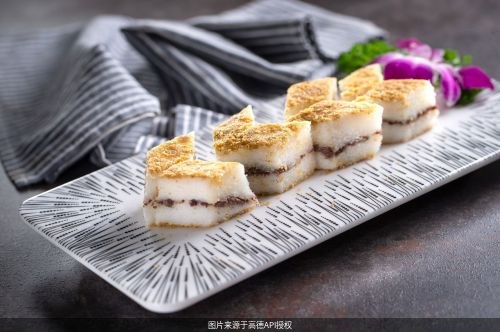
Walk from Sajinqiao into the quarter; at 10 am Beiyuanmen has not yet surrendered to tour groups, the golden hour for sweets. The zenggao at Southeast Asia stall gleams in its wooden steamer, date paste and sticky rice in clean layers; next door, huanggui persimmon fritters use Lintong crystal persimmons for the dough, fried to order, crisp outside and chewy within.
Both are opening acts, half portions each, keeping stomach capacity for noon's paomo. Grab a bottle of sour plum drink while passing, the quarter's is usually properly simmered, deep-colored and not cloying, perfect once the walking warms you.
Paomo, the Proper Meal: Forty Minutes of Tearing Bread
Noon in the quarter calls for a proper bowl: beef or mutton paomo. The veterans, Tongshengxiang and Lao Sunjia, anchor the main street, while locals queue in the lanes at Lao Mi's and Lao Liu's. The ritual starts with tearing: two unleavened tuotuo loaves torn to soybean size is the diner's homework, the cook only boils.
Finished styles vary: kou tang leaves one mouthful of broth, gan pao drinks the bowl dry into the bread, shui wei cheng floats wide broth around it. First-timers order kou tang, with pickled garlic and chili paste, eating from the rim inward without stirring.
Roujiamo and Liangpi: The Guanzhong Afternoon Tea
Three o'clock is when the second stomach wakes. The quarter's cured-beef roujiamo and Qinyu's (on Dongmutoushi, outside the quarter) represent two schools: the former salty-beef fragrant, the latter the classic laizhi pork with streaks of fat through lean, in the canonical baiji mo with its iron-ring crust and chrysanthemum heart. Pair either with sesame-paste liangpi or Qishan rolled noodles, judged on the balance of vinegar aroma and chili oil.
For this window think in thirds: one-third of a roujiamo, one-third of the noodle portion, saving the last third of capacity for night skewers and sweets. Xi'an's street-food trap is never bad food, it is too much good food for one stomach.
Sajinqiao Night: Skewers and Claypots under the Wall
At night Sajinqiao changes costume, skewer grills claiming the sidewalk. Xi'an skewers run small: order by the twenty-stick handful, beef seasoned only with salt and cumin over direct charcoal. Balance with a claypot, meatball or hot-sour, and add charcoal-grilled bread brushed with chili paste as the starch.
Locals order one handful at a time: ten sticks to test the fire, more if it earns it. The bill is counted by counting sticks, dropped into a tin jar as you finish, possibly China's most honest pricing system.
The Sweet Close: Ice Peak, Fermented Rice and Mirror Cakes
Three directions close the night: a glass-bottle Ice Peak orange soda, Xi'an's taste totem, available at any stall; the egg jiangmo stall mixing fermented rice soup to order, its faint boozy warmth under silky egg; and jinggao, mirror cakes steamed in mini bamboo baskets from glutinous rice flour, dipped in rose or chocolate sauce, one bite each.
If a third stomach exists, the honey chilled zongzi and mung-bean cakes at Sajinqiao's north end travel well boxed. By now today's carbohydrate load is double the limit, but the wall is right there; a morning lap tomorrow earns it back.
| Getting around |
|
| Budget | Graze all day for about RMB 120-200 pp; even a full-stuff version tops out near RMB 300. |
| Best time | Year-round; breakfast stalls fold by 9 am while skewer stalls fire up after 7 pm, so time both ends. |
FAQs
How do I choose between the main quarter street and Sajinqiao?
Depends what you want. The main street's lantern nights and graze-stroll energy are part of the experience, at higher prices and denser crowds; Sajinqiao is where locals shop and eat, truer on both taste and price. Browse the main street by day, eat in Sajinqiao, shoot the lit main street at night, and keep real meals to the lanes on both sides.
Can one person actually finish this route?
No, and you should not try. The right play is half portions and guerrilla sharing, five dishes across three people. Solo, the priority order is paomo, roujiamo, hu soup, skewers, with sweets as fate allows. Xi'an street food's virtue is small portions and many sittings, not clean plates.
What about travelers who avoid beef or mutton?
Paomo has egg and vegetarian versions. The quarter is beef-and-mutton territory, so substitutes live on Sajinqiao and outside it: hulutou, pork-intestine paomo, with Chuntian Sheng as the veteran house, plus oil-splashed noodles and biangbiang noodles, all pork or vegetarian. Qinyu's roujiamo is cured pork, no clash with the quarter.
What should sensitive stomachs watch for?
Three things: nothing frozen for the first bowl, save the sour plum drink for midday; skip raw-cured and cold salads for now; eat skewers well-done, the thin meat over fierce charcoal is safe but do not ask for rare. Pack stomach remedies; the line's oil-and-chili level runs about seventy percent of Sichuan food, milder than feared, but back-to-back assault still deserves a buffer.