
One day in Xi'an splits cleanly in two: the morning belongs to the Terracotta Army 40 km east in Lintong, the afternoon returns to the old city for the wall and the Bell and Drum Towers. The whole game is timing. Arrive at opening or the tour buses will slice the experience in half after 9:30.
Skip the taxi. Bus 5 (route 306) leaves from the east square of Xi'an Railway Station, runs straight to the site gate for about RMB 7, and takes roughly an hour; do the same on the way back. If energy remains at night, the musical fountain on the north square of the Giant Wild Goose Pagoda is a free finale. You will walk over 20,000 steps, so wear shoes you trust.
Itinerary at a glance
| 08:30 | Emperor Qinshihuang's Mausoleum Site Museum: The First Hour |
| 11:00 | The Qin Mausoleum Park: The Stop Most People Skip |
| 13:00 | Huaqing Palace: Tang History Written in Hot Springs |
| 16:00 | Back to Town: Bus to the Bell and Drum Towers |
| 18:00 | Dinner in the Muslim Quarter: Sajinqiao over the Main Drag |
| 20:00 | Giant Wild Goose Pagoda North Square: The Fountain Finale |
The route, stop by stop
Emperor Qinshihuang's Mausoleum Site Museum: The First Hour
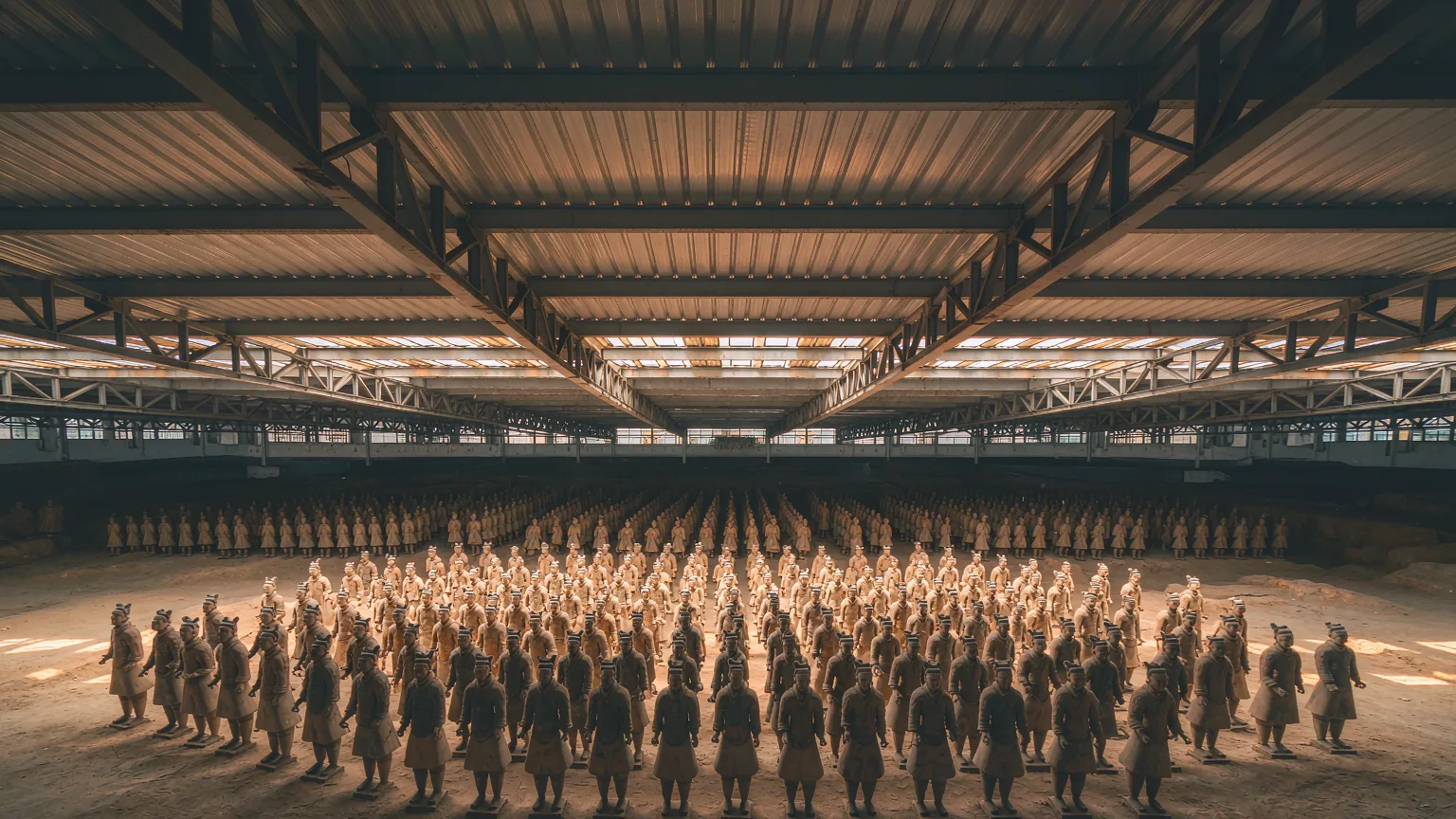
The order matters: Pit 1 first, then Pit 3, then Pit 2. Pit 1 is the phalanx from every photograph; stand at the east rail of the raised viewing deck and morning light slants through the front gate, giving the figures their best shadows. Tour groups have not landed yet, so the soundtrack is camera shutters, not guide horns.
All three pits take about two hours. Pit 1 shows the army's scale and the working restoration area at its far end, where figures are reassembled shard by shard in front of you. Pit 3 is the small command post, worth it for its layout. Pit 2 holds the highlights: the kneeling archer, including the famous green-faced one, and the bronze chariots now displayed in their own hall, worth a separate twenty minutes.
The Qin Mausoleum Park: The Stop Most People Skip
Most visitors turn back after the three pits, yet the warriors were only the tomb's satellite garrison; the mausoleum park itself is the main event. A free five-minute shuttle gets you there. The must-sees are the excavation sites of the two bronze chariots and the mound itself, a truncated pyramid of rammed earth still over fifty meters tall after two thousand years.
Budget forty minutes to an hour. Crowds are thin and the tree lines are calm. If time is tight, view the mound from a distance and move on; if imperial tomb systems interest you, the interpretive signs here beat the ones at the pits.
Huaqing Palace: Tang History Written in Hot Springs
Three stops back toward the city on the same bus line sits Huaqing Palace, a perfect en route break. This was the Tang hot-spring retreat of Emperor Xuanzong and Consort Yang; five sets of Tang-era bath foundations survive, and the Crabapple Pool is the original of the famous Consort's Pool. The Xi'an Incident sites sit on Lishan Hill inside the same park, including the rock crevice where Chiang Kai-shek was found in 1936.
The grounds are compact; two hours covers the core. If modern history pulls you harder, spend your time at Wujianting, where the bullet-scarred walls from that night are the real artifacts.
Back to Town: Bus to the Bell and Drum Towers
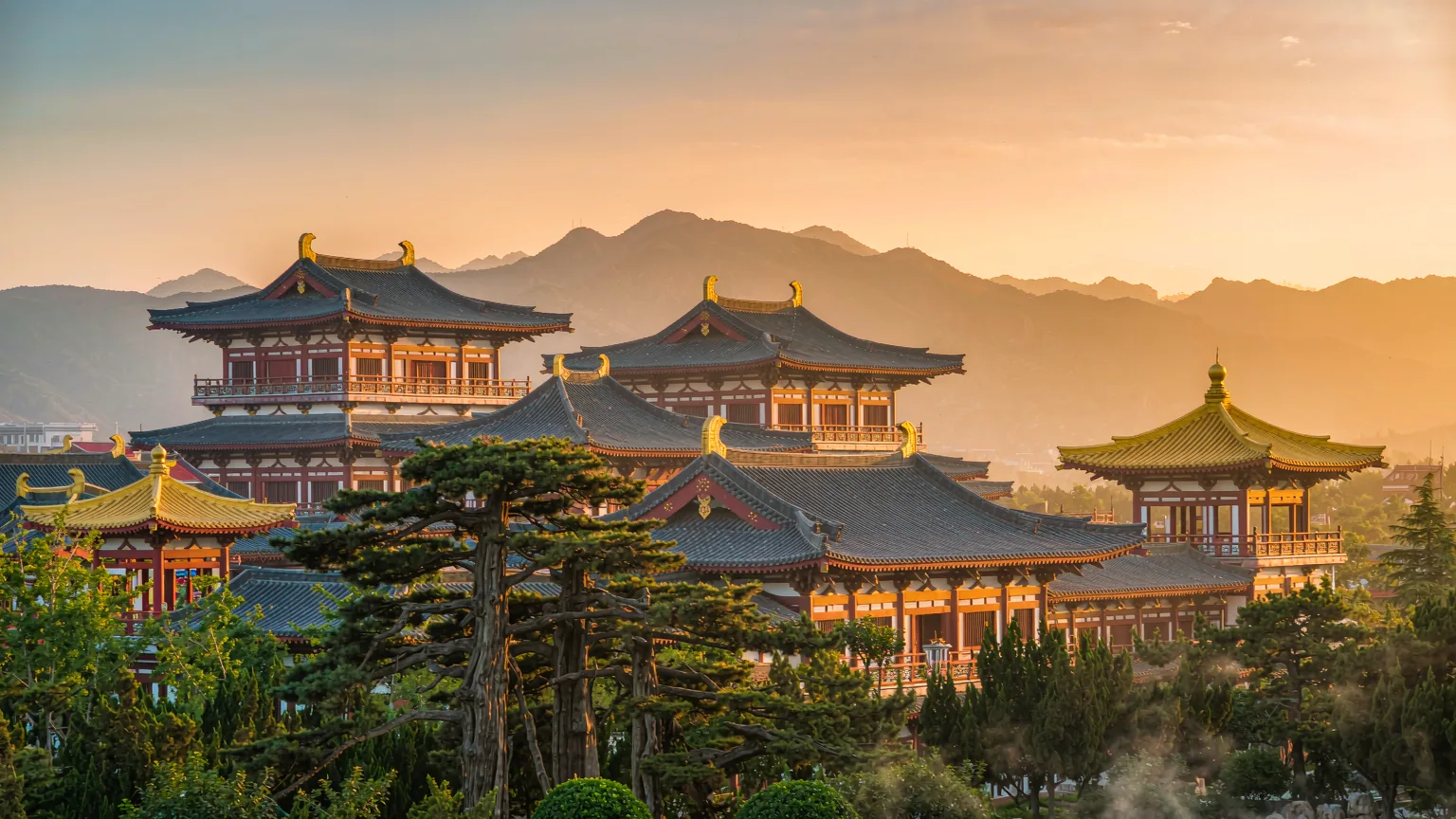
Ride bus 306 back to the railway station, then walk fifteen minutes or take the metro to the Bell Tower, the geometric heart of the old city where four avenues cross. Behind the Drum Tower lies the entrance to the Muslim Quarter, but hold your appetite; climb the Drum Tower first for the city view, when six hundred years of tiled ridgelines turn gold at dusk, one of the best free vantage points downtown.
A combined ticket for both towers costs RMB 50 and each takes twenty minutes. If you only have time for one, pick the Drum Tower: the wider view plus the exit straight into the quarter.
Dinner in the Muslim Quarter: Sajinqiao over the Main Drag
The lanterns on Beiyuanmen's main street are photogenic, but local appetites live on Sajinqiao, one lane over. Here the shops stack shoulder to shoulder, from Lao Jin's egg-and-vegetable stuffed buns to Ma Er's sour soup dumplings and Ding's crispy pork, at sixty to seventy percent of main-street prices, queued by locals off their bikes rather than tourists with selfie sticks.
A solid dinner combo: one bowl of beef paomo, the bread soup you tear by hand, or its spicier stir-fried cousin, plus sour soup dumplings, closing with an Ice Peak soda or sour plum drink. Tear the bread to fingernail size, the passing grade for paomo; the finer the pieces, the better the broth clings.
Giant Wild Goose Pagoda North Square: The Fountain Finale
From the quarter, the metro reaches Dayanta station in about twenty minutes. The north square fountain is one of Asia's largest, with evening shows usually at 20:30 or 21:00 depending on season, and each twenty-minute run sends water columns soaring over Shaanxi opera music and drums, with the Tang-dynasty pagoda where Xuanzang stored his sutras standing behind.
The fountain is free; the central axis or the east steps hold the best sightlines. Taxis around the Grand Emporium mall afterward are easy, and the ride home lets your 20,000 steps recover.
| Getting around |
|
| Budget | Tickets (Terracotta Army plus city wall) and meals run about RMB 300-450 pp; adding Huaqing Palace and the Chang Hen Ge show adds RMB 200-580. |
| Best time | Mar-May and Sep-Nov are the steady months; in summer and Golden Week the warriors double in crowds, so aim for the 8:30 opening. |
FAQs
Can I see the Terracotta Army and the city in one day?
Yes, at a pressed pace: enter the warriors at 8:30, move to the mausoleum park by 11, Huaqing Palace at 13:00, back in town by 16:00, all riding the bus timetable. The cost is highlights only. If museums are your thing, save the Shaanxi History Museum for another visit instead of squeezing it in.
How do I book Terracotta Army tickets? Can I buy on site?
Book via the official museum WeChat account or website with real-name registration. In peak season, July-August and Golden Week, slots fill two to three days ahead and walk-up tickets are a lottery. Foreign passports book with passport numbers and enter with the physical passport.
How do I recognize the real bus 5 (306) and avoid fake buses?
The genuine route 5 departs from the bus hub at the station's east square, marked with official bus livery and stops; pay about RMB 7 by card or QR code. Anyone aggressively touting a direct no-traffic-lights ride is unlicensed, however bus-like the costume. The real bus queues at a marked stop and never approaches you.
Is this route manageable with seniors or small kids?
Two spots strain: the stepped decks at Pit 1 and the quarter's crowds. Fixes: rent a wheelchair at the warriors' service desk (refundable deposit), keep Huaqing to the flat grounds, shift the quarter dinner to off-peak midday, and watch the fountain from the square's edge steps instead of standing through it.