
First-time visitors ask what Xi'an has; return visitors ask what Chang'an was. This route skips the headliners for places that answer the second question: the 84-square-kilometer Tang city model in the Xi'an Museum, the excavation trenches still visible at Daming Palace, and the canon library of 114 Kaicheng Stone Classics at the Forest of Steles.
Deep reading also changes the method: every stop deserves a guide or homework, and skimming here is waste. If you hire exactly one guide, make it the steles: carved words are dead text until spoken. The minimum preparation is two hours: one documentary and one map of Tang Chang'an. Fix in your mind the relative positions of Zhuque Street, the two markets and Daming Palace, and on site every guide's words become coordinates on the map in your head instead of proper nouns.
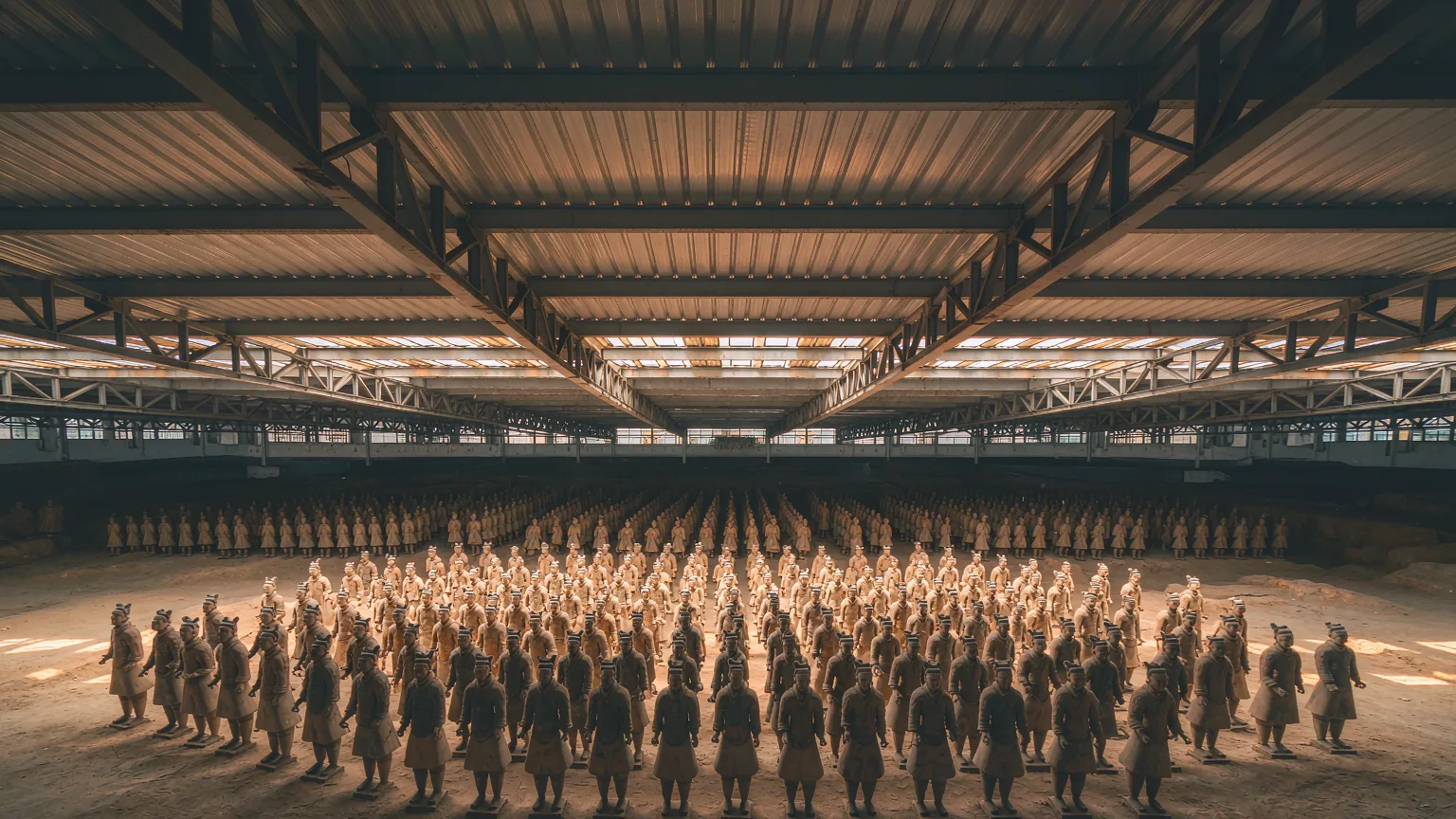
Itinerary at a glance
| DAY1 09:00 | Day One: The Xi'an Museum and the Tang City Model |
| DAY2 09:00 | Day Two: A Full Day at the Daming Palace Site |
| DAY3 09:00 | Day Three: The Steles in Depth, with Hanyangling as an Option |
The route, stop by stop
Day One: The Xi'an Museum and the Tang City Model
Day one morning sits with the Xi'an Museum at the Small Wild Goose compound, and the core task is reading the Tang city model properly: the width of Zhuque Avenue, the placement of the two markets, the naming logic of the 108 wards, cross-referenced against the pagoda on the old Jianfu Temple grounds, and the imperial city system turns three-dimensional. The second-floor Buddhist sculpture gallery hides Northern Zhou and Sui masterpieces behind plain labels.
The afternoon's homework happens in the compound teahouse: bring any Tang Chang'an novel, find the West Market and the fictional Bureau of Jing'an on the model, and afternoon tea turns into a geography seminar.
Turn the model into a game of guess and check: estimate the size of one ward first, then verify it against the layout. A single Tang ward matched a sizable modern residential district, and the gates that opened and closed on schedule made the chessboard of Chang'an a unit of public order rather than a poetic exaggeration. Parents can have children find the Little Wild Goose Pagoda's own spot on the model; the thrill of getting it right will power the whole afternoon.
Day Two: A Full Day at the Daming Palace Site
The right way into Daming Palace starts at the Danfeng Gate museum: the gate's profile under a steel shelter, five doorways sizing up the title of first gate of the Tang. Then walk the axis north from the Hanyuan Hall platform through Xuanzheng and Zichen halls to Taiye Pool, the front-court and rear-quarters order of the palace laid out underfoot.
The archaeology center is the day's hidden core: real excavation trenches, working conservation on finds, and hands-on simulated digs for kids and adults alike. The park is enormous; rent a bike or ride the sightseeing cart, and walking alone will eat the whole afternoon.
The emptiness of the site is the lesson of the day: almost nothing later than the Tang survives above ground, and the rammed-earth platforms hide inside the undulating turf. Stand on the Hanyuan Hall platform and look north, and nothing blocks the sightline down the axis. That preserved corridor of view is itself an exhibit, a reminder that the palace once commanded this same emptiness.
Day Three: The Steles in Depth, with Hanyangling as an Option
The deep steles day hires a guide or preps with reading, walking the evolution of scripts through regular, running-cursive and clerical-seal lines, and digesting two stories in particular: how the Kaicheng Classics froze a canon in stone, and the dispersal of the Zhaoling Six Steeds. Spend the afternoon in the copy-practice area, or walk to Shuyuanmen and have a name seal carved, turning three days of reading into an object.
If day three can leave the city, Hanyangling, Emperor Jing's mausoleum toward the airport, is the theme's best encore: the underground museum's glass corridor runs above intact burial pits, terracotta figures of a Han army a century older than the warriors, sparse enough to feel private.
Read the steles with a method: check the transcribed text on the label first, then find the characters on the stone, where the shift from clerical to regular script is plain in the Classic on Filial Piety. The rubbing shops along Shuyuanmen operate year-round; for a modest fee a master walks you through pulling your own short text in about forty minutes, the truest way to carry these characters home.
| Getting around |
|
| Budget | About RMB 600-1000 pp; entry fees run light, guides and hired cars take the spend. |
| Best time | Year-round, mostly indoors; this is the best Xi'an route for rainy days. |
FAQs
Can I appreciate these without preparation?
You can, at a steep discount. Each stop has a background threshold; the easiest fix is a guide, the steles and Daming Palace guides being consistently strong, RMB 100-200 per session. If time is tight, at least watch ten minutes of intro video on the Tang city model first.
How do I choose between this and the classic three days?
First visits take the classic route, the warriors being a required question; return visits and history lovers take this one. The two share the wall and the steles with entirely different emphases: the classic answers why Xi'an is essential, this one why Chang'an was great.
Does this route suit teenagers?
Very much so, especially mid-curriculum in ancient Chinese history: simulated digs at Daming Palace and script evolution at the steles are textbook chapters made physical. Give the teen an audio guide and permission to go deep on what they like, worth more than trailing adults all day.
Does rain or snow hurt this route?
Barely, which is its strength: the three main museums run indoors or under shelter, and rain becomes a reason to go. The one open-air stretch, the Daming Palace axis, empties in rain, and walking the platforms under an umbrella has its own austere beauty.