
With only one day in Xining, do not overstuff the route: give the morning to People's Park and Qinghai Provincial Museum, the afternoon to the Dongguan Great Mosque, and the sunset to Nanshan Park watching the city light up. As the gateway to the Qinghai-Tibet Plateau at over 2,200 m, the city rewards a slow first day; your body outranks the itinerary.
Buses cover the whole city and take QR-code payment, and taxis start cheap, with every leg under twenty minutes. Expect around twelve thousand steps; a proper lunch of hand-pulled mutton midway keeps the evening climb honest.
The day traces a single arc by bus and foot with no backtracking. On rainy days, compress People's Park to a half-hour crossing and give the saved time to the museum's pottery hall; plateau rain arrives fast and leaves faster, rarely lasting a whole day.
Itinerary at a glance
| 08:30 | People's Park: Where the Plateau Morning Warms Up |
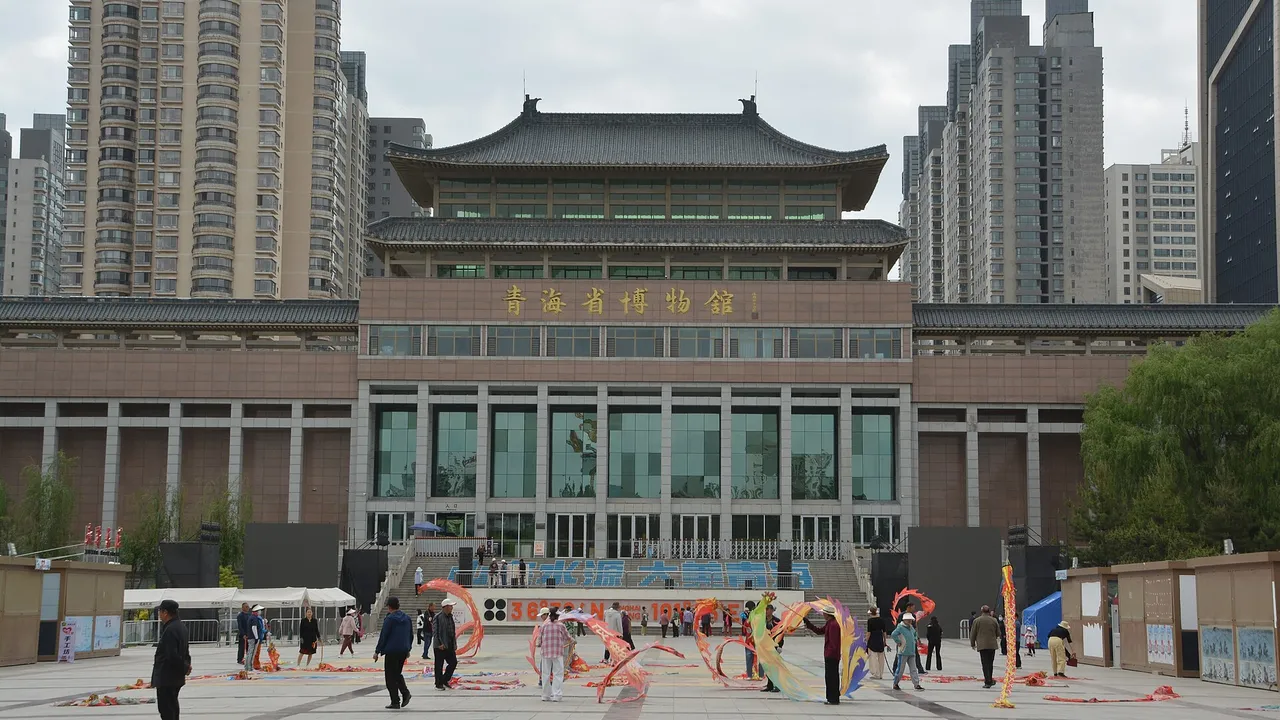
| 10:30 | Qinghai Provincial Museum: The Upper Yellow River in Painted Clay |
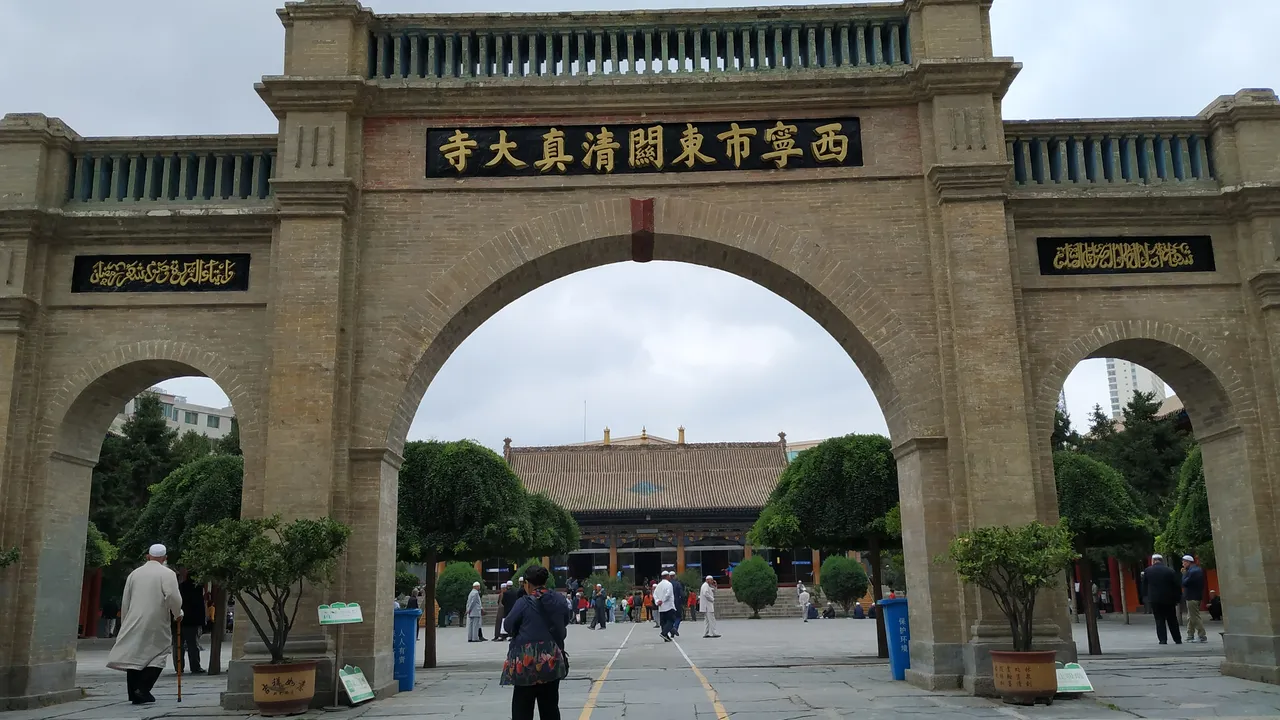
| 14:30 | Xining Dongguan Great Mosque: Faith as a Daily Routine |
| 17:30 | Nanshan Park: Boxing Up the Xining Dusk |
The route, stop by stop
People's Park: Where the Plateau Morning Warms Up
People's Park comes first, seen best before the crowds. Early hours belong to locals: tai chi elders by the lake, a chorus rehearsal, the hum of bamboo diabolos, more Xining than any ticketed sight. The lake-and-corridor loop takes about forty minutes under thick shade, the coolest corner of a dry city.
In spring the tulip show turns the grounds into color blocks by the hundreds of thousands, a local festival in all but name. Summer brings the densest canopy, and the lake breeze carries a humidity rare on the plateau, the most comfortable air downtown.
The east greenhouse and bonsai garden stay green all winter; families rent four-seat carts around the lake while elders claim the benches and sunning cats. Left of the main gate, a lane of old noodle shops serves the beef noodles locals default to at noon.
Qinghai Provincial Museum: The Upper Yellow River in Painted Clay
The museum is the shortest path to understanding Qinghai. The permanent show opens in prehistory, where Majiayao painted pottery flows with lines unimaginable for hands four thousand years old; the water ripples and spirals on the jars are the upper Yellow River as its makers saw it. Deeper in, the Tibetan Buddhist gallery packs gilt statues and thangkas with detail that slows every step.
Bilingual labels run throughout, and two hours covers the spine. If you must cut it short, take the pottery section first, then the ethnographic hall, where the province's many peoples are more concrete than any guidebook.
End at the museum's design counter: pottery-motif scarves, bookmarks and magnets pocket four-thousand-year-old lines from a few dozen yuan, souvenirs with better provenance than any scenic-gate trinket.
Xining Dongguan Great Mosque: Faith as a Daily Routine
The Dongguan Great Mosque ranks among the Northwest's best-known mosques; its Chinese-style gateway joins Han timberwork to Islamic ornament in a silhouette unmistakably of this region. Outside prayer hours the courtyard welcomes visitors, and the display boards on the mosque's history and Muslim daily customs deserve ten minutes before you study the buildings.
On Fridays at midday worshipers flood the surrounding streets and traffic pauses briefly. On ordinary days the Muslim quarter outside rewards a stroll: dried-fruit shops, fried sanzi dough stalls and halal bakeries in a living streetscape, not a stage set.
With time to spare, stretch the surrounding blocks toward evening: the fried-dough vats reheat at four, sanzi crisp enough to shed flakes, best seated over a sansaowan bowl of tea, the loosest close this culture line offers.
Nanshan Park: Boxing Up the Xining Dusk
Nanshan Park rides the slope south of downtown, a half-hour climb on foot, or take a taxi to the mid-slope gate and walk the rest. Before sunset the light sweeps the Huangshui valley, laying the city's full east-west axis at your feet; darkness comes late on the plateau, with the brightest hour after 7:30 pm.
The summit is open and windy, and the viewing platform is the default closing shot. Once the city's river of lights switches on, head down while pairs of headlights still mark the road, as the path lamps sit far apart.
| Getting around |
|
| Budget | Most stops are free; budget about RMB 100-180 pp for meals and buses, with museum entry free by reservation. |
| Best time | May to October is steadiest; at roughly 2,200 m above sea level, keep day one unhurried and take midday sun protection and water seriously. |
FAQs
How do I get around Xining in one day without a tour?
All four stops have direct buses at one to two yuan with QR payment; take taxis when pressed, from flag fare to about fifteen yuan across town. There is no rail transit, but the city is compact, so buses plus walking suffice, with a small buffer for the evening rush.
Do the museum and the mosque charge entry or need booking?
The museum is free but requires real-name booking via its official WeChat account, closed Mondays, with peak-day slots tight, so book a day or two ahead. The mosque is free and unbooked; just skip Friday midday prayers and follow on-site dress and photo rules.
Can the order of the four stops change?
Keep park and museum in the morning, mosque in the afternoon, Nanshan at dusk: museum slots cluster in the morning, the mosque photographs best in afternoon light outside prayer hours, and Nanshan belongs to sunset. If your museum slot is afternoon, swap it with the mosque and shorten the park to one brisk lap.
What should I watch physically on my first plateau day?
At about 2,200 m most people feel only mild breathlessness. Pace yourself on day one, drink plenty of water, skip alcohol, and pack sunscreen and sunglasses for fierce midday ultraviolet. Days and nights differ by nearly ten degrees, so carry a layer; for real headache or nausea, rest and hydrate, and seek care if it worsens.