
Three days from Xining loop Qinghai's two calling cards: day one over Sun-Moon Mountain and down the Daotang River to Qinghai Lake with a Heimahe sunset; day two at dawn for Chaka Salt Lake's windless mirror, starting back by afternoon; day three through Huangyuan Gorge and around the Jinyintan grassland to re-enter Xining from the north.
The whole route runs 2,600 to 3,500 m, and a chartered car is the sanest choice, cheapest split four ways. One rule outranks all: the Chaka mirror belongs to early risers, since wind roughs the lake after 10 am and the Mirror of the Sky degrades into a plain salt pan.
The two highest nights sit at 3,200 m, so a week ahead start drinking more water and banking sleep, more effective than any pill. Stock the car with snacks and a thermos; hunger on the plateau arrives suddenly, and pass and lakeshore shops offer little.
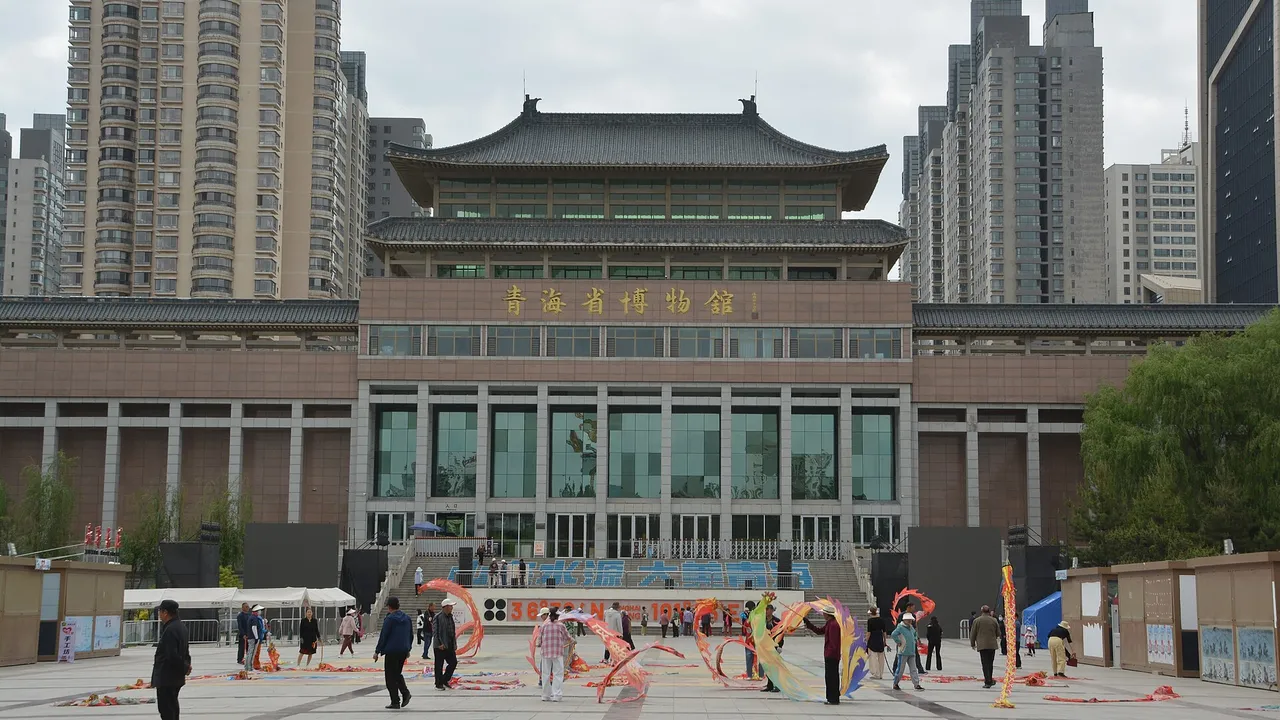
Itinerary at a glance
| 09:00 | Sun-Moon Mountain: Where the Princess Looked Back |
| 11:00 | The Daotang River: China's Backward-Flowing Exception |
| 14:00 | Erlangjian: The First Sight of the Great Lake |
| 19:00 | Heimahe Sunset: The Lake's Golden Half Hour |
| 07:00 | Chaka Salt Lake, the Mirror of the Sky: A Morning That Owns the Reflection |
| 11:00 | The Chaka Salt Sculptures: A Sculpture Park Built of Salt |
| 16:00 | Huangyuan Gorge and Dangar Old Town: The Old Post Station on the Way Home |
| 09:00 | The Jinyintan Grassland: The North Road's Open Close |
| 11:00 | The Atomic City Memorial: The Bomb Story on the Steppe |
The route, stop by stop
Sun-Moon Mountain: Where the Princess Looked Back
Two hours west of Xining on the Qinghai-Tibet highway, Sun-Moon Pass draws the line between farm and range: fields on the east slope, grassland on the west. Legend places Princess Wencheng's last look back at Chang'an here, and the twin pavilions and prayer-flag arrays snap in the wind.
The pass sits near 3,500 m, windy and cold; forty minutes of photos and a flag-corridor walk suffice, with views wider than expected, the route's first real we-are-on-the-plateau signal.
Sun-Moon's ticket covers two small exhibit rooms on Princess Wencheng and the Tang-Bo road, ten minutes of reading that adds a layer to the view; the pass howls so loudly that conversation leans close, and burst mode earns its keep on photos.
The Daotang River: China's Backward-Flowing Exception
Below Sun-Moon Mountain the Daotang River runs west into Qinghai Lake, the exception to China's eastward rivers and the source of its name, flowing backward. In person it is a modest, quiet stream curling through grassland among cattle and sheep, best taken as a short leg-stretch.
Tibetan herder tent camps and horse stands line the small towns; a ten-minute pasture ride is on offer. Thirty to forty minutes here, saving the main hours for the lake.
Erlangjian: The First Sight of the Great Lake
Erlangjian is the lake's most developed south-shore park, a long pier reaching into the water where three sides turn blue and the lake's scale first becomes real. In summer, rapeseed fields spread gold along the shore, the signature frame with the blue water.
The pier walk runs forty minutes to its end, or ride the sightseeing carts. Wind off the lake doubles off its surface, so sunglasses are equipment, not fashion; herder-run flower fields along the south shore offer a near-identical view for those skipping the ticket.
Heimahe Sunset: The Lake's Golden Half Hour
Bed down in Heimahe town and reach the shore half an hour before sunset. On the western shore the lake burns orange-gold, and under low clouds the whole sky catches fire, the lake's most photogenic thirty minutes. The shoreline stretches long; walk south a stretch for thinner crowds.
Heimahe sits near 3,200 m and nights can drop to single digits, so book heated rooms. Eat kang-pot mutton in town, sleep early, the Chaka mirror waits at dawn.
Chaka Salt Lake, the Mirror of the Sky: A Morning That Owns the Reflection
Reaching Chaka before seven is the only guarantee of a windless mirror. At dawn the lake reads as a sheet of pale mercury, clouds, mountains and people all inverted; the earlier you stand there, the fewer the crowds and the smaller the wind. Rent wading covers, walk ten meters out, turn around, and the name explains itself.
The little train reaches the lake's far side, saving three kilometers of walking for photography. Salt crystals bite bare feet, so covers are non-negotiable, and the brine stings eyes badly, rinse with fresh water immediately if splashed.
Dawn at the lake runs three to five degrees colder than town, so wait out of the wind at the visitor center and reach the gate five minutes before opening; beeline for the shore, where morning light gives the salt's texture a relief that noon flattens.
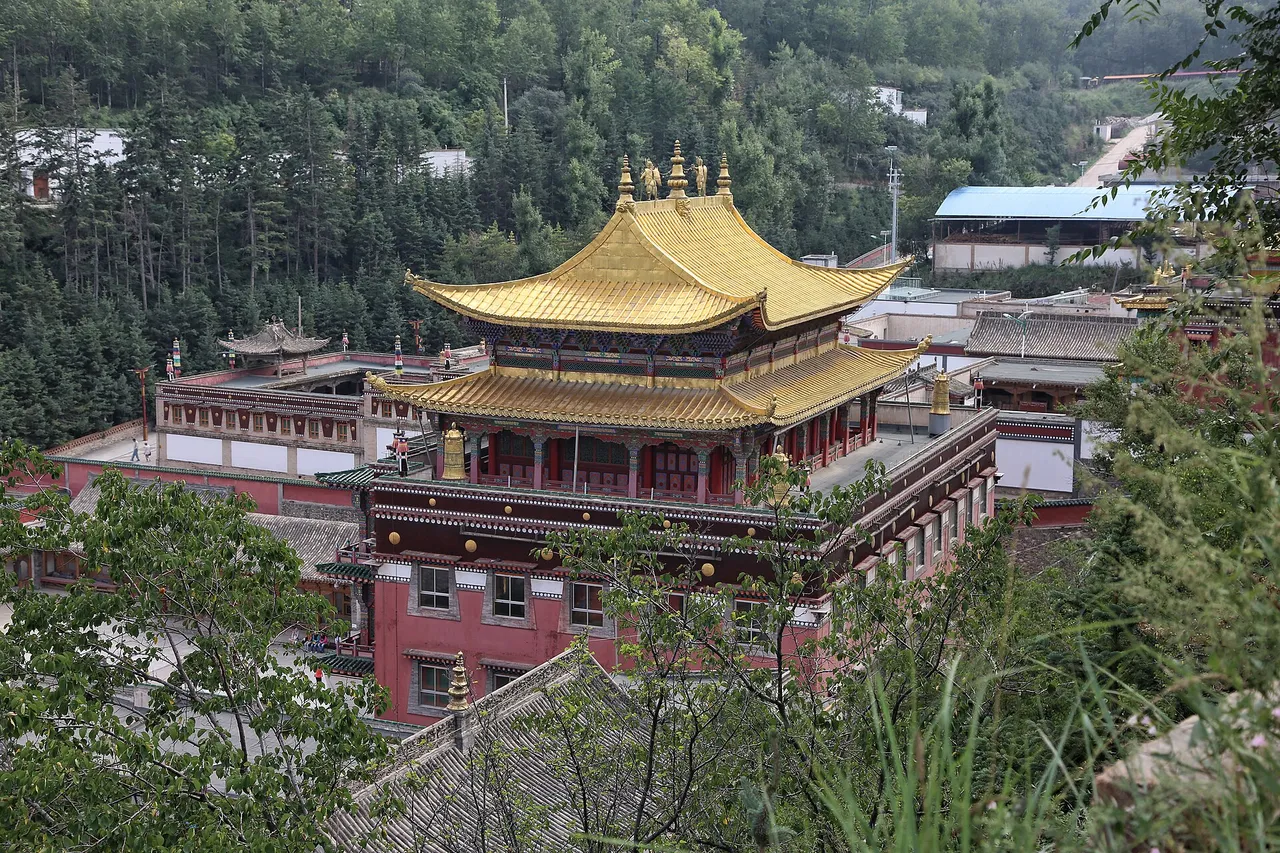
The Chaka Salt Sculptures: A Sculpture Park Built of Salt
Beside the lake, the salt sculptures rise from brine and crystal in great white masses, a Queen Mother of the West, Genghis Khan, an entire park of salt-built figures glowing in sun. Weathering is part of the show: salt melts and cracks, so each season brings new works and repairs.
Half an hour to an hour on foot, highly photogenic with morning light behind you. Lunch follows this stop, then the four-hour drive back toward Xining.
Huangyuan Gorge and Dangar Old Town: The Old Post Station on the Way Home
The return skips the outbound road, cresting into Huangyuan Gorge with danxia-colored walls and the rushing Huangshui alongside. In Huangyuan county seat, Dangar Old Town preserves the stone streets of a former tea-horse trading hub, its temple and archways worth an unhurried walk.
The un-ticketed main streets carry the flavor in an hour, timed neatly for dinner. The town's yogurt and niangpi have strong local reputations, a fitting bonus meal.
The Jinyintan Grassland: The North Road's Open Close
Day three turns north from Huangyuan into Haiyan county's Jinyintan grassland, textbook steppe in summer: ankle-deep grass, sheets of wildflowers, sheep scattered like sesame on a green blanket. Wang Luobin wrote his famous song about a faraway place about exactly this grassland.
Ride a horse or simply stand roadside watching cloud shadows sweep the range. The altitude still tops 3,000 m, so pace any running, and the wind stays assertive.
The Atomic City Memorial: The Bomb Story on the Steppe
Jinyintan's other identity is the former site of China's first nuclear weapons research base, and the Atomic City Memorial records those anonymous years with artifacts and film. The halls are free and clearly routed, an hour or so end to end.
Companions indifferent to the history can wait on the grass outside. This closes the loop; from Haiyan to Xining runs about ninety minutes, landing you in time for an afternoon or evening train.
| Getting around |
|
| Budget | A three-day charter runs RMB 2,400-3,200 per car (split four ways), with tickets, lodging and meals about RMB 900-1,400 pp. |
| Best time | June-August brings rapeseed blooms at the lakeshore with peak crowds and prices; May and September are quiet but windy, pack heavy layers; the Chaka mirror rides on morning calm. |
FAQs
How do I arrange a three-day charter, and what price is fair?
Hotel desks and licensed platforms both arrange charters; sign a simple contract clarifying fuel and the driver's room and board. RMB 2,400-3,200 for three sedan days is fair, and quotes far under market invite mid-trip surcharges. Exchange contacts with the driver before departure for easy changes.
Do Chaka Salt Lake tickets and the little train need booking?
Entry runs about sixty yuan, worth booking online in season to skip lines, walk-up fine off-season; the train sells on site, roughly fifty round trip. The mirror depends on weather, not tickets, arriving only on windless mornings, so placing Chaka at dawn is the only reliable play.
Which day is hardest, and how can the plan flex?
Day two is the grinder: dawn at Heimahe, hard walking at Chaka, then a four-hour drive. Tired groups can add a night in Chaka town, returning unhurried on day three with Jinyintan trimmed, or sleep in Chaka the first night, catch the dawn mirror, and return directly, cutting the dogleg.
How do I handle altitude on this route?
The route runs 2,600-3,500 m with mild breathlessness and head fullness for most. Sleep well beforehand, drink water over alcohol, move slowly at passes and shores, and carry a portable oxygen can and ibuprofen, resting first when headaches bite. The pace is brisk; anyone with heart or lung conditions should consult a doctor first.