
Five days is the comfortable length for Xining and the lake line: two days walking the 2,200 m city, museums, mosque, snack streets and parks, while the body acclimatizes; day three adds Ta'er and Huangyuan; days four and five run the classic Qinghai Lake and Chaka loop.
Versus the three-day sprint, the five-day version spreads the altitude gain, clearly lowering sickness risk and deleting the night drive between Heimahe and Chaka. The extra cost buys city nights and charter days, exchanged for composure.
Pack smart on the five-day line: leave the big suitcase at the hotel and carry a backpack through the loop with two nights of clothes and toiletries. The heavy coat, gloves and hat needed at both Heimahe and Chaka ride in the outer layer, no digging required.
Itinerary at a glance
| 09:00 | The Dongguan Great Mosque: Day One's Cultural Base Tone |
| 11:00 | Qinghai Provincial Museum: Background for the Whole Trip |
| 18:30 | Shuijing Lane and Mojia Street: A Stomach's First-Night Acclimatization |
| 09:30 | People's Park and Nanshan Park: The City's Second Breath |
| 08:30 | Ta'er Monastery: Day Three's Headline |
| 14:00 | Dangar Old Town: A Huangyuan Afternoon |
| 09:00 | Sun-Moon Mountain and Erlangjian: The Loop Opens |
| 19:00 | A Night in Heimahe: Charging for Chaka |
| 08:30 | Chaka Salt Lake, the Mirror of the Sky: Morning Mirror and Salt Sculptures |
| 15:00 | The Return and a Nanshan Park Close |
The route, stop by stop
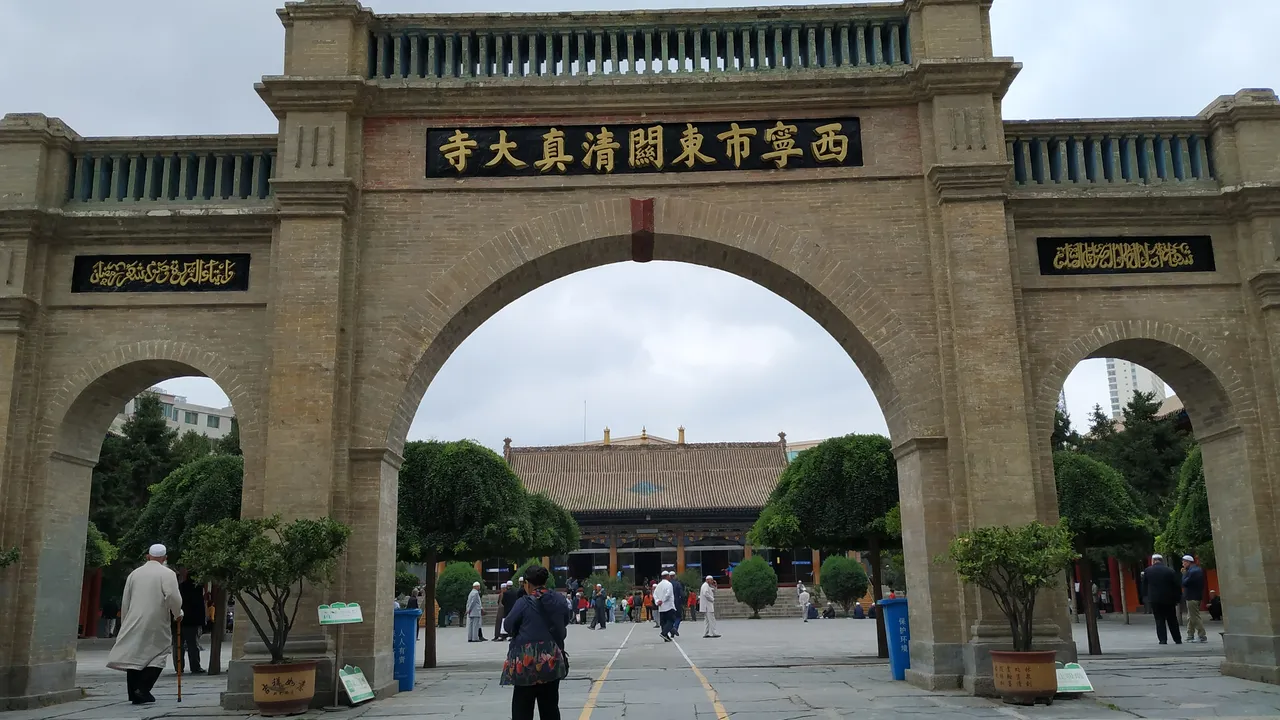
The Dongguan Great Mosque: Day One's Cultural Base Tone
Day one opens at the Great Mosque to read the city's plural base color first: a Chinese gateway framed against an Arab-style dome, exhibition rooms running six centuries of the Hui community, and the surrounding Muslim blocks of dried-fruit and bakery stalls for an easy circuit.
An hour suffices, morning light suiting the facades best; skip Friday midday prayers.
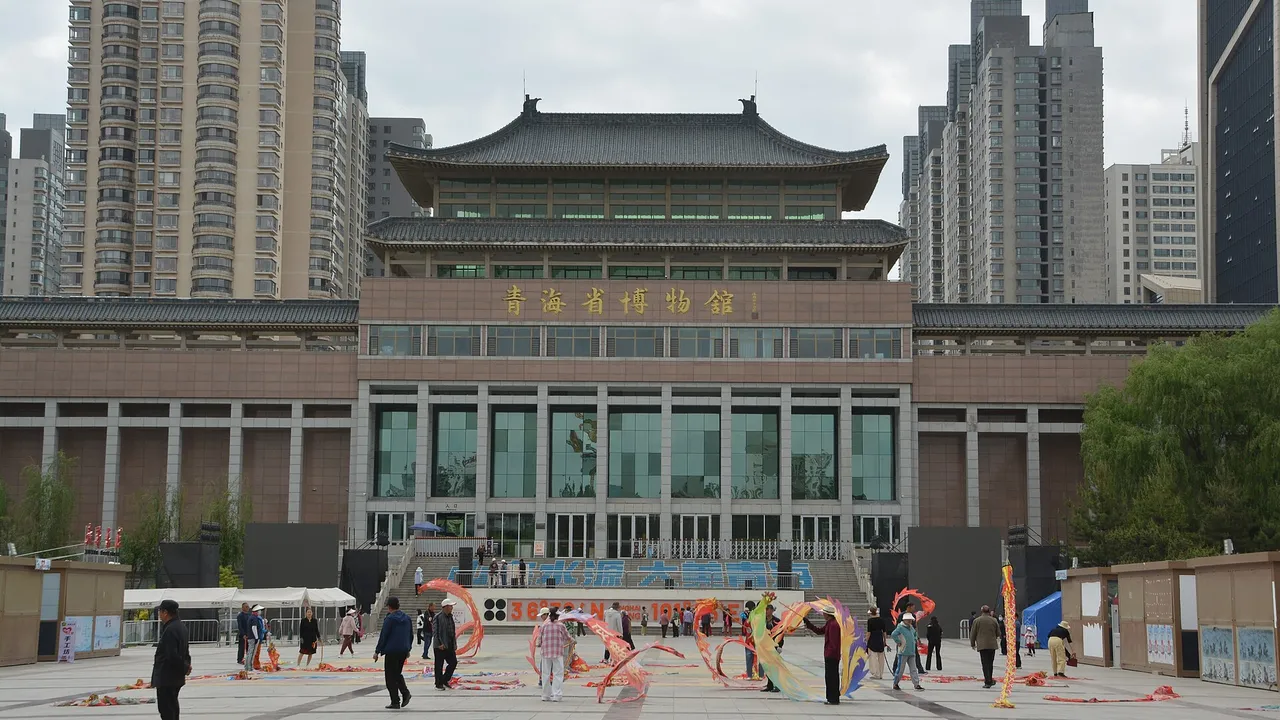
Qinghai Provincial Museum: Background for the Whole Trip
The first afternoon before lunch goes to the provincial museum, where Majiayao pottery, the Tang-Bo road and the ethnic galleries raise the framework of Qinghai's story. Everything seen later at Ta'er, Dangar and Sun-Moon Mountain finds its footnote here.
Two hours covers the spine with the pottery section starred; free by booking, closed Mondays.
The pottery hall allows flash-free shooting, texture clearest in side light; a free themed talk runs each season, times posted at the desk, and joining beats reading alone by a wide margin.
Shuijing Lane and Mojia Street: A Stomach's First-Night Acclimatization
Night one dines around Mojia Street and Shuijing Lane, niangpi, tianpei, hand-pulled mutton and yogurt in one sitting. On the first plateau night eat to seven-tenths and keep meat moderate, giving the stomach its own acclimatization.
The two lanes sit adjacent and link on foot; an after-dinner loop around Central Square aids digestion before an early night.
People's Park and Nanshan Park: The City's Second Breath
Morning two visits People's Park for local morning life and lakeside shade; the afternoon climbs Nanshan Park, whose platform reads the whole city and the Huangshui valley, a gentle rehearsal for the altitudes ahead.
Both parks are free, three hours combined; the Nanshan path tops out in half an hour, taken slowly.
Ta'er Monastery: Day Three's Headline
Day three starts early for Ta'er in Huangzhong, seeing the Great Golden Tiled Hall and butter-sculpture hall before the coaches land. The three arts, prayer wheels and debating courtyard fill a complete two-and-a-half-hour visit, the first live scene of Qinghai's human story.
Lunch at the gate town after, with the afternoon steering toward Huangyuan.
Ta'er's restrooms sit at the entrance service area, so go before entering; slopes and steps everywhere call for grippy soles, and stone lanes turn slick after rain. Small kiosks between halls pour hot milk tea at ten yuan a cup, worth it when tired.
Dangar Old Town: A Huangyuan Afternoon
The afternoon reaches Dangar old town in Huangyuan, where tea-horse streets, lanterns and the city-god temple fill an hour or two of slow walking. This is the five-day plan's only old town, bought with the composure the sprint version lacks.
The town is free with small halls charging; overnight in Huangyuan or push to Xihai town, depending on tomorrow's route.
Sun-Moon Mountain and Erlangjian: The Loop Opens
Day four opens the loop properly: over Sun-Moon Pass in the morning to read the farm-range divide, down the Daotang River to the south shore, meeting the great lake at Erlangjian by noon. After two days of acclimatization, 3,200 m feels clearly lighter.
An hour covers the pier's full length; the afternoon drifts along the shore to Heimahe for a lakeside sunset.
Erlangjian's carts run only in season, off-season the pier goes entirely on foot; Tibetan-dress photo stands line the pier, haggle to under fifty yuan for portraits, and changing is easier in the thin hours.
A Night in Heimahe: Charging for Chaka
Sleep in Heimahe over kang-pot mutton and noodle soup. Step out at night for stars, the plateau Milky Way visible to the naked eye and worth ten minutes of cold. Early bed follows, with sunrise at 6:30 or a direct push to Chaka.
Book heated rooms ahead; nights run cold, so make hot-water washing quick.
Chaka Salt Lake, the Mirror of the Sky: Morning Mirror and Salt Sculptures
Day five's morning belongs to Chaka, entering at 8:30 to catch the day's calmest water even after missing dawn. Rent wading covers, ride the little train deep in, turn and look at the reflections; the salt sculptures stand lakeside, white giants of Genghis Khan and the Queen Mother of the West glowing in sun.
Wind rises after ten and the mirror fades, so spend the early hours hard and leave the gate before lunch.
Chaka's rinse point stands at the top of the wading pier, so flush shoes and cuffs with fresh water before re-entering the car; the little train's last run shifts with sunset, stretching to 7:30 in season, leave ten minutes of slack for it.
The Return and a Nanshan Park Close
The afternoon returns from Chaka, four hours or so, reaching Xining by early evening. With strength left, climb Nanshan Park once for the city sunset and first river of lights as the five-day coda; running empty, head straight to the hotel, no forcing.
The five-day plan's wisdom is its buffer: the last evening holds nothing mandatory, leaving slack for flights and trains.
| Getting around |
|
| Budget | The two-day loop charter runs RMB 1,600-2,200 per car; all-in about RMB 1,800-2,800 pp including four nights. |
| Best time | May-October overall; the five-day plan's edge is acclimatizing two city days before hitting 3,200 m, exactly what the three-day version skips. |
FAQs
How do I choose between five days and three?
Follow body and pace: three days run tight for the fit and time-poor; five days acclimatize two city nights before altitude, lowering sickness risk and padding photo hours. With elders, children, or a first plateau trip, take the five.
Can Ta'er and Dangar old town share one day?
Yes: two hours at Ta'er plus an hour's drive reaches Huangyuan by noon, two hours in Dangar in the afternoon, lodging by dusk. The cost is moving the provincial museum into the first two days; build the schedule backward from there.
Should Chaka Salt Lake be morning or afternoon?
Morning, and the earlier the better: before ten the water runs calm and the light soft, maximizing both mirror and photographs. Afternoon brings wind and white overhead light, recommended only when the schedule leaves no choice.
How do I keep the five days near RMB 2,000?
Three levers: split the charter four ways; take chain budget hotels downtown (around RMB 200 a night); buy only the core tickets (Ta'er, Erlangjian, Chaka) since museums and parks are free. Eighty yuan a day per person eats very well.