
Xining's heritage depth lives beyond its museums: Ta'er is a mother monastery of the Gelug school, Dangar old town anchored the tea-horse trade, the Daotang River below Sun-Moon Mountain carries Princess Wencheng's legend, and the Yellow River at Guide runs green and clear, upending every mental image. Three days link these into half a history of Qinghai.
The route runs clockwise: day one downtown (provincial museum, Great Mosque), day two Ta'er then Dangar over Laji Pass to sleep in Guide, day three the old town and geological park before crossing back to Xining. A charter spares all friction; public transport changes once each at Huangyuan and Guide.
The heritage line alternates heavy and light: Ta'er and the geological park each take half a day, while Dangar, Yuhuang and the wetland stay easy stops to slow down in. Read a few pages of Northwestern ethnic history before setting out, or finish a related history program, and the road grows richer.
Itinerary at a glance
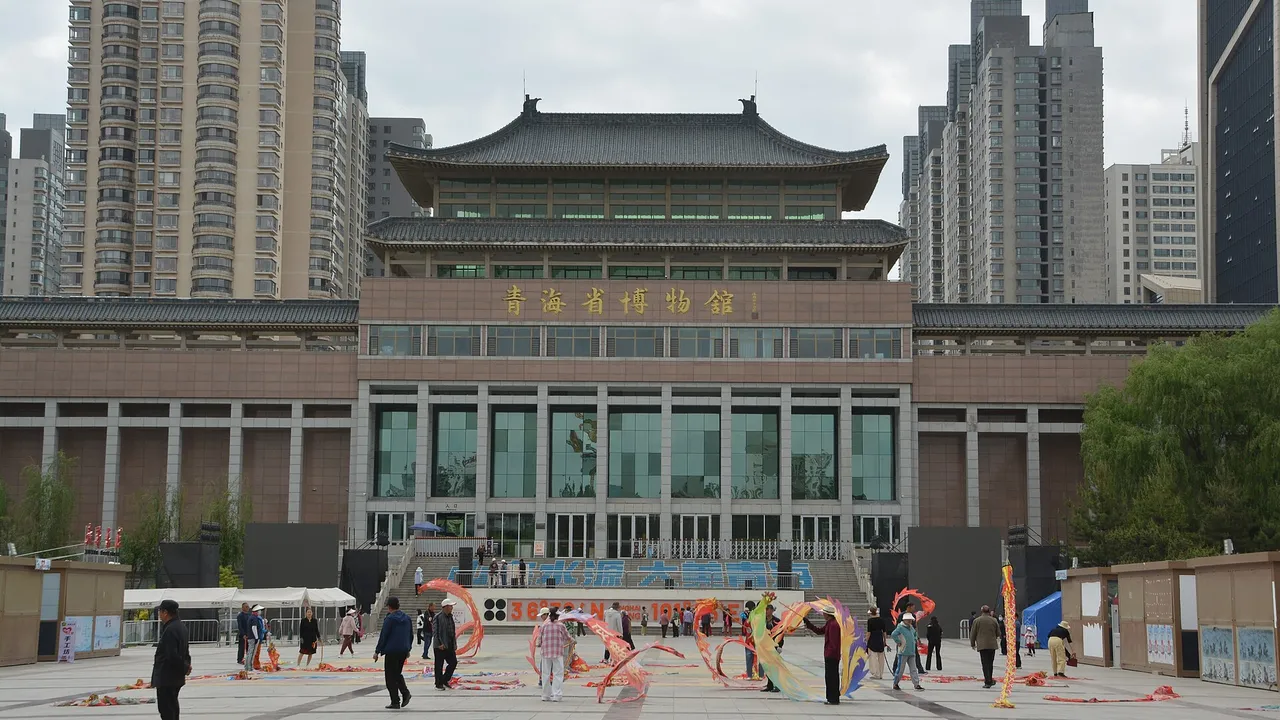
| 09:00 | Qinghai Provincial Museum: Reading the Province First |
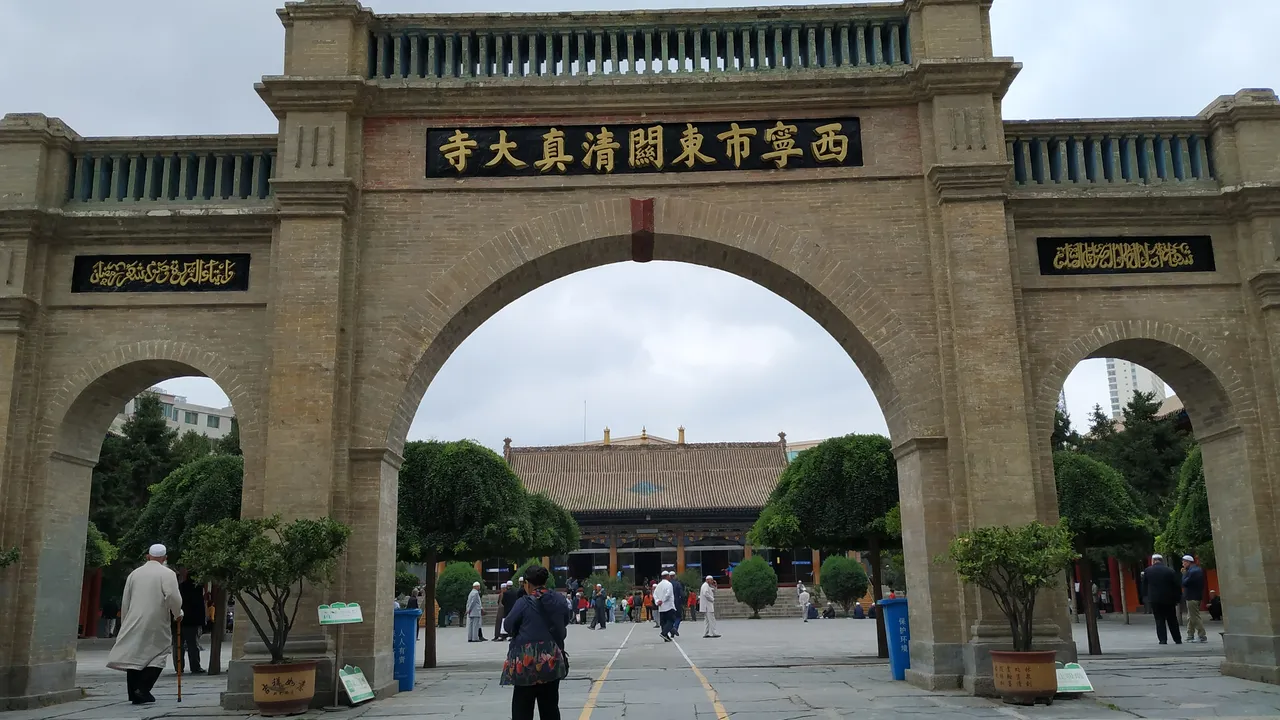
| 13:30 | Xining Dongguan Great Mosque: The City's Other Inheritance |
| 08:30 | Ta'er Monastery: A Gelug Mother House in the Morning |
| 13:30 | Dangar Old Town: A Living Specimen of the Tea-Horse Trade |
| 15:30 | Laji Pass: Forty Minutes over the Ridge |
| 17:30 | First Sight of Guide: Where the Yellow River Runs Clear |
| 09:00 | Guide's Yuhuang Pavilion: The Heart of a Ming County Town |
| 11:00 | Guide National Geological Park: The Seven-Color Peaks of Ashigong |
| 15:00 | The Yellow River Clear Wetland Park: A Farewell to the River |
The route, stop by stop
Qinghai Provincial Museum: Reading the Province First
Opening at the museum fits the whole trip with a pair of glasses: Majiayao pottery motifs, maps of the Tang-Bo road, ethnic dress and ritual objects. Once these register, Ta'er's murals, Dangar's trade houses and Guide's ferry crossing stop being pretty scenery.
Two hours covers the spine, pausing at the pottery and the Tang-Bo road sections. Bilingual labels run throughout; entry is free but booked, and Monday's closure belongs outside your plan.
Xining Dongguan Great Mosque: The City's Other Inheritance
The afternoon returns downtown to the Great Mosque, whose history reaches the Ming; today's Chinese gateway and rooflines stack generations of repair, six centuries of material witness for the Northwest's Muslim community. The exhibition room runs Hui migration history and Xining's urban story on one line.
An hour suffices, focused on architectural detail and the displays. Stroll the Muslim blocks afterward, where dried-fruit shops and halal bakeries supply the city's base note.
Ta'er Monastery: A Gelug Mother House in the Morning
Day two opens early at Ta'er in Huangzhong, entering ahead of the tour buses. The hillside complex grew for six centuries; the gold-leafed stupa of the Great Golden Tiled Hall is its devotional heart, while in the chilled butter-sculpture hall monks' yak-butter figures achieve a fineness unbecoming of fat. Murals and applique hang through the courts, the three arts together.
Turn wheels clockwise, keep halls camera-free, and shoot along the eaves and lanes instead. Two and a half hours out the gate matches the onward car to Huangyuan.
The side lanes repay more than the main road: mani stone heaps at corners, faded wall murals and cats sunning on windowsills make up the Ta'er no ticket covers. Follow a young monk in maroon robes for a stretch and courtyards closed to the public often appear at least from outside.
Dangar Old Town: A Living Specimen of the Tea-Horse Trade
After lunch the car reaches Dangar old town in Huangyuan county, once the junction of the Tang-Bo road and the southern Silk Road, a treaty-era trading port. Under the gateway arch, stone streets keep their trade houses, temples and yamen intact, with lanterns hung under the eaves, the town's signature craft.
The main streets are free; small halls like the city-god temple ticket separately. An hour covers the spine, half an hour more for the trade-house sites and lantern museum.
Laji Pass: Forty Minutes over the Ridge
The road from Dangar to Guide climbs Laji Pass near 3,800 m, prayer flags spread in color across the wind. The ridge has always divided farm from range; look south from the top and the land changes character, the Yellow River valley of Guide already under the clouds.
Stay twenty to forty minutes for photos, flag-turning and an easy altitude breather. Wind and cold demand a coat in every season, and mild head fullness is normal, easing on descent.
First Sight of Guide: Where the Yellow River Runs Clear
Descending into Guide county town, the first order is the riverbank: this stretch of the Yellow River carries little silt and runs jade clear, the famous line about clear water at Guide posted right there. Dusk softens the valley light; walk the riverside path among locals out for their evening loop.
The town is small, with lodging and meals along the river. Try Guide's soft pear juice and long-handle pears, the local fruit's calling cards, at dinner.
Guide's Yuhuang Pavilion: The Heart of a Ming County Town
Day three opens with Guide's old town. The Yuhuang Pavilion anchors it, a Ming brick-and-timber tower on a city-wall base, with the whole town and the river in view from the top. Wall remnants and old streets ring a complete Ming county-seat plan, a rarity on the Northwestern frontier.
Twenty minutes up top, an hour inside the walls. Confucian, Buddhist and Taoist buildings share one axis, and that coexistence is itself physical evidence of the region's history.
The pavilion's guides are mostly local elders who fold Guide's old stories into their timberwork talk, twenty minutes well spent; the top is windy, so mind the camera strap, and the river reads far more dimensional from above than from the bank.
Guide National Geological Park: The Seven-Color Peaks of Ashigong
The late morning belongs to the national geological park, where the Ashigong peaks pair danxia landforms with the river valley, red, orange and ochre strata stacking in sunlight, the most photogenic stop of the three days.
Walkways run two to three kilometers, ninety minutes on the main line. Noon light washes the colors white; before eleven or after three they saturate.
The Yellow River Clear Wetland Park: A Farewell to the River
Before the drive back, the wetland park closes the loop: reeds spread along the river, waterbirds cross against the far hills, and the old waterwheel and ferry site recall a key crossing of the upper Yellow River. A boardwalk stretch returns the heritage line to nature.
The wetland is free, forty minutes to an hour. The return over Laji Pass runs about two and a half hours, landing in Xining for dinner.
| Getting around |
|
| Budget | Two chartered days run RMB 1,600-2,200 per car, with tickets, lodging and meals about RMB 800-1,200 pp; museum and mosque are free. |
| Best time | May-October gives the surest roads; monasteries and old towns ignore seasons, though winter leaves ice on the passes. |
FAQs
Is public transport realistic on this heritage loop?
Yes, with transfers: direct buses reach Ta'er, and both Huangyuan and Guide run coaches whose frequency floats with the season. Two of three days cross county lines, and waits eat hours, so charter for groups and consider splitting Xining day-tours for solo travelers.
Do Ta'er, Dangar and Yuhuang Pavilion all need booking?
Ta'er runs about seventy yuan, online in season or on site; Dangar's streets are free with small halls ticketed at the door; Yuhuang sells at the gate for a few tens. None require real-name booking, the provincial museum being the lone must-book.
Why does this route use Laji Pass instead of Sun-Moon Mountain?
Laji is simply the direct road to Guide; Sun-Moon Mountain would add a hundred-kilometer detour better saved for the lake-and-Chaka loop. The passes differ in mood, Laji rugged, Sun-Moon open; see both only by merging them into a five-day grand loop.
Where is the route's highest point, and what precautions apply?
Laji Pass near 3,800 m is the high point; cap stays at forty minutes, move gently, dress warm. Everywhere else runs 2,200-2,600 m at mild intensity. If real headache or palpitations hit at the pass, return to the car for oxygen and rest, descent normally resolves it.