
Seven days is the complete answer for the Xining direction: the first three never leave the 2,200 m circle, exhausting the city's parks, mosque, museum, snack streets and TV tower while the body fully adapts; day four runs out and back to Guide's clear Yellow River; days five to seven loop Qinghai Lake and Chaka, returning over the Jinyintan.
The deep itinerary's value is slack: every core sight sits in the freshest morning hours, afternoons stay light, and any stop can stretch on demand. On the plateau, comfort runs seven parts pacing to three parts luck.
Pack the seven days in layers: the plateau's swing runs three seasons a day, so bring a fleece, a light down and a wind shell, all three rotating through the day. Laundry assumes towns, so quick-dry synthetics beat cotton by a mile.
Itinerary at a glance
| 09:00 | People's Park: Starting from the Local Morning |
| 14:00 | The Dongguan Great Mosque: Setting Day One's Tone |
| 18:30 | Mojia Street and Shuijing Lane: First-Night Mouth and Stomach |
| 09:30 | Qinghai Provincial Museum: Loading the Trip's Background Score |
| 19:00 | The Xining TV Tower, Plateau Pearl: Night View, First Lesson |
| 08:30 | Ta'er Monastery: Day Three's Headline |
| 08:00 | Guide National Geological Park: The Seven-Color Peaks of Ashigong |
| 13:30 | Guide's Yuhuang Pavilion and the Riverbank: A Clear-Water Afternoon |
| 09:00 | Sun-Moon Mountain: The Loop's First Gate |
| 13:30 | Erlangjian: The Formal Meeting with the Great Lake |
| 19:00 | Heimahe: Sunset, Stars and One Good Night |
| 08:30 | Chaka Salt Lake, the Mirror of the Sky: Mirror, Train and Wading Covers |
| 11:00 | The Chaka Salt Sculptures: An Open-Air Museum of White Giants |
| 10:00 | The Jinyintan Grassland and the Atomic City: The Return's Last Lesson |
The route, stop by stop
People's Park: Starting from the Local Morning
The first stop chases no distance: People's Park shows how Xining starts a day, tai chi by the lake, a chorus, spinning diabolos, with spring tulips laying the grounds in color blocks. One forty-minute loop reads the plateau's dry crispness like a first page of instructions.
The morning park is the loosest hour of the day; do not rush it. The six days ahead will thank today's slowness.
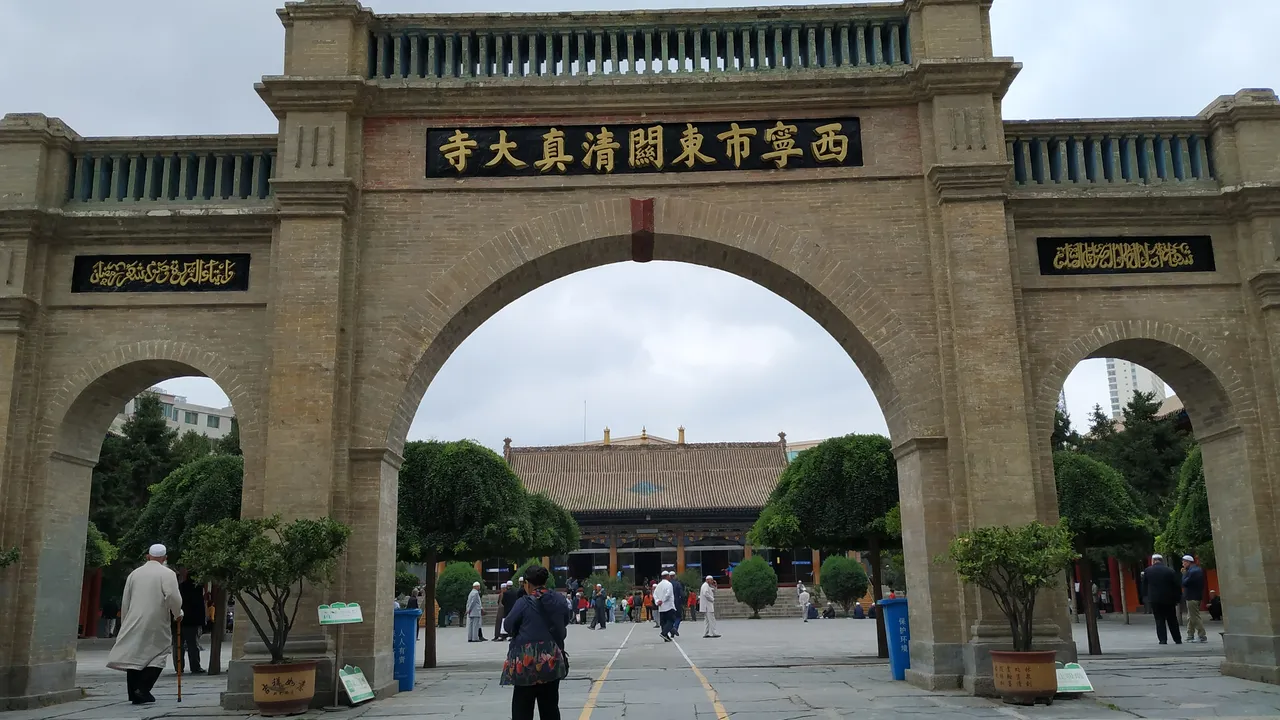
The Dongguan Great Mosque: Setting Day One's Tone
The afternoon reads the Great Mosque, planting the city's plural base color first: a Chinese gateway against an Arab-style dome, and exhibition rooms of Hui community history worth slow reading. The Muslim blocks outside run dried-fruit and fried-dough stalls all the way to dinner.
Only two light stops on day one is deliberate: the first plateau day should not spend its legs on transit.
Mojia Street and Shuijing Lane: First-Night Mouth and Stomach
Dinner goes to Mojia Street and Shuijing Lane: niangpi, tianpei and sheep-intestine noodles to open, hand-pulled mutton in moderation, yogurt to close. Seven-tenths full on the first plateau night is iron law, tonight's restraint capitalizing the six days of meat ahead.
Walk the streets half an hour after eating and turn in early; the first night's sleep sets tomorrow's state.
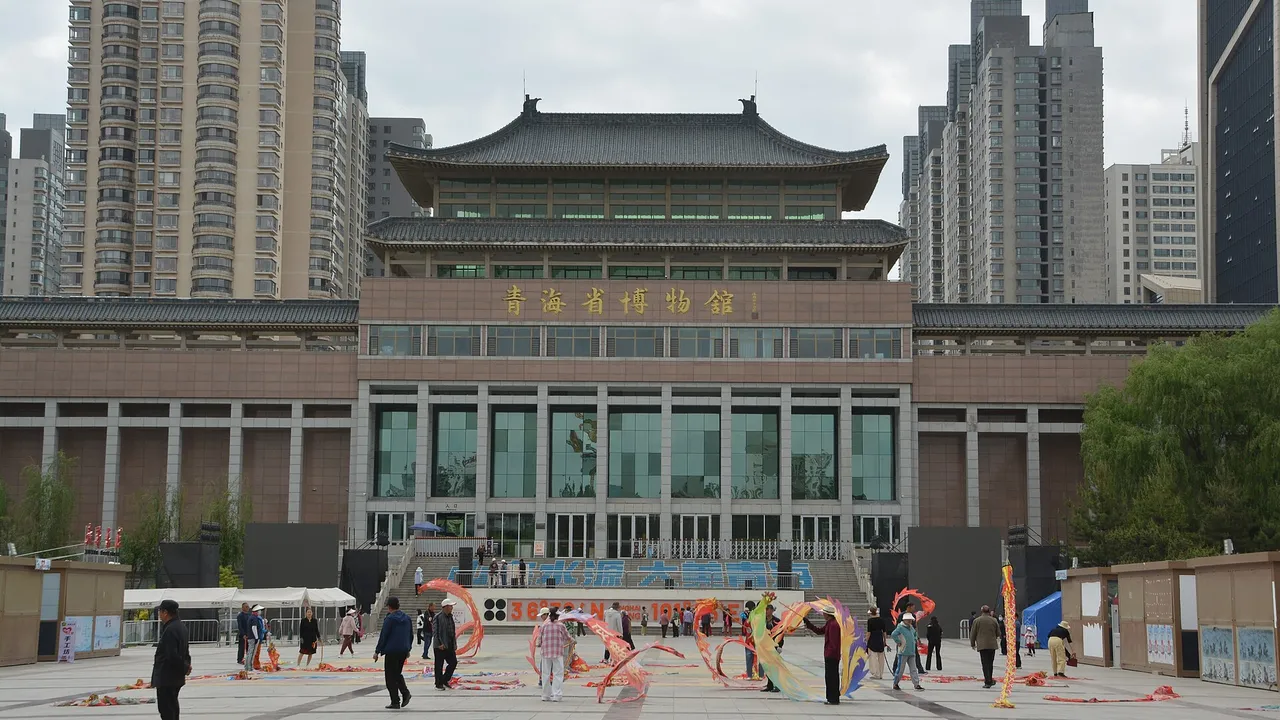
Qinghai Provincial Museum: Loading the Trip's Background Score
Day two's morning soaks in the museum: Majiayao water ripples, the Tang-Bo road relief map, Tibetan Buddhist art and ethnic dress halls, spreading Qinghai's space and time in one pass. Everything the next seven days show at Ta'er, Dangar, Sun-Moon Mountain and Guide rehearses here.
Two to three hours, starring the pottery and ethnic sections; free by booking, closed Mondays, kept clear of your dates.
The Xining TV Tower, Plateau Pearl: Night View, First Lesson
Evening two rides the Plateau Pearl tower in the best window between sunset and switch-on: read the Huangshui valley's geography first, then watch ten thousand lights unroll along it. Near two hundred meters up the wind is real, plateau night just outside the glass.
Forty minutes and down, dinner in the east end. One tower night gives every later night, from Nanshan, the lakeshore, the salt pan, its frame of reference.
Ta'er Monastery: Day Three's Headline
Day three belongs to Ta'er: set out early, enter ahead of the coaches, take the Great Golden Tiled Hall, butter-sculpture hall, murals and applique slowly, and turn a full clockwise circuit of the wheels. Beyond the two-and-a-half-hour spine, the lanes and eaves deserve half an hour of wandering.
Return downtown for an afternoon of rest, charging the four days ahead. A deep itinerary must hold such half-day gaps in its middle.
Ta'er's incense and resin run thickest at dawn, the halls hushed during morning recitation, the golden hour for photographs; the butter-sculpture hall queues short, and reading the case notes before looking up speeds understanding greatly.
Guide National Geological Park: The Seven-Color Peaks of Ashigong
Day four runs out and back to Guide, opening at the geological park: danxia peaks in red, orange and ochre framed against the Yellow River valley, walkways of two to three kilometers, colors deepest before eleven. These strata and the museum's pottery came from one land, two time scales annotating each other.
No shade inside, hat and bottle mandatory; ninety minutes on the main line lands you at lunch.
Guide's Yuhuang Pavilion and the Riverbank: A Clear-Water Afternoon
The afternoon climbs the Ming-era Yuhuang Pavilion first, brick and timber on a city-wall base with town and river in view, then follows the riverside path to watch jade-clear Yellow River water pass underfoot. The saying about clear water at Guide only lands while standing on the bank.
Forty minutes for the pavilion, the riverbank at will; the drive back to Xining takes about two hours by dusk.
Sun-Moon Mountain: The Loop's First Gate
Day five opens the loop. Over Sun-Moon Pass the farm-range divide reads at a glance, Princess Wencheng's legend and snapping prayer flags all in the wind. After four days of acclimatization, 3,500 m is merely a height that taxes a few breaths at the photo stop.
Twenty to forty minutes at the pass, then down along the backward-flowing Daotang River, steppe and sheep slowing the rhythm.
Erlangjian: The Formal Meeting with the Great Lake
The afternoon brings the first complete view of Qinghai Lake on Erlangjian's pier: water on three sides, a gold rim of rapeseed in season, blue in layers. Summer crowds thin noticeably toward the pier's far end, worth ten extra minutes of walking.
The shore sits at 3,200 m, walk slow and rest often; reach Heimahe before dusk and give the sunset to the lakeshore.
The pier's midsection holds the least wind, the rest point of choice for families with elders and children; prayer flags over water at the pier's end make the classic frame, best lit after four, so check sunset time before heading out.
Heimahe: Sunset, Stars and One Good Night
Overnight in Heimahe, the loop's classic base. The lakeshore chills fast after sunset, so take the gold-red skyline then head in for kang-pot mutton; step out after ten for ten minutes of naked-eye Milky Way, worth the cold.
Book heated rooms ahead; a light first night's insomnia at 3,200 m is normal, no cause for alarm.
Chaka Salt Lake, the Mirror of the Sky: Mirror, Train and Wading Covers
Day six's morning belongs to Chaka. When the calm dawn water inverts clouds and people alike, rent wading covers, walk ten meters out, turn around, and the Mirror of the Sky explains itself. The little train reaches the deep end, all three saved kilometers spent on photographs.
Wind roughs the mirror after ten, so press the core experience into the morning; salt bites bare feet, and brine in the eyes calls for an immediate fresh-water rinse.
The Chaka Salt Sculptures: An Open-Air Museum of White Giants
The lakeside salt sculptures are Chaka's second face: great figures of the Queen Mother of the West and Genghis Khan glowing coldly in sun, their weathering and repairs a true growth ring. Half an hour to an hour on foot, with morning's forward light raising the hit rate of every frame.
The sculpture zone is included in lake entry; the white pan reflects fiercely, so pull exposure down a stop and keep sunglasses on throughout.
The Jinyintan Grassland and the Atomic City: The Return's Last Lesson
Day seven turns north from Chaka through the Jinyintan grassland, summer steppe textbook-open, wildflowers, sheep and cloud shadows laying the last day in slow motion. Wang Luobin's song about a faraway place was written about exactly here.
Stay half an hour to an hour on the steppe, then take the Atomic City Memorial at Haiyan, the grounds of China's first nuclear weapons research base, its unnamed people the heaviest stroke beyond all the lake scenery. Ninety minutes of expressway closes the week in Xining.
| Getting around |
|
| Budget | The three-day loop charter runs RMB 2,400-3,200 per car; seven days all-in about RMB 2,800-4,200 pp with six nights. |
| Best time | May-October overall; the seven-day plan climbs altitude slowest, the steadiest choice for elders, children and first-timers on the plateau. |
FAQs
Which days run highest on the seven-day plan, and how is the pacing set?
The 3,200 m night at Heimahe is the trip's highest sleeping altitude, placed on days five and six after four days of adaptation. The pacing rule is one hard morning per day with light afternoons and pass stops capped at forty minutes, the lowest-risk arrangement on offer.
What does the seven-day version add over five, and is it worth it?
It adds a day and a half of city plus a full day at Guide: the city read finer, altitude taken slower, and Guide's river and danxia freed from the day-trip squeeze, for roughly RMB 500-800 more. If time allows, worth it; seven days is the floor for doing this line unhurried.
With elders aboard, which parts need special care?
Four things: keep windbreakers handy at passes and shores; book heated rooms at Heimahe with a portable oxygen can; take Ta'er and the geological park's stairs slowly with frequent rests; and cut any afternoon that follows a bad morning, the seven-day slack exists for exactly that.
For the three-day charter, how do I confirm the driver is reliable?
Three checks: willingness to sign a simple route-and-price sheet; familiarity with Heimahe and Chaka lodging and gate locations; and steady driving with proactive altitude advice. Walk through the three days' stops verbally before departure; a good driver volunteers what you missed.