
Xining is a borderland hinge where cultures stack, and one day can cover three very different bodies of faith and learning: the Tibetan Buddhist Ta'er Monastery, the knowledge system of Tibetan medicine, and the Muslim quarter's Great Mosque. The theme is understanding, not just seeing; each stop reserves time for reading and asking.
Ta'er sits in Huangzhong, about forty minutes by car, while the other two lie downtown on bus lines. Plateau sun runs fierce, halls forbid photography, and hats come off indoors; etiquette appears in every stop's tip.
The three stops carry different booking rules, so settle them the night before: buy Ta'er online, book the museum on its official account, and do nothing for the mosque. Fog often hangs over the Huangzhong road mornings and evenings, confirm the mountain route with the driver first.
Itinerary at a glance
| 08:30 | Ta'er Monastery: A Class in Butter Sculpture, Murals and Embroidery |
| 13:30 | Qinghai Tibetan Medicine Culture Museum: A Plateau's Knowledge System |
| 16:30 | Xining Dongguan Great Mosque: A Second Faith's Ordinary Hour |
The route, stop by stop
Ta'er Monastery: A Class in Butter Sculpture, Murals and Embroidery
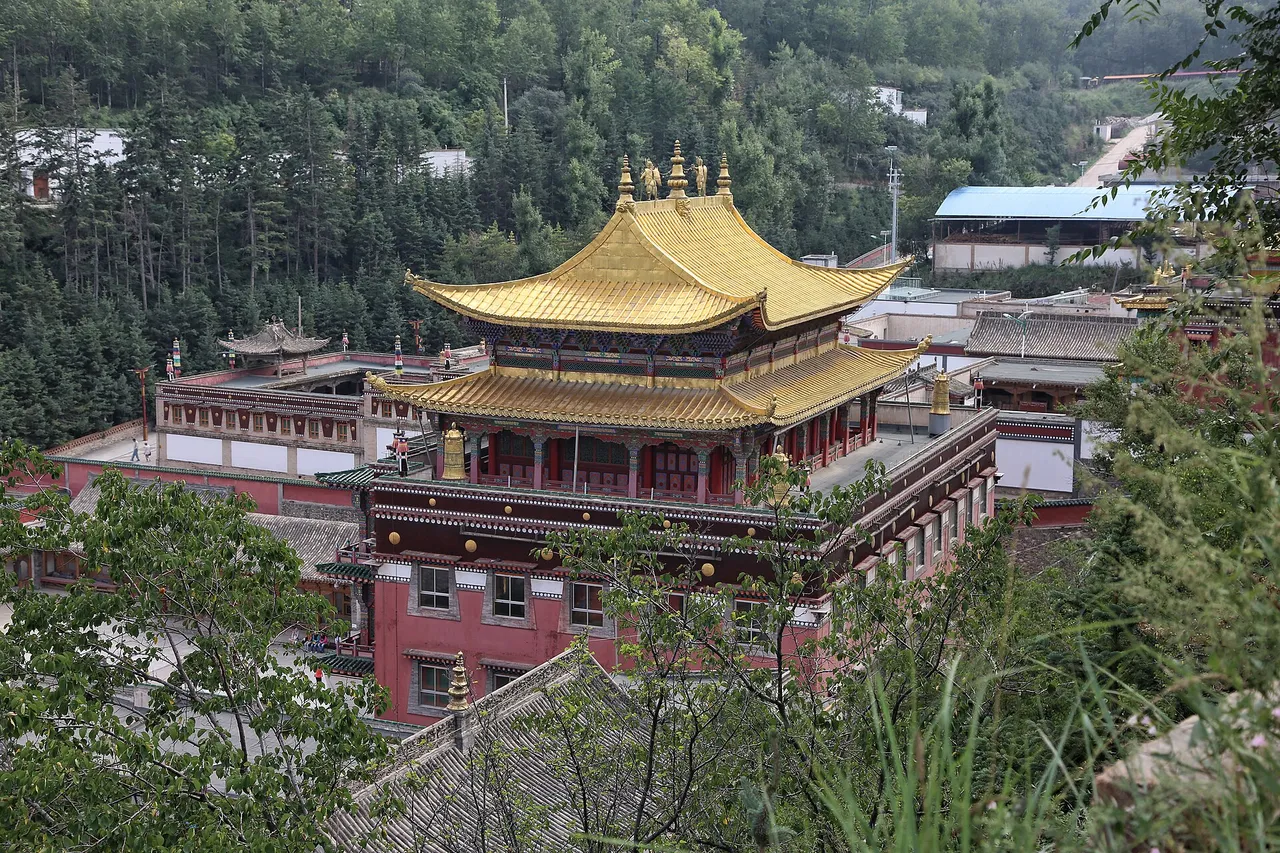
Ta'er Monastery, birthplace of Tsongkhapa, founder of the Gelug school, spreads across the Lotus Hill slopes with six centuries of halls in steps. Follow the flow to the Great Golden Tiled Hall, whose gold-leafed stupa is the site's devotional core, then the butter-sculpture hall, where monks model figures and flowers from yak butter into colors too vivid for fat; murals and applique embroidery, the other two of the three arts, hang through the courts.
Turn prayer wheels clockwise, keep halls photo-free and hushed, and pause to listen where monks debate. Two and a half hours is right, landing you at the gate town just as lunch stalls open.
Many monks welcome a brief chat, and a willing explainer is a gift not to be missed; half-finished thangkas hung outside the rooms reveal the rough craft of applique and painting. Walk the prayer-wheel corridor full circle before leaving, palms warmed by the drums, how many remember Ta'er.
Qinghai Tibetan Medicine Culture Museum: A Plateau's Knowledge System
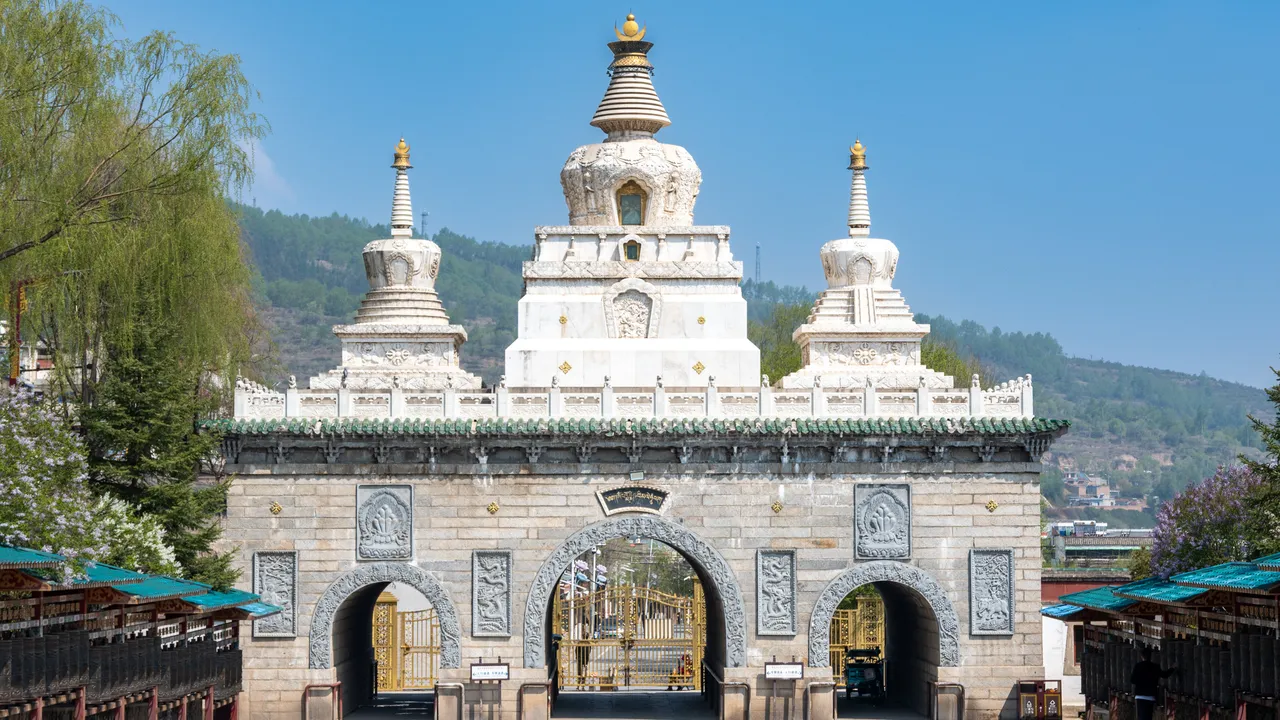
Back in town after noon, the classroom shifts from religion to learning. The Tibetan Medicine Culture Museum is free, running from plateau medicinal plants to Tibetan anatomy and diagnostics; the showstopper is one colossal thangka scroll painting hundreds of meters of Tibetan history, medicine and astronomy in a single line, more than half an hour from its head alone.
No need to parse the medical terms; read it as a plateau survival manual, which herb cures what, how highland people handle cold and thin air, all knowledge proven by millennia. Ninety minutes suffices, with rest seating mid-route.
The labels dwell usefully on highland remedies and Tibetan wellness, absorbing even without a medical background; the ground-floor shop sells Tibetan incense and herb sachets, pungent stuff, sample small before committing to boxes.
Xining Dongguan Great Mosque: A Second Faith's Ordinary Hour
By dusk the mosque sheds the day's bustle as quarter residents file toward the gates; standing outside the square when the call to prayer rises is the quietest moment on this culture line. The exhibition room covers Northwest Muslim history and custom, and the frame of a Chinese gateway against an Arab-style dome annotates Xining's layered culture by itself.
From Tibetan Buddhism to Islam, the day has watched ordinary devotion, not performance. Dine in the surrounding blocks afterward; the halal kitchens' hand-pulled mutton closes the theme neatly.
The sweet shops around the mosque peak at dusk, honey sanzi, sugar-oil cakes and cubed barley cake filling glass cases; take a mixed plate for later with boiled tea, reliving the day's two faiths through taste.
| Getting around |
|
| Budget | Ta'er entry about RMB 70 pp, the museum free by booking, the mosque free; the day with transport runs RMB 150-220 pp. |
| Best time | Year-round, with temperate halls and sheltered courts; before 10 am the monastery is tour-group free, the day's best window. |
FAQs
Is half a day enough for Ta'er, and how do I get there?
Yes, two and a half hours covers the golden hall and the three arts. The direct bus is fine but infrequent; for a tight day charter or share a car, about forty minutes each way. Leave by 7:30 am in season and enter before ten, ahead of the tour groups.
How do tickets and museum booking work?
Ta'er sells entry on site for about seventy yuan, with online tickets skipping the seasonal queue; some halls run timed entry, just follow the flow. The medicine museum is free with real-name booking on its account or mini program, and same-day slots are usually open, even that morning.
How should the order and trade-offs of the three stops work?
The order is fixed: monastery early, museum after noon, mosque at dusk, matching light and crowds. If forced to two, keep Ta'er for architecture and art, the museum for knowledge systems; the free, central mosque rarely gets cut.
What etiquette applies at the monastery and the mosque?
Both want knees and shoulders covered and soft voices indoors. In the monastery turn wheels clockwise, shoot nothing in halls, step over no thresholds; at the mosque avoid prayer times, stop at the hall door, and ask before photographing. When unsure, mirror the locals or simply ask; staff explain gladly.