
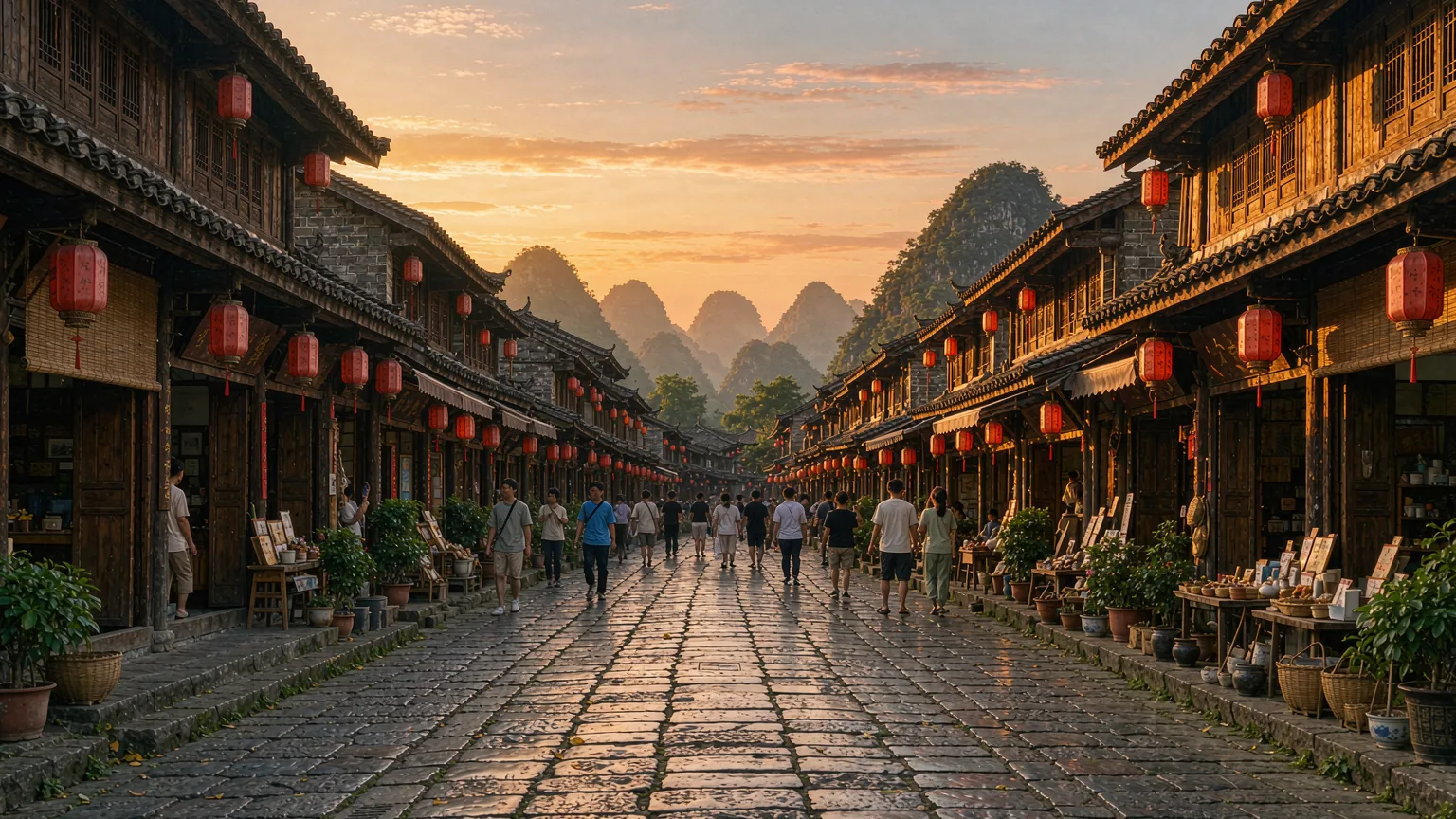
Most travelers treat the county town as a transit lounge for the sights, but the town itself rewards a slow day. It began as an old river county seat: the old houses of West Street, the stone embankment along the river, the oil-tea kitchens and silver workshops in the lanes, all within walking range. This day schedules nothing that needs a vehicle, only your own legs, from dawn to midnight.
The rhythm dodges the crowds: see West Street before the tour buses land, put the museum under the harshest midday sun, and give dusk to the riverside path. Sit whenever tired, a bowl of oil tea or a glass of beer, for the charm of this town is a blurred border between sight and daily life, and you cannot tell whether you are touring or already on holiday.
Itinerary at a glance
| 08:30 | West Street at Dawn: The Old County Seat on Flagstones |
| 10:30 | Yangshuo Xilou: Northern Guangxi Folk Arts on the Stage |
| 14:00 | Guangxi Zhuang Silver Culture Heritage Museum: The Zhuang Homeland in Silver |
| 17:30 | Binjiang Road and Little Horse's Sky Bar: A Riverside Dusk |
The route, stop by stop
West Street at Dawn: The Old County Seat on Flagstones
Before nine, West Street belongs to locals: grocers with half-open shutters, scooters cutting through on the school run, grandmothers shelling beans at the door. Only at this hour can you read the architecture, grey brick, timber doors and windows, and Nanyang-style arcades mixed together, the trace of a treaty-era meeting of China and the West that daytime crowds bury completely.
A few hundred meters carry you from the street's mouth to the river, and every side lane is worth ducking into, Guihua Lane and the county-office quarter keeping the old town's hush. When legs tire, find a noodle shop that opens early, two liang of Guilin rice noodles with crackling pork, eaten standing, the most authentic start to the town.
Yangshuo Xilou: Northern Guangxi Folk Arts on the Stage
The Xilou quarter sits just off West Street, and the theatre giving the quarter its name anchors it: wooden eaves over a stage lined with benches, where folk performances of northern Guangxi rotate, caidan opera, Gui opera excerpts and ethnic song and dance, schedules posted daily. Even without a show, the carvings and painted beams earn a slow loop.
Snack stalls and craft shops scatter through the quarter at a browsable density, nothing like the crush of the main street. Arriving at half past ten threads between West Street's worst hours: watch a performance, then drift out at an easy pace for lunch.
Guangxi Zhuang Silver Culture Heritage Museum: The Zhuang Homeland in Silver
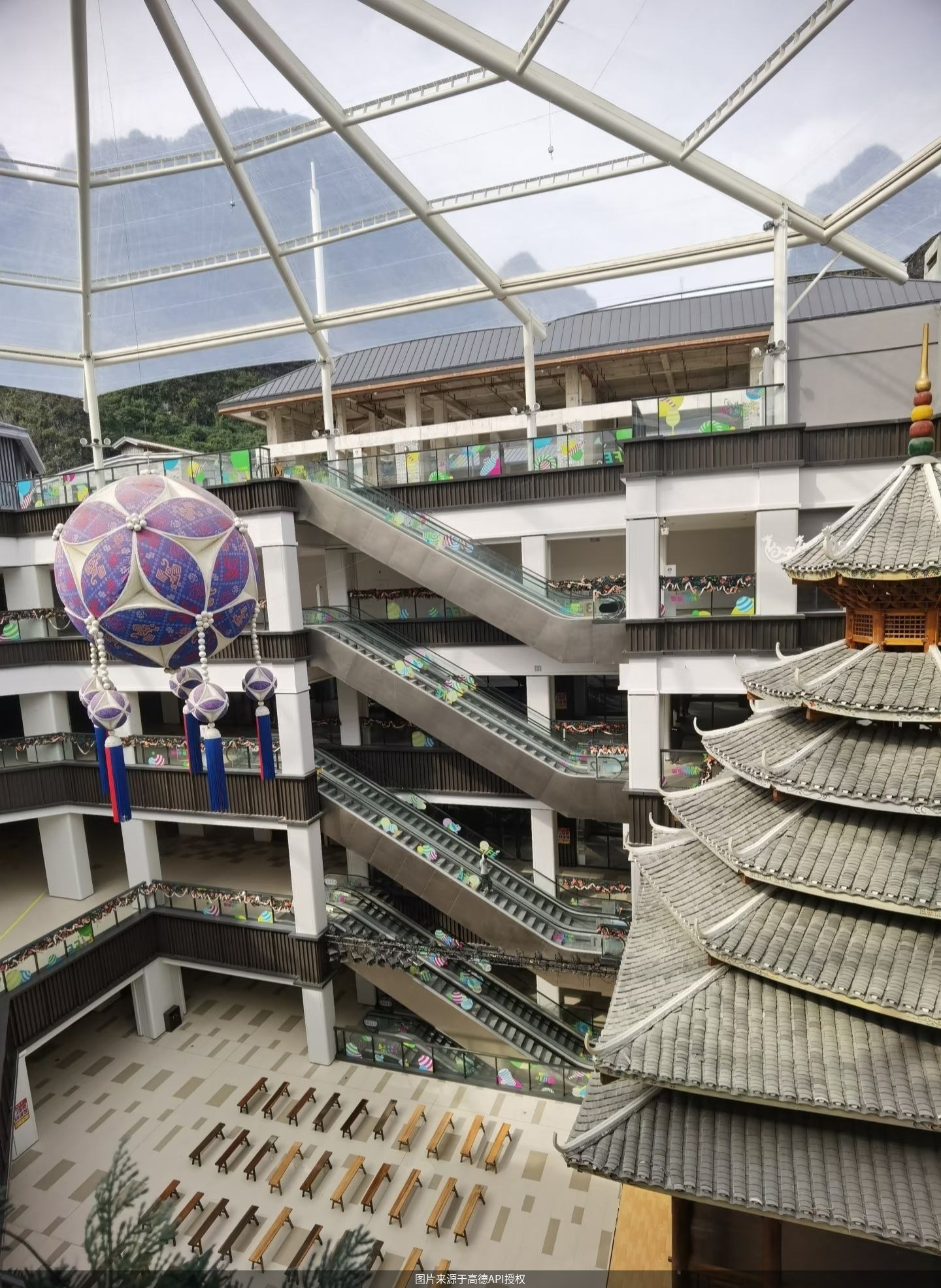
The fiercest midday sun is the right hour for this indoor museum. The collection centers on Zhuang silver: headdresses, neck rings and baby-carrier plaques, displayed set by set and branch by branch, with phoenix, wave and rice-ear motifs that carve a people's history of migration and farming into metal. Beyond the labels, the workshop zone shows artisans chasing silver at the bench.
One hour here teaches a casual visitor where the old convention of silver as wealth among the Zhuang and Dong comes from; if craft interests you, the hands-on sessions let you hammer a small silver piece for an extra fee, and you carry it home.
Binjiang Road and Little Horse's Sky Bar: A Riverside Dusk
Dusk turns Binjiang Road into the town's gentlest hour: anglers on the stone embankment, the river sliding past the wall, the silhouette of Bilian Peak across the water deepening layer by layer. Walk from the mouth of West Street, amble ten-odd minutes along the road, find a flight of stone steps and sit while the working rafts head home, looser than any paid platform.
When dark falls, step into Little Horse's Sky Bar. This veteran riverside bar is a living fossil of the backpacker era, its terrace facing the Li River; order a local beer and let the water sound blend with the guitarist, and the slow town line closes here, ready for the Yulong River tomorrow.
| Getting around |
|
| Budget | Walking the town costs little: the museum ticket plus two meals and drinks, about RMB 150-250 pp. |
| Best time | Any season; pick weekdays in peak months, since West Street offers two kinds of quiet, before 9 am and after midnight. |
FAQs
Is a town day without paid sights a waste of Yangshuo's scenery?
Not at all, Binjiang Road is itself a free Li River gallery with Bilian Peak and the mirrored water in full view, and the lanes of West Street are the town's history in the flesh. Slot this day on arrival or departure: luggage and transfer hours never fit a scenic area anyway, and walking the town through beats forcing one more ticket.
Has West Street turned fully commercial, is it still worth a visit?
Bars and chains crowd it, yes, but its value lives at dawn and midnight: the old buildings and street life before nine, the quiet flagstones after twelve. Pass through by day but keep ducking into the side lanes, Guihua Lane and the county-office quarter still hold the old town's grain, leave the main street to the crowds and keep the lanes for yourself.
Can I buy the silver at the museum, or is it tourist junk?
The workshop keeps artisans making pieces on site, bracelets and small goods priced by gram with craft fees separate, far steadier than scenic trinket stalls. Buy on three checks: weigh the piece, ask the silver content, keep the guarantee note. On a budget, take small earrings or hammer your own piece in the session, better value and meaning than the main street's batch goods.
Is it safe to walk the town alone at night?
The town is generally calm, and the main street and riverside stay lively at night, fine for solo walkers. Three habits: avoid dim lanes late and return via the main streets; never climb the embankment railings near the night anglers; check the price list before ordering in bars, and use taxis at the junctions or your inn's pickup after closing.