
Yangshuo is not only scenery; it carries over a thousand years of county history: caidan opera on the stage, silver on a girl's head, fishing fires at the wharf, oil tea on the stove. Only all of them together make the complete Yangshuo. These three days schedule no climbs and no floats, giving every hour to things you can watch, hear and eat slowly.
Each day runs one theme: day one in town, craft at the theatre quarter and silver museum, architecture on West Street; day two north to Xingping for the old street, the fishing lights and riverside life, closing with a show; day three with Dong and Zhuang living customs at Xanadu in the morning, the craft lineage in wood at the Tianyi museum in the afternoon, and the Romance show as finale. The pace is loose, built for curiosity rather than checklists.
Itinerary at a glance
| 09:00 | Day One Morning: Yangshuo Xilou, the Old Stage of Caidan and Gui Opera |
| 11:30 | Day One Midday: Guangxi Zhuang Silver Culture Heritage Museum |
| 14:30 | Day One After into Night: West Street's Historic Buildings and Old Halls |
| 08:30 | Day Two Morning: Xingping Town and the Old Ferry's Daily Round |
| 11:00 | Day Two Midday: The Twenty-Yuan View and Old Fishing Lore |
| 14:30 | Day Two Afternoon: Taotaoji Oil-Tea House, a Flavor on the Heritage List |
| 19:00 | Day Two Night: Impression Sanjie Liu and the Ballad Tradition |
| 09:00 | Day Three Morning: Dong and Zhuang Life at Xanadu |
| 13:30 | Day Three Afternoon: The Craft Lineage at Tianyi Wood Art Museum |
| 19:00 | Day Three Night: The Romance of Guilin Curtain |
The route, stop by stop
Day One Morning: Yangshuo Xilou, the Old Stage of Caidan and Gui Opera
Heritage begins at a stage. The heart of the Xilou quarter is a timber theatre with flying eaves, where caidan opera, Gui opera and the string-and-voice tradition take turns; caidan is northern Guangxi's homegrown comedy, its lyrics colloquial, seven-tenths of the plot readable without the dialect. Morning slots lean toward folk dance and opera excerpts, times posted daily.
Beyond the show, study the building itself: painted caisson over the stage, carved flourishes at the proscenium, and the old backstage etiquette, all labeled. Craft and snack shops scatter through the quarter, so the post-show wander doubles as lunch.
Day One Midday: Guangxi Zhuang Silver Culture Heritage Museum
From stage to vitrine, the silver museum arranges northern Guangxi's worn possessions into a chronology. Zhuang ceremonial sets, Dong neck rings and Miao crowns each glow under the case lights, their rice-ear, water and beast motifs mapping onto each people's farming and myth; a good guide's skill is tying motif to livelihood.
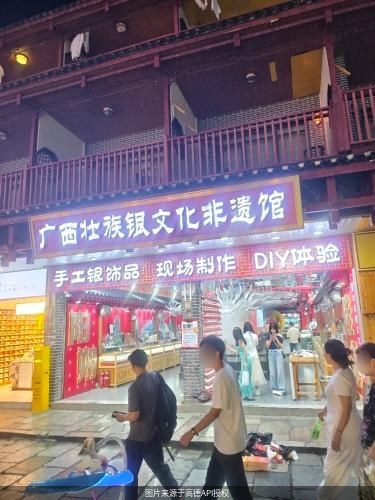
The workshop shows the full chase, a flat silver plate passing a dozen hand stages to become one phoenix-crown part. Lunch light in the museum or back in town over noodles, either works, for West Street this afternoon keeps no schedule.
Day One After into Night: West Street's Historic Buildings and Old Halls
By day West Street is commerce, but architecture reads a second layer: the street took shape in the late Qing treaty-port years, Western window arches and Chinese pitched-roof arcades sharing one facade, with the county-office quarter keeping the doorways of old yamen and merchant houses. Walk slowly, part the signboards and read the elevations, a fresh way to browse.
Three points matter: the old gate tower at the street's mouth, the residential courtyards in Guihua Lane, and the stone wharf steps where Binjiang Road ends. Each carries a plaque or an oral story, and two questions to an old shopkeeper often beat any guidebook.
After dark the street plays its second act: lanterns lit, bar singers warming up, old houses reopening as night stalls. Walk to the river for the night Li, then back into a lane for hot rice noodles. Xingping wakes early, so a short folk-instrument set at most, indoors by half past nine to bank some sleep.
Day Two Morning: Xingping Town and the Old Ferry's Daily Round
Day two heads north to Xingping, historically a major node on the Li River waterway: the arcade houses along the old street were all shops and shipping offices, their lintels still spelling old firm names. Before the day tours land, elders listen to Gui opera in the teahouse and vegetable farmers wait for the ferry with shoulder poles.
The Guandi temple and stage survive in good shape, the stage caisson painted in late Qing brushwork. After the street, sit by the river watching the green far bank and crossing ferries; Xingping's value lies in no single sight but in this everyday texture of a river county town.
Day Two Midday: The Twenty-Yuan View and Old Fishing Lore
From the old street to the riverside viewpoint, the twenty-yuan note's reverse stands before you. These waters once worked as fishing grounds; cormorant fishing survives mostly as performance now, but dusk fishing fires and rafts heading home remain the Li River's signature memory. Matching banknote to landscape is the obligatory ritual, and worth one layer deeper: this reach runs slow and shallow, which is why the mirror holds.
Lunch riverside for Xingping flavors, small Li River shrimp and stuffed river snails the two local names. Walk the riverside path half an hour after, digesting and finishing the water you did not finish in the morning.
Day Two Afternoon: Taotaoji Oil-Tea House, a Flavor on the Heritage List
Back toward town, the afternoon's program is eating: oil tea is a heritage-listed tradition of northern Guangxi, and the quiet afternoon room at Taotaoji's flagship lets you watch the whole craft, leaves hammered with ginger and garlic in the iron wok, broth poured, toppings added, first bowl bitter and second fragrant, and only then do you truly taste the bowl.
The side plates matter: boat rice cake, mugwort cioba, fried rice and peanuts, salt and sweet in halves. After three the teahouse fills with local elders drinking and playing chess; a second bowl seated among them is a cultural experience truer than any staged show.
Day Two Night: Impression Sanjie Liu and the Ballad Tradition
The heritage night belongs to song. Liu Sanjie is the totem of northern Guangxi balladry, the legendary singer who out-dueled landlords with folk songs, and tonight's riverside spectacle moves fishing fires, spinning wheels and antiphonal singing onto the water, six hundred performers mostly local villagers singing the tunes their grandparents kept. Melodies heard this morning at the stage and teahouse return to you across the river.
The show runs about seventy minutes, the night wind off the water colder than town. Back to the inn after, one more full day ahead.
Day Three Morning: Dong and Zhuang Life at Xanadu
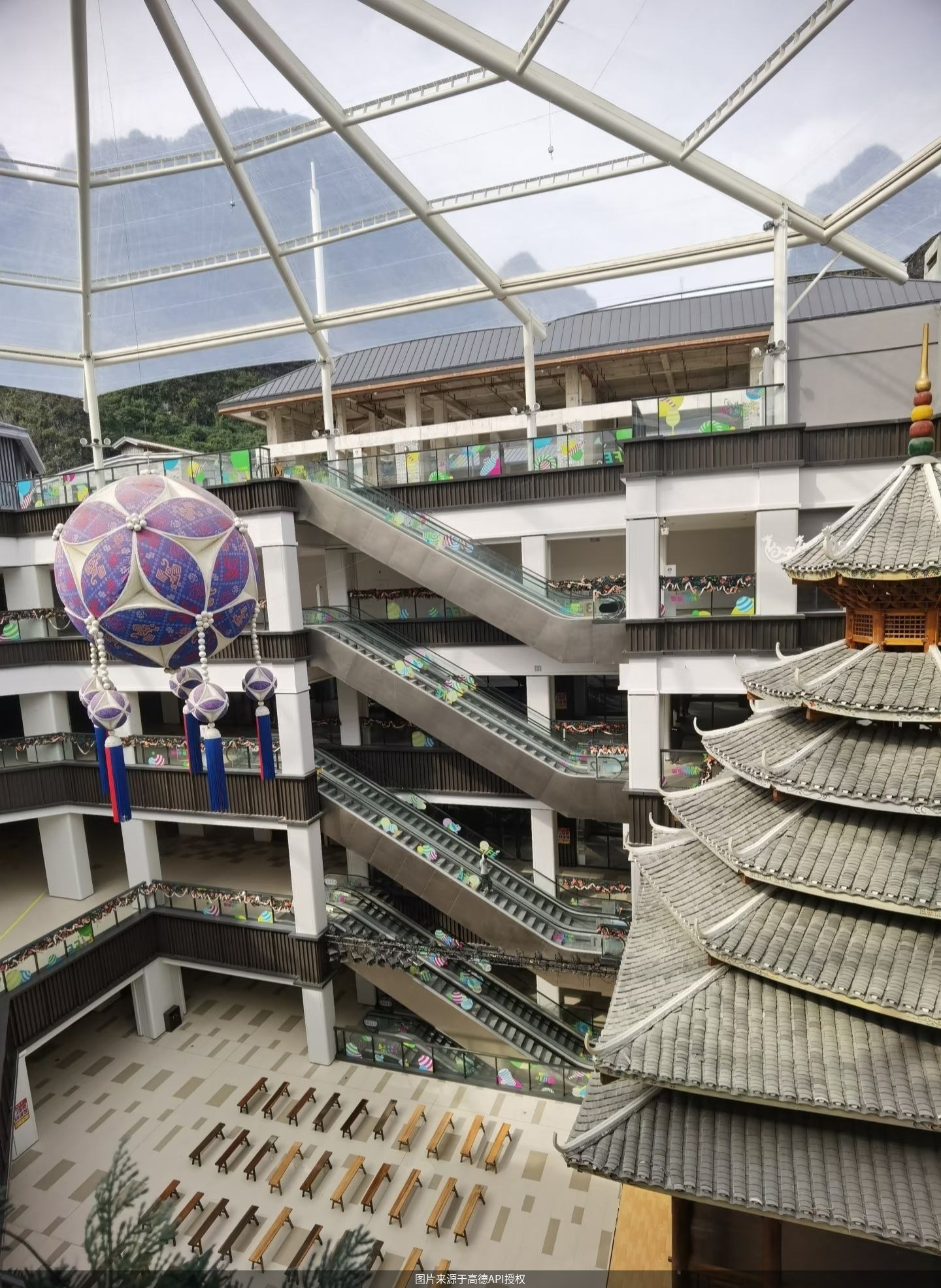
Day three morning goes to Xanadu, a park that stages the living customs of the region's minorities. The boat threads a water cave and the lake opens wide, Dong drum towers, wind-rain bridges and waterwheels lining the shore with live demonstrations of spinning, brewing and rice-cake pounding. The forty-minute float comes with a guide explaining how the bridge stands and what the tower is for.
Ashore, the performance zone holds Dong grand song, the polyphonic a cappella singing on the UNESCO heritage list, far more stunning live than recorded. The park walks out in two hours, and entry before ten beats the crowds.
Day Three Afternoon: The Craft Lineage at Tianyi Wood Art Museum
The last stop of heritage three days is the Tianyi Wood Art Museum. Silver and song filled the first two days; today is wood: giant root carvings and golden nanmu work laying out the lineage of Chinese joinery, lacquer and carving in separate halls. Wood devotees can spend the afternoon, ordinary visitors cover the highlights in ninety minutes.
Here the three days can close their accounts: caidan on the stage, silver in the cases, arcades on the street, oil tea on the stove and the timber before you assemble a history of northern Guangxi life written without words. The evening Romance show is this route's fated finale, retelling it all on a modern stage.
Day Three Night: The Romance of Guilin Curtain
The finale sits at the Romance. An indoor spectacle of about an hour compresses Guilin's history, the canal, the examinations, the ballads, into five acts, and every element you met at the stage, the vitrines and on the river returns gilded by modern staging. The marriage of stagecraft and old material is the draw, spellbinding for children and elders alike.
After curtain, eat well at the park or back in town and sort three days of ticket stubs and photos. Heritage closes here; the scenery keeps for next time.
| Getting around |
|
| Budget | Museums, shows and meals total about RMB 600-1000 pp before lodging; oil tea and noodles run cheap, the two shows take the big share. |
| Best time | Any season; folk shows and tea houses run year-round, and avoiding Golden Week keeps the galleries calm. |
FAQs
Is this heritage line too quiet, missing Yangshuo's landscapes?
Not entirely: Xingping's river, the note view and Binjiang Road are all inside, landscape running through the three days as backdrop, just without dedicated climbs or floats. If scenery is non-negotiable, switch to the three-day nature line, or swap day three's wood museum for a Ten-Mile Gallery ride.
Without the dialect, can I follow caidan and Gui opera?
Caidan is comedy, physical and plot-forward, with side boards giving lyric gist, and seven-tenths comprehension is realistic; Gui opera's sung scenes reward the connoisseur more, but excerpts are familiar pieces, so skim a plot summary beforehand. The real threshold is tempo, not language, sit through one full show and the pleasure arrives on its own.
On a tight budget, what silver and wood buys are worth it?
For silver buy small: earrings, a silver lock or a plain bangle, honest gram-priced handwork within a few hundred; for wood buy tea scoops, chopsticks and small ornaments, usable craft from the hundred-yuan tier. Both big-piece traps live in weight and material, so on a budget skip them and spend on the sessions, chasing your own silver plate or handling the joinery beats owning something you cannot judge.
Which of the three days can be swapped wholesale?
Day two flexes most: if last night's show was the Romance rather than Liu Sanjie, compress Xingping to half a day, add a Yulong raft in the afternoon, and return for the other show at night. Days one and three are the spine, theatre plus silver and Xanadu plus finale best left untouched, and the heritage thread snaps if they move.