
Yangshuo's essence lies outside the county town, in two modes of travel: by water on a raft, and by wheels between the paddy fields. Fitting both plus Xingping into one day means running the clock backwards: the Yulong River is quietest and mistiest at dawn, the Ten-Mile Gallery belongs to mid-morning before the sun stands up, and Xingping is the heavyweight act, so keep two full hours for the scenery on the back of the twenty-yuan note.
Do not try to sprint between sights by car, because the loveliest roads are cycle paths: the gallery and both banks of the Yulong carry green lanes, and one bicycle or scooter strings the karst peaks into a route. Buses and shared cars link the town with Xingping, about an hour each way. One rule decides the day: book the raft first, never leave Xingping too late, and save West Street's late dinner for your twenty thousand steps.
Itinerary at a glance
| 09:00 | Yulong River: Rafting the Misty Shuie Di Stretch |
| 11:30 | Ten-Mile Gallery: Cycling Through the Karst Corridor |
| 15:00 | Xingping Ancient Town and the Li River Twenty-Yuan Note Viewpoint |
| 19:30 | West Street: The Night After Twenty Thousand Steps |
The route, stop by stop
Yulong River: Rafting the Misty Shuie Di Stretch
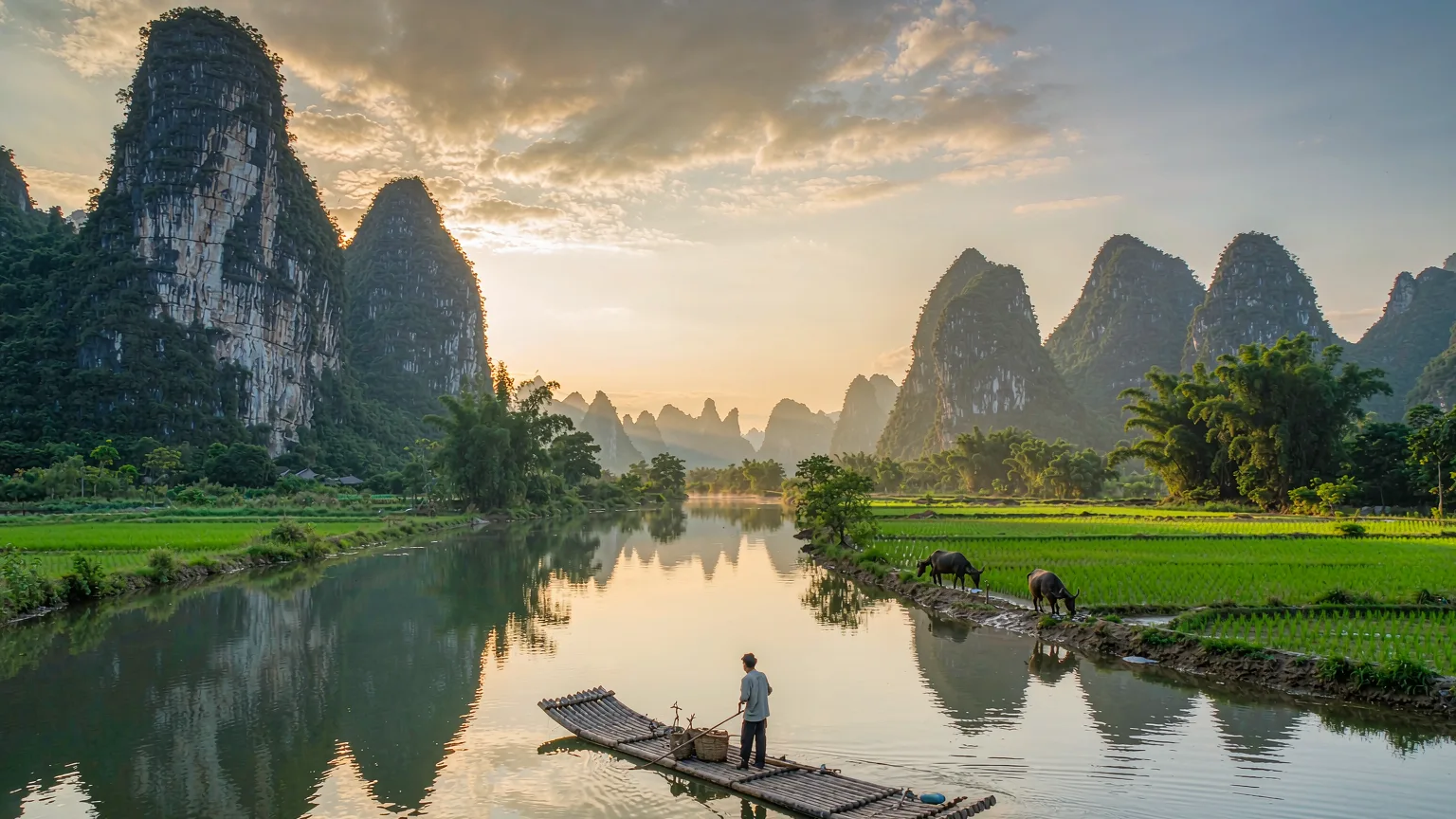
The Yulong, called the Little Li River, is the prettiest tributary inside Yangshuo. The rafts long ago swapped lashed bamboo for PVC pipes, but the poling tradition holds: one boatman, one bamboo pole, and the spike of the day is riding each small weir, bow lifting and sliding down. Before 9 am the mist still hugs the water, the peaks mirror perfectly, and the water buffalo and paddies look freshly awake.
The classic run is Shuie Di to Gongnong Bridge, about ninety minutes threading karst clusters and fern bamboo. No paddling required, just sit steady, and the boatman will point out rock shapes with names like Camel Crossing the River, all acts of imagination, so no guilt if you cannot see them.
Ten-Mile Gallery: Cycling Through the Karst Corridor
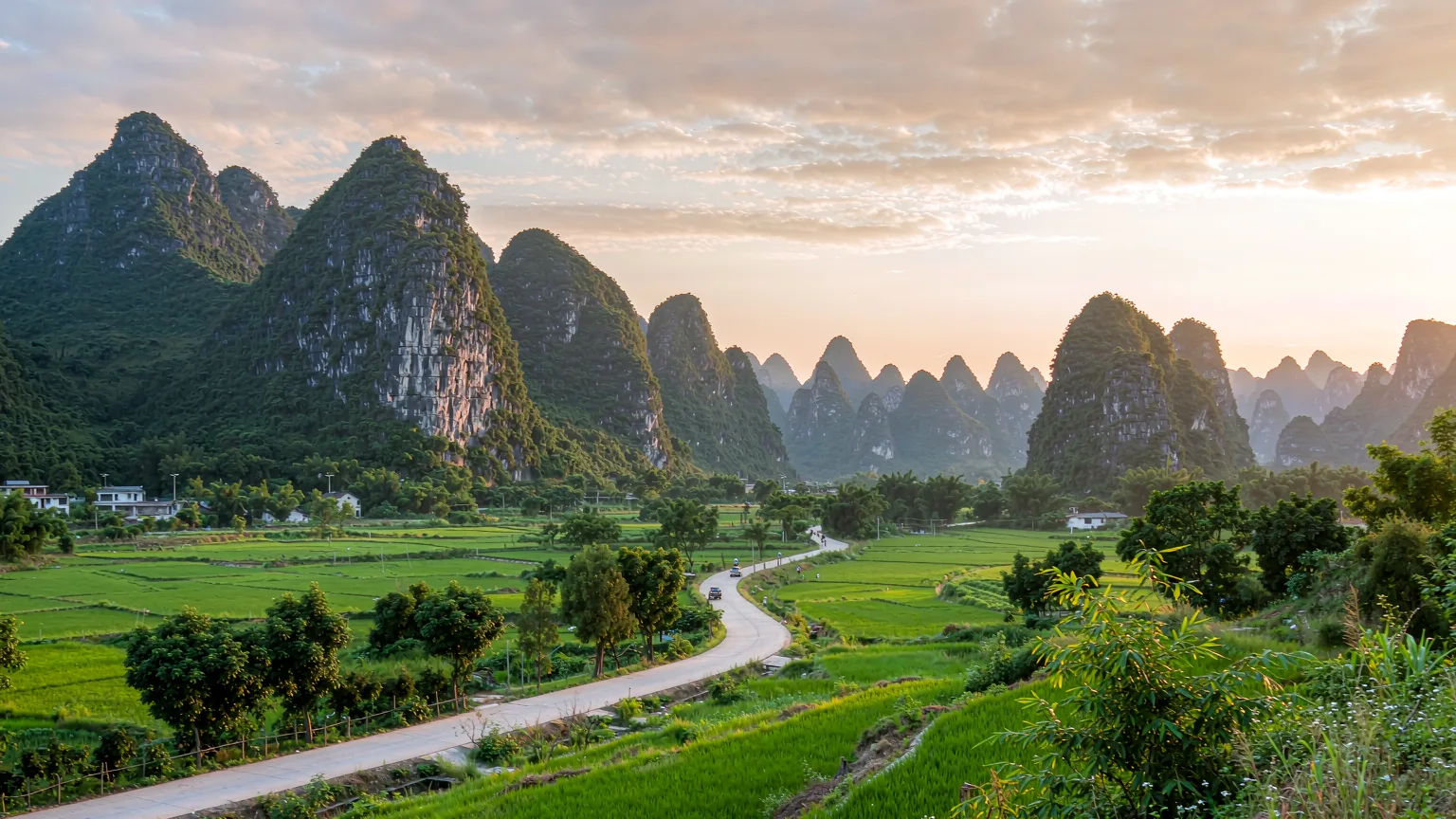
Head south from town along the Moon Hill tourist avenue, and both sides of the road called the Ten-Mile Gallery turn into textbook karst: peaks neither tall nor gentle, each one standing alone in the paddy fields, the road bending between them, every bend a postcard. Cycling is the right speed, one notch faster misses the shapes, one notch slower and the sun nails you to the asphalt.
A rented scooter halves the effort; leaving at eleven brings you to Moon Hill for the turnabout before noon, shooting with the light behind you and pushing against it on the way home. A random bowl of rice noodles at a village shop beats any scenic-area restaurant; eat and ride, for Xingping waits in the afternoon.
Xingping Ancient Town and the Li River Twenty-Yuan Note Viewpoint
Xingping is a seventeen-hundred-year-old ferry town on the Li River, small enough that one old street runs from the wharf up the hill, Qing-dynasty arcaded houses still occupied on both sides. The main event is at the water: take the ferry or the riverside path across, look back, and there stands the scene on the back of the twenty-yuan note, the Huangbu Reflection peaks ranged along the river, complete only when a fishing raft crosses the frame.
With time to spare, board a Li River raft at Xingping wharf for the classic run toward Nine Horse Fresco Hill, boarding by real-name queue in order. Light after four in the afternoon suits reflections best, the wind drops, the mirrored hills hold still, the best-value half hour of the whole day.
West Street: The Night After Twenty Thousand Steps
Back in town by night, West Street burns at full brightness. This fourteen-hundred-year-old street is now Yangshuo's heart, bars, eateries and craft shops strung with lights along the flagstones; once the day tours leave, the crowd turns into riders returning and locals out for a stroll, closer to the street's original temper.
Skip the influencer queues for dinner; the veteran beer-fish kitchens and Guilin noodle shops in the side lanes earn their seats. Afterward walk a stretch of Binjiang Road, lights picking out Bilian Peak across the river, the night breeze dissolving the day's heat, and only then does this one-day line truly close.
| Getting around |
|
| Budget | Rafting about RMB 200 per raft plus bike or scooter rental RMB 40-80 and meals, roughly RMB 300-450 pp; the Xianggong Mountain platform costs extra. |
| Best time | Apr-Jun and Sep-Nov bring the steadiest water and light; after heavy rain the Yulong may close to rafts, so confirm sailing the night before. |
FAQs
Does the high-speed rail stop at Yangshuo station, and how do I reach the county town?
Yes, the rail station sits in Xingping town, not the county seat, about half an hour from Guilin. Buses and shared cars outside the station reach the county seat in roughly forty minutes. If your trip centers on the Li River, sleep in Xingping instead and save the shuttle; the last buses run early evening, so watch the clock.
Do both the Yulong and Li River rafts need booking? Can I buy on site?
Both use real-name tickets. Yulong rafts sell by launch stretch, and booking a day ahead through official channels pays off in peak periods, since walk-up tickets sell out at rush hours; the Xingping section of the Li River queues by real-name ticket at the wharf, afternoon slots run short, so arrive before noon for a number. Both price per raft, two passengers each.
Is it too rushed to fit the Yulong, the gallery and Xingping into one day?
Tight but doable if you cut the extras: take one raft stretch, ride the gallery only to Moon Hill and back without paid side sights, and keep Xingping to the old town plus the note viewpoint. If you would rather shoot sunrise and sunset or add the Impression Sanjie Liu show at night, drop Xingping and run the slow version, Yulong plus gallery.
What should I wear and how should I handle the sun through a full outdoor day?
Rafts and cycle lanes mean hours of exposure over water and fields, so a sun hat, cooling sleeves and strong sunscreen are essentials, with grippy sandals or trainers; phone on a lanyard or in a waterproof pouch, since the weirs splash. Afternoon weather turns fast in the hills, and a light poncho beats an umbrella and rides safer. Cash is barely needed, shops and wharves all take QR payment.