
Seven days restore Zhangye from a Danxia checklist stop to the corridor's hinge. Two days of town and Danxia open, four days each take one direction, deep-mountain grottoes, the grand canyon, pastoral grassland, the ancient city, and the seventh sweeps the town. The Jinta special cave runs as the week's hidden thread, its booking shaping day four.
The design mirrors a seven-day Lanzhou: one theme per day, every night in the city or Danxia town, luggage untouched. The effort curve stays flat, with the single early start spent on Danxia sunrise and the single long haul on Luotuo City.
Itinerary at a glance
| Day 1 · 09:00 | The Giant Buddha Temple and the Shanxi Guild Hall: A Western Xia Opening |
| Day 1 · 19:00 | The Ganzhou Market and Night Stalls: Setting the Palate |
| Day 2 · 15:30 | Qicai Danxia: The Loop and the Sunset Main Stage |
| Day 3 · 06:30 | Danxia Sunrise and Binggou Danxia |
| Day 4 · 08:00 | Mati Temple's Thirty-Three Heavens and the Thousand Buddha Caves |
| Day 4 · 13:30 | The Jinta Temple Special Cave: Northern Liang High-Relief Apsaras |
| Day 5 · 09:00 | The Pingshanhu Grand Canyon: Into the Red-Bed Fissure |
| Day 5 · 16:30 | The Wetland at Dusk: A Soft Transfer from Rock Days |
| Day 6 · 08:00 | The Shandan Horse Ranch: Ten Thousand Horses and Luanniao Lake |
| Day 6 · 13:30 | The Shandan Han-Ming Wall and the Return |
| Day 7 · 08:30 | Luotuo City and the West Route Army Memorial |
| Day 7 · 16:00 | A Temple Evening and One Last Bowl of Xiao Fan |
The route, stop by stop
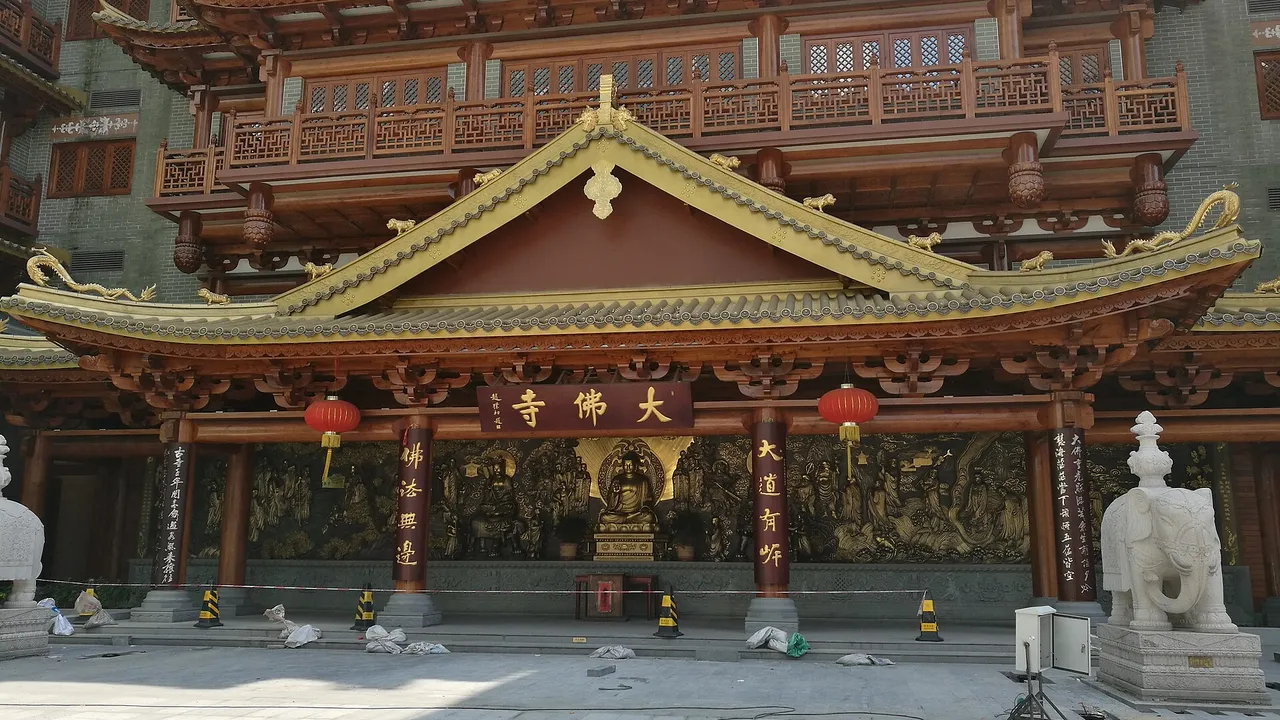
The Giant Buddha Temple and the Shanxi Guild Hall: A Western Xia Opening
The week opens downtown. The temple's reclining Buddha stretches thirty-four and a half meters, China's largest indoor clay figure, its Journey to the West murals predating the novel, while the Shanxi guild hall stands in the same grounds with its Chunqiu Tower and opera stage intact.
Two guided morning hours read it thoroughly; the afternoon adds Zhenyuan Tower and the wooden pagoda, fixing the old town's skyline as the week's launch bearing.
The Ganzhou Market and Night Stalls: Setting the Palate
Night one goes to the Ganzhou market and Ming-Qing Street: beef xiao fan, cuoyu and stir-fried paozi walk the town's carbohydrate system, with grill skewers and grey-bean soup closing, fifty yuan a head covering the map.
Note each sitting's price, your catering baseline for seven days, and sleep early, since tomorrow the Danxia wants its sunset.
Qicai Danxia: The Loop and the Sunset Main Stage
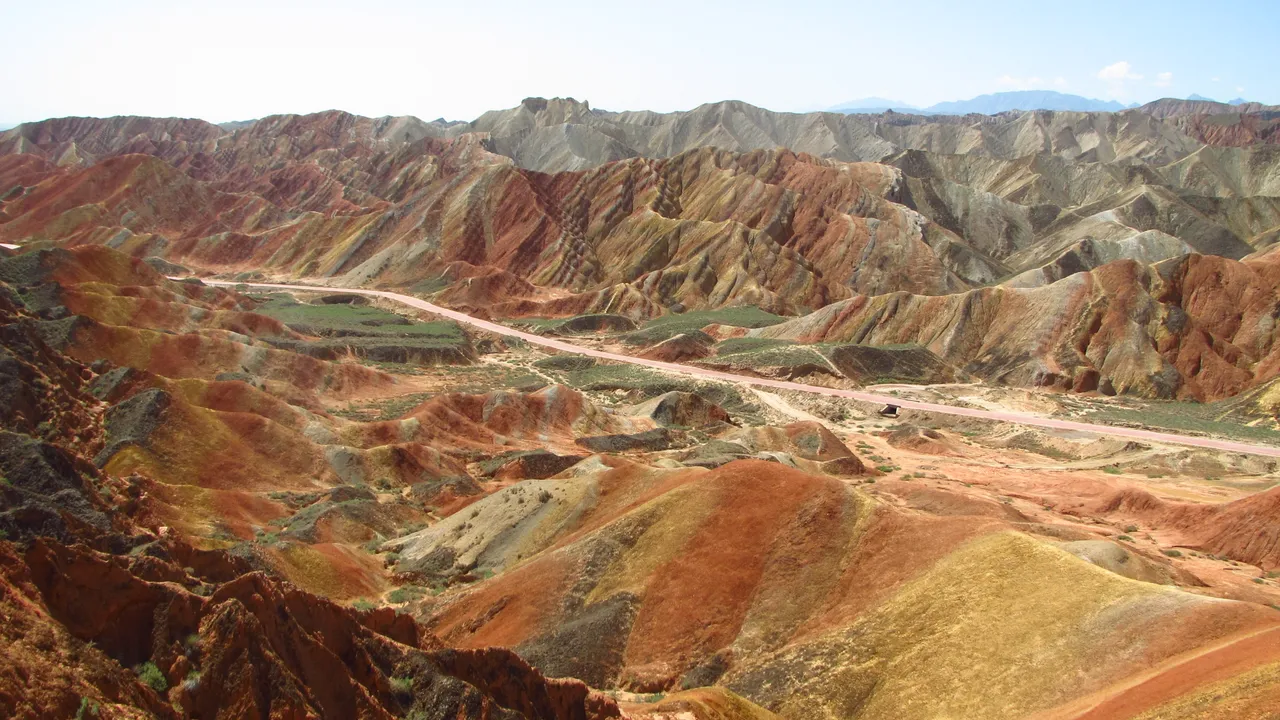
Day two enters the Qicai Danxia in the afternoon. The north gate is best equipped while west and east draw fewer; the shuttle loops the platforms as warm light raises the red-orange bands layer by layer. Claim Platform Four, the Rosy Clouds deck, an hour before sundown, facing the sun.
After sunset, twenty minutes of purple reprise reward patience. Sleep in Danxia town and save the morning for sunrise.
Danxia Sunrise and Binggou Danxia
At dawn, re-enter through the east or west gate with your registration for sunrise, light kindling from the east as the hills ignite slowly. Breakfast in Danxia town, then shift twenty kilometers to Binggou Danxia.
Binggou trades color for form, lattice and palace rock walls stacking over ochre slopes, the Little and Great Western Heaven sections taking about two hours. Return to city lodging by evening.
Mati Temple's Thirty-Three Heavens and the Thousand Buddha Caves
Day four enters the mountains, about ninety minutes out. The Thirty-Three Heavens stacks halls into the cliff, tunnels and steps near vertical, Qilian snow and grassland spread from the chain-assisted top, with the Thousand Buddha Caves and Gesar Hall rounding the circuit.
With a Jinta booking secured, keep the morning to the main climb and give the afternoon to the special cave; without one, study the Thousand Buddha Caves and the mountain paths closely, and the day stays full either way.
The Jinta Temple Special Cave: Northern Liang High-Relief Apsaras
The afternoon's centerpiece is Jinta Temple, switched onto the site's own shuttle up a narrow mountain road. In the east cave, high-relief apsaras fly in stacked layers around the central pillar, Northern Liang works more sculptural and older than Dunhuang's familiar flyers, among the rarest survivals anywhere.
Official guiding leads the cave and half an hour reads it thoroughly, the highest-value half hour of the week, with booking and weather as the only two variables.
The Pingshanhu Grand Canyon: Into the Red-Bed Fissure
Day five runs northeast, over an hour to the Pingshanhu canyon. Walkways spiral down the red walls, a sideways squeeze at the slot passage and hand-over-hand work on the iron ladder, two to three hours in morning light.
Average fitness or weak knees can keep to the rim circuit and still feel the scale; eat a simple meal at the visitor center and slow the afternoon.
The Wetland at Dusk: A Soft Transfer from Rock Days
Back in town, hand the dusk to the wetland. After four days of red hills and canyons, the Heihe reeds and waterbirds are the gentle footnote of the same geological play, boardwalks glowing at sunset.
Dinner nearby closes day five; the excursion highlights are done, with two days left, one toward Shandan and one toward Gaotai.
The Shandan Horse Ranch: Ten Thousand Horses and Luanniao Lake
Day six runs east, about two hours to the Shandan ranch. Grassland rolls to the snowline, horse bands scattered like chess pieces, Luanniao Lake mirroring the Qilian. Herders lead rides at hourly rates, and the gentle slopes suit beginners.
Around ten in the morning the herds descend to drink, the shooting window; the history displays run from Han pastures to modern stud policy, worth half an hour.
The Shandan Han-Ming Wall and the Return
On the return, stop at the Shandan section of the Han and Ming walls, two parallel earth ramparts running tens of kilometers along the gobi, called an open-air Great Wall museum. The best-preserved stretches sit near Xiakou, viewable from roadside stops.
Reach Zhangye by evening. After dinner, tally what remains: only the Gaotai direction tomorrow, so start consolidating luggage.
Luotuo City and the West Route Army Memorial
Day seven runs south to Gaotai, about ninety minutes. The Luotuo City ruins keep their rammed-earth walls intact on the gobi, the street grid legible, two thousand years pressed into one earthen-yellow geometry; then the West Route Army memorial in town adds the modern-history final link to the week.
The ruins offer no shade and hard wind, so hat and water are mandatory; the memorial is free and closed Mondays as usual.
A Temple Evening and One Last Bowl of Xiao Fan
Back in town, circle the Giant Buddha Temple grounds, the day-one monastery quieter in dusk's register, then take a last bowl of beef xiao fan at the Ganzhou market, tasting richer for the backdrop of seven days.
The week's order ran Buddha, hills, caves, canyon, horses and city; looking back, Zhangye has told the corridor whole, Danxia color, grotto faith, grassland breadth and ancient-city weight in one stretch.
| Getting around |
|
| Budget | About RMB 2500-4000 pp across seven days: five charter days swing the total most, tickets including the special cave near RMB 600, meals flexible. |
| Best time | May to October covers everything; July-August keeps the ranch and Biandukou live, while winter weathers the Jinta mountain road shut. |
FAQs
Does missing the Jinta booking ruin the trip?
No. Day four holds a complete fallback: deepen the Thirty-Three Heavens and Thousand Buddha Caves, add the mountain paths and the Gesar Hall, and pull the wetland forward. The special cave is a bonus, not a dependency.
How do I pick the best season for seven days?
May to October runs whole, with July-August peaking at the ranch and Biandukou and September trading crowds for light; winter keeps the Danxia but discounts the Jinta road and the ranch, so slim the plan by season.
How do I control a seven-day budget?
Charter five days at 500-800 yuan daily, cheapest split four ways; tickets including the special cave near 600; city lodging 200-300 nightly with Danxia town from around 150; meals 80-150 daily, swinging mostly on mutton and riding.
Which single day could be dropped whole?
By taste: drop the Gaotai day if modern history pulls little, replacing it with wetland and old town; drop the ranch day for pastoral-fatigue, merging Pingshanhu with the wetland. The spine is town, Danxia and Mati; everything else is a swappable module.