
Zhangye's culture stacks in two layers: one spread across town, where the Western Xia Buddha temple and the Ming drum tower sit ten walking minutes apart; the other carved into the Qilian Mountains, where the Mati Temple caves hide halls inside a cliff over a hundred meters tall. One day covers a layer in town and a layer in the mountains.
Transport decides the day: the three town stops chain on foot, while Mati Temple lies some sixty kilometers south, best by charter, or by the scenic shuttle or tourist through-bus both ways. The cave climbs run steep and narrow, so wear flat shoes and carry your backpack in front.
Itinerary at a glance
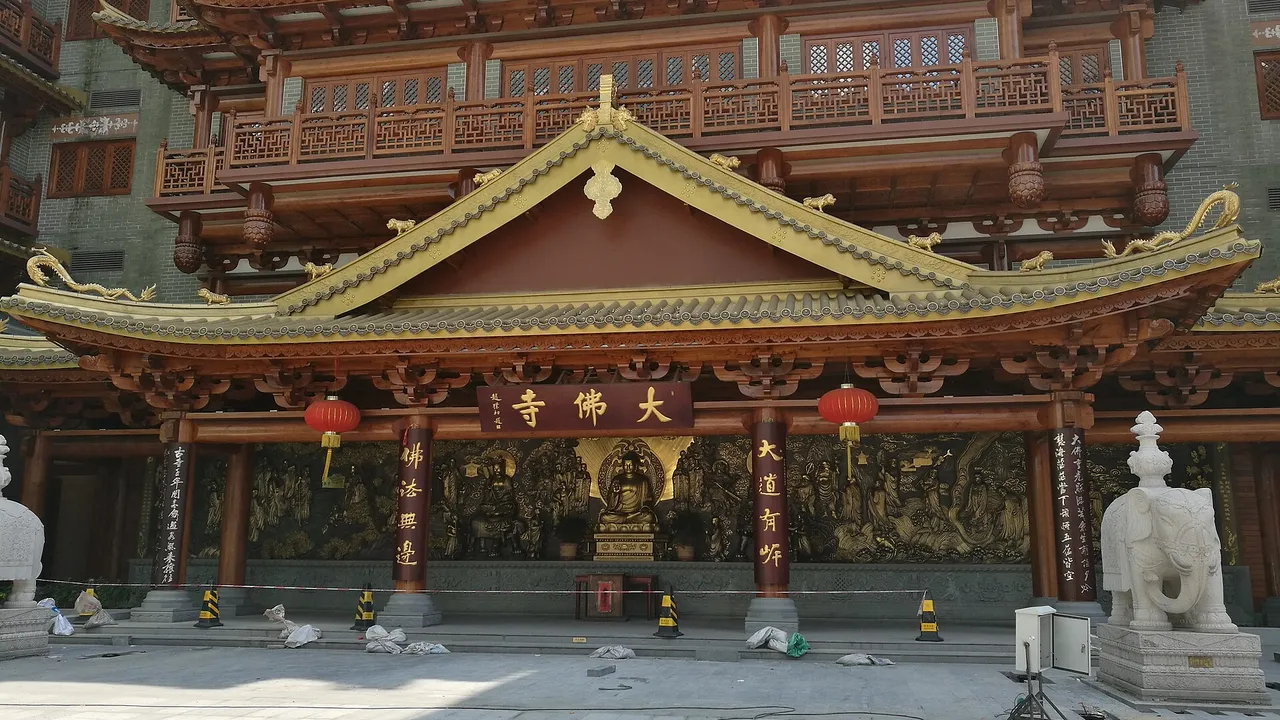
| 09:00 | The Giant Buddha Temple: A Western Xia Royal Monastery |
| 11:30 | Zhenyuan Tower: Reading Zhangye in Four Boards |
| 14:00 | Mati Temple's Thirty-Three Heavens: A Vertical Monastery in the Cliff |
| 16:30 | The Thousand Buddha Caves and the Gesar Hall: The Lower Tier |
The route, stop by stop
The Giant Buddha Temple: A Western Xia Royal Monastery
Founded in 1098, the Giant Buddha Temple served the Western Xia court. The reclining Buddha in the main hall runs thirty-four and a half meters, clay over a timber armature, the largest indoor clay figure in China, with grouped Journey to the West murals painted before the novel was written, precious evidence of how those stories spread.
The grounds run broad and tree-shaded. The Shanxi guild hall sits inside the same scenic area, its Qing-era Chunqiu Tower and opera stage intact; with morning light at its best, this is the golden hour for photos and slow looking.
Zhenyuan Tower: Reading Zhangye in Four Boards
Return to the town center at noon. Zhenyuan Tower, the Ming drum tower, commands the crossing of four great streets, its four boards reading Spring Rain over the Golden City, Dawn Moon at the Jade Gate, Clear Snow on the Qilian and Ancient Pastures of Juyan, one direction each of geography and history, the best teaching aid for the corridor's sense of place.
Climb for the view over four streams of traffic, then lunch in the surrounding lanes, beef xiao fan or cuoyu noodles within walking reach. Rest briefly afterward to bank strength for the Mati climb.
Mati Temple's Thirty-Three Heavens: A Vertical Monastery in the Cliff
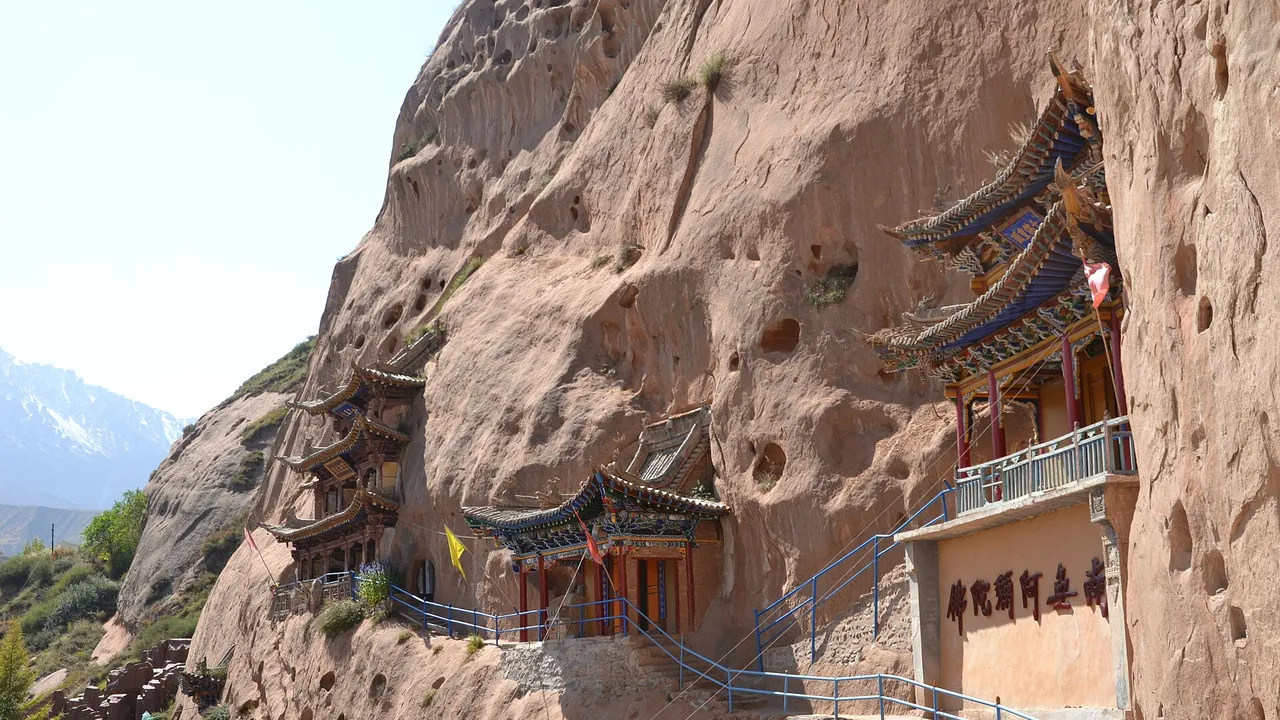
The Mati Temple complex cuts into cliffs on the northern flank of the Qilian Mountains, its core the Thirty-Three Heavens cave: halls stacked inside the rock, linked vertically by tunnels and steps that near the top climb almost straight up, one hand on the iron chain, shoulder to the wall.
From the top, the Qilian snow ranges line the far edge of the grassland. Inside, traces of Northern Dynasties statuary and mural work overlap with later repairs, a carving history you can run your hand across.
The Thousand Buddha Caves and the Gesar Hall: The Lower Tier
On the way down, the Thousand Buddha Caves rank side by side on the cliff face, their styles complementing the Thirty-Three Heavens, thin on crowds and generous with light. The Gesar Hall honors the hero of the Tibetan epic, a second thread of Tibetan belief woven through the complex.
Evening light slants into the valley and the Qilian ranges escort the drive back. Dinner waits in town, where a bowl of beef xiao fan pulls the day's timeline, from a Xia Buddha to cliff caves, back to the present.
| Getting around |
|
| Budget | The Giant Buddha Temple is about RMB 40 and the Mati combined ticket around RMB 70; with shared charter and meals, the day runs RMB 200-350 pp. |
| Best time | May to October is steadiest; the Mati mountain roads ice over in late seasons, and the cave climbs may close by weather in winter. |
FAQs
What if there is no direct public transport to Mati Temple?
Three routes: book a local day tour with vehicle and guide included; carpool with other travelers, since hostel boards carry regular notices; or charter at RMB 300-400 round trip, dear for one or two and cheapest for four. Scenic shuttles run thin, so never stake a schedule on them.
Is the Thirty-Three Heavens climb dangerous?
For healthy adults it is manageable: chains and rails line the route, and one-way flow prevents collisions. The risks are steepness, narrowness and dimness, so wear grippy flat shoes, sling your pack in front and move slowly. The height-averse, the unwell or families with very small children still get plenty from the base and its setting.
Which deserves more time, the Buddha Temple or Mati Temple?
By role: the Buddha Temple is an indoor masterpiece, steady in any season, while Mati is an outdoor experience of climbing and snow views that depends on weather. They share nothing stylistically; with time, do both, and if forced to choose, take the temple in rain and Mati in sun.
Any taboos for visiting the caves?
Caves generally ban photos and touching, so follow on-site signs and staff; circle temples and mani stone piles clockwise; keep knees covered and voices low. In the Thirty-Three Heavens passage, never stop to block the one-way flow for photos, letting it run is basic courtesy.