
Zhangye's history runs three layers deep: a Western Xia royal monastery in the town center, grottoes from the Northern Dynasties through the Ming cut into Qilian cliffs, and a Han-Tang city collapsed into the gobi. Three days take one layer each, from clay sculpture to cliff carving to rammed-earth walls, the corridor's timeline laid out whole.
The Jinta Temple special cave is this route's hidden level: its Northern Liang central pillar with high-relief flying apsaras is among the rarest survivals, reached by booked access up a mountain road. Everyone who sees it calls it worth it, and missing it leaves the main line intact.
Itinerary at a glance
| Day 1 · 09:00 | The Giant Buddha Temple: The Reclining Buddha and Journey Murals |
| Day 1 · 11:30 | Zhenyuan Tower and the Wooden Pagoda: Ming Zhangye's Skyline |
| Day 2 · 08:30 | Mati Temple's Thirty-Three Heavens: A Vertical Monastery in the Cliff |
| Day 2 · 11:30 | The Thousand Buddha Caves and the Gesar Hall: The Lower Tier |
| Day 2 · 13:30 | The Jinta Temple Special Cave: Northern Liang Apsaras |
| Day 2 · 16:30 | The Road Out: Sorting Two Days on the Drive Back |
| Day 3 · 08:30 | Luotuo City Ruins: A Han-Tang Town in the Gobi |
| Day 3 · 11:30 | The West Route Army Memorial Hall |
| Day 3 · 15:00 | The Road Back and a Temple Evening |
The route, stop by stop
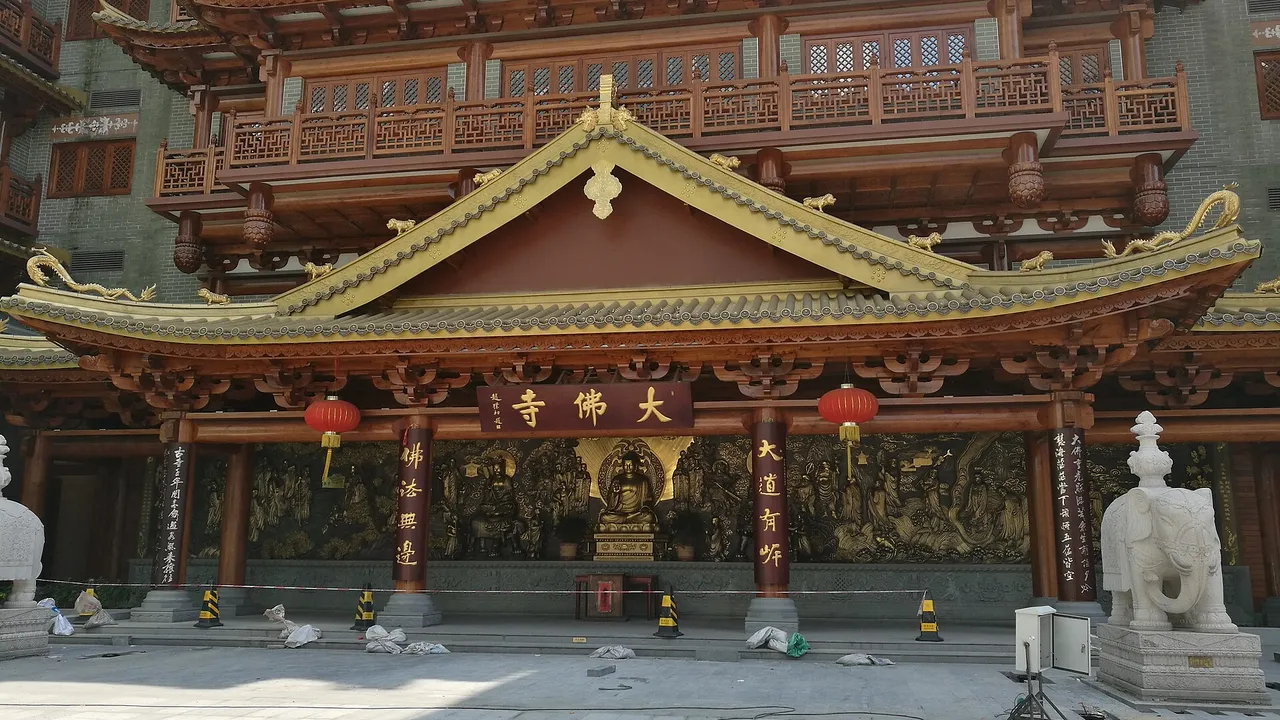
The Giant Buddha Temple: The Reclining Buddha and Journey Murals
Heritage begins downtown. Founded in 1098 in the Western Xia era, the Giant Buddha Temple holds a reclining Buddha thirty-four and a half meters long, China's largest indoor clay figure, its gilt patterns and robe folds clearest in morning light, with grouped Journey to the West murals predating the novel.
The Shanxi guild hall inside the grounds, with its Chunqiu Tower and opera stage, adds a merchants' layer to the history. Two courtyards take two hours, morning light is best, and a guide earns the fee.
Zhenyuan Tower and the Wooden Pagoda: Ming Zhangye's Skyline
At noon, walk the tower and the pagoda. Zhenyuan Tower hangs four boards, Spring Rain over the Golden City, Dawn Moon at the Jade Gate, Clear Snow on the Qilian and Ancient Pastures of Juyan, sixteen characters summing the town's four directions; the wooden pagoda, rebuilt through the centuries, keeps the old town's most photogenic corner against its courtyards.
Both sit inside the walking circle; rest at the hotel afterward, since tomorrow's mountain day wants an early night.
Mati Temple's Thirty-Three Heavens: A Vertical Monastery in the Cliff
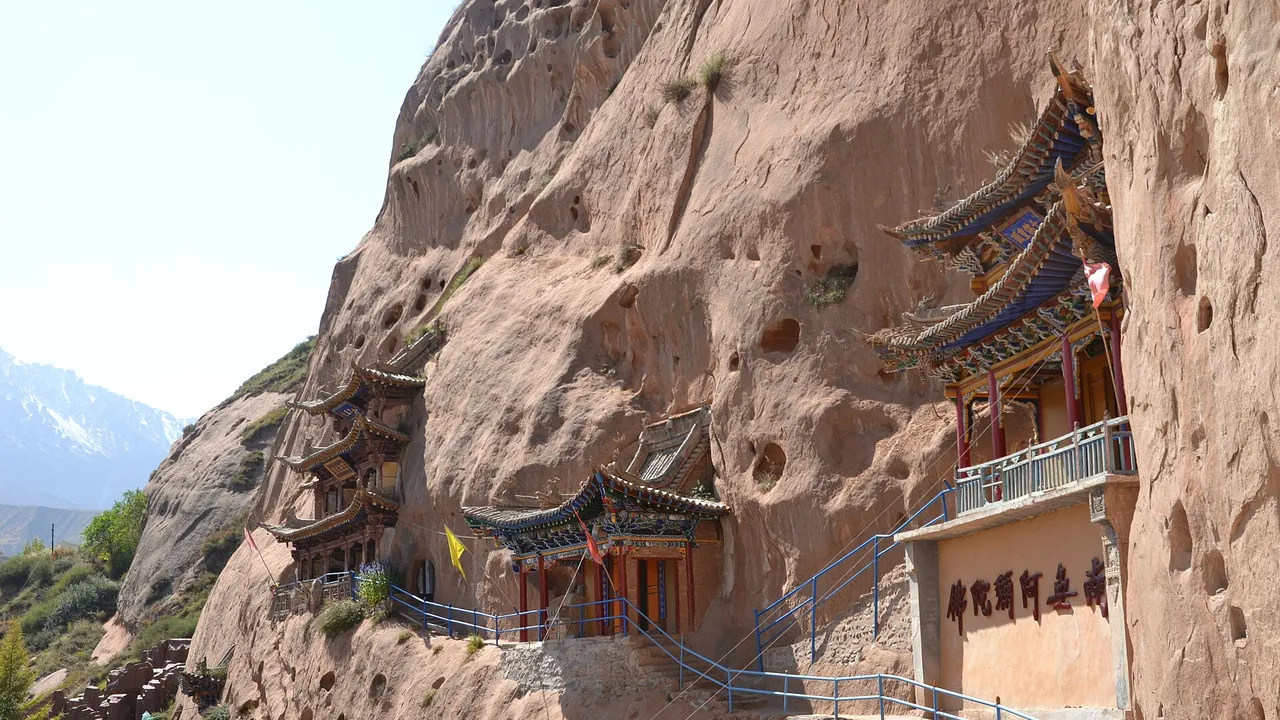
Day two enters the mountains early, about ninety minutes by car. The Thirty-Three Heavens stacks halls into a cliff over a hundred meters tall, tunnels and steps climbing near vertical, one hand on the chain and shoulder to the rock, with Qilian snow and grassland spread from the top.
Morning light enters the valley, the best hour for caves and photos alike. The complex runs from the Northern Dynasties to the Qing, the cliff's layered tool marks and later repairs stacking into a chronicle in stone.
The Thousand Buddha Caves and the Gesar Hall: The Lower Tier
On the way down, the Thousand Buddha Caves rank side by side on the cliff face, their styles complementing the Thirty-Three Heavens, thin on crowds and generous with light; lunch near the site banks strength for the afternoon's Jinta run.
The Gesar Hall honors the hero of the Tibetan epic, a second thread of belief woven through the complex. Layered multi-ethnic faith coexisting on one cliff is the very signature that sets Mati apart from other grotto sites.
The Jinta Temple Special Cave: Northern Liang Apsaras
The afternoon's centerpiece is Jinta Temple, hidden in deep mountains north of the Mati complex and reached by a special shuttle up the valley road. In the east cave, high-relief apsaras fly in stacked layers around the central pillar, Northern Liang works more sculptural and older than the familiar Dunhuang flyers.
A guide leads the special cave, and half an hour reads it thoroughly. It is fair to call it the highest-value half hour of a Zhangye heritage trip.
The Road Out: Sorting Two Days on the Drive Back
Leave the mountains straight after Jinta, about ninety minutes back to town. With phone signal flickering on the mountain road, spend the drive replaying two days of statuary and murals, since tomorrow's ancient-city ruins want that sense of time as a base.
Dinner downtown. If Jinta fell through on weather or quotas, detour to Sunan county town for its ethnic-style street so the day still lands a gain, and the evening light on the snow ranges suits photos anyway.
Luotuo City Ruins: A Han-Tang Town in the Gobi
Day three runs south to Gaotai, about ninety minutes. The Luotuo City ruins preserve a Han-Tang town whose rammed-earth walls still close their outline on the gobi, the street grid inside still legible, a nationally protected site.
The site has no shade and hard wind, so hat and water are mandatory. From a breach in the wall the whole city compresses two thousand years into one earthen-yellow geometry, the starkest stop of the trip.
The West Route Army Memorial Hall
The memorial in Gaotai county town honors the West Route Army soldiers who fell in the 1937 battle of Gaotai. Its displays of documents, relics and reconstructed scenes mark a key stop of the corridor's modern history, closing the timeline begun by the ancient sites.
Keep the visit quiet, observing the hall's photography rules. Lunch in Gaotai town after, where cuoyu noodles and skewers carry local versions.
The Road Back and a Temple Evening
Gaotai back to Zhangye runs about ninety minutes. In town by dusk, take a slow circle outside the Giant Buddha Temple if energy allows, the daytime monastery quieter in another register, a proper close to three heritage days.
After dinner, tally the timeline: Western Xia, Northern Liang, Han-Tang, Ming-Qing, and 1937, all within an hour's drive. The corridor's historical density shows itself most completely in Zhangye.
| Getting around |
|
| Budget | Tickets total about RMB 300-450 pp including the Jinta special cave, with three days of shared charter adding RMB 500-800 per head. |
| Best time | May to October is steadiest; the narrow Jinta mountain road closes in rain and snow, so confirm access before booking. |
FAQs
What if the Jinta special cave cannot be booked?
Three routes: shift the booking date flexibly, since cancellations drip back; downgrade to lower-tier caves or guided services within the Mati complex; or bank the regret as a reason to return. The main itinerary does not depend on Jinta, since the Thirty-Three Heavens and Thousand Buddha Caves carry day two alone.
Is Luotuo City worth the dedicated trip?
For ruins lovers, yes: an intact city outline against the gobi is rare even in Gansu. General visitors get a sight that leans on imagination, with little guiding or infrastructure. If choosing, take Luotuo City for archaeology, or trade it for the wetland park en route for scenery.
Does this route suit seniors?
Broadly yes, with two strains: the steep Thirty-Three Heavens climb and gobi walking at Luotuo City. Seniors can view the cliff from below and keep to the city's edge at the ruins; everything else runs on flat ground, and the memorial has seating.
What is the easiest guiding plan?
Audio guides cover the temple and the memorial; the Mati caves strongly deserve a guide, since the dating of the figures hides its logic; Jinta requires official guiding. Charter drivers usually know licensed local guides, billed per site.