
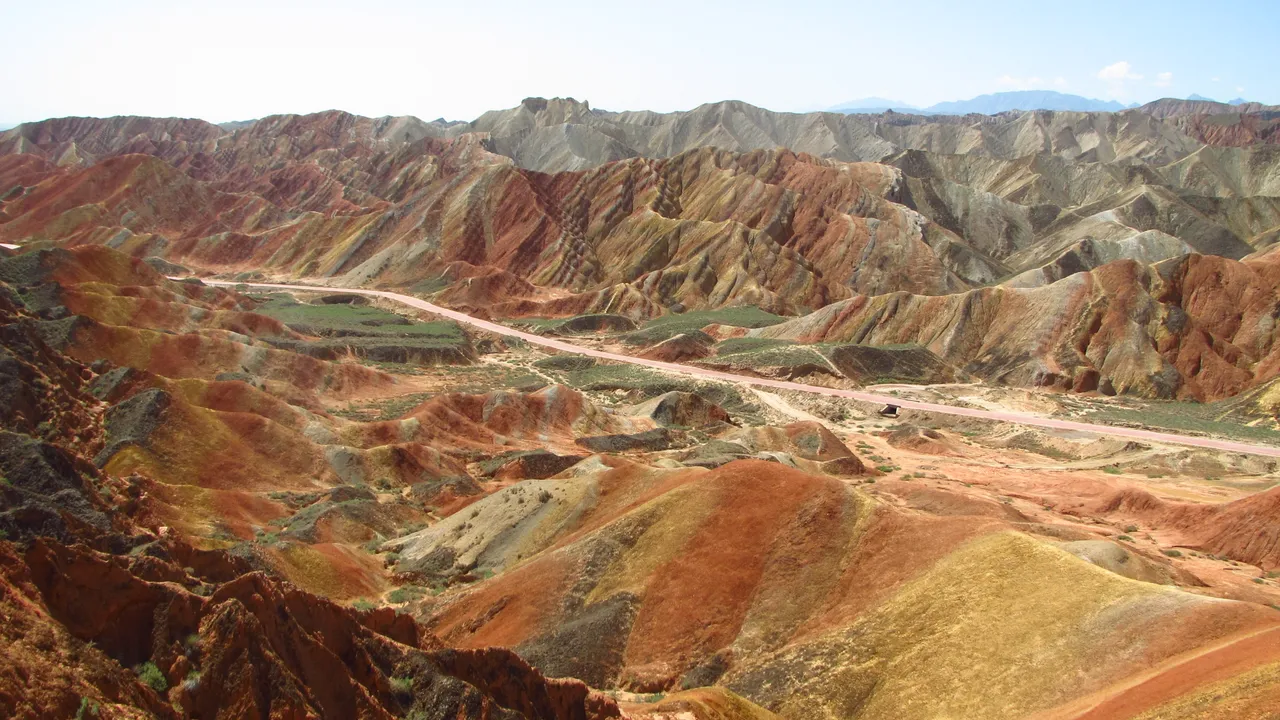
Zhangye is a landform museum: the Qicai Danxia for color, Binggou Danxia for sculpture, the Pingshanhu canyon for a deep-split crack, and Mati Temple setting grottoes into the same Qilian wall. Three days across four landform units plus a wetland finale completes the corridor's geology lesson.
The plan follows the light: the Qicai Danxia reserves sunset and next-dawn's golden windows, everything else sits in normal daylight. All drives stay under an hour, easiest by charter, with scenic shuttles covering the Qicai park and Mati.
Itinerary at a glance
| Day 1 · 15:30 | Qicai Danxia: Entering at the North Gate and Looping the Platforms |
| Day 1 · 18:30 | Platform Four, the Rosy Clouds Deck: The Sunset Main Stage |
| Day 2 · 06:30 | Second-Day Sunrise: The Hills at Dawn |
| Day 2 · 10:00 | Binggou Danxia: The Palace-Form Sculpture Park |
| Day 2 · 14:00 | Mati Temple's Thirty-Three Heavens: The Cliff Climb |
| Day 2 · 16:00 | The Thousand Buddha Caves and the Gesar Hall: The Lower Tier |
| Day 3 · 09:00 | Pingshanhu Grand Canyon: Descending into the Fissure |
| Day 3 · 13:30 | The Slot Passage and the Iron Ladder: The Canyon's Second Half |
| Day 3 · 18:00 | Zhangye National Wetland Park: A Soft Close to Three Days of Rock |
The route, stop by stop
Qicai Danxia: Entering at the North Gate and Looping the Platforms
Day one enters in the afternoon. The Qicai Danxia lies in Linze County about forty kilometers out; the north gate is best equipped with the most shuttle connections, while the west and east gates draw fewer people. Board the park shuttle and loop the platforms once for the lay of the land.
Afternoon light warms and the hill bands begin to show. Linger at Platforms Two and One, taking panoramas from the walkway corners, where the human-to-hill scale reminds you how big this landform really is.
Platform Four, the Rosy Clouds Deck: The Sunset Main Stage
Claim your spot at Platform Four an hour before sundown. It is the most saturated deck on the loop, facing the setting sun, red and orange bands deepening in the raking light through visible color steps every ten minutes. Take the outer corner of the walkway, one step back for the full panorama.
Do not rush off after the sun drops: the twenty minutes that follow often stage a purple-red reprise before blue hour. Then ride the shuttle to the gate, overnighting in Danxia town or back in the city.
Second-Day Sunrise: The Hills at Dawn
The two-day ticket's proper use is a dawn return. Register at the gate on exit the day before, then enter next morning through the east or west gate, closer to the platforms; light kindles from the east first, the hills igniting slowly.
Dawn crowds are a fraction of the sunset rush, and the walkways hush enough to hear the wind. Breakfast outside the park after, then start day two.
Binggou Danxia: The Palace-Form Sculpture Park
Binggou Danxia sits about twenty kilometers from the Qicai park with the opposite temperament: plain in color, supreme in form, lattice-window and palace-like rock walls stacking over ochre slopes, a textbook of window-and-palace Danxia landforms.
The trails split into the Little and Great Western Heaven sections, about two hours combined. Quieter than the color assault of Qicai, Binggou rewards slow reading of the rock shapes.
Mati Temple's Thirty-Three Heavens: The Cliff Climb
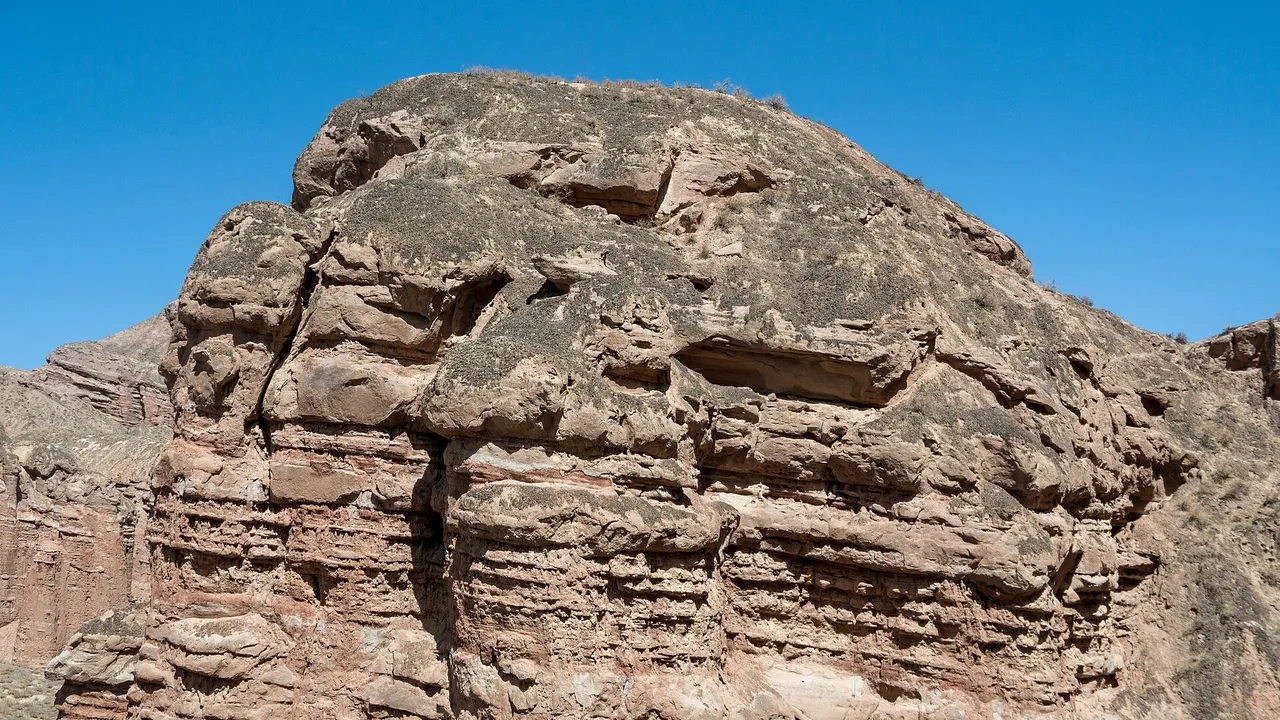
The afternoon shifts to Mati Temple, about an hour's drive. The Thirty-Three Heavens stacks halls inside the cliff, its tunnels and steps climbing nearly vertical, one hand on the chain and shoulder to the rock, pace slow.
From the top the Qilian snow ranges line the grassland horizon, wind surging up the valley. Inside, traces of Northern Dynasties statuary and murals overlap with later repairs, a carving history you can run your hand across.
The Thousand Buddha Caves and the Gesar Hall: The Lower Tier
On the way down, the Thousand Buddha Caves rank side by side on the cliff face, their styles complementing the Thirty-Three Heavens, thin on crowds and generous with light; with time tight, these two groups alone fill two hours well.
The Gesar Hall honors the hero of the Tibetan epic, a second thread of Tibetan belief woven through the complex. Evening light slants into the valley; dinner waits in town, where a bowl of beef xiao fan pulls the day back to the present.
Pingshanhu Grand Canyon: Descending into the Fissure
Day three heads northeast, over an hour to the Pingshanhu Grand Canyon. Water cut this deep fissure through red conglomerate, gentle on top but staggering below: walkways spiral down the walls, and at the narrowest slot passage you turn sideways to pass.
The loop hike takes two to three hours, with the iron-ladder segment the thrill peak, rising straight up. The height-averse can keep to the rim circuit and still feel the canyon's scale.
The Slot Passage and the Iron Ladder: The Canyon's Second Half
The canyon's second half starts from the floor. The walls close overhead into a slot of sky, noon sun leaking through as a single band; the ladder section climbs hand over foot, and looking back the walkways hang on the red walls, achievement included.
Eat a simple meal at the visitor center on the way out and slow the afternoon for the drive home. The hike burns reserves, so double the sun protection and water.
Zhangye National Wetland Park: A Soft Close to Three Days of Rock
Back in town by evening, give the last hour to the wetland. After three days of red hills and canyons, the Heihe reeds and waterbirds are the gentle coda of the same geological play, boardwalks glowing in the low sun.
Dinner follows straight from the park, beef xiao fan or night-market skewers. With color, sculpture, fissure and cliff caves all done, Zhangye's landform course closes with full credit.
| Getting around |
|
| Budget | Tickets total about RMB 300-400 pp, three days of shared charter add RMB 500-800 per head, for an overall RMB 900-1500. |
| Best time | May to October is prime; the Danxia needs clear skies, so check cloud before setting out, and schedule canyon hiking away from noon glare. |
FAQs
Do four landforms in three days blur together?
Not if you order them as color, form, fissure and cliff caves: Qicai teaches color, Binggou form, Pingshanhu scale, and Mati adds the human layer. Fatigue usually comes from repeated light and angles, so vary the hours and it never lands.
Is sunrise worth the early start, and where to stay?
Worth it: dawn colors run soft with almost no crowds, the day's best shooting window. Easiest is sleeping in Danxia town after sunset, minutes from the gate at dawn; from the city it means a forty-minute dark drive, doable but punishing.
How demanding is the Pingshanhu canyon?
Moderate to demanding: two to three hours, big elevation swings and many steps, with the iron ladder needing hands. Average fitness or weak knees should keep to the rim circuit, trading some scenery for half the effort. Supplies inside are scarce, so carry water and snacks.
How do I rework the plan in bad weather?
Danxia lives by the sky: overcast grays the color, rain boosts saturation but slicks the walkways. The flexible swap sends bad-weather days to Mati and the city museums, holding the Danxia for a clearing window; the three-day frame carries slack, so trade days front to back.