
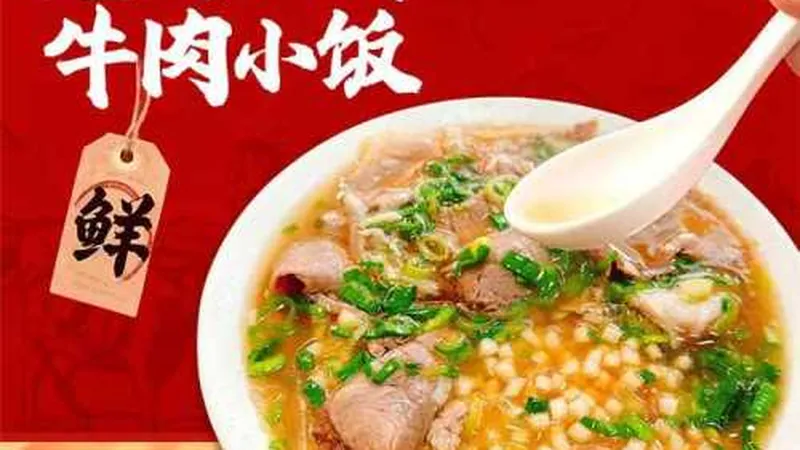
Zhangye wakes inside a bowl of beef xiao fan. The name misleads: xiao fan is not rice but noodle dough cut to chess-piece size, drowned in boiling beef broth. The town's noodle system runs on its own rules, xiao fan, cuoyu, paozi and latiaozi each with its shape and method, and one day walks the whole rotation on the meal clock.
No rushing here: the main arena is the Ganzhou market and the lanes around Zhenyuan Tower, shifting to the night market after dark. Walking plus taxis, under five kilometers all day; your stomach's capacity is the only constraint.
Itinerary at a glance
| 07:30 | Beef Xiao Fan: The Town's Wake-Up Call |
| 10:30 | Cuoyu Noodles: The Craft of Two Pointed Ends |
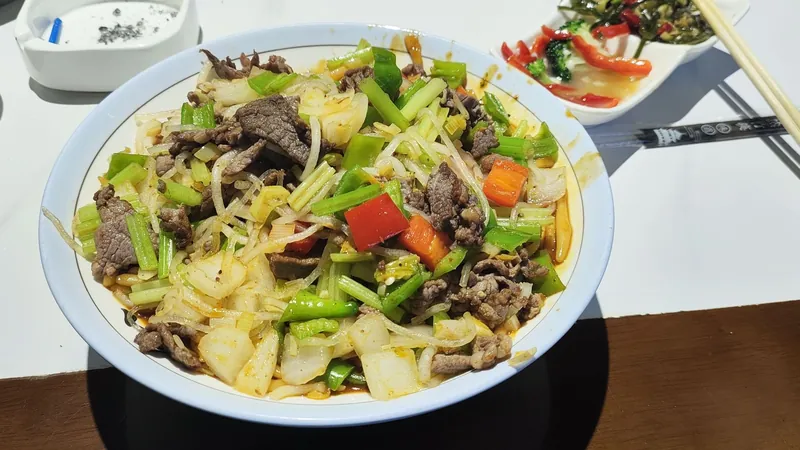
| 13:00 | Stir-Fried Paozi and Latiaozi: Noon at the Noodle House |
| 19:00 | The Zhangye Night Market: Skewers, Yu'er Fen and Grey-Bean Soup |
The route, stop by stop
Beef Xiao Fan: The Town's Wake-Up Call
Watch the scene first: the cook cuts rolled dough into dice-sized cubes, drops them in boiling water, scoops with a strainer into bowls, and floods them with rich beef-bone broth, slices of cooked beef on top, scallion and chili scattered over. The cubes slide and spring, the broth thick but never greasy, the town's single synchronized morning act.
The old shops fire their pots around six, locals eating standing at the door, and only then does the town wake. Add a fried dough stick or a sugar cake and the Zhangye breakfast is complete.
Cuoyu Noodles: The Craft of Two Pointed Ends
The mid-morning intermission belongs to cuoyu. Dough is rubbed on the board into little fish, pointed at both ends and plump in the middle, served in soup or dry-tossed. The dry version comes with hot chili oil, garlic sprouts and vinegar, the fish shapes carrying the sauce, one bite at a time without stopping.
Some old shops rub the dough in view of the counter, the cook's hands producing dozens a minute. Eat after watching, and the bowl tastes twice as good.
Stir-Fried Paozi and Latiaozi: Noon at the Noodle House
Noon calls for a proper noodle house. Paozi are short noodle lengths boiled to half-done then blast-fried with pork slices, green pepper and glass noodles, full of wok breath and chew, the heavyweight of Zhangye noodles; latiaozi are hand-stretched whole strands, tossed with oily pork or vegetarian toppings.
Ordering runs simple: paozi by the plate, latiaozi with free refills of noodles, toppings priced separately. For two, one paozi plus one latiaozi and a bowl of the plain noodle broth to settle it all is the local standard lunch.
The Zhangye Night Market: Skewers, Yu'er Fen and Grey-Bean Soup
After dark the night market takes over, trading the day's noodle seats for grill and sweets. Order lamb skewers by the handful, ten to a bunch, cumin and chili to taste; yu'er fen serves cold jelly cut into little fish under vinegar sauce and chili oil, slick and refreshing; grey-bean soup runs warm, thick and sweet, the proper close.
The market doubles as a window on Zhangye evenings: off-duty locals crowding plastic stools, kids chasing through the aisles, grill smoke tinting half the street blue. Walk the pedestrian street home afterward and digestion takes care of itself.
| Getting around |
|
| Budget | Grazing all day costs about RMB 60-120 pp; even eating your fill at every stop stays near RMB 150. |
| Best time | Year-round; beef xiao fan runs hottest from 7:00 to 9:00 while the night market fills after 7 pm, so time both ends. |
FAQs
Are four sittings in one day too many?
Portions matter, not the count. Zhangye noodles run cheap and portion-flexible, so stopping at six or seven tenths each sitting turns four meals into one curve. If truly full, cut the mid-morning cuoyu and keep the dawn xiao fan and the night market at both ends.
Do these places queue or take reservations?
None take reservations; timing is everything. Dodge the eight o'clock xiao fan peak, sit at noodle houses before one, and expect the market to fill after seven. Zhangye draws fewer tourists than big destinations, so weekdays are walk-in and weekend favorites cost ten minutes or so.
What can non-mutton eaters find?
Plenty. Beef xiao fan, cuoyu, paozi and latiaozi all run beef or vegetarian, untouched by mutton; yu'er fen and grey-bean soup are vegetarian. Night grills cook beef alongside lamb, so order beef skewers; the town's carbohydrate system treats restricted diets kindly.
What should sensitive stomachs watch for?
Three things: drink the noodle broth hot, go easy on cold dishes and dressed jelly, and order skewers well done. Local heat runs mild for the northwest, with chili always optional. Carry bottled water, since the dry climate makes hydration during meals matter more than avoidance.