
Old Zhangye is perfectly scaled for walking: the Giant Buddha Temple, the Shanxi guild hall, Zhenyuan Tower and the wooden pagoda all sit within twenty minutes of one another, stitched together by the lanes and markets that are the town's real daily life. This walk sets no checklist; the goal is a rounded feel of Ganzhou by day's end.
The rhythm runs temple in the morning, tower and noodles at noon, lanes in the afternoon and the old street by evening. At about 1,500 meters elevation with dry summers, carry water; shade and arcades are frequent, and rest comes easy.
Itinerary at a glance
| 09:00 | The Giant Buddha Temple and Shanxi Guild Hall: Xia Buddhism Meets Shanxi Merchants |
| 11:30 | Zhenyuan Tower and Its Four Streets: The Noon Market under the Drum Tower |
| 14:00 | The Wooden Pagoda and the Old Lanes of Xianfu Street |
| 17:00 | Ming-Qing Street and the Evening Close |
The route, stop by stop
The Giant Buddha Temple and Shanxi Guild Hall: Xia Buddhism Meets Shanxi Merchants
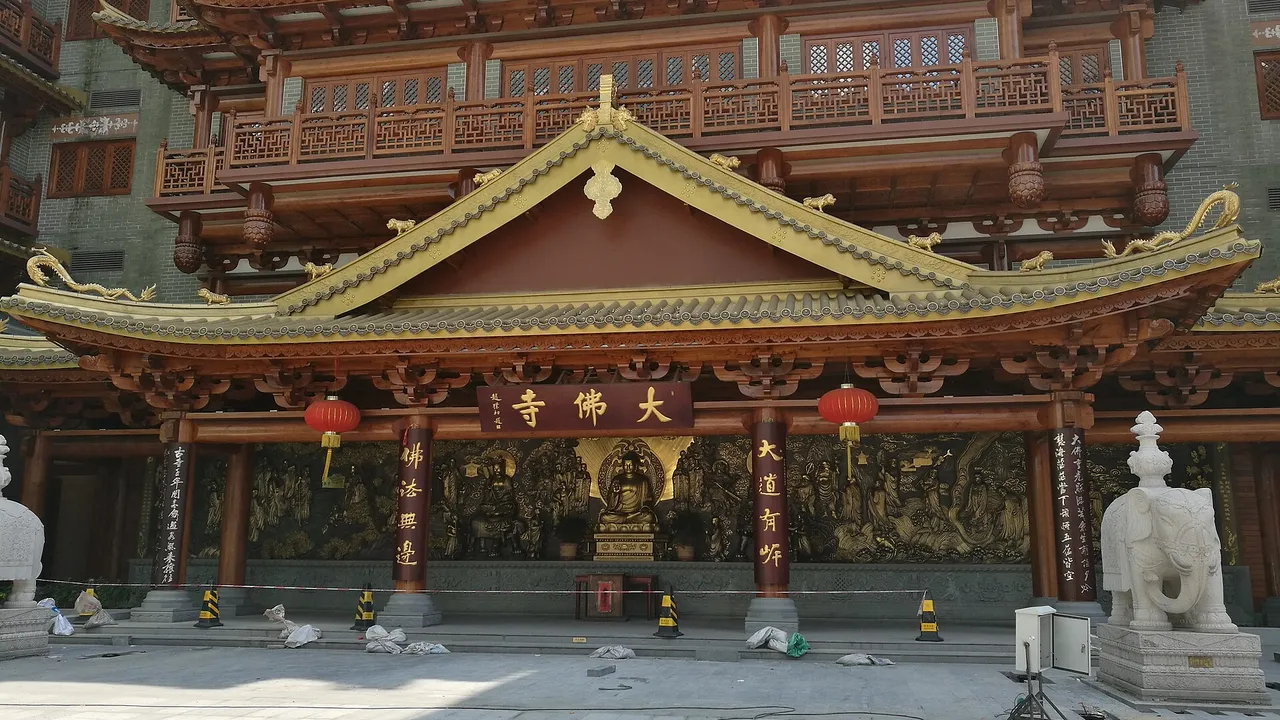
The morning opens at the Giant Buddha Temple. The reclining Buddha stretches thirty-four and a half meters, China's largest indoor clay figure, with murals carrying Journey to the West motifs older than the novel. Old trees shade the yard, and morning light slanting through the hall door is the best hour for both viewing and photos.
Beside it stands the Shanxi guild hall, the Qing-era home of Shanxi merchants in Zhangye, its Chunqiu Tower and opera stage intact; read the Guan Yu cult and the guild regulations together and the old trade roads of the corridor come alive.
Zhenyuan Tower and Its Four Streets: The Noon Market under the Drum Tower
Walk ten minutes east of the temple to Zhenyuan Tower, the Ming drum tower rising three stories over the crossing of four great streets, its four boards reading Spring Rain over the Golden City, Dawn Moon at the Jade Gate, Clear Snow on the Qilian and Ancient Pastures of Juyan, the town's compass points hung in calligraphy.
Lunch around the tower: each of the four streets keeps noodle shops and snack counters serving beef xiao fan, cuoyu noodles and stir-fried paozi to taste. Afterward stroll East or West Street, where heritage facades mix with signboards, the truest streetscape of the old town.

The Wooden Pagoda and the Old Lanes of Xianfu Street
The afternoon goes to the lanes. The square wooden pagoda of the Wooden Pagoda Temple stands along Xianfu Street, nine tiers rising and rebuilt through the centuries, its present body later-era work, yet the timber craft against old courtyards remains one of the old town's most photogenic corners.
The surrounding lanes hold the town's street-level texture: barbers, watch repairers, old teahouses and new cafes sharing one block. When legs tire, settle into an old teahouse, where a few yuan of tea buys an afternoon.
Ming-Qing Street and the Evening Close
Return to Ming-Qing Street at the town center by evening. Lanterns hang along this antique-style commercial block and glow after dark, night stalls and small cultural shops lining the way as the old town switches from day mode to night.
Dinner on the street or at the neighboring Ganzhou market: grilled skewers, yu'er fen jelly noodles and grey-bean soup in one round. The walk back to the hotel caps roughly ten kilometers, closing old Zhangye into a complete circle.
| Getting around |
|
| Budget | The Giant Buddha Temple is about RMB 40 while most of the route is free; meals run RMB 40-80 pp. |
| Best time | April to October suits an all-day walk; in summer split it into morning and evening with a teahouse or noodle break at noon to escape the blaze. |
FAQs
Is old Zhangye walkable?
Very. The core runs about two kilometers east to west and a bit over one north to south, with the main sights and eateries inside walking range; ten kilometers a day is the normal load. Only the wetland and the Danxia require vehicles; the old town itself is walkable throughout.
Does the Giant Buddha Temple charge admission, with any discounts?
Entry runs about RMB 40, sold on site, with half-price or free admission for students and seniors under posted rules; show valid documents at purchase. Holiday hours may extend, tower climbs or special shows sometimes bill separately, and same-day notices govern all of it.
Can the old town be walked in half a day?
Yes, but only the skeleton: the temple and the tower are the two musts, about three hours. The wooden pagoda and Ming-Qing Street are atmosphere bonuses; cut them when pressed, or save the street for after dinner when it lights up, which pays better anyway.
Any photo-spot tips in the old town?
Three frames earn the day: the temple's old trees and hall eaves in the morning light (the hall itself bans cameras), the symmetrical street view at the tower crossing at noon, and the lantern-lined depth of Ming-Qing Street after it lights up. For the wooden pagoda, a framed shot down an old lane works best in afternoon backlight.