
Read Kanas with water as the lead: day one runs from Wolong Bay through Shenxian Bay into the lake's near views, day two climbs the pavilion for the whole lake, hears the suer flute in the Tuva old village, and takes the border permit out to Baihaba's frontier river, and day three exits with Wucaitan's sunset folding three days of water color into one valley.
Two nights inside the reserve or at Baihaba are the precondition for morning mist and a quiet lake. Kanas is vast with frequent shuttle transfers, so build the plan backward from the timetable; catching buses is this route's basic skill.
Itinerary at a glance
| 10:00 | Wolong Bay: Where the Bays Begin |
| 11:30 | Moon Bay: The Arc and the Footprints |
| 13:30 | Shenxian Bay: Noon Calm and the Mist Foreshadowed |
| 16:00 | Kanas Lake: A Lakeside Afternoon |
| 08:30 | The Fish Watching Pavilion: The Lake in Full |
| 11:00 | The Kanas Tuva Old Village: A Turn of the Suer Flute |
| 15:00 | Baihaba: Border Permit and the River beyond the Line |
| 13:00 | The Long Haul Out: From Baihaba back to Jiadengyu |
| 17:30 | Wucaitan and the Burqin Night Market: The Signature under Three Days of Water |
The route, stop by stop
Wolong Bay: Where the Bays Begin
Enter at Jiadengyu and let the shuttle deliver the bays in order. Wolong is the first read: a shoe-shaped shoal lying in blue-green water, the mixed spruce-and-birch island's outline complete, morning side-light splitting the surface into bright and dark halves. The boardwalk drops to the waterline for a close look at the color, cooler than the platform.
Keep the first stop under forty minutes. The bays build in sequence, so save your best attention for Moon Bay and Shenxian Bay.
Moon Bay: The Arc and the Footprints
Moon Bay is Kanas' cover shot. The river bends a flawless arc, water grading green to blue to milky teal, and the footprint-shaped patches on the shoal carry a story told for years. Late morning gives favorable light and open platforms, the standard hour for the complete bend.
Walk the boardwalk ten minutes toward the lake and look back from the higher ground: the arc and the water's gradation angle best there. The path is gentle, and moving slowly beats standing still and machine-gunning frames.
Shenxian Bay: Noon Calm and the Mist Foreshadowed
At noon Shenxian Bay's midstream islet is crystalline: the fog gone, the surface calm, reflections sharp, the slope open for sitting. Today is reconnaissance only; if you can rise early, the thick-mist version is the bay's real feature tomorrow.
Handle a light meal at the bay-side service point. Shuttles run about every twenty minutes, so finish eating just in time to board into the lake country.
Kanas Lake: A Lakeside Afternoon
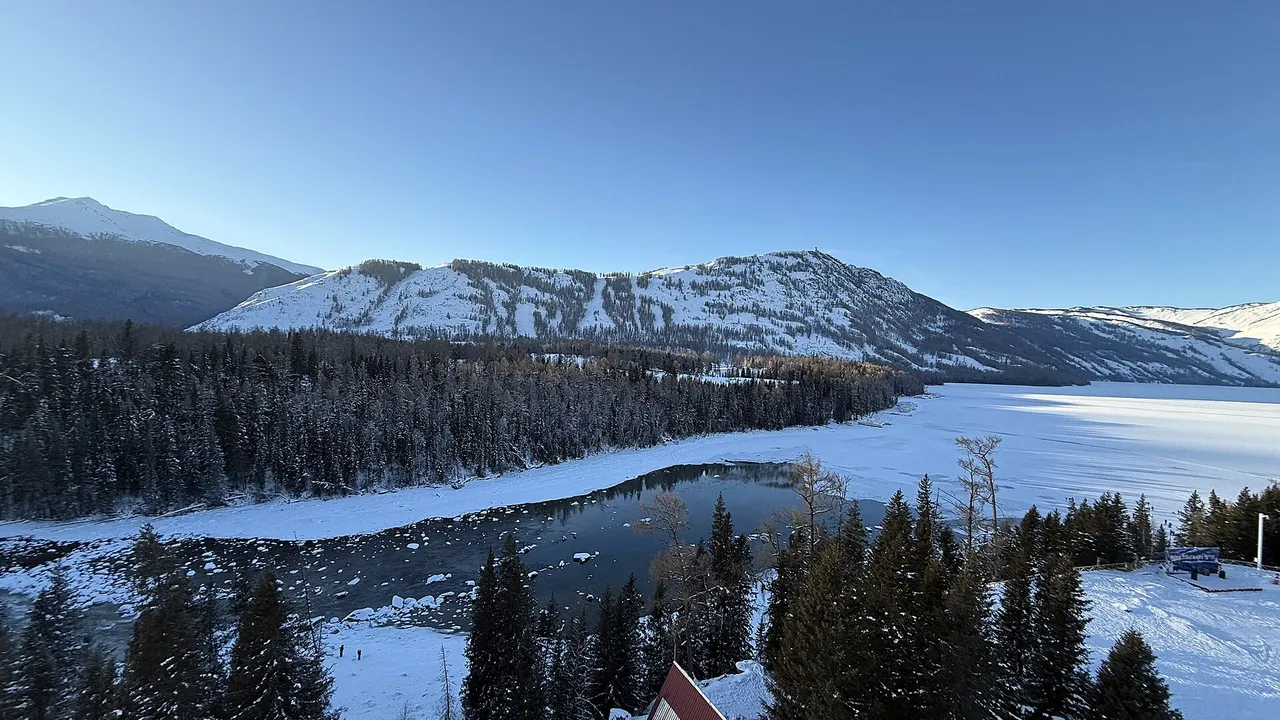
Into the lake country. The lakeside boardwalk runs at the water's edge, and up close the milky teal shows its suspended mineral grains, a hue only glacier melt produces. The lake's head is the river's exit where water leaves to carve the bays, and standing there you grasp lake and bay in one relation.
Evening wind wrinkles the surface into scales of light. Tonight you sleep in the lake country; walk the shore after dinner, the stars run clear, and the cabin village lights its windows.
The Fish Watching Pavilion: The Lake in Full
Day two opens with the climb. After the mountain transfer and a stairway stretch, Kanas spreads below: the curves of its bays, snow peaks opposite, color patches drifting across the surface with the clouds, the only high angle in Kanas and the only way to feel the lake's true size.
The pavilion's legend is the giant fish, still unsettled. The view outranks the mystery: on clear days most of the lake and the ridgelines show, and morning light is the clearest.
The Kanas Tuva Old Village: A Turn of the Suer Flute
Descend through the Tuva old village. Log cabins, fences and drying racks frame the daily picture, and the Tuva household visit is the fixed program here: milk tea, a taste of milk wine, and an elder playing the suer, a three-holed wooden flute of desolate tone.
Visits charge per head including performance and refreshments. Respect the rules: remove shoes or sit as directed, ask before photos, especially of elders and the instruments.
Baihaba: Border Permit and the River beyond the Line
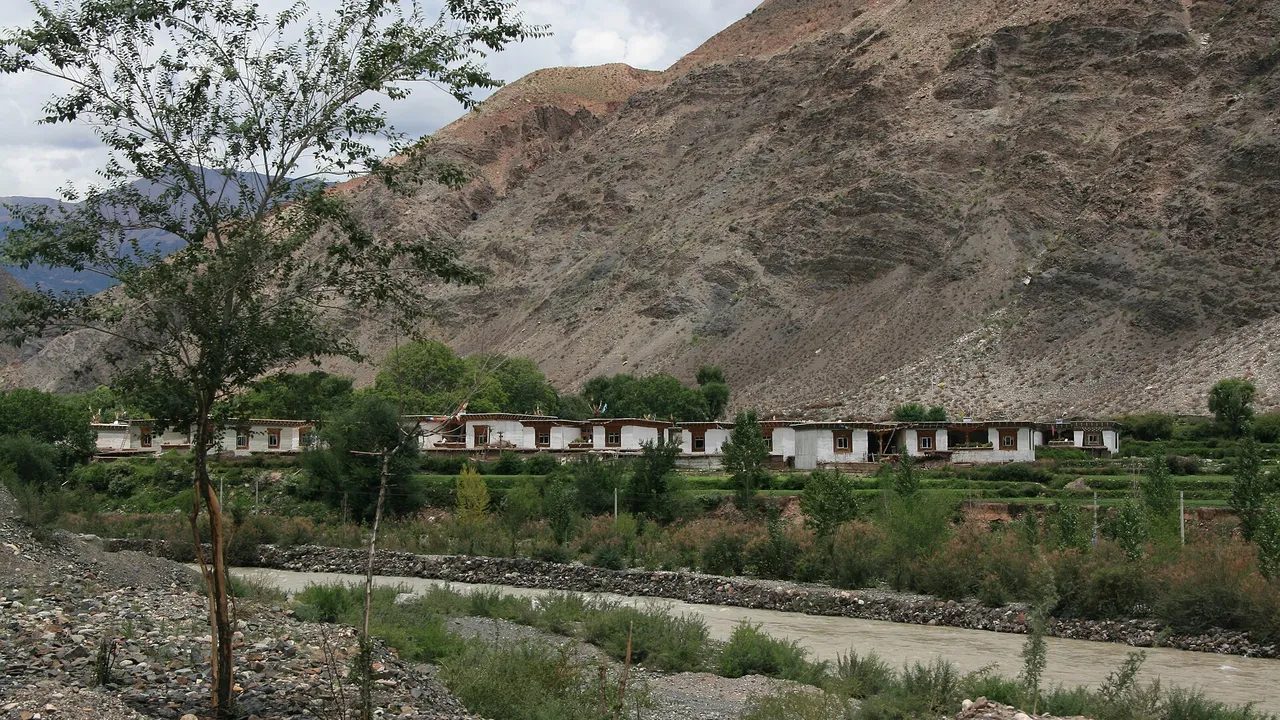
The afternoon transfer heads to Baihaba, where the border permit is the hard gate: apply at the designated point with your ID, simple but mandatory, while foreign passport holders follow local entry rules. The village is a mixed Tuva and Kazakh log-house settlement, with Kazakhstani mountains across the line.
From the border canyon viewpoint, read the boundary river and the far shore, and treat the boundary marker as something to watch quietly rather than shoot loudly. Baihaba runs quieter than the lake country, its evening baseline of chimney smoke and cowbells.
The Long Haul Out: From Baihaba back to Jiadengyu
Day three morning returns from Baihaba through the Kanas transfer center and out to Jiadengyu, about three hours of transfer. The car is the best place to reread the trip: the bays' arcs, the lake's color patches, the village's chimney smoke, all replaying along the mountain road.
Leave slack at transfer points, queues run long in season; eat a simple meal at Jiadengyu and push straight to Wucaitan for the afternoon.
Wucaitan and the Burqin Night Market: The Signature under Three Days of Water
The finale after the mountains is Wucaitan: yardangs on the Irtysh's north bank striped red, yellow and violet by the setting sun, birches gilded across the river, the water you watched for three days closing in its hottest register. Twenty minutes by car back to Burqin after sunset.
Close at the riverside market on grilled fish, skewers and kvass, translating lake-and-bay flavors into river flavors. Kanas' water becomes memory tomorrow; tonight's charcoal is the nearest footnote.
| Getting around |
|
| Budget | Entry and shuttles total about RMB 450-650 pp with the Baihaba shuttle extra, and two nights run RMB 300-800. |
| Best time | June to September, the open season, keeps mist, lake color and grassland all live; mid-to-late September can catch golden birch and first snow as the water cools. |
FAQs
How do I get the border permit for Baihaba?
Apply on the spot with your ID at the Kanas transfer center or the designated point in Habahe county, simple and cheap, issued while you wait. Foreign passport holders should confirm current policy in advance. Keep documents on you, checks occur en route.
What is the smartest lodging plan for three days?
Two nights lakeside, or one lakeside plus one in Baihaba: sleeping inside buys the mist, the quiet water and sunrise, half of Kanas' value. Base in Jiadengyu is cheaper but burns hours commuting and shows you only the scheduled-cut version.
Is the pavilion worth the extra transfer fare?
Yes: it is the only viewpoint showing the lake whole and the only way to feel its scale, best on a clear morning. Skip it only in persistent rain with poor visibility, and move the money and hours to the Tuva visit or the lakeshore boardwalk.
What if three days are not enough for Kanas?
A normal regret: the complete reading adds Hemu and the winter snows, which are other trips entirely. The three-day version's job is to teach you the water system and villages; keeping Hemu's morning mist as next time's reason beats stuffing it all into one pass.