
Old Beijing is not built for sightseeing; it is built for walking. The chessboard grid of hutongs laid out by the Yuan dynasty survived seven centuries, and its gray walls, door piers, pigeon whistles and locust-tree shadows only reveal themselves at walking pace. This route starts with the water of Shichahai, passes through the timekeeping of the Drum Tower, the street life of Nanluoguxiang and the scholarly air of Guozijian, and ends at dusk in Wudaoying — about 12 kilometers, with subway only for the ride home.
The rule of a city walk is: don't rush. The plan runs 8:30 to 20:00, with 20-40 minute walking segments, two proper sit-down meals and three incidental coffees. It aims not to see everything but to see through a few things — hutongs are not for looking at, they are for walking through.
Itinerary at a glance
| 08:30 | Morning Circuit of Shichahai: Yinding Bridge and the Cold-Water Swimmers |
| 10:00 | The Drum & Bell Towers: Old Beijing's Time Zero |
| 11:30 | Lunch: Fangzhuanchang 69 and Hutong Kitchens |
| 13:00 | Nanluoguxiang, Done Right: Walk the Side Lanes |
| 15:00 | Guozijian Street: The Most Scholarly 700 Meters in Beijing |
| 16:30 | Wudaoying Hutong: Coffee, Boutiques and Blue Hour |
| 19:00 | Yonghe Temple by Night & the Ride Home |
The route, stop by stop
Morning Circuit of Shichahai: Yinding Bridge and the Cold-Water Swimmers
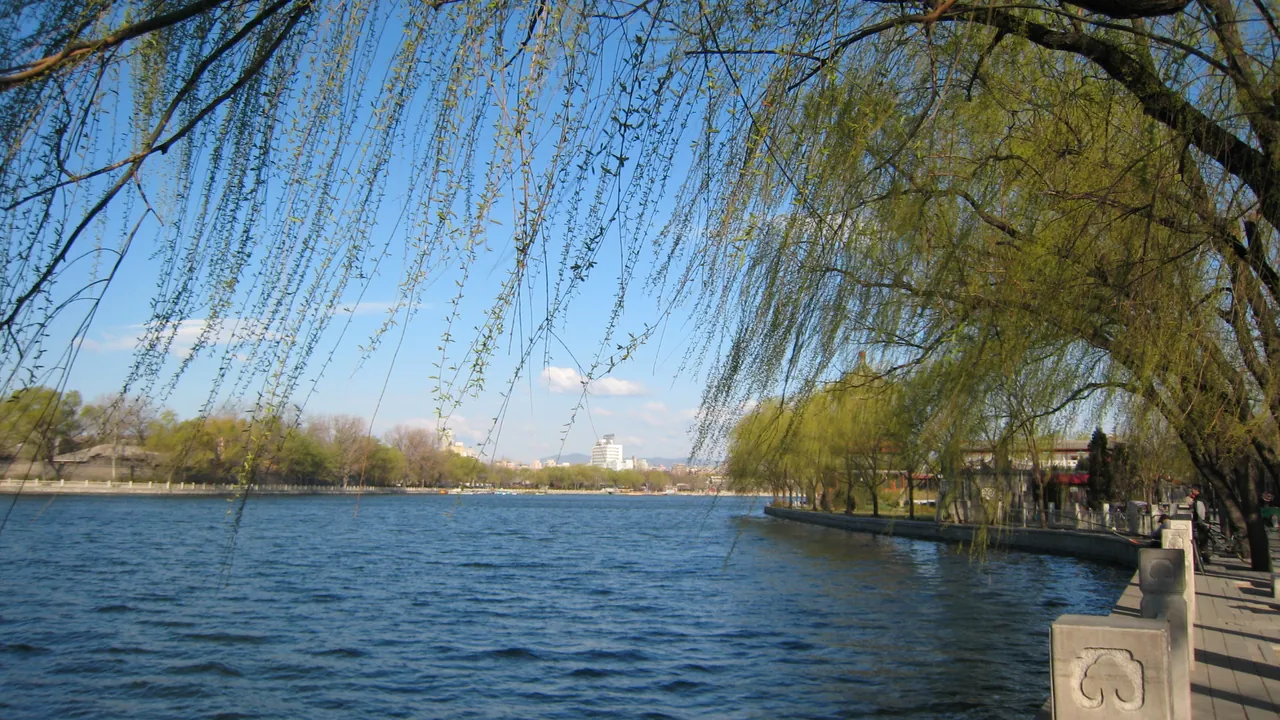
Enter via Lotus Market and circle Qianhai lake counter-clockwise. Mornings belong to locals: winter swimmers hauling out of the icy water, bird-cage owners hanging cages on the willows, old calligraphers writing the Orchid Pavilion Preface on stone slabs with sponge brushes — the characters evaporate in five minutes, and they write again.
Pause on Yinding (Silver Ingot) Bridge — viewing the Western Hills from here is one of old Beijing's eight scenic sights, and on clear days the mountain line still shows. The century-old restaurants by the bridge can wait; save your appetite for the Drum Tower.
The Drum & Bell Towers: Old Beijing's Time Zero
For three dynasties, the whole city kept time by these towers: drums at dusk, bells at dawn, for six hundred years. Climb the Drum Tower's 45 steep steps (admission RMB 25 includes the hourly drum performance) — when the two-meter drum booms, you feel it in the chest. From the top, gray tile roofs roll to the horizon: the most ceremonial height on this walk.
The Bell Tower stands 100 meters north — no performance but starker beauty; climb both if time allows (combo RMB 40). At their foot sits Zhao Fujie grocery, a state-run shop still ladling sesame paste by weight from vats — one whiff and you understand old Beijing.
Lunch: Fangzhuanchang 69 and Hutong Kitchens
Fangzhuanchang No. 69, just east of the Drum Tower, is the ceiling of hutong noodles: around RMB 20 a bowl, the sauce slow-fried with six-mill bourbon-yellow soybean paste and pork belly, eight toppings, smell before you stir. Lunch queues run 20-40 minutes — take a number and browse Baochao Hutong meanwhile.
Alternatives: Yao's Chao Gan (stewed pork liver) with steamed buns is the orthodox old-Beijing brunch, or duck into any lane kitchen where locals outnumber tourists — a reliable rule.
Nanluoguxiang, Done Right: Walk the Side Lanes
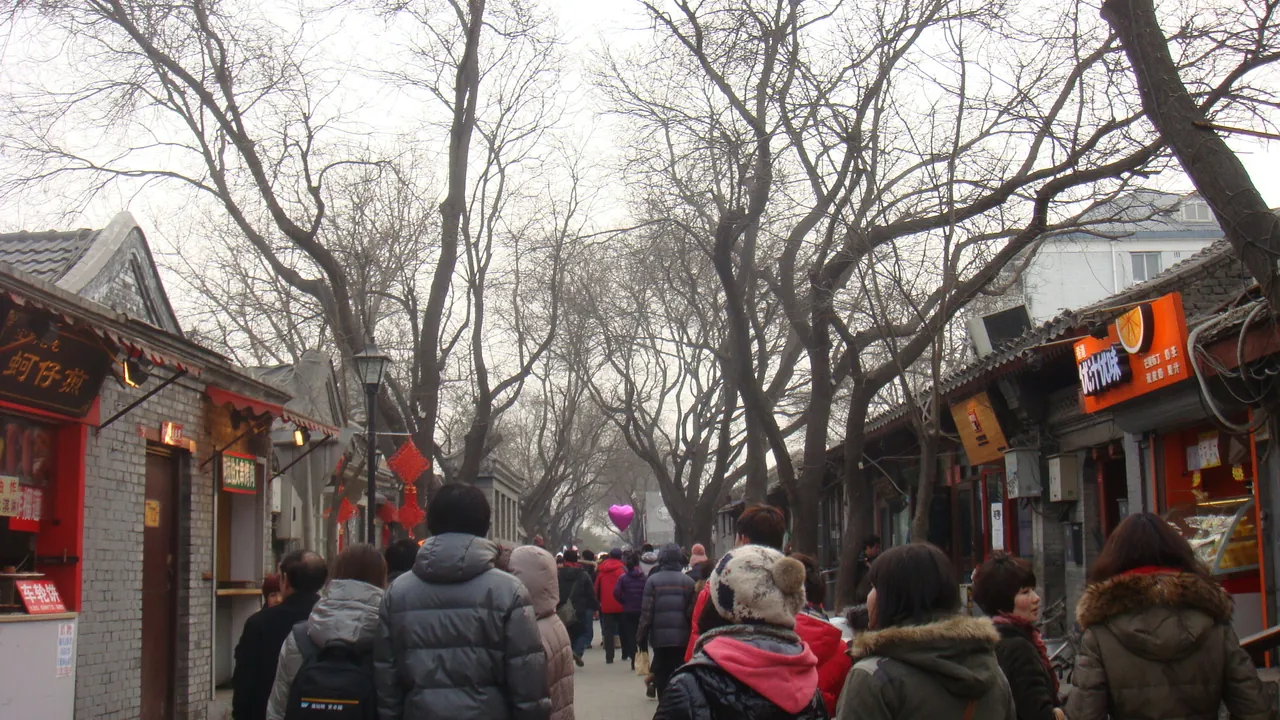
The 787-meter main drag of Nanluoguxiang on weekends is a crush — but its value was never the main street; it is the sixteen hutongs branching off both sides. Maor Hutong holds the residence of Wanrong, the last empress; No. 13 Yu'er Hutong is Qi Baishi's former home and museum (RMB 5, crabapple blossoms in April); Suoyi Hutong is quiet enough to hear bicycle bells.
The play: cross the main lane in 10 minutes, then loop through Maor → Yu'er → Fuxiang hutongs for 40 minutes. Read the door piers (round for military officials, square for civil) and count the door pins (two or four, by rank) — details no signboard will explain.
Guozijian Street: The Most Scholarly 700 Meters in Beijing
A 10-minute ride (or 25-minute walk) from Nanluoguxiang's north end brings you to Guozijian Street — the only street in Beijing still carrying four painted memorial archways, shaded by scholar trees, with the Confucius Temple and the Imperial Academy (the ancient highest school) facing each other. Combo admission RMB 30 gets you 198 steles listing 50,000 jinshi exam graduates across three dynasties — Zeng Guofan, Li Hongzhang and Ji Xiaolan are all in the stone.
Even without tickets, the street itself rewards a slow pass: touch the stone ordering all officials to dismount, photograph the archways, and sit a while under the 600-year-old 'Censor Cypress' in the temple yard — the proper use of this street.
Wudaoying Hutong: Coffee, Boutiques and Blue Hour
Across from Guozijian's south gate lies Wudaoying — hutong commerce 2.0: calmer than Nanluogu, with just the right density of courtyard cafes, boutiques, indie bookshops and wine bars. Pick a courtyard cafe (upper-floor street-facing seats catch the yellow roofs of Yonghe Temple) and let 12 kilometers of legs go flat.
The lane's east end faces Yonghe Temple's vermilion wall; at dusk the silhouette of Wanfuge Pavilion over the wall is a photographer's quiet spot. These trees, this wall, this lane — the right place to end a city walk.
Yonghe Temple by Night & the Ride Home
Yonghe Temple stops admitting at 4:30 pm, but its outer wall and archway are always visible, and evening lighting deepens the gold roofs. On lunar new-moon days and festivals, residents circle the wall with prayer wheels and incense — a bonus no guidebook schedules.
Return via Yonghegong station (lines 2/5). After twelve kilometers you understand the scale of old Beijing: not a city of monuments, but a living city you can walk all over.
| Getting around |
|
| Budget | Food & tickets approx. RMB 150-260 pp |
| Best time | Mar-May and Sep-Nov are ideal; hutongs after snowfall are another city |
FAQs
What if it rains?
Light rain gives hutongs their best mood and the stone lanes drain well; in heavy rain, move Wudaoying earlier and hold up in cafes and bookshops.
Is it safe to walk hutongs alone at night?
The route stays on lively blocks and is fine before 8-9 pm; later, keep to avenues rather than empty lanes. Nighttime safety in Beijing is generally excellent.
Can I cycle this route?
Possible but pointless — the essence is walking pace; cycling makes you miss the door piers and tree shadows. Walk it and spend the saved energy on the morning lake circuit.
Is the lake circuit safe when frozen?
When the official ice rink opens (late Jan-Feb), you can skate on the lake via its entrance only — never on wild ice; the shore circuit stays open all winter.