
Beijing is not a food desert; it is a food maze — the good stuff hides behind plain facades, deep in hutongs, under residential blocks, and you need a correctly ordered list. The day opens with breakfast: douzhir (mung-bean fermentation drink) is the courage test, pea-flour cakes and ludagunr are the sweet reward. Lunch is copper-pot lamb hotpot, mid-afternoon is the Niujie halal snack street, dinner is roast duck as the headliner, and for the brave, a midnight bowl of luzhu offal stew closes the account.
The sequence is engineered: snacks before heavy dishes, the sour shock of douzhir at your bravest fasting hour, the rich duck at your hungriest. Arrive hungry, wear elastic waists, execute as written.
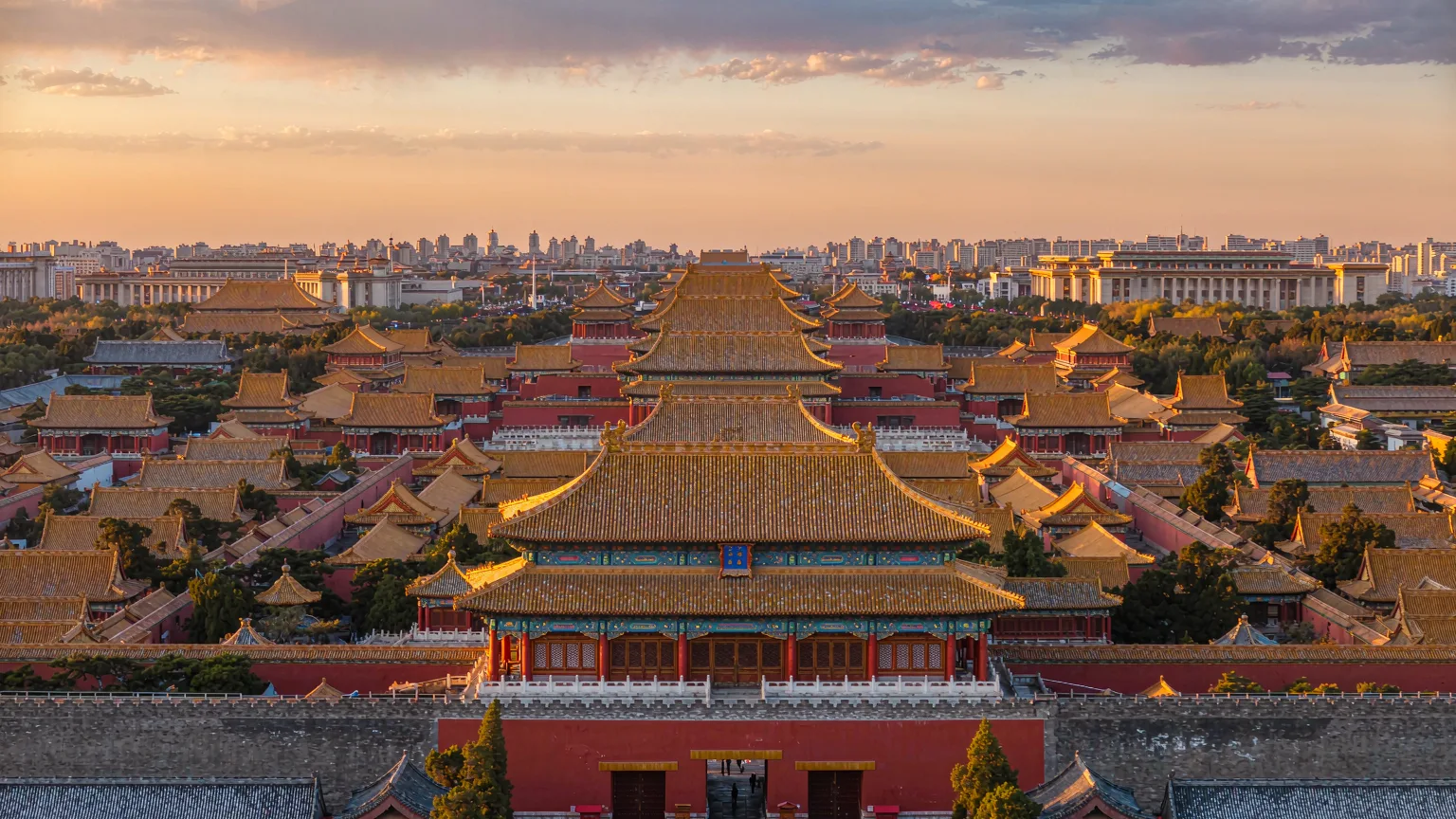
Itinerary at a glance
| 09:00 | Huguosi Snacks: The Douzhir Rite of Passage |
| 10:30 | Zengyang Book House & Brick Pagoda Lane: The Digestif Walk |
| 12:00 | Jubaoyuan: The Noon Battle of Copper-Pot Hotpot |
| 14:30 | Niujie Halal Snack Street: Round Two and Souvenirs |
| 16:00 | Qianmen & Dashilan: The Long Walk Between Feasts |
| 17:30 | The Duck Headliner: Three Tiers, Three Budgets |
| 21:00 | The Midnight Bonus: Luzhu Stew or Chao Gan |
The route, stop by stop
Huguosi Snacks: The Douzhir Rite of Passage
The Huguosi flagship (93 Huguosi St) opens at 6:00 am; first watch locals paying with coins for sugar-fried buns. The starter set: one bowl of douzhir (RMB 3) — fermented mung-bean liquor, an acquired taste somewhere between sour and funky — with a pair of jiaoquan rings and pickled radish, the official pairing. Not finishing it is not shameful; even Beijing kids split into two camps.
The safe cards: pea-flour huang (delicate, faintly sweet), ludagunr (glutinous rolls in soybean flour), miancha (millet paste with sesame, drunk by rotating the bowl) and sugar-fried buns. The full set with douzhir tops out at RMB 30. The street itself holds Mei Lanfang's former residence 100 meters along — glance at the siheyuan after eating.
Zengyang Book House & Brick Pagoda Lane: The Digestif Walk
A 15-minute ride to Xisi: the Zengyang Book House operates inside the courtyard of the Wan-song Elder's Pagoda — Beijing's only bookstore walled by an ancient brick pagoda. Sunlight, local chronicles, a cat asleep on book stacks. This stop is strategic digestion: between breakfast and lunch you need two hours and two thousand steps.
The surrounding Xisi hutongs (North 1st through 8th) preserve the Yuan-dynasty lane fabric best; pick any one to wander, and look for the brick-carved archways along Lilu Hutong.
Jubaoyuan: The Noon Battle of Copper-Pot Hotpot
Jubaoyuan on Niujie is a ceiling of Beijing lamb hotpot: charcoal copper pots with clear broth, hand-cut fresh lamb — the test is that slices cling to the plate when inverted. The sesame dipping sauce is the soul: a peanut-sesame base with chive flower, fermented tofu and chili oil, tuned to taste.
Queue strategy: arrive by 11:15 to seat with the first batch; 30 minutes later the wait can hit an hour. While waiting, browse the square outside the Niujie Mosque and Shuru Hutong. Budget RMB 120-150 pp — one pot, four lamb plates and a beef-ribeye plate plus baked buns for two.
Niujie Halal Snack Street: Round Two and Souvenirs
Niujie street itself is the halal snack corridor: after hotpot, walk 500 meters for round two — Bai's niangao (fresh-cut rice cakes by weight), Hongji's beef cubes and fried pine meat, Cheese Wei's chilled court-style cheese custard with its faint rice-wine perfume. Eyes bigger than stomach is the norm here; buy extra as souvenirs.
Mid-street stands the Niujie Mosque, founded in the Liao dynasty — a rare hybrid of Han timber architecture and Arabic screen wall, open to non-Muslim visitors in the outer courtyard (free; dress modestly and avoid prayer times).
Qianmen & Dashilan: The Long Walk Between Feasts
A 20-minute ride to Qianmen — this hour is not for eating but for making room: circle Dashilan and Yangmeizhu Xiejie, look at Ruifuxiang silks and Neiliansheng cloth shoes, and smell the luzhu broth at the Menkuang Hutong corner (a trailer for midnight). Buy a tin of jasmine tea at Wuyutai — the foolproof gift for elders.
For thirst, skip bubble tea: at Zhangyiyuan's flagship you can drink jasmine at the old counter by the gram — cheaper and far more atmospheric than any chain.
The Duck Headliner: Three Tiers, Three Budgets
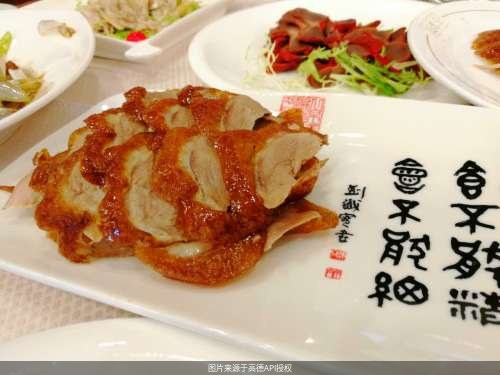
Beijing duck has two schools: hung-oven (open fire, crackling skin) and menlu oven (sealed heat, tender meat). By budget: RMB 150-200 — Siji Minfu (grab the view seats at the palace branch; Qianmen branch easier); RMB 250-350 — Da Dong (the modern crisp-skinned school, dip the skin in sugar); RMB 300+ — Quanjude Hepingmen (the heritage ritual) or Shijiu (new fusion). All three need reservations or early arrival.
How to eat it: taste the skin alone with sugar (the fruitwood test); wrap two slices of skin and one of meat in the lotus-leaf pancake with scallion and sweet-bean sauce; finish with the carcass — salt-and-pepper fried or simmered into cabbage tofu soup. One duck feeds two or three; add a bottle of Arctic Soda (Beibingyang) and the circle closes.
The Midnight Bonus: Luzhu Stew or Chao Gan
If you are somehow hungry five hours later (you usually won't be), the century-old Menkuang Hutong luzhu stall drags the day back to the street: old broth simmering intestines, lung, fried tofu and wheat cakes, crowned with garlic and chili oil, RMB 40 a filling bowl. If you cannot eat another bite, at least sip the broth — it alone is worth the detour.
If your hotel route passes Wangfujing, Yao's Chao Gan night shift is still on — liver stew and buns, the old-Beijing postmark on the whole day.
| Getting around |
|
| Budget | Five meals, approx. RMB 300-480 pp total |
| Best time | Year-round; hotpot and duck land best in autumn and winter |
FAQs
Can I do this day without offal?
Absolutely: skip douzhir and the midnight luzhu, switch breakfast to sugar buns and tofu pudding, keep everything else — hotpot, duck and Niujie have plenty of offal-free options.
Any issue for halal eaters?
Niujie and Jubaoyuan are halal by default; most duck houses are not — substitute Jubaoyuan's own halal roast duck and the day stays intact.
Isn't five meals too much?
In practice it is three meals plus two tastings — 2-3 items per stop. The design prioritizes variety over volume; cut any stop freely.
How should vegetarians adapt?
Huguosi sweets, Niujie snacks and the Dashilan tea houses all work; swap lunch for a vegetarian snack platter and order vegetable pancakes at dinner.