
Beijing sits on a plain; the mountains to its west rise abruptly — spurs of the Taihang range leave only the Yongding River's gap between city and peaks. Old Beijingers called the Western Hills 'the capital's right arm.' Three days inside that arm: two temples older than the city on day one, a Ming-Qing stone village for the night on day two, and one of China's rare surviving pilgrimage trail systems on day three.
Public transport is thin in these mountains — self-drive or charter (RMB 1,200-1,600 for three days) is strongly advised. The roads bend a lot but are never scary; ordinary sedans cope.
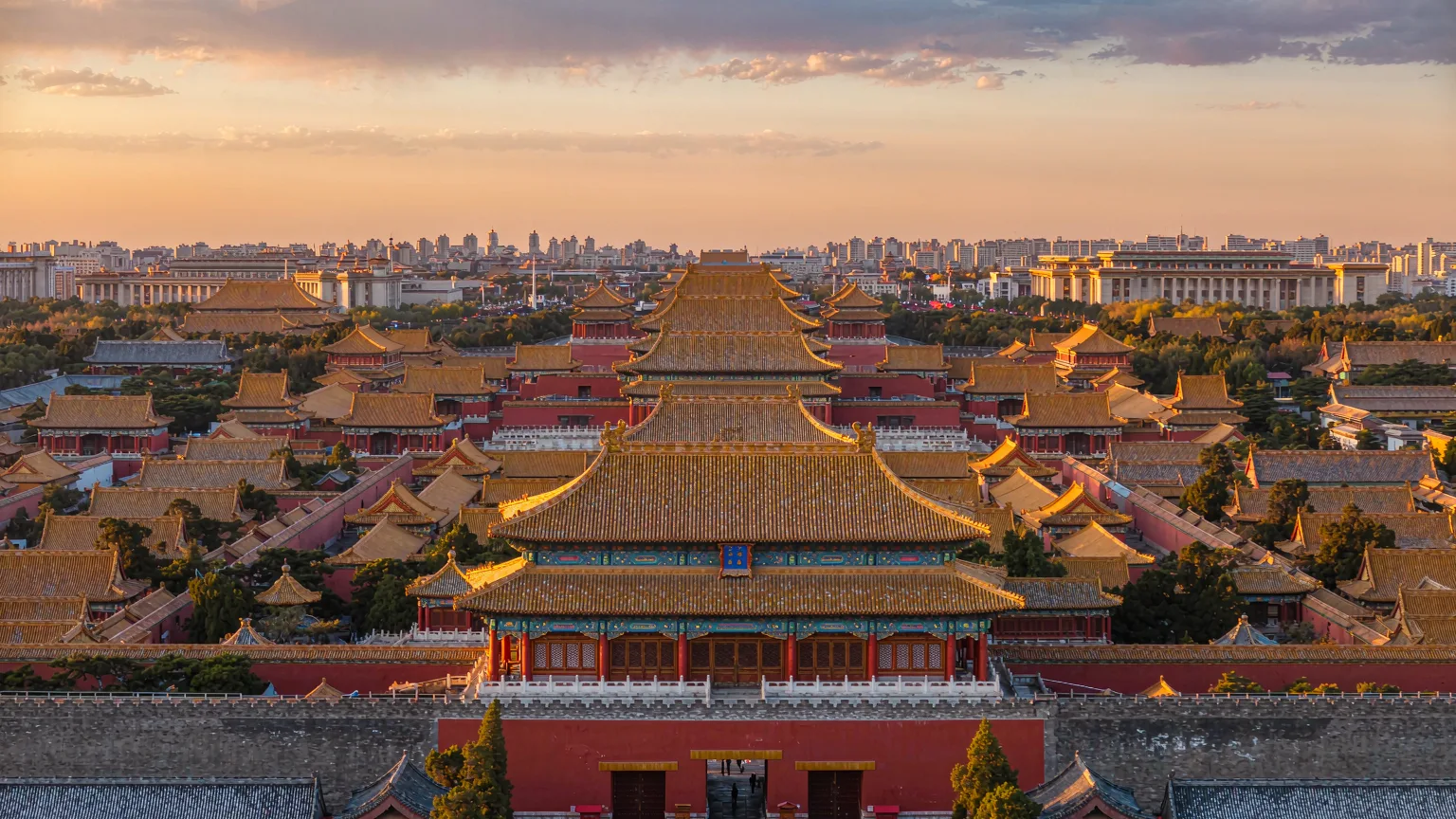
Itinerary at a glance
| Day 1 · 09:00 | Tanzhe Temple: A Stick of Incense Older Than the City |
| Day 1 · 13:30 | Jietai Temple: China's Largest Ordination Altar and Its Pines |
| Day 2 · 09:00 | Cuandixia: A Village Shaped Like Its Own Impossible Character |
| Day 2 · 14:00 | The One-Line Sky and Ling shui, the Scholars' Village |
| Day 3 · 08:30 | The Miaofeng Pilgrim Roads: China's Last Living Incense Trail |
| Day 3 · 14:00 | The Descent and the Yongding River: The Close |
The route, stop by stop
Tanzhe Temple: A Stick of Incense Older Than the City
'First came Tanzhe Temple, then came Youzhou city' — founded in the Western Jin dynasty (3rd century), it predates Beijing-as-capital by nearly a millennium. What to see: the hall roof of Daxiongbao (ranked like the Forbidden City's supreme hall), the Emperor Tree (a Liao-dynasty ginkgo, so named by Qianlong, molten gold in autumn) and the stone fish (rub the ailing part of your body, says the legend).
A path behind the temple reaches Dragon Pool in a 40-minute round trip — a hidden viewpoint in leaf season. Admission RMB 55, audio guide RMB 20; the density of plaques, couplets and steles makes the guide essential.
Jietai Temple: China's Largest Ordination Altar and Its Pines
Eight kilometers southeast lies Jietai Temple, Tang-era, famed for its ordination altar — largest of China's three great altars. The real magic is the pines: the Pine Embracing the Stupa, the Recumbent Dragon Pine, and the Moving Pine (tug one branch and the whole crown sways, certified by a Qianlong poem) — every one over five centuries old.
The temple offers basic guest rooms (wake to the morning bell) or continue toward Cuandixia in the afternoon. Between the temples, stop at Dingdu Peak viewpoint — legend says the Yongle emperor chose his capital's fengshui from here.
Cuandixia: A Village Shaped Like Its Own Impossible Character
Cuandixia sits in a fold of the hills at Zhaitang, Mentougou: seventy Ming-Qing courtyard houses stacked up the slope, the whole layout tracing the 30-stroke character 'cuàn' (everyone in the village is Han, one clan — guides nationwide love testing tourists on the pronunciation).
One night here is the soul of the route: zero light pollution, the Milky Way naked-eye visible; wake to roosters and climb the village-back trail for the panorama of stacked courtyards (the paid platform, RMB 20, earns it). The central Caizhu and Guangliang courtyards (combo RMB 35) show Qing merchant-house 'cat doors' — anti-theft architecture.
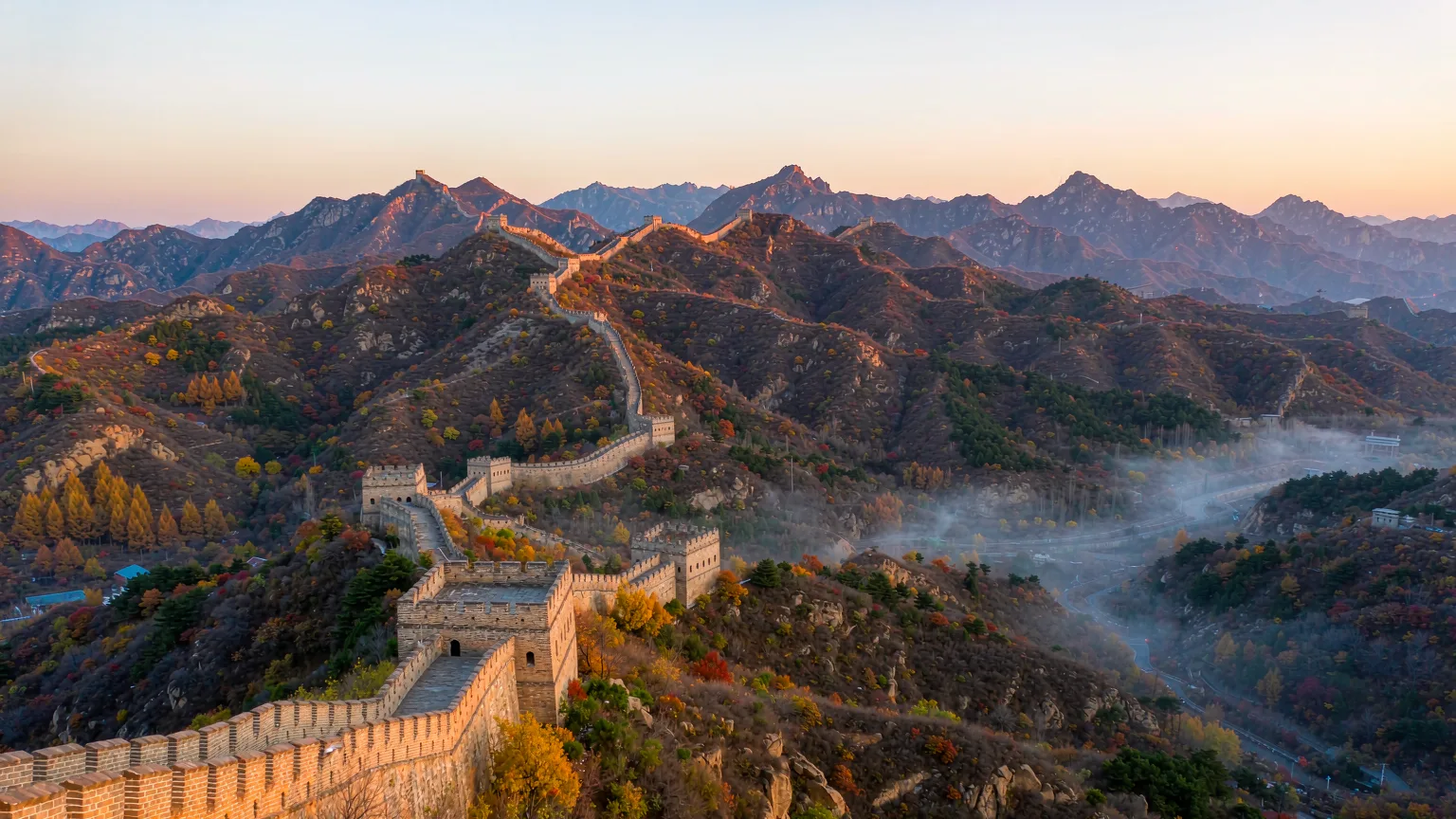
The One-Line Sky and Ling shui, the Scholars' Village
Behind the village, the free One-Line Sky crevice trail (40 minutes) squeezes between rock walls, cold air breathing out of the gap even in summer. Stronger hikers can glance toward the Ming-era Tianjing Pass ruins on Huangcao Ridge from Bo Yu village — distant viewing suffices.
An 8-kilometer detour brings you to Lingshui, the 'Village of Scholars': 22 provincial graduates and 2 jinshi across the Ming and Qing. 'Where Are We Going, Dad?' filmed its first season here. See the Spirit Spring (the literati's vein), the top-scholar steles and the North Mountain temple — rawer than Cuandixia, essentially uncommercial.
The Miaofeng Pilgrim Roads: China's Last Living Incense Trail
The Miaofeng temple fair has run from the Ming to today: every year, lunar 4/1-4/15 (around May), pilgrims from Beijing-Tianjin-Hebei still climb on foot via the old incense trails — stone steps of the 'Old North' and 'Middle North' roads, some paving original Qing. Even off-season, hike a stretch: from Jiangou village to Huixiang Pavilion takes 1.5 hours, threading rose fields and pines.
At the summit, the Bixia Yuanjun temple overlooks all of Mentougou's ridgelines, incense and mountain wind together. Late May to mid-June, the thousand-mu rose valley on the mid-slope — North China's largest highland rose field — makes the whole air sweet.
The Descent and the Yongding River: The Close
Descend route 109 along the Yongding River valley — the mother river's gorge through the mountains is scenery itself: stop 10 minutes at Pearl Lake (reservoir), where in low water the old piers of the Fengsha railway still show.
City return runs 1.5-2 hours. What you will remember: a handful of gold leaves from the Emperor Tree, a bowl of hand-pulled noodles under the impossible character, a gust of mountain wind at the temple — the west hills reward only the unhurried.
| Getting around |
|
| Budget | Approx. RMB 600-1,200 pp (charter or self-drive) |
| Best time | Blossoms in Apr-May, foliage mid-Oct to early Nov, roses on Miaofeng late May-mid June |
FAQs
How is 'cuàn' pronounced?
Cuàn, fourth tone — originally 'to cook firewood.' The village mnemonic: 'Xing on top, forest in the middle, fire under the big character.'
Is it all climbing? Can seniors come?
No: day one is flat temple grounds, day two gentle village slopes, only day three climbs 300 m — reducible by cable car or half-route. Seniors can join at a slower pace.
Do Cuandixia guesthouses really lack private baths?
Most have added private baths in recent years (confirm the exact phrase when booking); book 1-2 weeks ahead for peak weekends.
Is this route worth it in winter?
Yes: temple snow and heated kang beds are the winter way; while Miaofeng closes (Nov-Mar), substitute Shuanglong Gorge's ice falls. Pack grip and layers.