
Devote a Beijing day to culture and the geography cooperates: the National Museum sits on the east side of Tian'anmen Square, Liulichang lies one kilometer southwest of Qianmen, and the Huguang Guild Hall stands at Hufangqiao — three points in a triangle under four kilometers, linking five millennia of Chinese civilization, the city's literati culture and a living stage art in one day.
The right rhythm alternates heavy and light: the museum has the highest information density and deserves your freshest brain; Liulichang slows the afternoon — browse Rongbaozhai's mounted paintings, buy a seal stone; and at night, Peking opera works even if you miss the words — you go for the gongs, the water sleeves, and the arias' emotional register. Three movements: civilization, street, stage.
Itinerary at a glance
| 09:00 | The National Museum: Reading Ancient China Right |
| 12:30 | Lunch: Old Kitchens along Xiheyan |
| 14:00 | Liulichang: Rongbaozhai and the Scholar's Four Treasures |
| 16:00 | Capital Museum: Footnotes of Old Beijing (Optional) |
| 18:30 | The Huguang Guild Hall: Real Peking Opera in a 200-Year-Old Playhouse |
| 21:00 | Hufangqiao by Night: Douzhir Ice Cream or a Final Noodle Bowl |
The route, stop by stop
The National Museum: Reading Ancient China Right
The National Museum is free but requires advance booking on its official mini-program (grab slots 7 days out for holidays). The 'Ancient China' exhibit in the basement runs from the Paleolithic to the Qing — four hours if exhaustive, two hours if curated: the Houmuwu ding (largest bronze), the four-ram zun, the Eastern Han storyteller figurine (Han humor in clay), the Tang tri-color camel with musicians, the phoenix crown of Empress Xiaoduan. Five objects, and the skeleton of Chinese history stands up.
Add interpretation: official audio guide RMB 40, or book a deep-dive docent tour (~RMB 200 pp). Special exhibitions cost extra but earn it — check what is running; closed Mondays.
Lunch: Old Kitchens along Xiheyan
Walk 20 minutes (or ride 8) from the museum's south end to the streets west of Qianmen, skipping the tourist strip: braised-gravy noodles, pork-stuffed baked buns, quick-fried tripe — RMB 40-60 pp. The museum cafe works if time-starved (pricey, mediocre, efficient).
Treat lunch as halftime — keep it light; the evening offers more chances to eat near the guild hall.
Liulichang: Rongbaozhai and the Scholar's Four Treasures
Since the Qing dynasty, Liulichang has been the empire's stationery market — and it still lives: at Rongbaozhai, study the woodblock water-print technique (intangible heritage; one print of the Night Revels scroll requires thousands of carved blocks); at Daiyuexuan, watch brush masters combing wolf-hair by hand; at the China Bookstore, leaf through old rubbings. Even without antique paintings, a water-print letter sheet or a carved seal (~RMB 100) carries the ritual.
The street runs 800 meters in two segments, right for 1.5 hours. Connoisseurs should head to Rongbaozhai's contemporary department — small works by established names are less scary than imagined.
Capital Museum: Footnotes of Old Beijing (Optional)
With surplus energy, ride 15 minutes to the Capital Museum's old-Beijing folklore galleries — weddings and funerals in the lanes, the objects of courtyard life — an intimate footnote to the museum's grand narrative. Free with booking, far less crowded, unhurried.
If tight on time, skip it and keep the afternoon open: two museums in one day is the ceiling; culture needs digesting too.
The Huguang Guild Hall: Real Peking Opera in a 200-Year-Old Playhouse
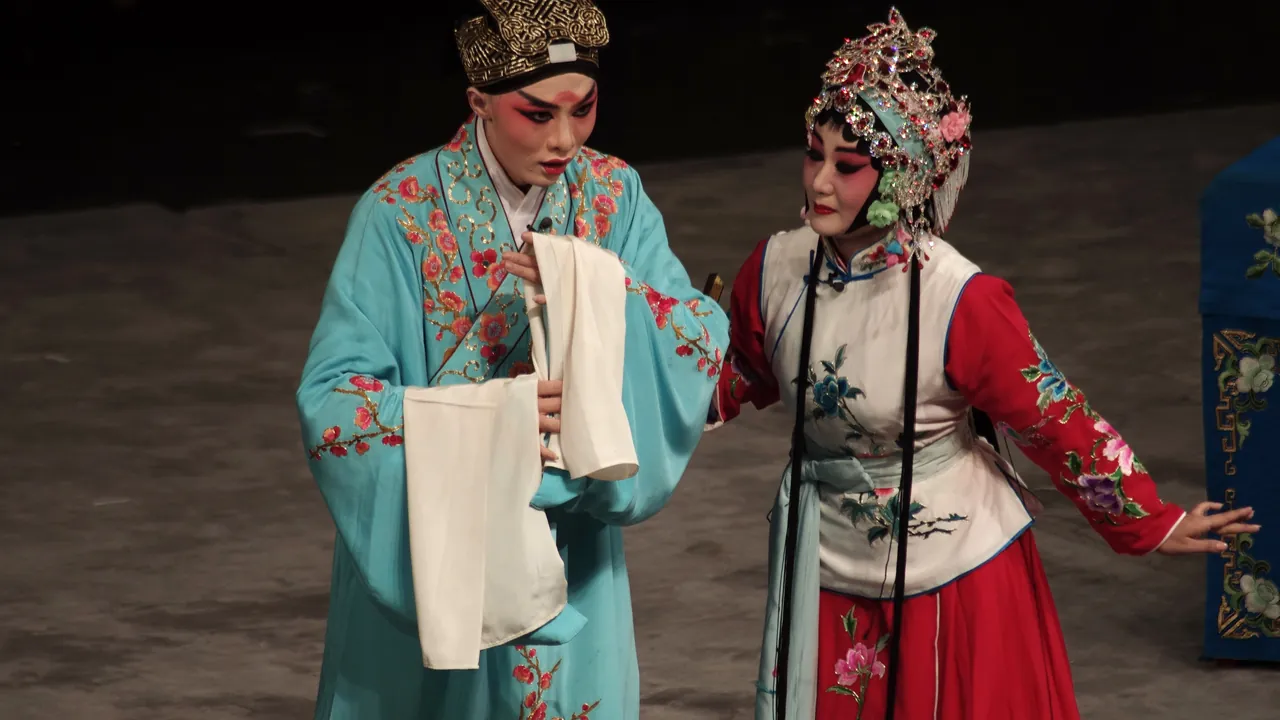
Built in 1807, the Huguang Guild Hall is Beijing's best-preserved commercial playhouse — Tan Xinpei and Mei Lanfang both trod its boards. Evening shows start at 7:30 (RMB 100-380); beginners should pick Sanfakou (a mime-style combat scene in the dark, zero barrier) or Qiujiang (a song-and-dance comedy); devotees go for the full-length Silang Visits His Mother.
Arrive 30 minutes early to browse the on-site opera museum (included): playbills, costumes and the 'xishen' doll props. Seats in the center of the ground floor, rows 3-5, put the eye-work and finger-work of the performance in focus.
Hufangqiao by Night: Douzhir Ice Cream or a Final Noodle Bowl
Out of the hall, the lanes around Hufangqiao glow: the adventurous try douzhir ice cream (more stunt than delicacy, but the story pays the fare); the grounded finish with a bowl of zhajiang noodles while replaying that blindfolded duel in the dark.
Return via Hufangqiao station (line 7). In one day you moved from bronze vessels to water sleeves, five millennia to two hours — that is how cultural depth accrues.
| Getting around |
|
| Budget | Approx. RMB 120-380 pp (museums free; opera ticket sets the ceiling) |
| Best time | Year-round; special exhibitions are worth the surcharge |
FAQs
Will I fall asleep at the opera?
Choose a martial scene (Sanfakou, Havoc in the Dragon Palace) — mime, acrobatics and stage fighting keep anyone awake; literary arias reward preparation. Start with the martial repertoire.
Is a docent worth it at the National Museum?
Yes. Without interpretation, five millennia are pots and basins; a good docent turns five objects into five eras. Book the deep tour if budget allows.
Is Liulichang just tourist traps?
The heritage names (Rongbaozhai, Daiyuexuan, China Bookstore) are industry standards, honest; unnamed stalls mark up freely — stick to the facades and bargain from one-third.
Suitable for kids?
Yes with curation: five objects at the museum, a martial 90-minute opera, and a stamp-collecting game at Liulichang — kids love the shop seals.