
Daodeng county town, Jinzhu, usually passes as a transit stop on the way to Yading, but it earns a full day. At 3,700-plus meters, lower than Yading village yet far above the plains, a slow day here is the cheapest acclimatization lesson before the reserve, and it decodes the Shambhala culture you will meet on the trail.
The line is loose: museum and stupa forest in the morning, the astronomy hall after lunch, then a chase after the red grassland toward Sangdui at dusk. Everything links on foot or by short charter, the pace deliberately slow; a headache or short breath will tell you when to stop for tea.
Itinerary at a glance
| 09:00 | Daocheng Yading Shambhala Culture Museum: Read Before You Walk |
| 11:00 | Daocheng White Pagoda: The Great Stupa Forest of Southern Kham |
| 14:30 | Daocheng Astronomy Science Museum: Why the Stars Favor the Plateau |
| 17:30 | Red Grassland: A Patch of Autumn Crimson |
The route, stop by stop
Daocheng Yading Shambhala Culture Museum: Read Before You Walk
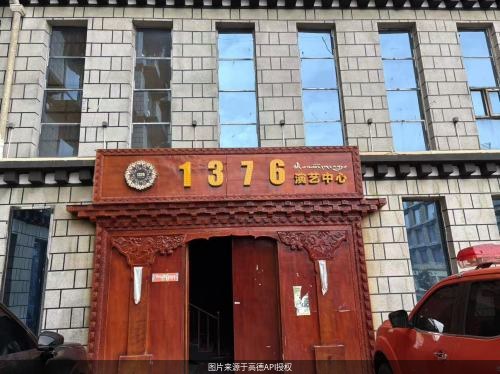
The town day starts at the museum. The Shambhala Culture Museum gathers Khampa culture, the Shambhala legend and memories of the Tea Horse Road into a compact hall with diligent labels, comfortably covered in an hour or two.
The highlights split between folk objects and religious art: butter churns, wool robes, thangkas and ritual items staged by daily use. After this, every mani pile, prayer flag and white stupa on the road stops being mere backdrop.
Mornings are quiet and well lit; put the museum on day one and the following days' scenery gains footnotes. Walk slowly inside; acclimatization starts on day one.
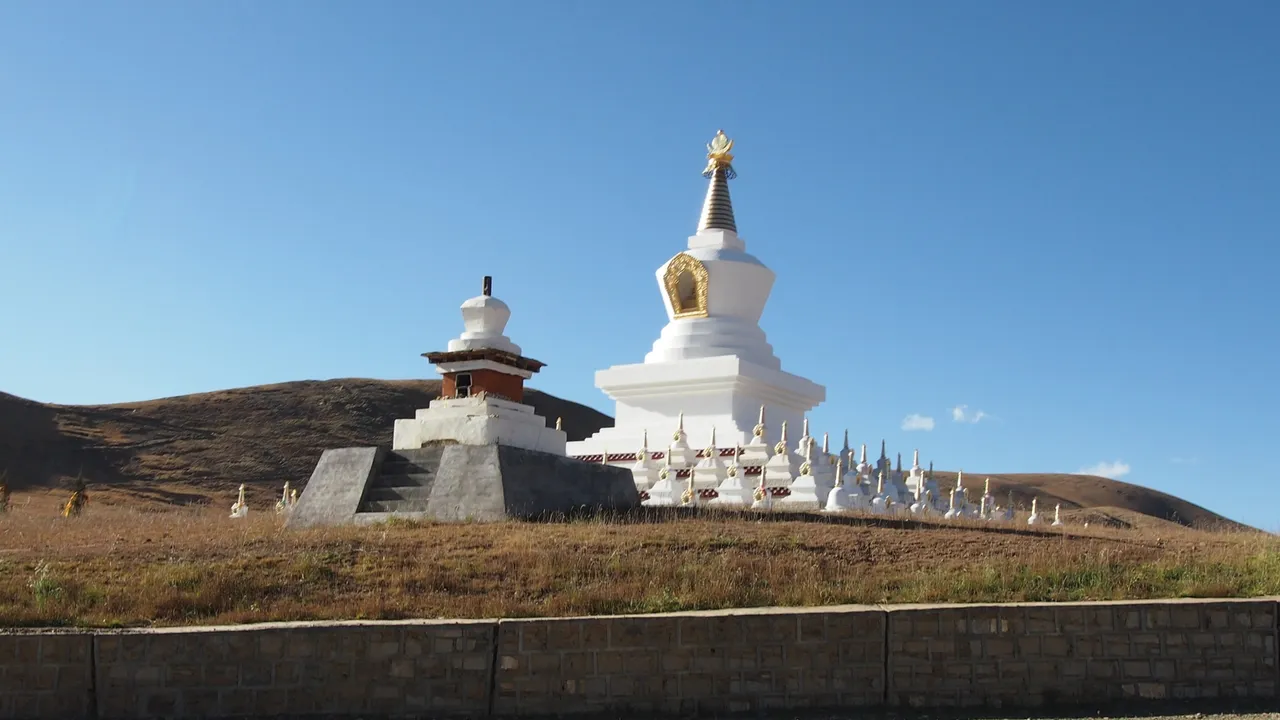
Daocheng White Pagoda: The Great Stupa Forest of Southern Kham
The White Pagoda stands on the slope north of town, one giant stupa ringed by a hundred smaller ones, among the largest stupa groups of southern Kham and the town's most visible landmark from afar.
Circle clockwise, as locals do, one hand spinning a prayer wheel; in morning light the stupa glows white. No need to hurry, one circuit takes about twenty minutes while wind-horse flags snap overhead and your pace settles.
The grass slope outside the forest is the vantage for town-plus-stupa panoramas, best in morning sun. Elders often sell yogurt and highland barley cakes by the pagoda, properly sour, worth a bowl on a bench.
Daocheng Astronomy Science Museum: Why the Stars Favor the Plateau
Daodeng's altitude and clean night sky have made it an astronomy stronghold; the town's science museum explains exactly why this land suits stargazing, unfolding cosmic-ray observation, high-plateau sites and deep-sky basics along one line.
The hall is compact with hands-on exhibits for kids; it also clarifies why the great instruments on Haizi Mountain live where they do. Afternoon docent sessions run often, and half an hour with one beats two solo laps.
On a clear night, the Milky Way shows to the naked eye from high ground a few kilometers out of town. Ask the museum for that evening's stargazing advice and sky outlook before leaving.
Red Grassland: A Patch of Autumn Crimson
The Red Grassland lies by the road toward Sangdui, about ten kilometers from town; each October the wetland turns crimson, backed by golden poplars and Tibetan houses, the most photogenic small patch in all Daocheng.
Everything depends on season and light: late-afternoon side light in mid-to-late October burns strongest, while the rest of the year it is a quiet pond. A round trip by charter runs about forty minutes, timed best an hour before sunset.
Boardwalk and viewing deck sit roadside; half an hour suffices. Head back to town for dinner afterward, closing the day gently and saving your legs for Yading tomorrow.
| Getting around |
|
| Budget | Most town sights are free or cheap; a return charter to the Red Grassland runs RMB 100-200, so the day lands near RMB 150-300 pp. |
| Best time | Any season works, October best of all, red grass, golden poplars and glassy skies; at 3,700-plus meters the town doubles as an acclimatization stop before Yading. |
FAQs
Is a day in the county town worth it without entering Yading?
Absolutely. At 3,700-plus meters the town is the buffer before the reserve, and a slow day of museum, pagoda and astronomy hall acclimatizes you better than charging into Yading. The seasonal red grassland and golden poplars sit nearby, so Daocheng's flavor does not require a ticket.
Do the museums need reservations?
Both run mainly free or low-cost with registration; in season and holidays confirm hours by phone or online first, with Mondays commonly closed. Ask separately about docent sessions and night stargazing, and decide the stargazing that evening on the sky, the safest way.
When is the best season for the town itself?
Mid-to-late October is the peak: red grass at full color, poplars golden, visibility at its yearly best. May-June brings green meadows and thin crowds for quiet wandering; winter is cheap and calm but some venues cut hours and nights turn brutally cold, so pack to a deep-cold standard.
What should I watch for while wandering the town?
Plateau sun is fierce, so hat, sunglasses and strong sunscreen matter before warmth; circle pagodas and temples clockwise and never shoot close portraits without asking. QR payment dominates but mountain signal wavers, so carry small cash. Skip alcohol and hair washing that night to give your body room to adjust.