
The plateau stomach keeps its own clock: hot breakfasts, early dinners, and a pot of hot broth to warm the night. Daocheng county town is small, its famous kitchens clustered along the main street; start with Tibetan noodles, close with yak hotpot, and slot a hot spring in between for a well-seasoned plateau day.
No rushing on this line, four stops linked on foot plus a short ride. What matters is rhythm: on your first day up high, stop at seventy percent full, favor hot soup over anything raw, place the soak in the afternoon slump, and keep each soak under fifteen minutes, rising slowly.
Itinerary at a glance
| 08:00 | Sisters' Tibetan Restaurant: A Bowl of Tibetan Noodles Opens the Day |
| 12:30 | Tsangyang Gyatso Tibetan Restaurant: A Proper Slow Lunch |
| 16:00 | Daocheng Three Sisters Hot Spring: The Afternoon Slump Meets Hot Water |
| 18:30 | Huotang Renjia Fennel Beef Hotpot: Closing the Plateau Night |
The route, stop by stop
Sisters' Tibetan Restaurant: A Bowl of Tibetan Noodles Opens the Day
The plateau day starts with a pot of butter tea. Sisters' is a veteran Tibetan kitchen in town; the morning noodles are boiled to order in a clean beef broth topped with scallions, paired with freshly churned butter tea, salty, fragrant and filling.
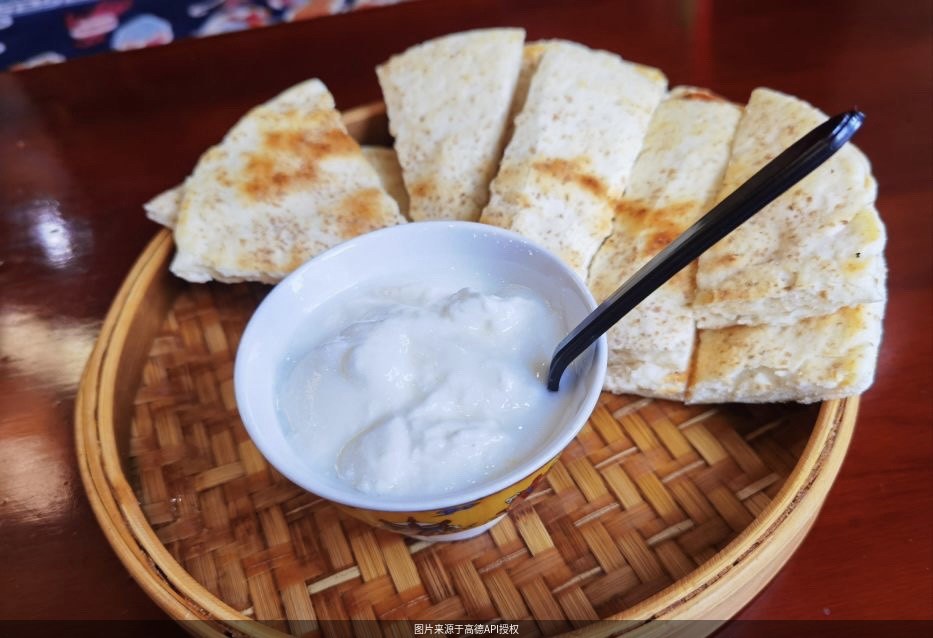
Beyond the noodles, highland barley cakes and yak beef buns deserve orders; locals crumble the cake into their tea. First-timers should start with a small bowl of butter tea, the salty brew grows on you.
The restaurant sits on the town's main street, thinnest crowds before nine. On the plateau breakfast must be hot and generous, the day's energy riding on it, so no energy-bar shortcuts.
Tsangyang Gyatso Tibetan Restaurant: A Proper Slow Lunch
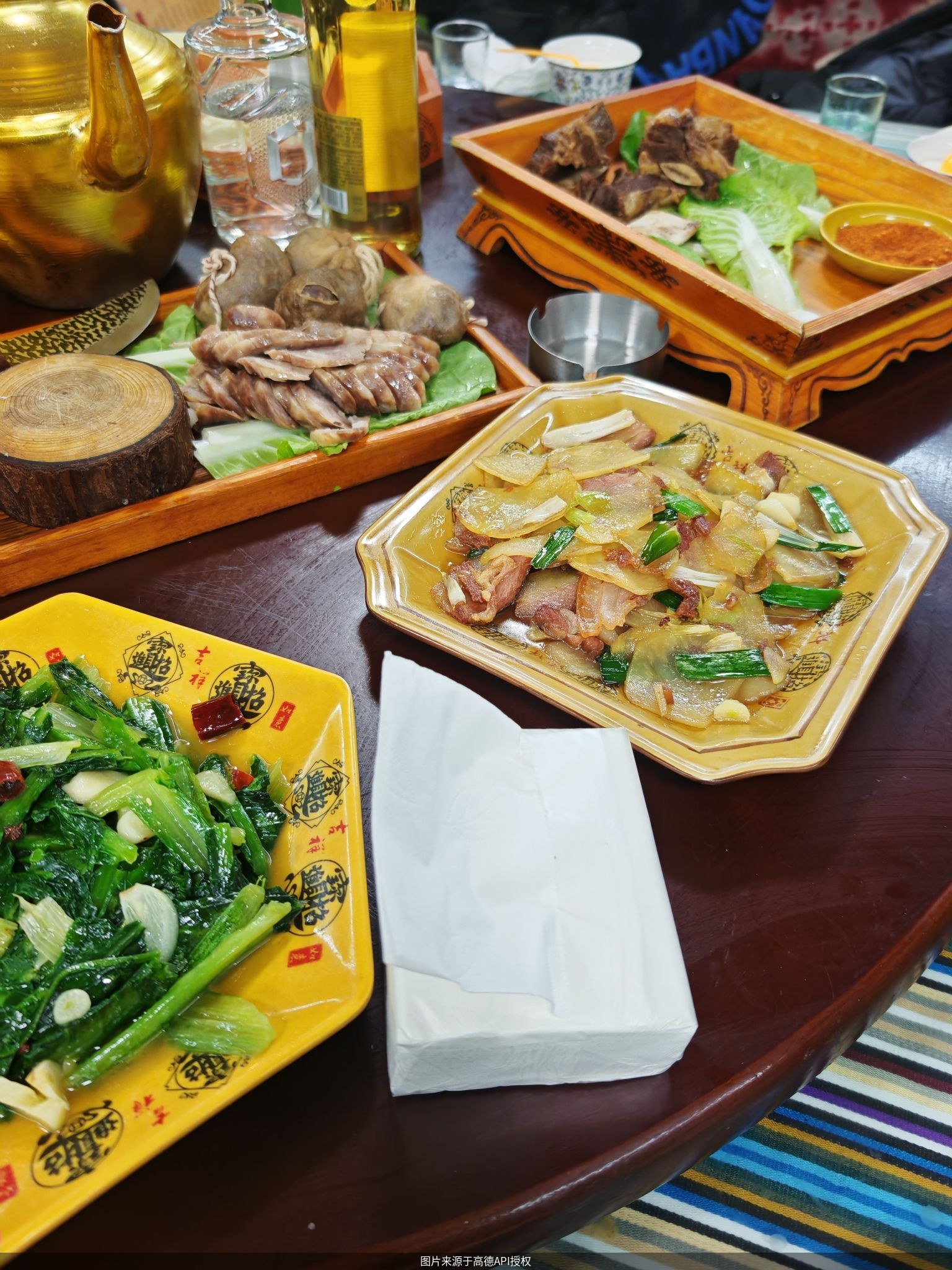
Lunch changes register. Named for the poet, Tsangyang Gyatso dresses its front in carved wood and paint, its menu carrying tsampa, yak hotpot and sour yak milk, one of the town's steadiest on both room and plate.
Ask the kitchen to mix tsampa on the spot, barley flour kneaded with butter tea and milk curd; newcomers should start with the sweet preparation. Yak beef wants a long low simmer, for water boils cooler here and time makes it tender.
Stop at seventy percent full, keeping capacity for the afternoon spring and the night hotpot. A glass of sour yak milk after cuts the grease and helps the gut adjust to plateau richness.
Daocheng Three Sisters Hot Spring: The Afternoon Slump Meets Hot Water
Beef settled, the spring calls. The Three Sisters Hot Spring is a veteran soak outside town; sinking into hot water on a plateau afternoon melts the ache out of walking legs, the most practical recovery there is before or after a hike.
Soak in short rounds: ten-odd minutes then rise for air, three rounds a day at most. Thin oxygen makes long soaks dizzying, so keep warm water poolside and sip steadily.
The pools cluster by a hot-spring village, indoor and outdoor, quietest before evening. Skin slips and sleep deepens afterward, the smoothest handoff into tonight's hotpot.
Huotang Renjia Fennel Beef Hotpot: Closing the Plateau Night
Night belongs to the fennel beef hotpot. Thick-cut yak slices go into a broth built on fennel and mountain spices, driving the plateau chill out of the room, the top end of a Daocheng dinner.
Cooking takes patience: water boils near eighty-something degrees up here, so beef turns tender only with a long simmer. Start with vegetables to season the pot, save the fire for thick cuts, and pick between dry and wet dips, locals lean dry.
The hearth seating suits a crowd; order one beef pot plus one mushroom pot to share. Walk back to the hotel afterward through the town's quiet night, working off a full day of carbs and beef.
| Getting around |
|
| Budget | Four sittings run roughly RMB 180-320 pp, with the hotpot and Tibetan mains the bulk, plus RMB 30-80 for the hot spring. |
| Best time | Year-round; on the plateau dinner should run early, most kitchens close after nine, and an afternoon soak hits the day's energy low best. |
FAQs
Are there enough choices in town if Tibetan food is not my taste?
Town dining leans Tibetan plus Sichuan; beyond noodles, butter tea and yak hotpot there are plenty of noodle shops and home-style stir-fries. Ease in via sweet tea and yogurt if butter tea resists; sensitive stomachs should skip raw and cold dishes for two days, favor hot soups and noodles, and note convenience stores are well stocked.
Is yak beef expensive, and how do I order fairly?
Yak beef prices by the jin and cuts differ widely, so confirm unit price and weight before ordering. For two or three people, one and a half to two jin with vegetables and staples suffices. For jerky souvenirs, compare county-town supermarket prices first, gate-area premiums are steep, and glance at the scale display when weighing.
Is hotpot plus a hot spring risky at altitude?
With rhythm, it is safe. Pick a ventilated hotpot table and allow half again the cooking time of the lowlands; keep soaks under fifteen minutes, rise slowly and hydrate throughout. Within the first twenty-four hours at altitude, or with clear headache and chest tightness, skip soaking and alcohol; your body's signals outrank your appetite.
If I can only choose between the hot spring and a show, which wins?
The spring wins. For muscle recovery around hikes, hot water is the practical choice, while evening shows often end past nine, and late nights at altitude burn tomorrow's energy. If a show matters, slot it on a mid-trip easy day, short walk by day, early show at night, straight to bed after.