
Seven deep days run on different logic: not completing a checklist, but setting a pace both body and landscape can absorb. Four days base in the county town at 3,700 meters, acclimatizing, recovering in hot springs, strolling monasteries and grassland, then two days inside Yading.
The itinerary's greatest asset is weather slack: Yading's two days, one short and one long, go to whichever day the sky favors. A deep plateau trip's real currency is not money but altitude and time, and seven days spends both with grace. Keep the departure day sight-free, the red grassland a lucky roadside bonus.
Itinerary at a glance
| D1 09:30 | Daocheng White Pagoda: The First Stroke of Seven Days |
| D1 14:00 | Shambhala Culture Museum: The Seven Days' Knowledge Map |
| D2 09:30 | Astronomy Science Museum: Daylight Homework for the Night Sky |
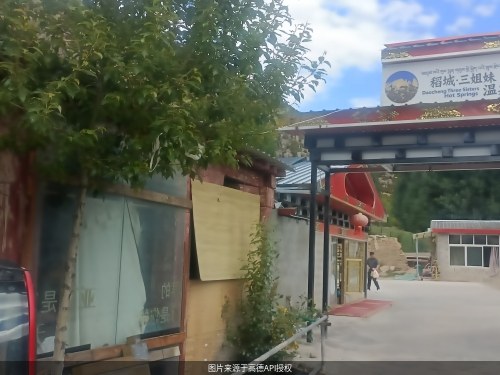
| D2 14:30 | Three Sisters Hot Spring: The Acclimatization Phase's Standing Recovery |
| D3 09:30 | Zhuje (Bangpu) Monastery: A Half Day of Old Walls |
| D3 14:00 | Red Grassland and Sangdui Village: An Afternoon of Slow Frames |
| D4 09:00 | Haizi Mountain: Giving a Whole Day to the Stone Sea |
| D4 11:30 | Xingyi Lake: Deep Blue at the Stone Sea's Center |
| D4 15:30 | Sela Grassland: The Green Corridor Home |
| D5 08:30 | Yading Nature Reserve: Entering on the Short-Line Day |
| D5 10:30 | Chonggu Monastery: Trailhead and a Sky-Reading Drill |
| D5 12:00 | Pearl Lake: Xiannairi's Mirror |
| D6 08:30 | Luorong Pasture: The Long Line's Push |
| D6 11:00 | The Yangmaiyong Ascent: Falls and Scree |
| D6 12:30 | Milk and Five-Color Lakes: The Whole Week's Highlight |
The route, stop by stop
Daocheng White Pagoda: The First Stroke of Seven Days
The deep trip opens on the town's boldest landmark: the stupa forest on the north slope, a central stupa ringed by a hundred smaller ones, among the largest groups of southern Kham, almost glowing in morning light.
Day one's task is feather-light: one clockwise circuit, reading the rhythm of turning wheels, learning the plateau's breathing cadence. Wind-horse flags snap overhead and the steps steady themselves.
Then half an hour on the grass before the stupas, watching the town's light and cloud bearing, where seven days of weather intuition begins its calibration. Rest at the hotel by afternoon.
Shambhala Culture Museum: The Seven Days' Knowledge Map
Placing the museum on day one's afternoon hands you the knowledge map first: the Shambhala legend, Khampa dress, religious art and Tea Horse Road galleries, footnotes ready for every stupa, temple, flag and face the next six days bring.
Deep travel's privilege is reading closely: two halls slowly beat five at a march. The folk objects room and religious art room deserve forty minutes each.
A hot meal on the main street after, early to bed. One formal sight per day during acclimatization is the first rule of seven days that never derail.
Astronomy Science Museum: Daylight Homework for the Night Sky
Day two holds a single formal sight: the astronomy science museum. Daocheng's altitude, dryness and dark skies made it an astronomy stronghold, and the halls tell the cosmic-ray and high-plateau site story plainly.
The deep-travel play is daylight homework for the night: after the exhibits, ask staff for tonight's stargazing spot, moon phase and cloud outlook, then follow the map. The Milky Way shows to the naked eye from high ground near town, and the plateau sky honors all homework.
Nap at the hotel by afternoon, then head out in a down jacket with thermos and red-light flashlight.
Three Sisters Hot Spring: The Acclimatization Phase's Standing Recovery
In a deep itinerary's recovery system, the hot spring is a standing item. The Three Sisters soak outside town, ten-odd minutes a round within three a day, prepaying the muscle debt that trek days accrue.
Across seven days, place the spring at two nodes: once while acclimatizing, once returning from Yading, the first to learn the soak, the second to enjoy it.
Hot noodles in the spring village after, a stroll back to town. Sleep early again; day three at altitude often opens the comfort window, and sleep is what locks it in.
Zhuje (Bangpu) Monastery: A Half Day of Old Walls
Day three heads toward Sangdui, first to the hillside Zhuje Monastery by the road. Eight centuries old, its halls modest but murals and vessels heavy with patina, monks few, visitors fewer.
A deep-travel day can hold one temple: sitting in the yard, walking the cloister, listening to wind at the eaves. If a monk offers the temple's history, sit and listen, the part no audio guide carries.
Circle clockwise, no interior photos, and come down the hill before noon for lunch at a local canteen toward Sangdui.
Red Grassland and Sangdui Village: An Afternoon of Slow Frames
The Sangdui afternoon refuses to rush: the red grassland deck, village lanes, mani piles and poplar belts strung on foot and unhurried frames. October's crimson wetland leads, village texture supports.
The deep-travel shot is a waiting game: cloud shadow crossing the wetland, yaks entering frame, an elder walking a child past the mani piles. Sangdui's light peaks after four.
Greet people before photographing, and buy from village shops over scenic stalls; back in town by dusk, choosing between the spring and an early bed.
Haizi Mountain: Giving a Whole Day to the Stone Sea
Day four charters a full day across Haizi Mountain, and unlike a drive-by checkpoint, it moves slowly between the viewing strips: roches moutonnees, glacial basins, erratic fields, one by one.
The mountain's beauty is emptiness itself: on the 4,500-meter plateau, human figures are scarce, cloud shadow travels the stone sea and lakes, and wind is the only soundtrack.
Lunch is self-carried, taken in shelter. Between dawn and dusk the light runs long and changeable, and reading clouds here is reading terrain.
Xingyi Lake: Deep Blue at the Stone Sea's Center
Xingyi is Haizi Mountain's largest lake, Tibetan for offering lake; the boulder beach to the waterline takes twenty to thirty minutes, lake color shifting grey-blue to deep blue with the cloud, waterbirds working the shallows.
Deep travel reads Xingyi's complete basin form: the encircling shoreline, the inlet and outlet traces, all recording ten millennia of glacial toolwork.
Forty minutes lakeside, moving hands and feet between shots, then revisit a morning-missed viewing strip on the drive back to town.
Sela Grassland: The Green Corridor Home
The run home from Haizi Mountain threads Sela Grassland, afternoon light slanting into the poplar belts, herds gathering toward the village, the seven days' midpoint crossed along a green corridor.
At about 3,800 meters the walking is easy; push ten minutes deep into the meadow, turn back to the town skyline, poplars, the white pagoda and far peaks in one frame.
An hour suffices. Tonight means the spring or a therapeutic early bed, for Yading starts tomorrow and the body enters the valley fully charged.
Yading Nature Reserve: Entering on the Short-Line Day
Day five enters Yading, short line before long, order unchanged. Shuttle to Zhaguanbeng, walk toward Chonggu, and after four days of proper acclimatization 4,000 meters feels mild.
The short line runs Pearl Lake, boardwalk rising gently through rhododendron to Xiannairi's mirror. Today's second task is reconnaissance: the long-line cart stand, last departures, descent nodes, all walked once.
Sleep at Yading village to skip the morning transfer, enter light. Finish the short line within three hours, idle the meadow after, and bank strength for the push day.
Chonggu Monastery: Trailhead and a Sky-Reading Drill
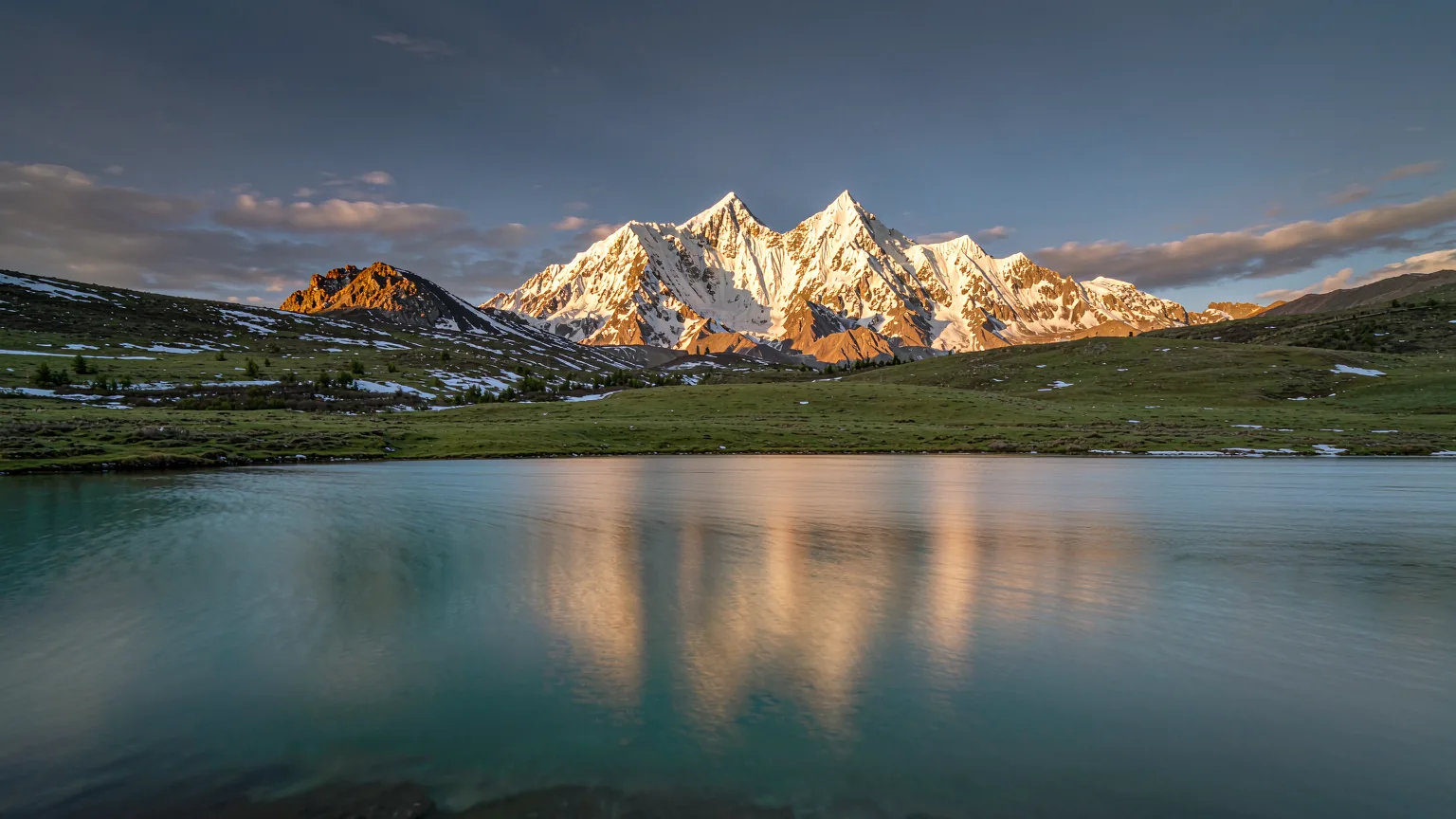
The Chonggu meadow starts the short line and is where deep travelers return again and again: every visit re-reads the sky, cloud layers, wind bearing, whether the summit shows.
Ten minutes of sky-reading before the walk sets today's distance and tomorrow's alarm. The plateau's weather forecast is written on the peaks, in no application.
Fill bottles at the temple, confirm the Zhuomalatso sign. How well a deep traveler knows the trailhead decides how composed they are in the mountains.
Pearl Lake: Xiannairi's Mirror
On a well-acclimatized day five, Pearl Lake is pure enjoyment: an hour's gentle rise, and on calm water the whole of Xiannairi lies inverted, flags and mani piles ringing a circle of quiet.
Deep travel stretches lakeside time: forty minutes on a stone, watching cloud shadow cross the peak and water color follow the light, the part sprinters never collect.
Close the short line and descend, then postcards or photo sorting at the guesthouse. The night before the push day, sleep before nine is non-negotiable discipline.
Luorong Pasture: The Long Line's Push
Day six pushes on whichever day the sky chose. The first cart reaches Luorong Pasture, the glacial U-valley spread in dawn light with Yangmaiyong and Chanadorje flanking, the last gentle ground before the climb.
Five kilometers of uphill to Milk Lake, 4,200 to 4,600 meters, the same chant: a talking pace is the right pace. Four days of acclimatization cash in here.
Final prep at the pasture: thermos full, sunscreen reapplied, energy bars pocketed. Low cloud on the summits triggers the postponement, for a seven-day trip has earned the right to wait for good weather.
The Yangmaiyong Ascent: Falls and Scree
The ascent hugs Yangmaiyong, the spire recomposing with altitude, meltwater falls stacking down the rock, loudest at noon. Scree alternates with boardwalk, and feet outrank lenses here.
Past 4,300 meters, rests tighten to every twenty minutes with water and sugar. The deep traveler's day-seven advantage shows now: grounded breath, measured stride.
One stop at the falls suffices, minding spray-slicked stone. The more you look up, the steadier your cadence must run; the two trade against each other.
Milk and Five-Color Lakes: The Whole Week's Highlight
Milk Lake's milky blue spreads below the pass, Yangmaiyong's reflection drifting with cloud; a hundred-odd meters higher, Five-Color Lake unrolls blue-green bands under slanting sun. The two lakes are the week's highlight and the altitude's final exam.
The deep traveler caps lakeside time at half an hour: eat, shoot, read the cloud, descend. Every minute at 4,600 meters is billed, and experience means not lingering.
Retrace to Luorong for the afternoon carts, soak feet and sleep early. Read the push night's body signals carefully, mild headache normal, worsening means help.
| Getting around |
|
| Budget | Seven days base in the county town plus two nights at Yading village; tickets and rides near RMB 350, totals roughly RMB 3,500-6,000 pp. |
| Best time | Mid-September to late October is best, red grassland and autumn forest together; the deep pace travels any season, with serious cold gear for winter. |
FAQs
What truly separates seven days from five?
The difference is slack: seven days stretch acclimatization to four and give Yading weather flexibility, so the push day chooses its sky and any physical setback gets a full day's buffer. Deep travel buys not two extra sights but the priciest goods on a plateau route: composure.
Can the two Yading days swap order?
Yes, and by weather they should swap. The standard order tests on the short line first, but if the second day's sky is clearly better, pushing the long line first stands, provided the four acclimatization days were kept. The only constant rule: an unready body walks neither line.
Is the deep pace too idle to justify seven days?
The idleness is design, not defect: a plateau trip's fatigue arrives on delay, peaking days seven and eight. The deep pace converts that buffer into experience, springs, monasteries, grassland in town. If intensity suits you better, turn day seven into an extension toward Xinduqiao or Litang; the cadence is yours.
What is the sanest lodging plan across seven days?
Four nights in the county town (oxygen-equipped rooms first), one at Yading village for the push day's early start, one or two closing in Shangrila Town or the county seat. Minimize bed changes, for sleep continuity at altitude outranks star ratings, and confirm heating, hot water and elevation room by room when booking.