
Fenghuang's heritage stacks three layers: the houses and halls in town form the literati history, the Southern Great Wall and Huangsiqiao outside form the military history, and the Miao villages of Shanjiang and Dehang form a living ethnic history. One layer per day: walking on day one, short drives on day two, deep into Miao country on day three.
Ticketing runs more complex than a single day: old-town passes and separate rural tickets coexist, terms per each site's same-day postings. For the villages pool or charter a car; Dehang lies in Jishou an hour or so away, doable as a round trip if you start early.
Itinerary at a glance
| 第1天 09:00 | The Shen Congwen Residence: Where Literary Fenghuang Begins |
| 第1天 10:30 | The Xiong Xiling Residence: A Premier's Charitable Life |
| 第1天 14:00 | The Yang Ancestral Hall and the Town Museum: Family and Fortress |
| 第1天 17:00 | The East Gate Tower: A Defensive Period to a Humanist Day |
| 第2天 09:00 | The Southern Great Wall: Four Centuries on the Miao Frontier |
| 第2天 13:00 | Huangsiqiao Ancient City: Garrison History inside a Stone Town |
| 第2天 16:00 | Qiliang Cave: A Military Undercurrent inside a Karst Cave |
| 第3天 08:30 | Shanjiang Miao Village: First Stop into Miao Country |
| 第3天 11:00 | The Fenghuang Miao Museum: Reading What the Morning Showed |
| 第3天 14:00 | Dehang Miao Village: A Miao Finale at the Gorge's End |
The route, stop by stop
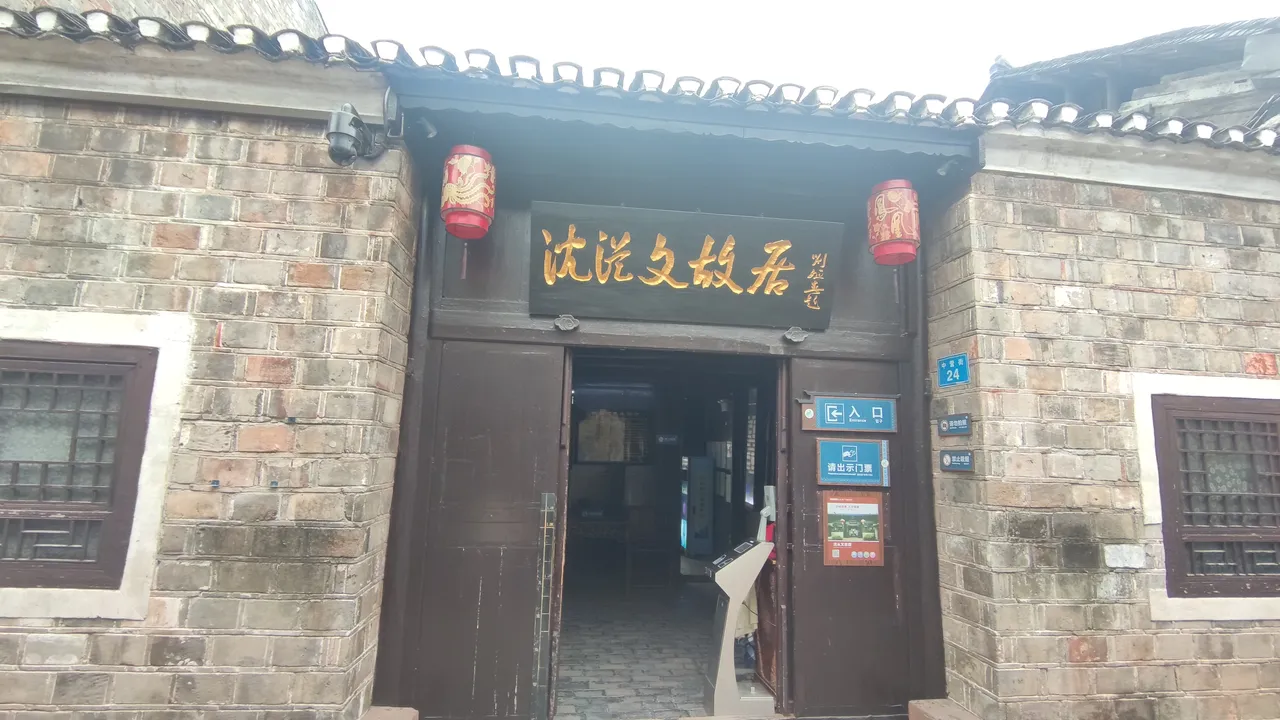
The Shen Congwen Residence: Where Literary Fenghuang Begins
The three heritage days open at Shen Congwen's house. The timber courtyard stages one whole life: west-Hunan boy, pillar of the Beijing school, late-life dress historian, with Border Town's translations ranked in the cases, and to read this courtyard is to read Fenghuang's cultural weight.
Mornings give thin crowds and good light, courtyard first then rooms, an hour suffices. Do not rush off after: walk Zhongying Street's old facades first, where the town's daily history starts.
The Xiong Xiling Residence: A Premier's Charitable Life
Minutes on foot sits the Xiong Xiling residence, its displays tracing the Republic's premier: west-Hunan prodigy, industrial reformer, a late life spent founding the Xiangshan children's home with his entire fortune. The courtyard is small, the chronology and photo walls the draw.
The pairing makes the town's twin stars of humanist history, one in letters, one in statecraft, both lanes leading to bigger stages. Forty minutes, then a simple lunch back at the inn or in the lanes.
The Yang Ancestral Hall and the Town Museum: Family and Fortress
The afternoon takes the Yang ancestral hall and the town museum. The hall's stage and carving embody a Qing military family's standing, while the museum gathers the town's military history, folkways and silversmithing onto one line. Adjacent venues, two hours together.
Day one's thread completes here: writer, premier, military family, fortress town, four facets. Close at the wall or riverside at dusk and let the day settle.
The East Gate Tower: A Defensive Period to a Humanist Day
Day one ends at the tower. The East Gate and its wall carry the town's military function; climb and look over the Tuo and the stilt rows, every famous figure and family of the day living inside this defense line, the geography reading at a glance.
Walk back via the North Gate wharf as lamps come on the water, and budget the days ahead: military heritage beyond town tomorrow, Miao country after.
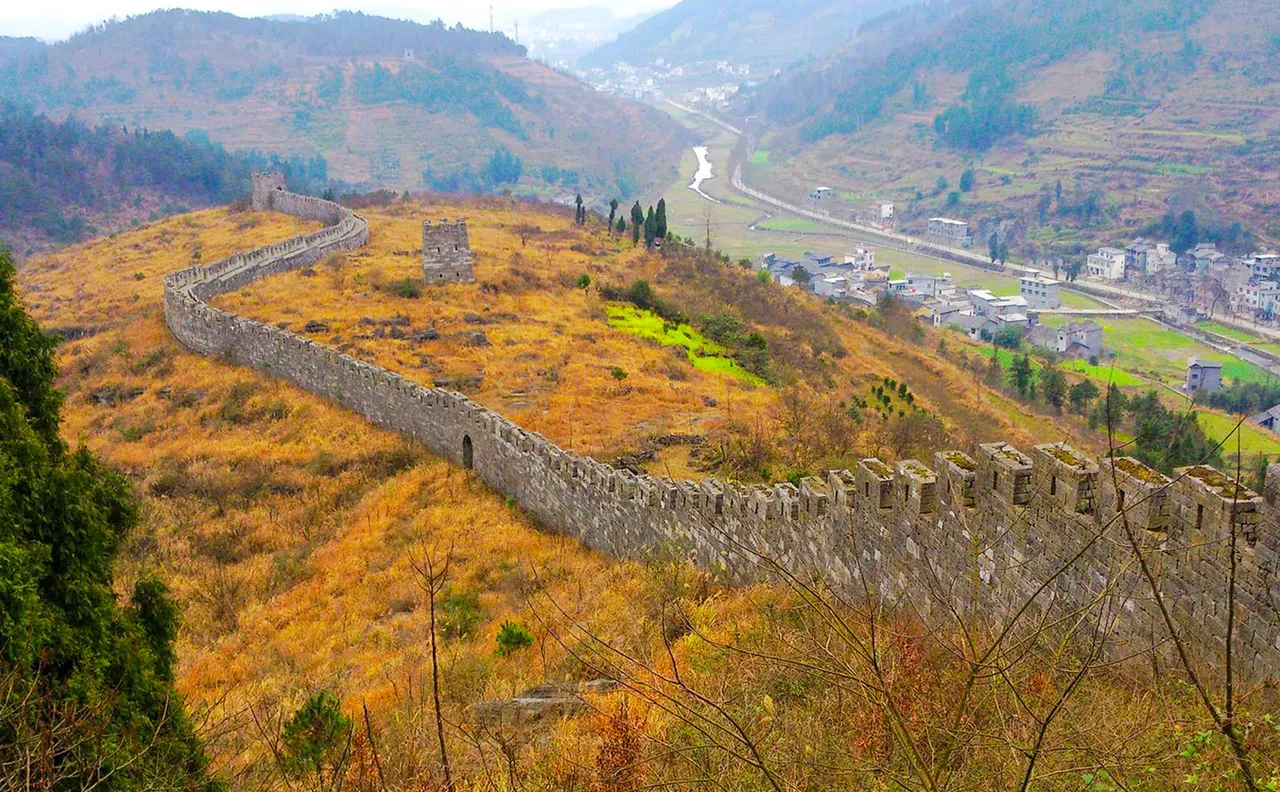
The Southern Great Wall: Four Centuries on the Miao Frontier
Day two heads out north. The Southern Great Wall is the frontier rampart the Ming and Qing raised to divide the unsubmissive Miao territory, stretching over a hundred kilometers, its open section climbable for long views, its battlements and beacon towers cut from the northern wall's same lineage at smaller scale.
Look back from the rampart: Han farmland on one side, Miao hills on the other, the history of a military cordon plainer than any panel. Two hours, with steps and ramps on the wall section, pace yourself.
Huangsiqiao Ancient City: Garrison History inside a Stone Town
Southwest of the wall lies Huangsiqiao, a garrison stone town founded in the Tang and among China's rare complete stone-built cities, gray walls boxing a tidy square that residents still inhabit, life and relic sharing the ground.
A wall circuit takes about forty minutes, with lanes inside for watching daily life. Huangsiqiao and the Southern Wall bookend one defense system, rampart in the morning and stone town in the afternoon closing the military line neatly.
Qiliang Cave: A Military Undercurrent inside a Karst Cave
On the way back, turn into Qiliang Cave, a great karst cavern that once sheltered rebel garrisons, its underground river, stone columns and tiered halls forming a lit subterranean spectacle, military legend layered over limestone, the trip's coolest stop.
The visit runs about ninety minutes with handrails on the slick stretches. Back in town by evening lands you exactly in the night-cruise light window, day two's period drawn on the river.
Shanjiang Miao Village: First Stop into Miao Country
Day three climbs into the hills. Shanjiang keeps some of the region's most intact Miao culture, its stilt houses, stone lanes and gate-welcoming rice wine the entry trio. On days with welcome rituals, one bowl of rice wine and one Miao song ring truer than any staged show.
The village rewards slowness: walk the lanes, watch embroiderers at their frames, elders smoking on their sills. On market days the Shanjiang market stacks Miao dress, silver and mountain produce in one frame, the freshest picture in all Miao country.
The Fenghuang Miao Museum: Reading What the Morning Showed
The Miao museum sits in Shanjiang, its collections tracing migration, dress, silver and belief. The embroidery and silver horns glimpsed in the village all morning find their full lineage here, so visiting after the village doubles the yield.
The museum runs small, an hour to do it justice. Anyone drawn to Miao silver and embroidery should see it before buying souvenirs back in town, the judgment entirely changed.
Dehang Miao Village: A Miao Finale at the Gorge's End
Day three's finale is Dehang, its name meaning beautiful gorge in Miao, the village seated at the canyon floor under vertical cliffs and streams. About an hour by car from Fenghuang, then walk the stream path: waterfalls, stilt houses, daily life in wicker back-baskets.
Folk shows and welcome wine run by session, worth waiting for if the schedule allows. Back in Fenghuang near nightfall, the three days close a great ring through gorge, frontier wall and old town.
| Getting around |
|
| Budget | The old-town joint pass follows on-site postings; the wall, Huangsiqiao and the cave mostly ticket singly, some RMB 200-300 pp across three days. |
| Best time | Spring and autumn steadiest; village market days and festivals follow lunar dates, confirm with your inn, and wet weather swaps wall walks for the cave. |
FAQs
What will three days of tickets cost in total?
The old-town joint pass plus singles for the Southern Wall, Huangsiqiao, Qiliang and Dehang lands roughly two to three hundred yuan per person, terms and prices having shifted repeatedly, so follow each site's same-day postings. Some villages also collect their own entry fees, ask before entering.
Can the out-of-town days run without a charter?
Yes, at a cost in hours: the wall and cave have direct buses and shuttles, Huangsiqiao the sparsest service, Shanjiang runs buses that jam on market days, and Dehang goes by rail to Jishou then transfer. For one or two riders, per-leg transport nears charter cost; for groups, chartering wins outright.
Have the Miao villages gone too commercial?
It tiers: show villages near town run heavily commercial, while living villages around Shanjiang stay far truer, market days most vivid of all. Set expectations on real life rather than performances, decline tout photo sets and overpriced portraits, and give your hours to lanes and markets, which changes everything.
Which of the three days could drop if pressed?
Drop day two. The wall and Huangsiqiao reward military-history devotees more than general travelers, and Qiliang can fold into day three's return. Old town and Miao country are the two ends of Fenghuang's humanist story, the highest priorities, worth keeping most.