
Seven days is what turns Fenghuang from an internet-famous town into a place. Days one and two stay in town: houses, halls, walls, stones and two boat runs; day three climbs South Phoenix Hill and drops into the cave; day four takes the wall and Huangsiqiao; days five and six sink into the Miao heartland; day seven runs the Dehang gorge, sweeping Furong Town in on the way.
Deep seven-day craft is blank space and synchronization: no hard plans at night, evenings returned to the Tuo; daytimes resequenced around market days and weather. Tickets split into the old-town pass and rural singles per same-day postings, with charter demand stacking in the back half.
Itinerary at a glance
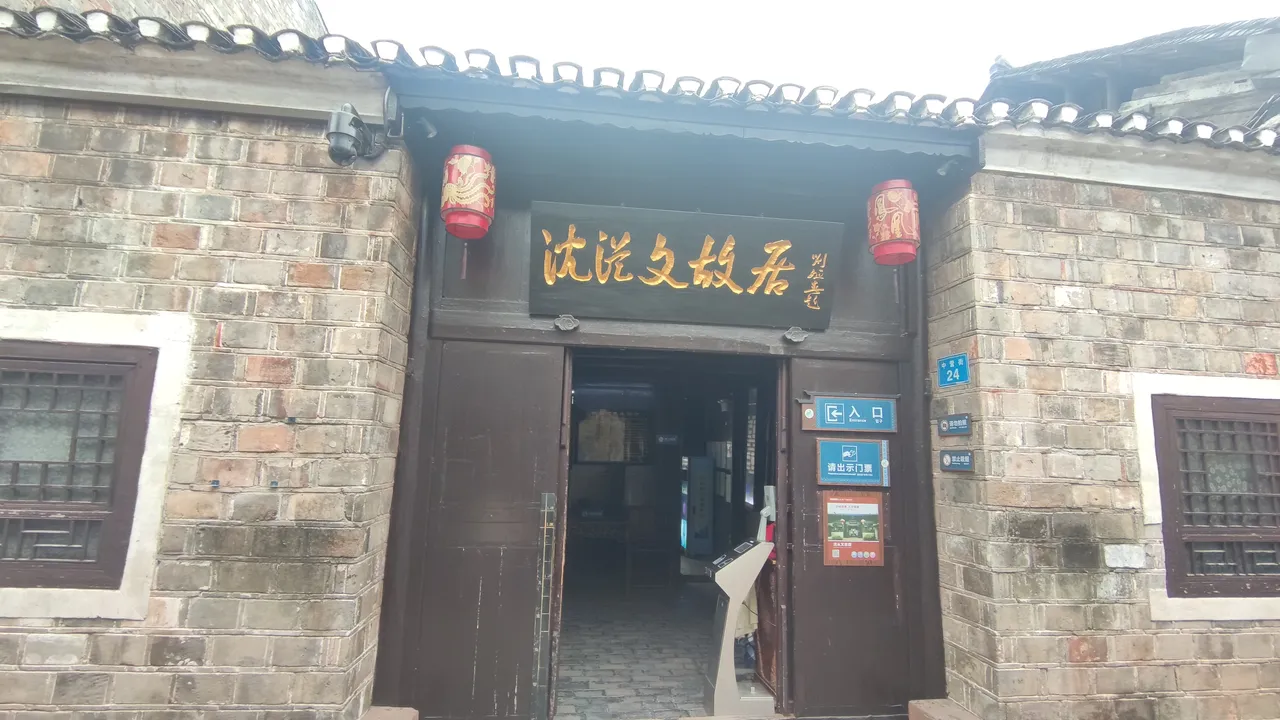
| 第1天 09:00 | The Shen Congwen Residence: Day One's Literary Foundation |
| 第1天 14:00 | The East Gate Tower and the Old Wall: Learning the Town from the Parapet |
| 第1天 16:30 | The Tiaoyan Stepping Stones and North Gate Wharf: An Afternoon on Two Rows of Piers |
| 第2天 09:00 | The Xiong Xiling Residence: The Premier's Chronology |
| 第2天 11:00 | The Yang Ancestral Hall and the Town Museum: Family and Fortress |
| 第2天 14:30 | Tuo River Boating and the Hongqiao Night: The River Twice, Day and Dark |
| 第3天 08:30 | South Phoenix Hill National Forest Park: Heights and Mist |
| 第3天 14:00 | Qiliang Cave: Underground Cool and a Garrison Past |
| 第4天 09:00 | The Southern Great Wall: Four Centuries on the Rampart |
| 第4天 13:30 | Huangsiqiao Ancient City: A Tang Stone Town in the Afternoon |
| 第5天 08:30 | Shanjiang Miao Village and the Miao Museum: Day One of Miao Country |
| 第6天 09:30 | Zhushan Village and the Lahao Camp: A Stone Village and an Old Garrison |
| 第6天 15:00 | Laodong Miao Village: Old Hours Deep in the Hills |
| 第7天 08:00 | Dehang Miao Village and the Aizhai Bridge: A Finale of Gorge and Steel |
| 第7天 17:00 | Furong Town: A Period Hung on a Waterfall |
The route, stop by stop
The Shen Congwen Residence: Day One's Literary Foundation
Seven days open at Shen Congwen's house, manuscripts, first editions and life photographs in the timber courtyard: feel the west-Hunan light in the sunwell first, read the rooms second, then buy a Border Town to carry, giving the next six days of boats and crossings their source.
After the residence, drift Zhongying Street and the lanes for an aimless hour, lunch in the lanes, and turn the afternoon toward the gates and the river.
The East Gate Tower and the Old Wall: Learning the Town from the Parapet
The afternoon climbs the East Gate Tower and its wall stretch, battlements opening to the Tuo and stilt rows outside, gray tiles stacking inside: read the town's plan from the wall, the river the axis, the bridge the center, lanes radiating out.
Descend and walk the bank fixing key coordinates, North Gate wharf, stepping stones, Hongqiao, Wanming Pagoda, where seven days of memory start their file.
The Tiaoyan Stepping Stones and North Gate Wharf: An Afternoon on Two Rows of Piers
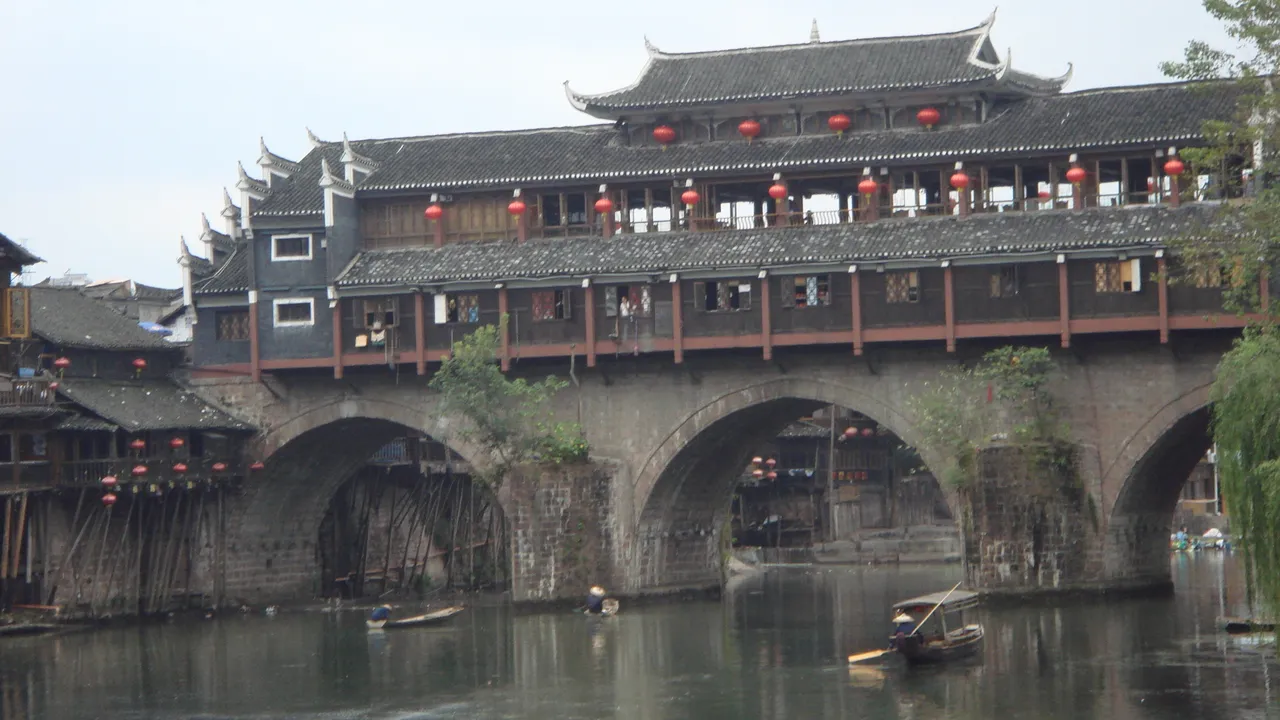
Off the wall, straight to the stones, two offset rows with the river at your ankles, across and back. The North Gate wharf once started the water journeys, and looking back from it frames Hongqiao and the stilt rows in the town's classic shot.
Take the bank steps at dusk as the lamp strips come on layer by layer. Day one only learns the town, boating and night cruises saved for later days.
The Xiong Xiling Residence: The Premier's Chronology
Day two's morning completes the humanist list. Xiong Xiling's house runs small, its chronology and photo walls the draw: west-Hunan prodigy, Republican premier, philanthropist who spent a fortune on a children's home, three lives told in one small courtyard.
Hold it against yesterday's Shen residence, letters and statecraft both setting out from these lanes, the most interesting structure in Fenghuang's humanist story.
The Yang Ancestral Hall and the Town Museum: Family and Fortress
The late morning takes the Yang ancestral hall and the town museum, the hall's stage and carving for a Qing military family, the museum gathering military history, folkways and silversmithing on one line, adjacent venues, two hours together.
All humanist points done before noon, Miao lunch after, and the afternoon goes to the river.
Tuo River Boating and the Hongqiao Night: The River Twice, Day and Dark
The afternoon's golden slot goes to the boats, dusk chaining into the bridge lights, the river's two faces in one day: stilt columns and washing steps by day, lamp strips and reflections at night. Two runs on the water complete the reading.
Boats run twenty to thirty minutes a slot, sunset runs softest; cruise tickets per on-site postings, then walk the bank home and rest early.
South Phoenix Hill National Forest Park: Heights and Mist
Day three climbs South Phoenix Hill, early trails cool and quiet, mist rising off the Tuo, the mid-hill deck framing the gray roofs, the summit adding the whole western Hunan roll, the park hugging the town's south edge, two to three hours round trip.
Without summit fever, turn back at the half-way deck, the view already earning the ticket. Lunch downhill, cave in the afternoon.
Qiliang Cave: Underground Cool and a Garrison Past
The afternoon goes underground at Qiliang, multi-level caverns spreading underground river, columns and halls under the lights, the rebel-garrison legend laying a humanist filter over the geology, the cave's constant climate immune to any weather.
Ninety minutes covers it; back in town by evening with the night free, teahouse, cruise or early sleep, since a seven-day rhythm lives on such blanks.
The Southern Great Wall: Four Centuries on the Rampart
Day four leaves town for the wall, the Ming-Qing military work dividing the Miao frontier, its climbable stretch looking over the seam between Han fields and Miao ridges, history plainer on site than any panel. Two hours, twenty minutes by taxi from town.
The wall's meaning lands only standing on it: how the people on either side spent four centuries divided and mingling. Down and onward to Huangsiqiao.
Huangsiqiao Ancient City: A Tang Stone Town in the Afternoon
The afternoon reaches Huangsiqiao, the Tang-founded garrison stone town, hinge of the wall system, bluestone walls boxing a square city still inhabited, a forty-minute circuit with the interlocking masonry readable from below, plainer than any panel.
Back in the old town by dusk with the evening free; reading day four's military history against the literati days before, the town's skeleton deepens again.
Shanjiang Miao Village and the Miao Museum: Day One of Miao Country
Day five enters Miao country. The morning takes Shanjiang village, stilt houses, stone lanes and elders in festival dress, gate wine and Miao song on ritual days, then the town's Miao museum for migration and dress lineages.
Village first, museum second, by design: the embroidery and silver horns of the morning find their full explanations inside. Three hours for both, Miao lunch in Shanjiang.
Zhushan Village and the Lahao Camp: A Stone Village and an Old Garrison
Day six climbs to the stone villages. Zhushan builds entirely of bluestone, walls, lanes and courtyards ranking along the ridge, old houses revived as galleries and guesthouses; nearby the Lahao camp keeps the wall line's garrison site, its military plan still legible.
Three hours for both, half an hour of driving between; the draw is real farm work and crafts, weaving, basketry, drying chilies, outlasting any staged scene.
Laodong Miao Village: Old Hours Deep in the Hills
Day six ends at Laodong, an old village hidden in the hills, stone lanes and houses well kept, limited development, low visitor density, made for walking without destination.
Follow the channel, the smoke, the school kids; the elders' doors stand open, greet and sit. Back to the old town by dusk, replaying two Miao days in your head.
Dehang Miao Village and the Aizhai Bridge: A Finale of Gorge and Steel
Day seven runs far to Jishou. The morning takes Dehang, the village seated at the canyon floor where cliffs, streams and falls act out its Miao name, beautiful gorge, to the limit, folk shows and gate wine by session, then up to the Aizhai Bridge deck to watch the steel truss hang three hundred meters high.
About an hour from Fenghuang, a round trip demanding an early start, with one more stop on the way home: Furong Town.
Furong Town: A Period Hung on a Waterfall
Seven days write their period in Furong Town, the Tujia old town threaded by a waterfall, the falls taking the lights at dusk, stilt towers glowing in the roar, one of the region's singular night scenes and the best curtain call a deep Fenghuang week could ask.
About ninety minutes from Dehang, then back to Fenghuang after the show or overnight in town. Seven days gather here: old town, river, wall, Miao country, gorge and falls, every side of one town and its region.
| Getting around |
|
| Budget | Old-town passes plus rural singles total some RMB 400-500 pp, charters to Miao country and Jishou the transport heavyweight, meals RMB 600-900 across seven days. |
| Best time | Spring and autumn steadiest, Miao New Year and the fourth-month eighth festival loudest; market days follow the lunar cycle, confirm with the inn and build the plan around them. |
FAQs
What do seven days add over five?
The Miao heartland and the blank space: Zhushan, the Lahao camp and Laodong add depth the five-day version lacks, while the spare evenings let boating, night runs and riverside idling stop competing. The seven-day essence shifts the trip from seeing sights to living days, paid in rhythm, not counts.
Will five town days over the same lanes grow dull?
This plan spends only three days in town, the rest outside, repetition diluted by design. The same place changes character by hour: the morning bank, the afternoon lane and the night bridge are three towns. Still familiar? Re-walk it at a different hour, nearly a new place.
What does the seven-day version cost overall?
Tickets total four to five hundred per person, charters stack across the last four days at some one to two hundred each per person shared by two, with meals and rooms floating by inn standard. Roughly two to three thousand per person all in, flexing hardest on river-view rooms and full-run chartering.
When should the plan shrink to five days?
Three cases: sustained rain discounting the wall and gorges, mild interest in Miao country where two hinterland days compress to one at Shanjiang, or limited stamina, since mountain driving accumulates fatigue. Merge days five and six and drop Laodong, leaving the old-town core untouched.