
Guangzhou grew along the Pearl River, and to its people the sea means this river. Three days walk the waterline from downtown toward the estuary: day one's Flower City Square and Haixinsha as the new axis on the Zhujiang New Town reach, day two's Taikoo Wharf and Party Pier as old wharfs reborn as riverfront life, day three's Nanhai God Temple and Nansha wetland returning Guangzhou to its identity as port and river mouth.
The routing conceit flows downstream: three days of falling water and widening river, from the city's river to nature's. Book the cruise and wetland ahead; the rest is free open space, easy on budget.
Itinerary at a glance
| Day 1 15:00 | Flower City Square: The New Axis's Urban Living Room |
| Day 1 16:30 | Haixinsha Asian Games Park: Games Memory on a River Island |
| Day 1 18:00 | Haixin Bridge: The River's First-Person Crossing |
| Day 1 20:00 | The Pearl River Night Cruise: The Standard Opening Move |
| Day 2 10:00 | Taikoo Wharf: A Riverfront Morning inside Old Warehouses |
| Day 2 16:00 | Party Pier: The Beer Culture and Creative Arts Zone |
| Day 2 19:00 | The Riverfront Path under Canton Tower: A Second Stretch of River in Light |
| Day 3 09:30 | The Nanhai God Temple: The Sea Silk Road's Origin Shrine |
| Day 3 14:00 | Nansha Wetland Park: The Migrant Way Station before the Sea |
| Day 3 17:00 | Nansha Tianhou Palace: A Mazu Temple Facing Lingding Bay |
The route, stop by stop
Flower City Square: The New Axis's Urban Living Room
Flower City Square is the heart of the new axis, flanked by the opera house, the provincial museum, the library and twin towers, the square itself spread with flower beds and water features. Afternoon crowds stay thin, right for one lap to inventory the landmark buildings.
The square peaks at dusk, lights rising and tower facades turning screens; the basement mall and food deck settle dinner on the spot.
Haixinsha Asian Games Park: Games Memory on a River Island
Haixinsha is a boat-shaped island mid-river where the 2010 Asian Games opening ceremony ran, stands and sail-membrane structures retained. Its angles across the water are superb, Canton Tower and Zhujiang New Town facing off over the current.
One island loop takes forty minutes, lawns right for sitting and watching ships; the park is free, an on-the-way stop between the square and the cruise piers.
Haixin Bridge: The River's First-Person Crossing
Haixin Bridge is the Pearl River's first footbridge, a curved span linking Haixinsha to the Canton Tower side. On the deck at dusk, both banks' lights and river cruises enter one frame, among the river's best reading angles.
Crossing needs free reservation on official channels, generous quotas but still worth booking on holidays. The bridge walk to the tower's foot takes ten minutes, dovetailing into the night cruise pier.
The Pearl River Night Cruise: The Standard Opening Move
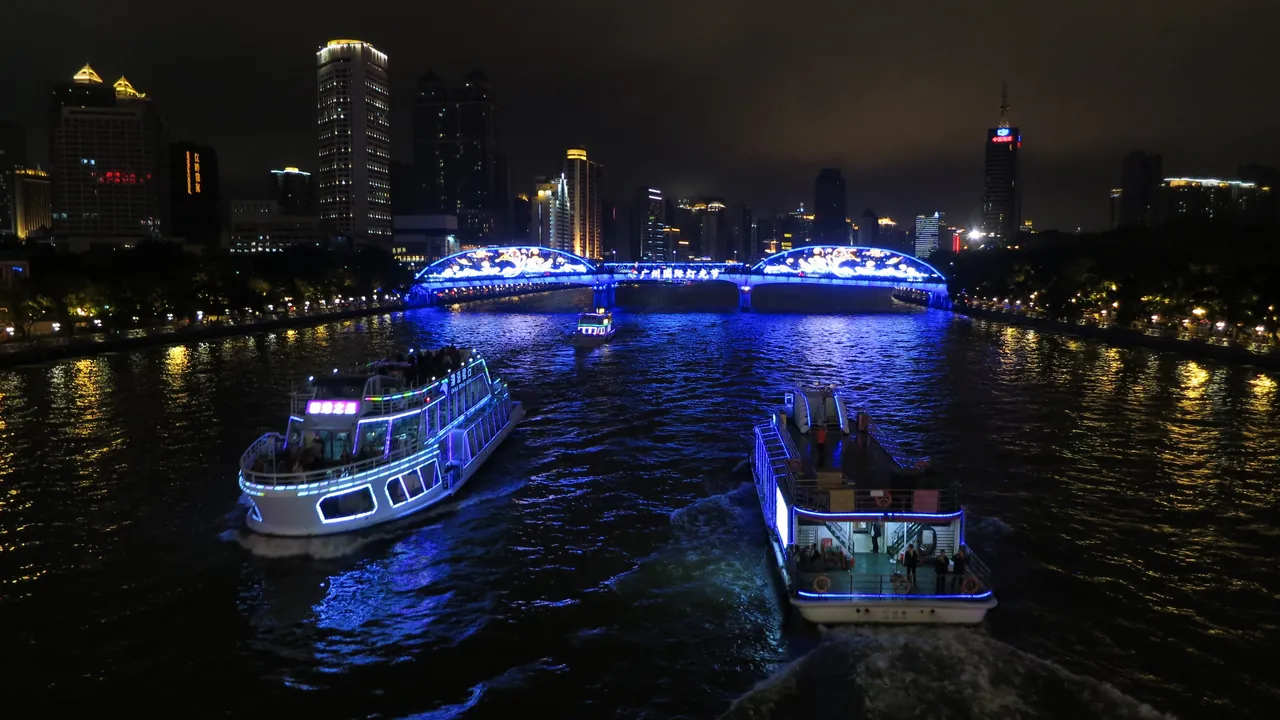
Night one's finale is the Pearl River cruise: sailing from the piers as Canton Tower, the new-town skyline and old arcades pass in light, about seventy minutes covering both banks whole.
Tickets tier by vessel and cabin, the open deck best-viewed and wind-bitten; dusk sailings sell first, so book seats one to three days ahead on licensed channels.
Taikoo Wharf: A Riverfront Morning inside Old Warehouses
Taikoo Wharf preserves early-twentieth-century British warehouse blocks, red-brick sheds reborn as the starting point of Guangzhou's riverfront life belt, yacht berths, a cinema, buyer shops and river-view restaurants lining the water.
Mornings run thin, right for a stretch along the embankment before touring the sheds; the red-brick facades against the river shoot beautifully, and a riverside cafe seat earns its hour.
Party Pier: The Beer Culture and Creative Arts Zone
Party Pier grew from the old Zhujiang Beer brewery, old plants and the embankment sprouting dozens of bistros and craft-beer bars, warming from late afternoon into the riverbank heart of Guangzhou nightlife, with Pazhou and Canton Tower across the water.
Scout it by day, walking the embankment east to west to pick tonight's table; craft beer and grills are the standard kit, and sunset river seats go to the early.
The Riverfront Path under Canton Tower: A Second Stretch of River in Light
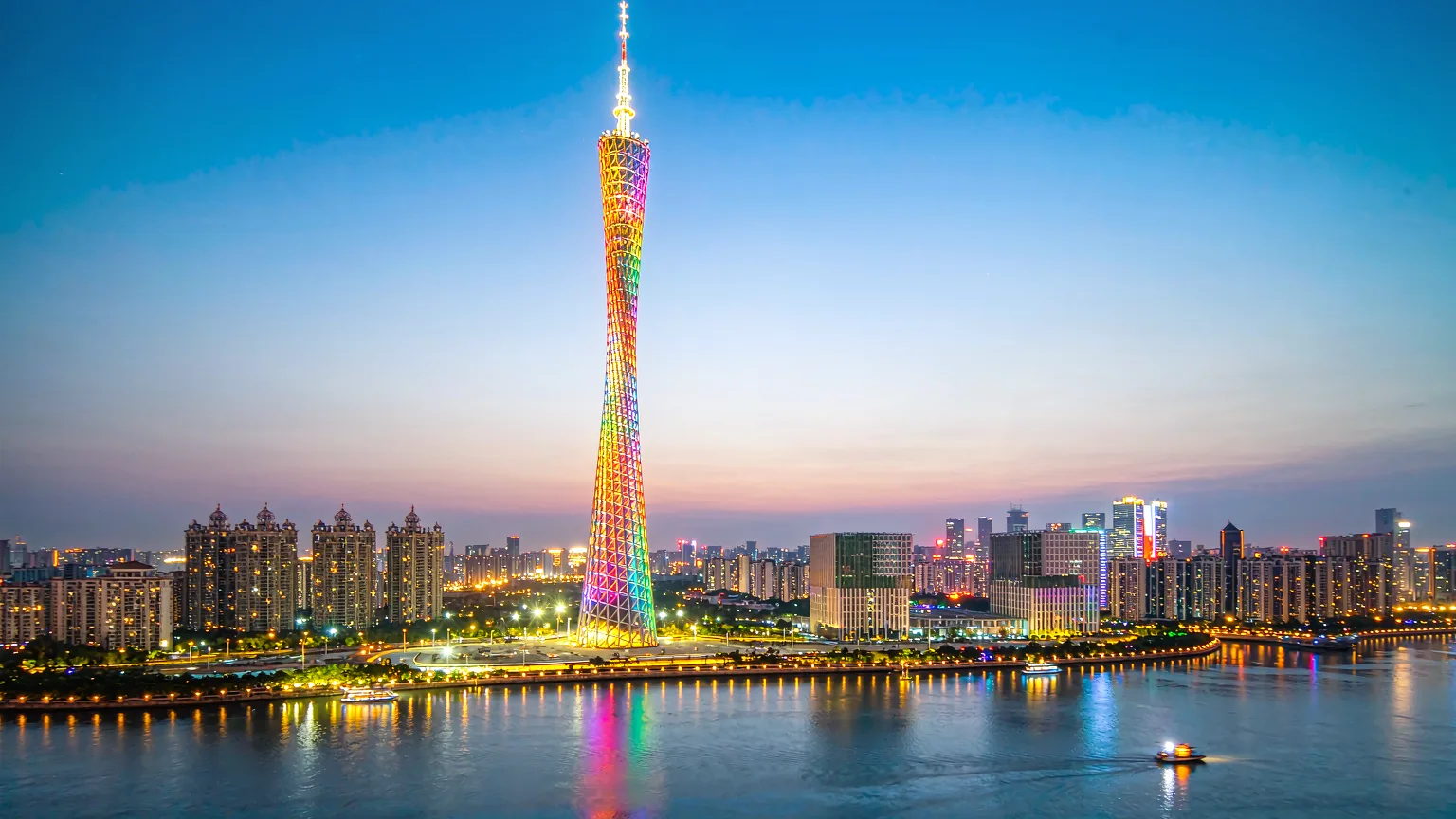
Night two returns to the riverfront under Canton Tower, a stretch linking Haizhu bridge to the tower with running and strolling lanes divided, the tower's lights cycling colors while reflections shatter on the current.
Walk the embankment from the bridge toward the tower, forty minutes of free light show; when legs tire, sit on the embankment steps and count the cruises past.
The Nanhai God Temple: The Sea Silk Road's Origin Shrine
Day three floats downstream to the Nanhai God Temple, one of the four seas shrines imperially founded in the Sui, where envoys sacrificed to the sea god and silk road fleets prayed for wind before sailing. Ancient stelae crowd the grounds, the Sea Never Rises archway the famous entrance scene.
The temple is history and old architecture, two hours covering all: the ceremonial gate, main hall and Zhaoling palace on the axis, with stele corridors holding centuries of sacrificial texts. Crowds run far below downtown sights, built for slow looking.
Nansha Wetland Park: The Migrant Way Station before the Sea
Afternoon reaches the river mouth. Nansha wetland is among the Pearl River Delta's best-kept estuary wetlands, mangroves and reed beds threaded by channels, winter migrants resting by the tens of thousands, and the boat ride through the channels is the park's signature.
The golden season runs November to March when birding and boating concentrate; summer trades in shade and lotus, with sun protection for the boats.
Nansha Tianhou Palace: A Mazu Temple Facing Lingding Bay
The day's last stop is the seaside Tianhou Palace, a Mazu temple built against the hill facing the sea, billed as the largest of its kind in Southeast Asia, its upper terrace overlooking where the river meets Lingding Bay's salt water.
The waterline arrives at the estuary here: from Flower City Square's urban river to the wetland's natural channels to the brackish seam beyond the palace. Watch one sunset from the temple platform and the three river days converge.
| Getting around |
|
| Budget | RMB 500-900 pp: sights lean free, cruise tickets RMB 100-200, spending concentrates in riverside dining at about RMB 150 a day. |
| Best time | October to March brings a fresh river breeze; in summer push cruises and riverside hours past sunset and keep noon indoors or in shade. |
FAQs
How do I pick a Pearl River cruise ticket?
Two criteria: vessel and cabin. Big boats ride steady with seated cabins, small ones nimble but windier; the open deck has the best views, seated cabins suit seniors and kids. Sailings between six-thirty and eight catch the fullest lights; book one to three days ahead on licensed channels and choose mid-peak sailings on holidays.
Why does even the footbridge need reservation?
Haixin is a pure footbridge with free real-name booking to cap deck crowds, and walk-ups generally cannot board; book on the official account, same-day quota usually sufficing, though a day ahead is wise on holidays and light-show nights. If forgotten, cross by metro and view the bridge from the tower's foot instead.
Do winter and summer differ much at Nansha wetland?
Sharply. Winter is the migrant season, mass arrivals at dusk and channel boat rides the core experience, best November to March; summer offers shade, lotus and flooded forest with limited birding but deeper green. Photographers and birders take winter, families take summer mornings.
Is the downstream day worth it given poor transport?
Worth it, the day carrying the most of why Guangzhou is Guangzhou: the temple explains the city's bond with the sea, while the wetland and palace mark the river's end. A chartered car for four to six people solves transport at controllable per-head cost; if it still feels heavy, cut the palace and keep the wetland.