
Guangzhou's heritage map reads cleanest by district: the Xiguan cluster (Chen Clan hall, Lychee Bay, Yongqing Fang) as the city of streets and crafts; Shamian and Yide Road as the concession and church architecture; the Whampoa reach (Nanhai temple, the academy, Shenjing village) as port and modern history. Three days, one district each, no backtracking.
Handle three bookings early: real-name tickets at the Chen Clan hall, free booking at the opera museum, slot reservation at the academy. Everything else is free open blocks with huge flexibility, and rainy days can swap whole days indoors.
Itinerary at a glance
| Day 1 09:00 | The Chen Clan Ancestral Hall: Reading Lingnan Craft through One Hall |
| Day 1 11:00 | Lychee Bay: Xiguan's Water Town before Noon |
| Day 1 14:00 | Yongqing Fang and the Cantonese Opera Art Museum: Old Meets New |
| Day 2 09:30 | Shamian Island: One Hour in the Concession Buildings |
| Day 2 14:00 | The Sacred Heart Cathedral: Far Eastern Gothic in Stone |
| Day 2 16:00 | Beijing Road: Ground-Level Proof of the Millennium Road |
| Day 3 09:30 | The Nanhai God Temple: A Millennium of Praying for Wind |
| Day 3 13:30 | The Whampoa Military Academy Site: Modern History at Its Original Scene |
| Day 3 17:00 | Shenjing Old Village: A Slow Close on Changzhou Island |
The route, stop by stop
The Chen Clan Ancestral Hall: Reading Lingnan Craft through One Hall
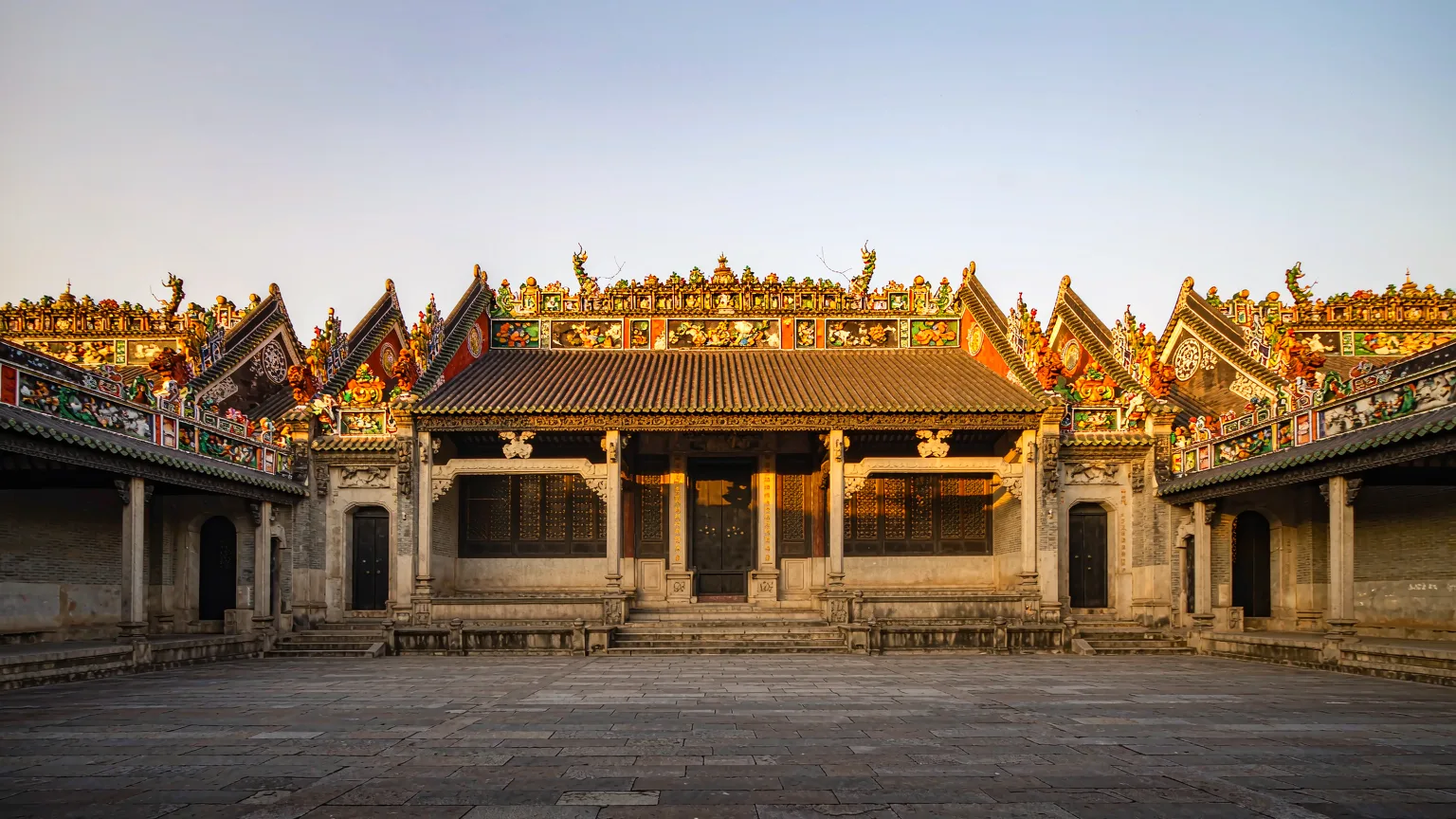
Open the three days at the Chen Clan Ancestral Hall, the Qing lineage hall piling roof-ridge ceramics, brick carving, woodwork, lime plaster and bronze-iron casting onto every ridge and eave, the summit of Lingnan architectural art. Enter looking up, from ridge figures down to beam details.
Thorough signage reads well without a guide, ninety minutes total; morning light slanting into the courtyards gives the brick carving its deepest relief, the best hour for eye and camera.
Lychee Bay: Xiguan's Water Town before Noon
Twenty minutes south on foot lies Lychee Bay, banyan beards, stone bridges and older residences lining the restored creek, the Wench pagoda and Liang ancestral hall on the banks, a living sample of old Xiguan's water vein.
Herbal-tea shops and water-chestnut stalls warm up mid-morning; buy and eat walking, one loop an hour, arcades and sliding-door houses everywhere.
Yongqing Fang and the Cantonese Opera Art Museum: Old Meets New
Afternoon enters Yongqing Fang, granite lanes, sliding doors and manchurian windows keeping old Xiguan's bones while cafes and studios pour in the new, Bruce Lee's ancestral home and the opera museum both inside.
The opera museum is free but booked, garden buildings ringing water, permanent shows on role types and costume craft, with luck a live Cantonese music set on the garden stage. Give this stop two full hours.
Shamian Island: One Hour in the Concession Buildings
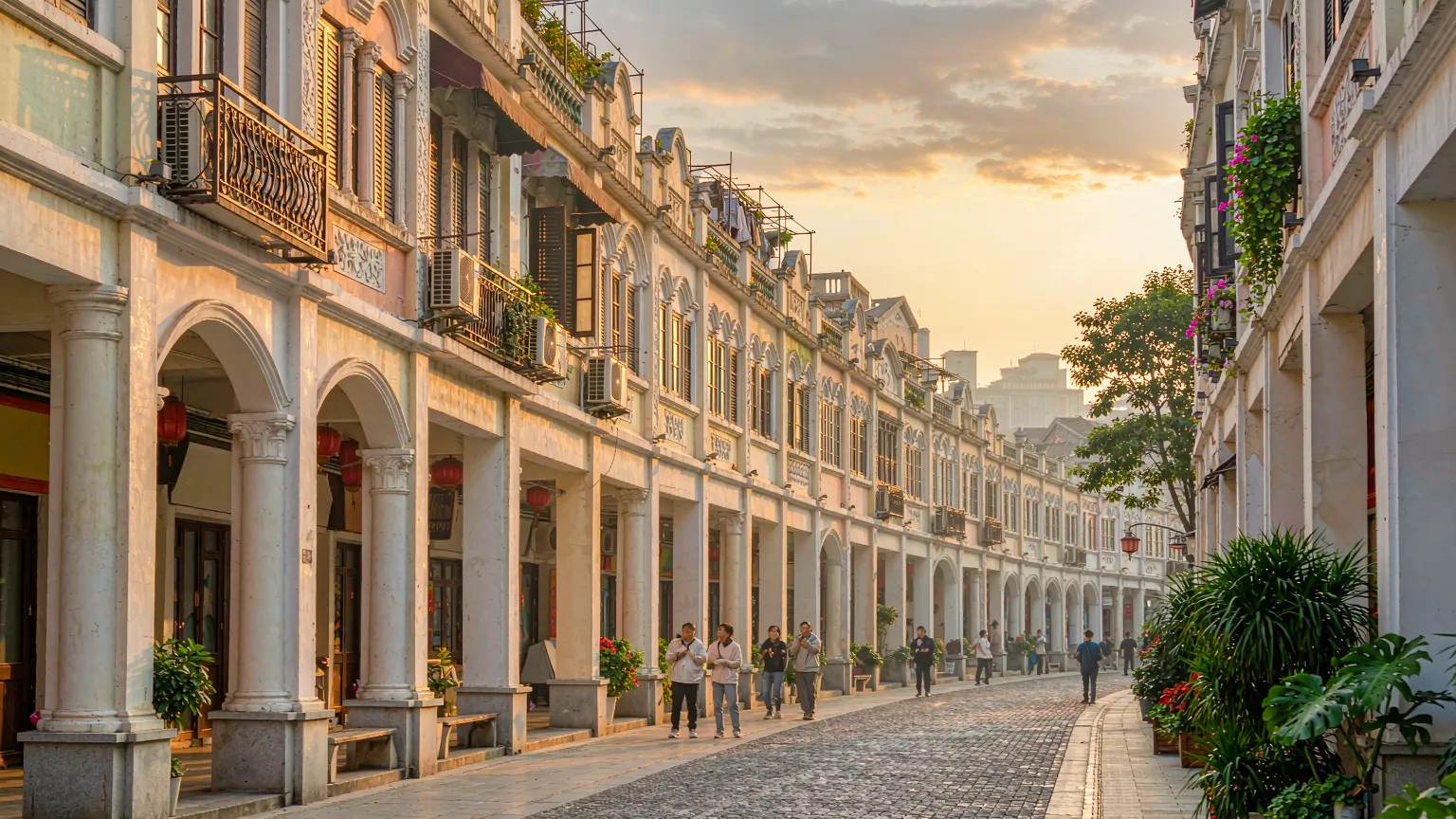
Day two shifts to the concession quarter. Shamian was the Qing-era British-French concession, 150-plus western buildings along the main street, the Notre-Dame chapel and old bank blocks the anchors, old banyans and coffee facades making the city's quietest quarter.
One island loop takes an hour focused on the chapel and HSBC corners; the building plaques are thorough, a street-level seminar in modern architectural history.
The Sacred Heart Cathedral: Far Eastern Gothic in Stone
Metro to Yide Road for the Sacred Heart Cathedral, an all-stone twin-spired Gothic built in the Guangxu era entirely of granite, a rare pure stone structure in the Far East.
Entry is free outside mass times; look up for the rose window and clustered columns, and afternoon light through the stained glass into the nave is the building's finest hour.
Beijing Road: Ground-Level Proof of the Millennium Road
Evening lands on Beijing Road, where glass mid-street protects layered road surfaces from Song through Qing, the trading capital's core street never moving in a millennium, a rare case of shopping atop history.
The ancient-road site is free to view, arcade facades and old brands lighting up at dusk; close day two by stocking pastry souvenirs, banking time for tomorrow's river crossing.
The Nanhai God Temple: A Millennium of Praying for Wind
Day three crosses to Huangpu. Founded in the Sui, the Nanhai God Temple is the official shrine of the sea god through the dynasties, where silk road fleets prayed for wind; the Sea Never Rises archway and the stelae field carry the most weight.
Two hours cover the axis buildings and stele corridors with crowds far below downtown; a drive remains to Changzhou island, so a morning start keeps it easy.
The Whampoa Military Academy Site: Modern History at Its Original Scene
Afternoon crosses to Changzhou island for the Whampoa Military Academy site, the 1924 school that produced hosts of modern military and political figures; the headquarters block, club hall and barracks are restored to original form with direct, legible displays.
The site is free but slot-booked, closed Mondays; about ninety minutes, with the naval air and river wind from pier to gate the island's own character.
Shenjing Old Village: A Slow Close on Changzhou Island
The heritage day closes at Shenjing old village on the island, famed for its roast goose, granite lanes and old houses intact, the former Anlai market at the village mouth once a bustling fair.
Dinner happens in the village, roast goose over white rice the standard answer; afterward wait for the ferry back downtown, and in the river's night view look back across three days of halls and academy, the Guangzhou heritage chapters shut.
| Getting around |
|
| Budget | RMB 300-600 pp: entries run in the tens of yuan, with spending in meals and Changzhou ferry transport at about RMB 150 a day. |
| Best time | October to March feels best; museums close Mondays, and the academy's booking slots need early locking. |
FAQs
Does the Whampoa Academy need booking? Can I get same-day slots?
Yes, real-name booked with slots on the official account; weekdays usually still have same-day room, while weekends and holidays deserve two to three days ahead. With booking confirmed, cross by ferry from Yuzhu pier with ID; the process is simple, just never stake the itinerary on same-day quota.
How does the ferry work? Is it a hassle?
Not at all: Yuzhu ferries run dense schedules, ten-odd minutes across for a few yuan, QR transit code accepted. The academy to Shenjing village walks or rides the island shuttle; for returns, board the Yuzhu-bound sailing and confirm the last departure on the pier's noticeboard.
Which stop is least cuttable in three days?
The Chen Clan hall and Whampoa site tie for first: one the peak of Lingnan craft, one modern history's original scene. If another must go, cut the Nanhai temple (the farthest), keeping Shamian and Yongqing Fang as the two most intact districts; Shenjing village folds into the academy stop.
Does this heritage line suit teenagers?
Highly, the three districts mapping onto three textbook chapters: craft arts, treaty-port trade and the national revolution. Give ten minutes of background before setting out, since on-site signage carries plenty; the academy's displays and artifacts hit students hardest, so keep it as the finale.