
Guangzhou's green runs in three layers: Baiyun Mountain as the city's back garden with the whole city from the top; the national botanical garden and Haizhu wetland as central-city ecology; and Conghua's springs with the Liuxi River as northern-hinterland landscape. Three days taper in intensity, hardest first, the third done mostly lying down.
Transport is the key variable: Baiyun rides metro plus shuttle, the botanical garden has its own metro stop, and Conghua needs rail then bus or a car. Overnight in a spring resort on day three, closing the trip in hot water.
Itinerary at a glance
| Day 1 08:30 | Baiyun Mountain: A Half-Day up the Goat City's Finest Peak |
| Day 1 13:30 | Yuntai Garden: A Garden Nap at the Mountain's Foot |
| Day 1 16:00 | Yuexiu Park: An Evening in the City's Green Heart |
| Day 2 09:30 | The South China National Botanical Garden: A Plant Kingdom in the City |
| Day 2 14:30 | Haizhu National Wetland Park: A Migrant Corridor beside the Bustle |
| Day 2 17:30 | Ersha Island: A Lawn Dusk in the Middle of the Pearl River |
| Day 3 10:00 | Liuxihe National Forest Park: Lake and Hills of the Northern Fringe |
| Day 3 14:00 | Conghua Hot Springs: An Afternoon in the Hot Water Town |
| Day 3 16:30 | Bishuiwan Hot Spring Resort: The Three Days' Hot-Water Full Stop |
The route, stop by stop
Baiyun Mountain: A Half-Day up the Goat City's Finest Peak
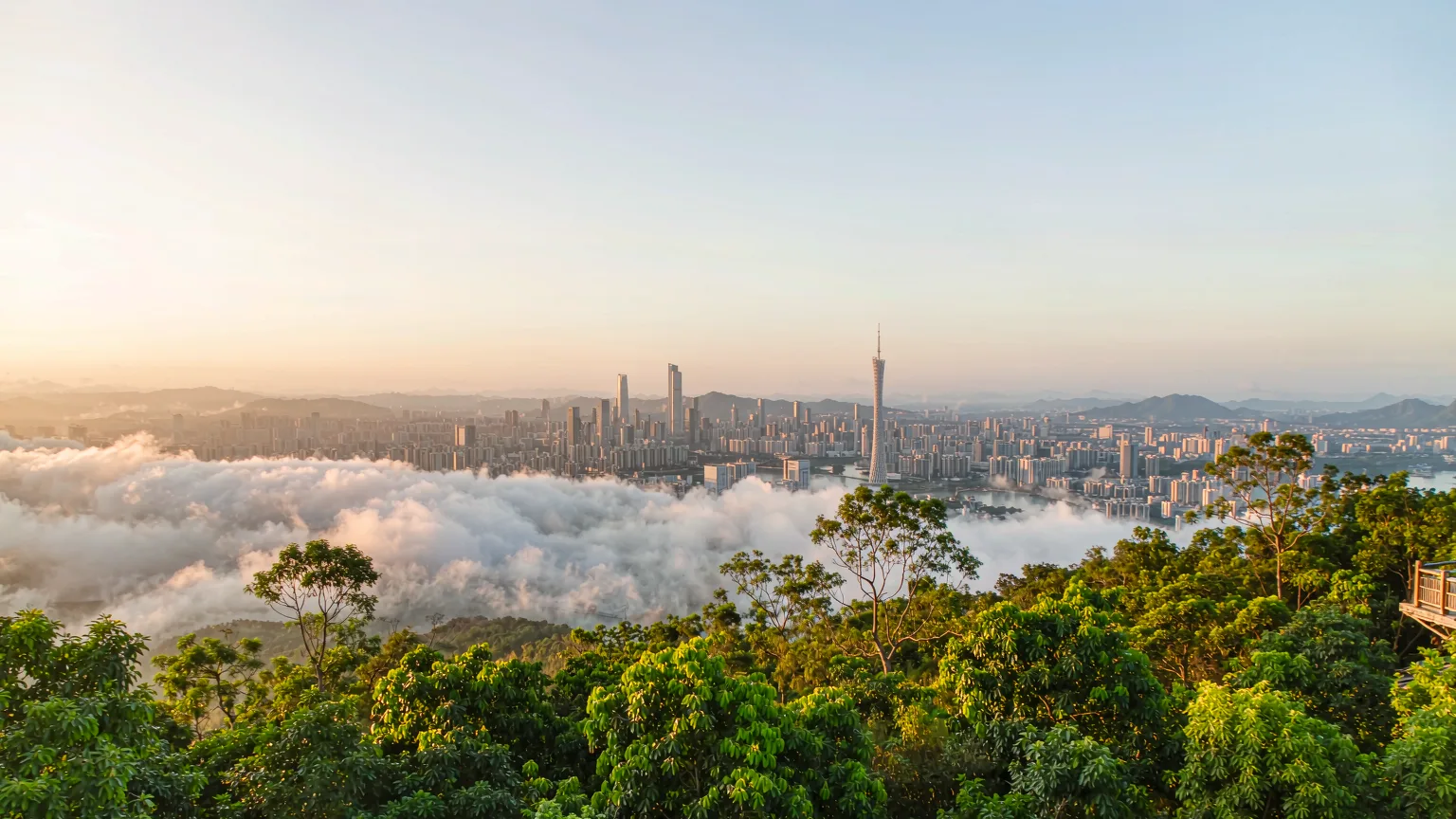
Baiyun is the city's lung, main peak Moxing Ridge barely over three hundred meters, with the whole city from the top. Early morning air runs best; the walk up takes two hours, or ride the cableway straight up and save your legs for the inter-mountain paths.
The summit views run two layers: north over folding ridges, south over the Pearl River and the skyline. Branch trails abound, with the Nengxiao pavilion and Mingchun valley stretch the worthiest loop.
Yuntai Garden: A Garden Nap at the Mountain's Foot
Out the south gate sits Yuntai Garden, a western-styled hillside garden famed for flower beds, fountains and colonnades, fullest at the spring tulip show. The post-climb afternoon suits slow loops and staring here.
The garden is small, an hour at ease, paths and ramps gentle. The lakeside lawn is a local picnic ground; sit a while after descending and day one closes comfortably.
Yuexiu Park: An Evening in the City's Green Heart
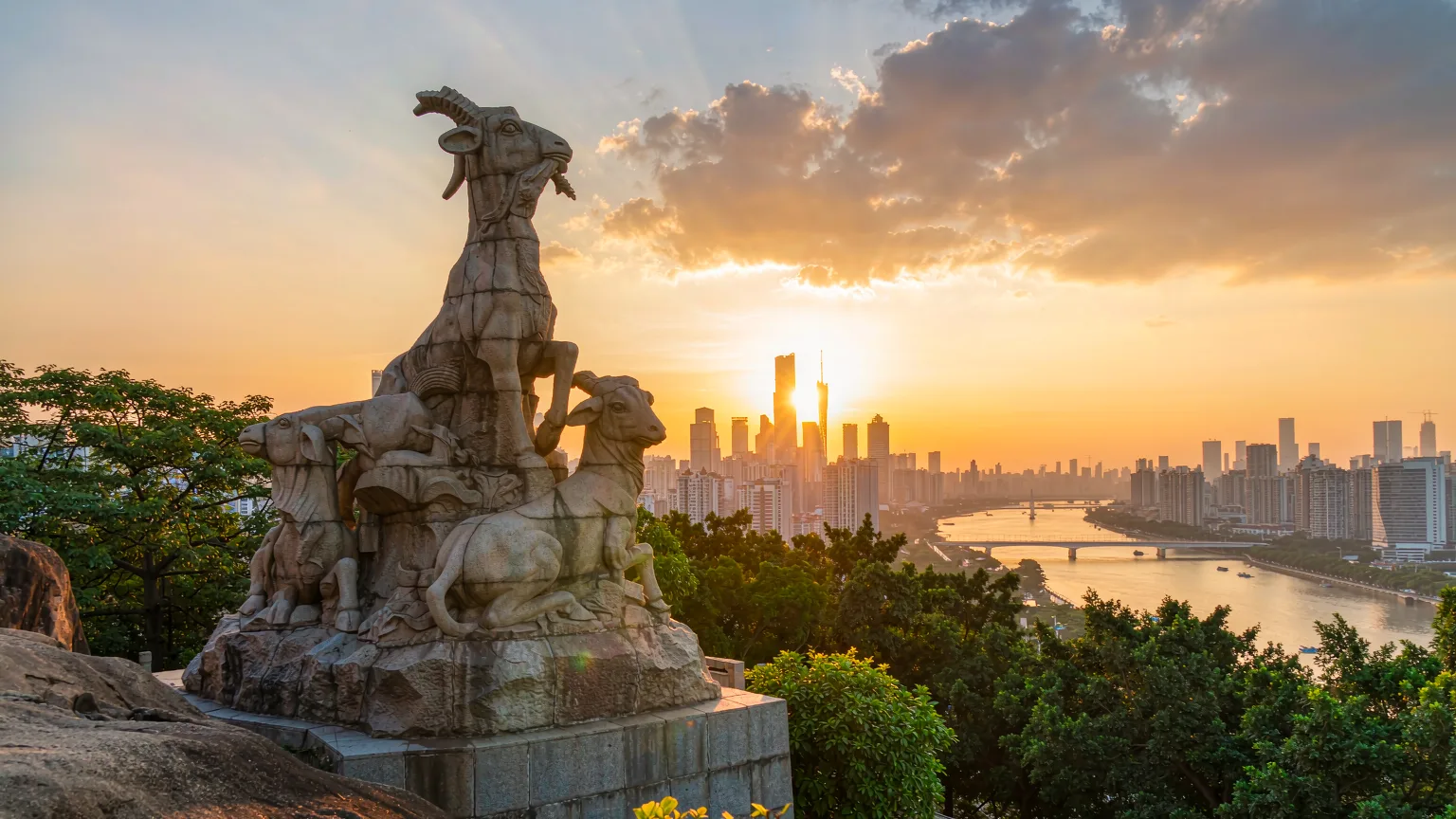
Return downtown for Yuexiu's liveliest hour: sunset from the Five Rams platform, gold edging on the Zhenhai Tower silhouette, locals streaming the lakeside loop.
Yuexiu's gentle slopes close day one at just the right intensity, within two hours; exit to a nearby restaurant for claypot rice or roast goose.
The South China National Botanical Garden: A Plant Kingdom in the City
Day two's morning goes to the South China National Botanical Garden, the region's richest in species; the glasshouse cluster holds four climate zones, desert, rainforest and alpine plants in one pass.
The grounds are vast, half a day for a serious visit: ride the sightseeing car for one full sweep, then walk the glasshouses and magnolia sections slowly. In Guangzhou winter the glasshouses stay summer, right for dodging cold and rain alike.
Haizhu National Wetland Park: A Migrant Corridor beside the Bustle
Afternoon shifts to Haizhu wetland, a rare megacity central wetland where orchards, creeks and woodland interlace with wintering flocks; rent an in-park bike or walk the boardwalks on a low-intensity two-hour loop.
Best windows run mornings and dusks after low tide; after four the light softens and egrets head home. The nature-education trail's signage is thorough, worth a slow read.
Ersha Island: A Lawn Dusk in the Middle of the Pearl River
At dusk reach Ersha Island mid-river, its development park and great lawns the city's kite and picnic shrine; the Zhujiang New Town skyline sits across, lights coming on in sequence at dusk while the grass holds its idlers.
This is the loosest stop of the nature days: no agenda, half an hour on the lawn. After dinner walk the opposite riverfront path, banking strength for tomorrow's springs.
Liuxihe National Forest Park: Lake and Hills of the Northern Fringe
Day three heads north to Conghua, first to Liuxihe National Forest Park, a reservoir park with a placid lake, lakeside trails and boat rides as the main plays, forest cover deep green by city standards.
Intensity stays low: walk a stretch of the lake or take a boat, two hours sufficing. Morning mist often hangs on the water, the photographer's hour.
Conghua Hot Springs: An Afternoon in the Hot Water Town
Conghua's springs are a near-century-old wellness retreat, water temperature and quality famous across South China, with old sanatorium buildings and riverside paths keeping the old atmosphere. In town, first a cup of mountain-water soy milk, then a riverside walk.
The core experience is soaking; public pools and hotel pools differ in class, so with budget, book a room with a private tub. The etiquette: rinse before soaking, fifteen minutes a round, rise and drink.
Bishuiwan Hot Spring Resort: The Three Days' Hot-Water Full Stop
The last stop is Bishuiwan, among Conghua's largest spring resorts, open-air pools terracing down the valley, twenty-plus pools of sizes with herbal, wine and fish pools zoned apart from kids' areas.
The open-air pools peak at dusk, mountain mist braided with steam. Overnight or return same day; Guangzhou's three nature days close in hot water, muscles and mood loosening together.
| Getting around |
|
| Budget | RMB 500-1000 pp: entries mostly within tens of yuan, a spring-resort night RMB 400-800, transport about RMB 100. |
| Best time | October to March cools for climbing and trails; in summer climb at dawn and museum-hop after noon, while springs shine in winter. |
FAQs
How long does Baiyun take? What about average fitness?
Walking up takes about two hours; the cableway reaches mid-mountain in minutes. Average legs or seniors should ride up and walk down, since the summit platform and main sights cluster by the upper station. Full walking earns the forest branch trails; choose by stamina.
When is spring season best? Can you soak in summer?
November to March is the season, when hillside damp and chill make the hot-pool contrast strongest; summer pools run as usual but discounted in appeal, most choosing night sessions. One or two soaks a day is right, and those with hypertension or heart conditions should consult a doctor first.
Does the three-day plan suit children?
Highly, all three directions being child-friendly: Baiyun's cableway saves legs, the botanical garden's glasshouses hook kids hard, and spring resorts stock children's pools and family facilities. Mind sun and mosquitoes at the garden and wetland, and halve children's soak times.
Skipping Conghua, what substitutes for day three?
In-city alternatives deepen day two: the botanical garden in the morning plus Nansha wetland for migrants in the afternoon (longer drive), or switch to a Zengcheng Baishuizhai waterfall hike. If relaxation leads, a downtown spring hotel still closes the trip in hot water and saves three hours of round-trip driving.