
Most visitors equate Hangzhou with West Lake, but locals spend their weekends north along the Grand Canal, whose southern terminus sits right here. Gongchen Bridge has arched over the water for more than three centuries, and the three blocks flanking it each have their own personality: Qiaoxi Street turns old factory halls into museums and craft shops, Xiaohe Street preserves late-Qing waterside houses, and Dadou Road is a quiet restaurant row in renovated warehouses. All are free and within walking distance.
The clever part is that the transport doubles as the sight: Waterbus Line 1 glides up the canal for 3 yuan a ride, taking about half an hour from Wulinmen pier to Gongchen Bridge, slow enough to watch the banks roll by. Spend the morning in museums and lanes, claim an afternoon riverside cafe seat, then move to Hefang Street for the old town at night. Mostly flat, made for wandering.
Itinerary at a glance
| 09:00 | Wulinmen Pier: Start with the 3-Yuan Waterbus |
| 10:00 | Gongchen Bridge and Qiaoxi Street: Reading the Canal in Stone |
| 12:30 | Xiaohe Street: Lunch in Late-Qing Canal Houses |
| 14:30 | Dadou Road: Riverside Coffee in Old Warehouses |
| 17:30 | On to Hefang Street: From Canal Life to Song-Dynasty Streets |
The route, stop by stop
Wulinmen Pier: Start with the 3-Yuan Waterbus
Waterbus Line 1 is Hangzhou's most underrated ride: a commuter boat gliding up the Grand Canal for 3 yuan, payable by QR code or coin, linking downtown Wulinmen with Gongchen Bridge in the north. It behaves like a sightseeing cruise without the price: an enclosed air-conditioned cabin with big windows and a handful of open-air seats up top, worth grabbing for the unfiltered canal view.
Over roughly 30 minutes the boat slides past the downtown skyline, under modern bridges, and slowly into an older Hangzhou of freight docks, low housing and weekend anglers. Sit on the right side; most sights face east. Boats run every 20 to 30 minutes, and outside rush hour you will share the deck with few others.
Get off at Gongchen Bridge station, right on the south bank, and the day's headline is directly overhead. If your day is a Monday, note most block museums close; the lanes themselves stay open, so reshuffle if museums matter to you.
Gongchen Bridge and Qiaoxi Street: Reading the Canal in Stone
First built in the Ming dynasty and rebuilt in the Qing, Gongchen Bridge is a three-arch stone span about 92 meters long, the tallest and longest ancient stone arch in Hangzhou. The name nods to imperial palaces, since this was the gateway for emperors arriving south. Look down as you climb: the stone steps carry deep grooves worn by centuries of wheelbarrows, and standing on top as a freight barge slides beneath the arch is the classic canal image.
West of the bridge, Qiaoxi Street reworks an old mix of factories and houses into an open district hosting the China Umbrella Museum, the Knife, Scissors and Sword Museum and the Fan Museum, all free with ID or QR registration. The Zhang Xiaoquan scissors exhibit is the standout; founded in the early Qing, the brand still equips Hangzhou kitchens.
Craft shops and teahouses fill the gaps between halls, and the vine-covered red brick of the old factories photographs like Shanghai's trendier alleys. Give each museum about 40 minutes and pick two rather than racing all three.
Xiaohe Street: Lunch in Late-Qing Canal Houses
A 15-minute walk west of Qiaoxi, Xiaohe Street keeps a cluster of late-Qing and Republican-era canal houses: whitewashed two-story homes doing double duty, shop in front, family upstairs, a living specimen of how canal families actually lived. The block is short, an unhurried hour covers it, and on weekdays you will share it with almost no tour groups.
Eat here: family-run kitchens serve soy-brined duck, fried fish noodles and flash-fried shrimp, the flavors of the canal, about 40 to 70 yuan a head, or grab a 30-yuan bowl of shrimp and eel noodles at the lane entrance. After lunch, visit the working soy sauce garden, where open vats of fermenting bean paste continue a century-old trade; small bottles of handmade soy sauce and pickles travel well.
On the east side, where the small river meets the canal, benches along the towpath make a fine spot to digest while barges slide past, and kids enjoy the shop making rice cakes by hand.
Dadou Road: Riverside Coffee in Old Warehouses
Twenty minutes on foot south along the canal bank, or one waterbus stop from Xiaohe's north end, brings you to Dadou Road, once a strip of freight warehouses and shops. The renovation kept the grey-brick skeletons and filled them with teahouses, private kitchens and cafes, making it the quietest of the three blocks and the best for doing nothing in particular.
Across the street, Xiangji Temple is worth a look: originally from the Northern Song and rebuilt in recent years, it is one of the few temples in China honoring the kitchen god, with an unusual copper hall; admission is 20 yuan. The stone pagoda in front is a canal landmark, prettier once lit at dusk. At the north end, the Jiangshu Railway park preserves traces of Zhejiang's first railway, free to wander and very photogenic.
This is where the afternoon should be wasted: grab a riverside table, order a Longjing latte or osmanthus coffee, and watch container barges crawl past. Weekends bring small markets; weekdays feel like a private venue.
On to Hefang Street: From Canal Life to Song-Dynasty Streets
Head back to Hefang Street at dusk via the waterbus from Gongchen Bridge to Wulinmen, then three metro stops on Line 1 to Dingan Road, about 50 minutes in all, or a 30 to 40 yuan taxi if you are in a hurry. Keep time for the canal at golden hour: the water turns bronze, and an erhu player under the bridge arch is not uncommon. The boat beats walking for this stretch.
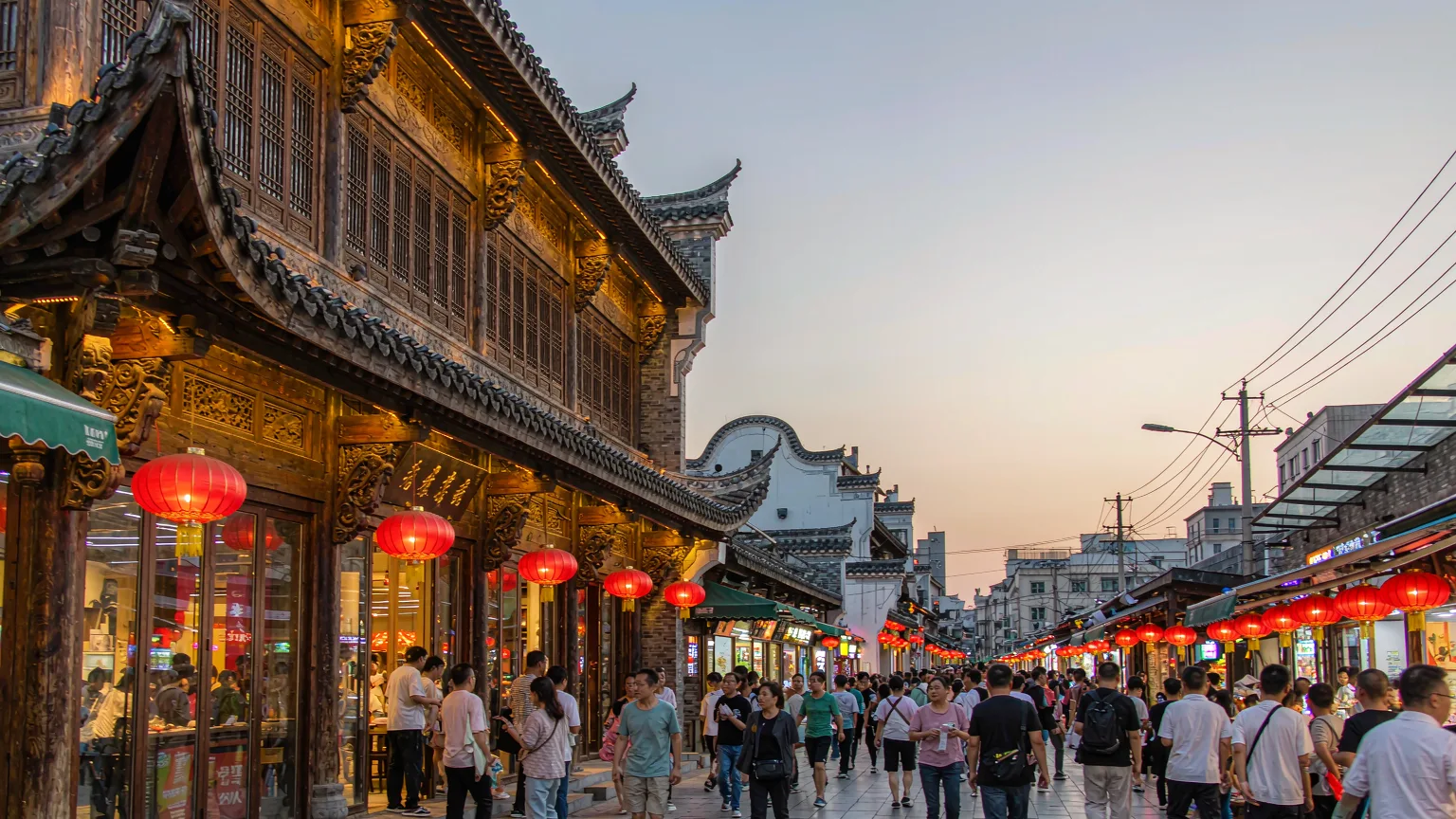
Hefang Street at night is a different animal: lanterns up, steam rising from snack stalls, the fan shop's craftsman possibly still pulling fan ribs by hand. Copper-pot tea paste, dingsheng rice cakes and scallion pancake rolls are the three street classics at roughly 10 yuan each, perfect while you decide on dinner.
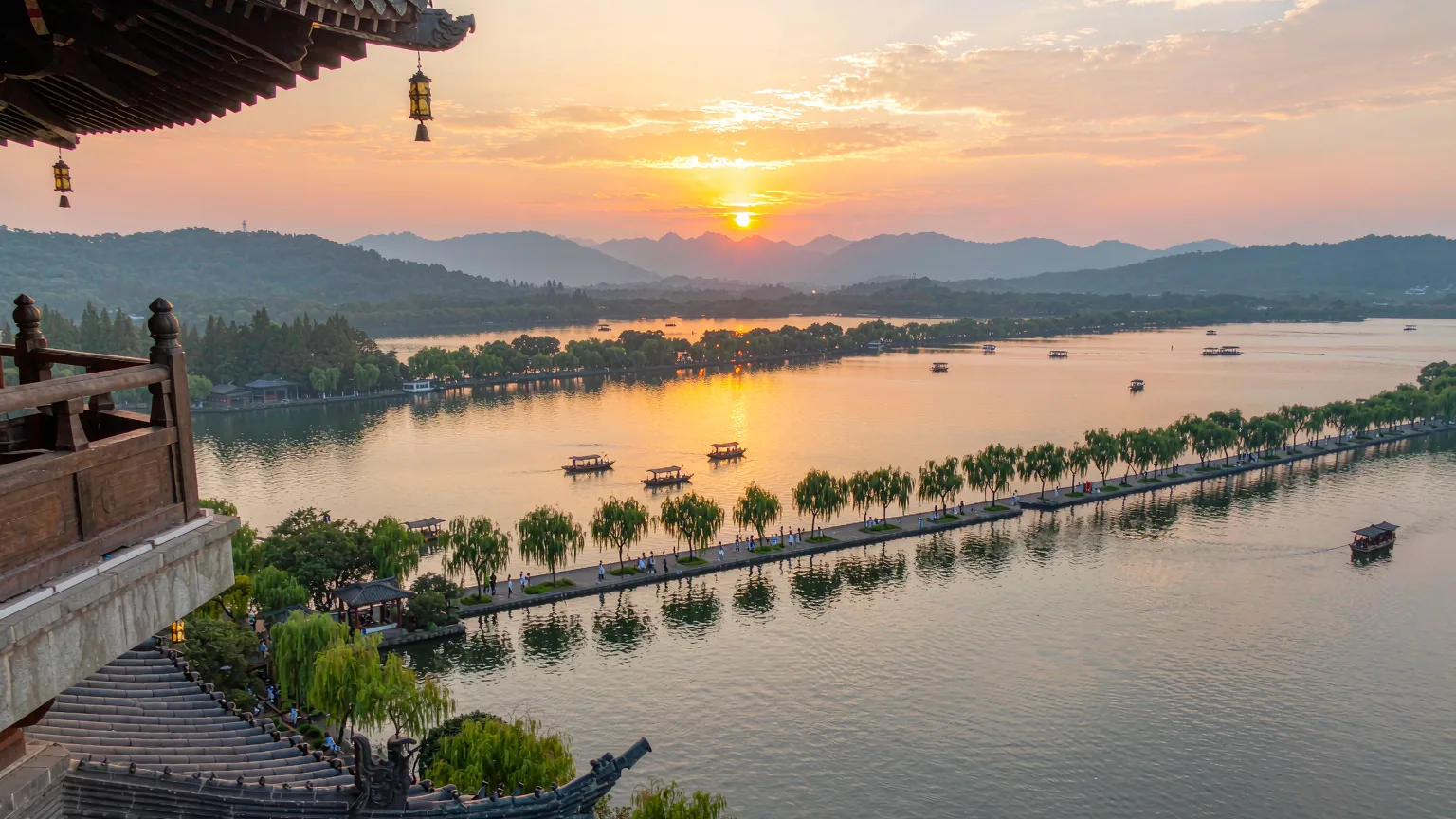
With energy left, walk five minutes to Chenghuang Pavilion at the foot of Wushan Hill, 30 yuan admission; from the top you can see both West Lake and the canal directions glittering, a tidy finale to a day in the old city.
| Getting around |
|
| Budget | About 80 to 180 yuan per person: the waterbus is 3 yuan a ride, all blocks are free, allow 50 to 120 yuan for coffee and snacks plus under 10 yuan for transit. |
| Best time | Works year-round, best in spring and autumn; start at 9 am, enjoy the quiet blocks after lunch, and reach Hefang Street as its night market warms up. |
FAQs
Is the canal waterbus safe, and will it make me seasick?
Yes, it is regular public transport with inspected vessels, marked seating and life-saving equipment, and it suspends service in storms. The canal is still inland water with almost no chop, and the boat moves at roughly cycling speed, so even prone travelers rarely react; pick a mid-cabin window seat and fix your eyes on the far bank. The crossing is only about 30 minutes, and leaning over the rails is not allowed.
Aren't the three canal blocks all more or less the same?
They are distinct, each with a job: Qiaoxi Street owns the museums and craft shops, best in the morning when your attention is fresh; Xiaohe Street is the authentic housing block with lunch and handmade sauces; Dadou Road is the warehouse-cafe stretch for slow afternoons. The architecture differs too, red-brick factories, late-Qing timber houses, grey-brick warehouses. Follow the order of museums, then lunch, then coffee, and nothing repeats.
Does this citywalk work on rainy or snowy days?
Rain suits the canal, deepening the grey brick and flagstone; the route converts almost fully indoors: enclosed waterbus, three museums at Qiaoxi, lunch in the lanes, and window seats over the river at Dadou Road. Skip only the open deck and the railway park. In snow, invert the plan: walk the bridge top and banks first for the rare snowy arch shot, then hide in museums. Either way, non-slip soles matter more than an umbrella.
How do I compress this route into half a day?
Keep the two cores: the waterbus and Gongchen Bridge. Ride from Wulinmen, photograph the bridge, do only Qiaoxi Street with one museum, say the scissors hall, for about 40 minutes, then walk or ride one stop to Xiaohe Street for lunch before heading back. Drop Dadou Road and Hefang Street, saving the latter for your lake day. The compressed version runs about 3.5 hours at roughly 50 yuan a head and still covers the canal essentials: bridge, boat and old houses.