
The countryside around Hefei is deeply underrated: Feixi keeps fortified estates and a famous mountain, Lujiang holds hot springs, Bantang by Chao Lake pairs springs with a farm complex, and Sanhe is a water town. Three days give one each to town, mountain and springs, never entering the city, a proper holiday for city legs.
The skeleton: day one all Sanhe including Liu Mingchuan's residence; day two Zipeng Mountain in the morning and Tangchi springs in the afternoon; day three Bantang springs and the Sangua commune, with a lake finale at Zhongmiao and Mushan Island. Self-driving is the optimal answer here; public transit needs patching.
Itinerary at a glance
| D1 09:00 | Sanhe Ancient Town: A Full Water-Town Day |
| D1 12:00 | A Sanhe Lunch: Rice Dumplings and Country Dishes |
| D1 14:00 | One-Man Lane and Yang Zhenning's Former Residence |
| D1 16:00 | Liu Mingchuan's Home Ground: Fortified Estates and a Late-Qing General |
| D2 09:00 | Zipeng Mountain: Xilu Temple and Forest Trails |
| D2 14:30 | Tangchi Hot Springs: A Healing Afternoon in Lujiang |
| D3 09:00 | Bantang Springs and the Sangua Commune |
| D3 11:30 | Tulip Highlands: Flowery Hills in Season |
| D3 15:00 | Zhongmiao and Mushan Island: A Lake Finale |
The route, stop by stop
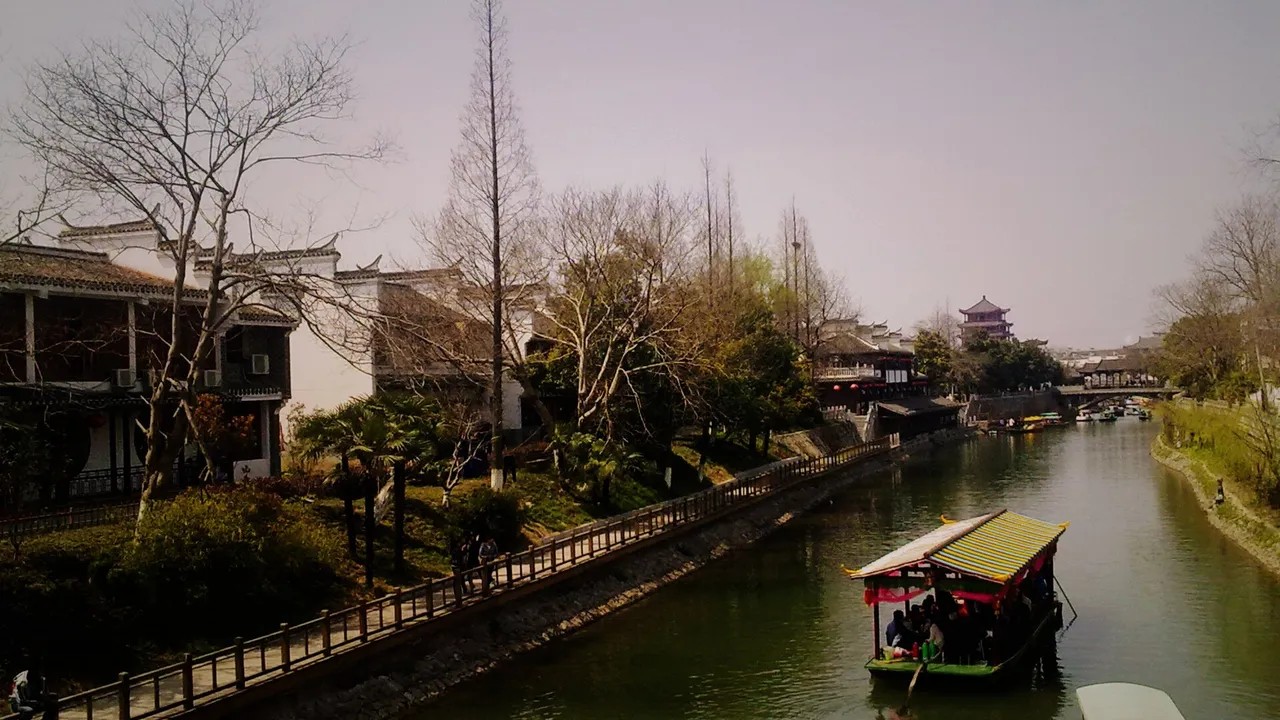
Sanhe Ancient Town: A Full Water-Town Day
Start the town day at dawn: Old West Street's flagstones still damp, the Wanniantai stage empty, boatmen wiping hulls at the ferry dock. Sanhe's beauty lies not in single points but in the relation of lanes to water, and both banks of the Xiaonan at the three-river confluence make the best walking stretch.
Streets and houses in the morning, Sanhe country dishes at noon, One-Man Lane and Yang Zhenning's residence in the afternoon, riverside lamps at dusk. The town is compact; slowly, it fills a day exactly.
A Sanhe Lunch: Rice Dumplings and Country Dishes
Sanhe's noon belongs to its country kitchens. The rice dumpling is the town's headliner: a shell of indica-rice flour fried to order, stuffed with tofu and shrimp, bubbling and crackling as it leaves the oil, its flavor sliding downhill within three minutes, hence the rule of eating beside the wok.
For the table, shrimp paste, crisp duck and river fish, all homestyle cooking drawn from the waters where three rivers meet. Two diners order three dishes and one dumpling serving, then walk the river to digest, saving the afternoon for the lane and the old residence.
One-Man Lane and Yang Zhenning's Former Residence
One-Man Lane runs barely a few dozen centimeters wide, hard evidence of how dear water-town land ran; nearby stands Yang Zhenning's former residence, where the boy sheltered with his family during the war, the courtyard and wooden upper floor keeping their old layout. The physicist's brush with a water town is Sanhe's most interesting layer of story.
Under an hour inside, and the lane's mouth opens onto a riverside teahouse, the right place to sit and catch local chatter.
Liu Mingchuan's Home Ground: Fortified Estates and a Late-Qing General
In the afternoon transfer from Sanhe to Mingchuan township in Feixi, home of Liu Mingchuan, the late Qing's first governor of Taiwan. The Liu stockaded estate typifies Huai-army fortified architecture, outer walls and moat intact, its displays laying out the defense of Taiwan against the French and the island's development clearly.
The estates scatter across farmland; pressed for time, see the Liu estate alone, chained by rural roads easiest by car. Dusk in Sanhe again or overnight in Feixi's county seat.
Zipeng Mountain: Xilu Temple and Forest Trails
Day two's morning climbs Zipeng. The national forest park runs dense to the canopy, trails rising and falling under leaves, and the Xilu Temple at mid-slope keeps a thousand years of incense, its front platform reading Feixi's hills. The climb is gentle, two hours round.
Families with kids can take only the gentle front route; photographers prize the early forest light. The base farmhouse chicken stew is the standard lunch.
Tangchi Hot Springs: A Healing Afternoon in Lujiang
The afternoon heads south to Tangchi in Lujiang, where the spring town's single task is soaking. Tangchi's water temperature and mineral content are known across East China, with resort hotels and guesthouses from budget to high end, an afternoon in the water erasing the morning's climb.
The town streets reward a browse too, the general stores' tea eggs and pickles surprisingly good. Overnight in town, turning east toward Chao Lake the next day.
Bantang Springs and the Sangua Commune
Day three turns east to Bantang by Chao Lake, where the springs famously issue a hot and a cold eye from the same field, a geological curiosity. Along the Bantang belt, the Sangua commune turned the Winter Melon, Watermelon and Pumpkin villages into a rural complex of tea fields, workshops and country markets, right for slow browsing.
Morning for the commune and market, buying handmade sauces and local produce; schedule any soak before the evening return, springs versus lake view decided by remaining legs.
Tulip Highlands: Flowery Hills in Season
Next to the commune, Tulip Highlands is Bantang's beauty corner: broad drifts of tulips open into color blocks over gentle hills in March and April, hillside paths linking viewing decks. Off season the highlands turn to meadow and windmills, still fine for a walk.
Bloom season packs hard, so enter at opening; plain-colored clothes suit the fields best. One to two hours.
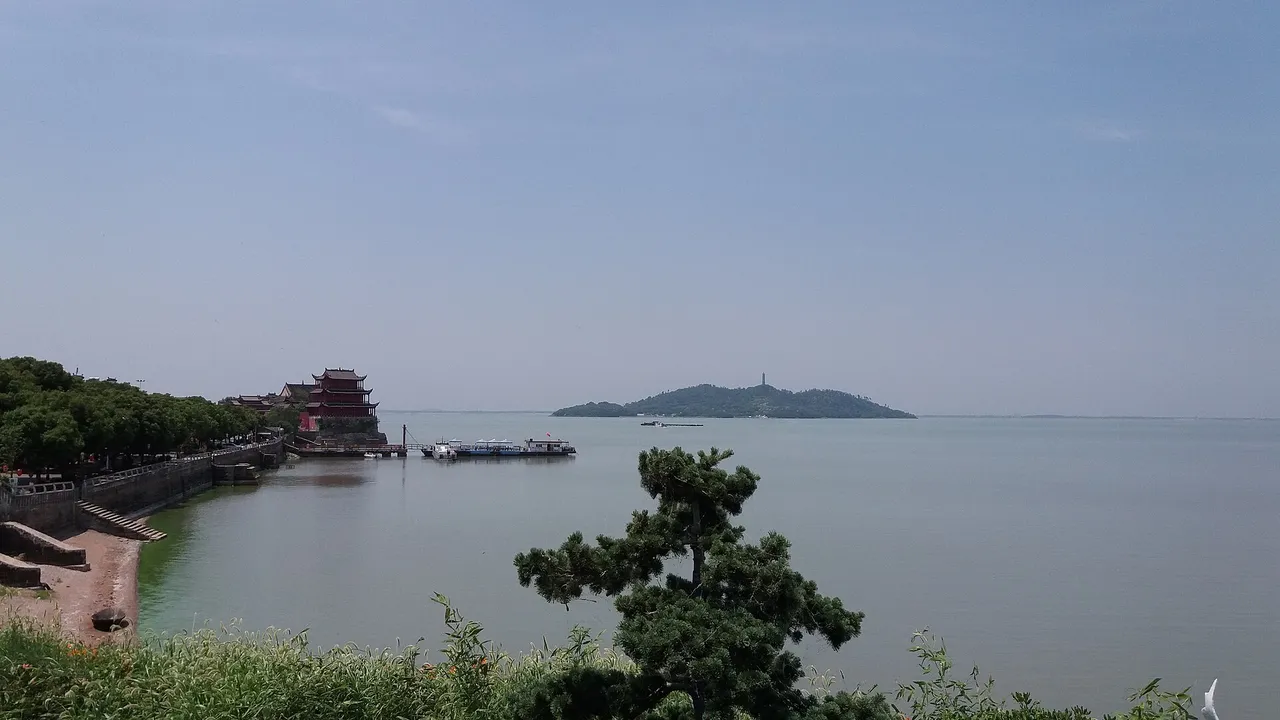
Zhongmiao and Mushan Island: A Lake Finale
The country run closes on Chao Lake's north bank: Zhongmiao's red walls between lake and sky, a twenty-minute ferry to Mushan Island, the Wenfeng Pagoda granting the full eight-hundred-li view. Catch sunset and the gilded water becomes the trip's last photograph.
Mind the last ferry, before four in winter; the ride back downtown runs about an hour, with dinner either in the city or at Bantang.
| Getting around |
|
| Budget | The town is free to enter, hot springs about RMB 100-200 pp, tickets totaling RMB 100-150, with meals and lodging extra. |
| Best time | Spring and autumn suit best; the springs run best in winter, and Tulip Highlands peaks in March-April bloom. |
FAQs
Can the country line work without a car?
Yes, with cuts: on public transit take Sanhe (express-served), Bantang and Sangua (line-served) as the core, dropping the Liu estate and Tangchi, and sleeping at a Bantang spring once. Driving covers it all; the gap is flexibility plus one to two saved hours daily.
Which springs are good, and how to choose on a budget?
Tangchi and Bantang both run mature spring zones, differing in mood: Tangchi leans resort-style, Bantang pairs springs with countryside. On a budget, the town's modest bathhouses at tens of yuan deliver eighty percent of the experience; private pools bundled with lodging at resorts cost multiples.
Which day is hardest, and how to adjust?
Day two: the Zipeng climb plus the Tangchi transfer makes the longest day. Fix by dropping Tangchi and sleeping at Bantang that night, banking all soaking for day three, or by taking only the gentle front route to cap the climb at ninety minutes. A country line exists for rest, not box-ticking.
If the tulip bloom is missed, is the highlands still worth it?
Worth it, with expectations swapped: off season offers meadow, windmills and hill-line hiking, winning on thin crowds and openness, good for emptying the head and practicing shots. If flowers were the sole mission and they are gone, spend an extra hour at the commune market instead; the country line never hung on bloom alone.