
Hefei's natural assets are underrated: west of downtown a green core of Dashu Hill and the botanic garden, south the open water of eight-hundred-li Chao Lake, and the western outskirts adding Zipeng Mountain and Science Island's leafy peninsula. Three days assign one each to hill, lake and island, pacing neither tight nor slack.
The skeleton: day one Dashu Hill, the botanic garden and a Swan Lake dusk; day two the full Chao Lake line, lakeshore meadows, the campaign museum, Zhongmiao and Mushan Island; day three Zipeng Mountain in the morning, Science Island in the afternoon, the ring park walk to close. The lake line runs long distances, so leave generous transfer time.
Itinerary at a glance
| D1 09:00 | Dashu Hill Forest Park: A Volcano inside the City |
| D1 11:30 | The Hefei Botanic Garden: Waterside Beds below Dashu Hill |
| D1 17:00 | Swan Lake: Dusk Water in the Government District |
| D2 09:00 | The Lakeshore Meadows: Lawns on Chao Lake's North Bank |
| D2 11:00 | The Crossing-the-Yangtze Campaign Museum: A Memorial by the Lake |
| D2 14:30 | Zhongmiao: A Millennium Temple on the Shore |
| D2 15:30 | Mushan Island: The Green Island in the Lake's Heart |
| D3 09:00 | Zipeng Mountain: Forest in the Western Outskirts |
| D3 15:00 | Science Island: A Peninsula in the Dongpu Reservoir |
| D3 18:00 | The Ring Park: A Green-Belt Close to Three Days |
The route, stop by stop
Dashu Hill Forest Park: A Volcano inside the City
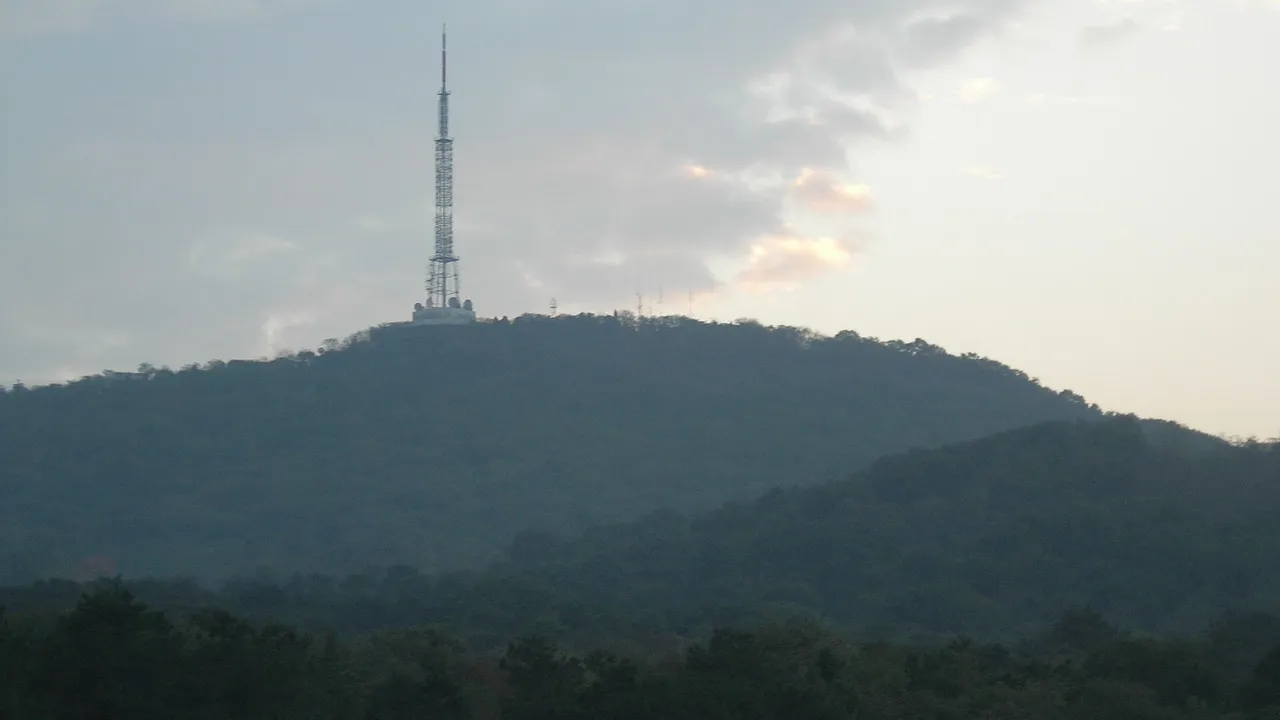
Dashu Hill is the only mountain inside Hefei's urban area, modest in height with intact woods, stone steps spiraling from base to summit in about forty minutes. The top platform reads the city, the western view stitching the new skyline to farmland beyond.
Its geology is the fun part: a dead volcano built of volcanic rock, explained clearly on the trailside panels. Mornings crowd the path and thin after nine; descend by the gentler west slope.
The Hefei Botanic Garden: Waterside Beds below Dashu Hill
The garden lies east of Dashu Hill, rich in water, with plum, osmanthus and aquatic beds taking the seasons in relay: spring plums and cherries, autumn osmanthus and withered lotus, each with loyalists, and on weekdays so quiet you hear the birds.
Walkable from the hill, its paths flat, the right place to hand post-lunch drowsiness to shade and benches. Two unhurried hours, then transfer toward Swan Lake.
Swan Lake: Dusk Water in the Government District
By dusk Swan Lake is the new district's parlor: a ring greenway, a man-made beach and tower reflections, runners strung along the shore. At sunset the western sky gilds the water bronze-red, the city's most photogenic free evening.
A full lap walks in forty minutes, and even half a lap pays. Dinner in the lake-side malls closes day one gently.
The Lakeshore Meadows: Lawns on Chao Lake's North Bank
Day two belongs to Chao Lake. The meadows sit on the north bank in the lakeside new district, lawns running straight to the water, home ground of kites, camping and wedding shoots. Here eight hundred li of lake first shows its width, the far shore dissolving into haze.
Morning light runs favorable, the grass-side wind airing out the lake smell, and a stretch of shoreline reads reeds and ripple. This is also day two's transit hub, with buses onward to the campaign museum and Zhongmiao.
The Crossing-the-Yangtze Campaign Museum: A Memorial by the Lake
The museum stands on Chao Lake's north bank, a five-pointed-star main building facing the water, commemorating the 1949 campaign when a million troops crossed the Yangtze. Inside, artifacts, maps and film lay out the planning and advance systematically, the gunboats and weapons the focal points.
Ninety minutes covers it and joints the lake day naturally: read the crossing's history, then stand at the shore watching today's water, a strong sense of time's depth.
Zhongmiao: A Millennium Temple on the Shore
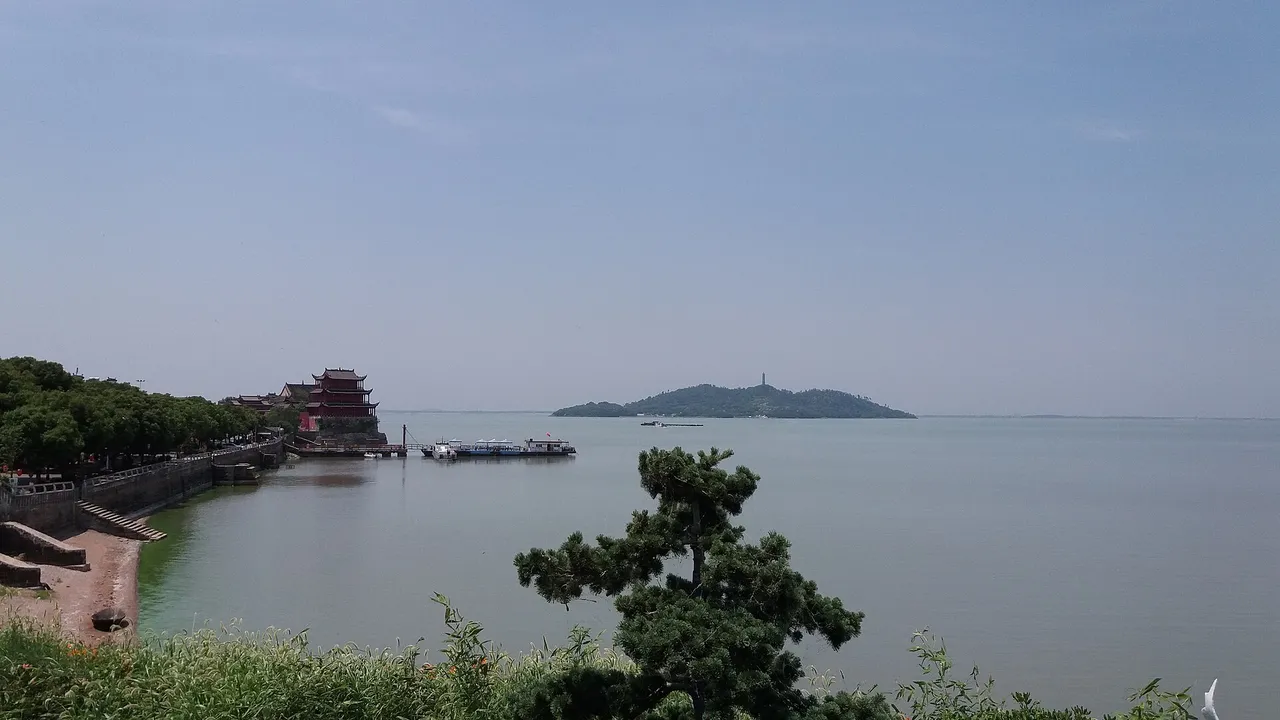
Zhongmiao stands on a headland of the north bank, its founding traced to the Three Kingdoms era, the current buildings Qing restorations, red walls striking between lake and sky. One of Chao Lake's signature sights, its front platform holds the best lake angle, with fishing boats drifting at the temple's feet.
The temple is compact, forty minutes, and the Mushan Island ferry pier lies east on foot, feeding the next stop.
Mushan Island: The Green Island in the Lake's Heart
Mushan is Chao Lake's largest island, a twenty-minute ferry out, with hiking paths and the Wenfeng Pagoda, whose top grants the full eight-hundred-li panorama, water and sky truly one only from up there. The island shore suits slow walks, fishing-village lanes mixed with loquat trees.
Ferry both ways plus touring takes two hours; confirm the last boat, since winter darkens early, and aim for a sailing before four. Island fisher-family restaurants can double as dinner.
Zipeng Mountain: Forest in the Western Outskirts
Day three's morning goes to Zipeng Mountain, the national forest park in Hefei's western outskirts, low but densely wooded, paths threading under the canopy, several degrees cooler than downtown in summer. The Xilu Temple sits on the mountain, incense sharing air with birdsong, and the summit reads Feixi's hills and fields.
Two to three hours of gentle climbing. Farmhouse restaurants at the base make lunch, chicken stew and mountain bamboo shoots mandatory orders.
Science Island: A Peninsula in the Dongpu Reservoir
The afternoon peninsula is uniquely Hefei: Science Island, a green finger reaching into the Dongpu Reservoir, home of the Hefei Institutes of Physical Science, where laboratory plants and quiet reservoir water coexist. A waterside greenway loops the island, right for riding or slow walking.
What you see is research and nature sharing ground: the outlines of big-science facilities framed with egrets. Access rules follow institute notices, but the ring roads and shorelines are public.
The Ring Park: A Green-Belt Close to Three Days
Back in the old city, walk the ring park's final stretch: the green belt over the old wall's base glows warm at dusk, locals strolling, playing chess, dancing in squares, and three days of hills, forests, lake and island switch back to the street channel here.
From the Xinghua Park section to Bao Creek takes an hour, with dinner on Huaihe Road or Lei Street. A city green belt closes the nature line, easy enough even for legs sore from day two.
| Getting around |
|
| Budget | Parks run mostly free; Mushan Island boats about RMB 60 and Zipeng Mountain cheap; three days total roughly RMB 150-250 pp before meals. |
| Best time | Apr-May and Sep-Oct run steadiest; Chao Lake sunsets turn clearest in autumn and winter, while lake summers demand serious sun cover. |
FAQs
How do I do the Chao Lake line without a car?
Public transit works but costs time: metro to the lakeside new district then along-lake buses reach the meadows and the campaign museum, while Zhongmiao and the island pier run thin, so check timetables. Easier alternatives are a Chao Lake day-tour coach or a four-way chartered car, costing little more than buses once split.
Is Mushan Island worth the crossing, and does winter cheapen it?
Yes, it is the lake's only deep experience: the Wenfeng Pagoda view over eight hundred li is the highlight of any Chao day. Winter actually clears the water, no discount in scenery, only stiff wind and short daylight, so catch a return boat before four; in summer, afternoon thunderstorms are common, so check the weather radar before boarding.
Choosing one, Dashu Hill or Zipeng Mountain?
By time budget: Dashu sits in the city, a two-hour round trip with the climb, slottable into any plan; Zipeng wants half a day plus, winning on forest feel and the Xilu Temple. The three-day plan holds both; on a single day pick Dashu and spend the savings on the botanic garden.
What matters on this route in summer?
Three things: carry sun cover and water, since the lake shore and reservoir island shade almost none; schedule the island and Zipeng in the mornings, as afternoon thunderstorms multiply; and long trousers plus repellent cut the wetland insect tax. Use the museum and shaded garden stretches to bridge noon rather than forcing the sun.