
Hefei's historical narrative runs in layers: Chu culture of the Shang and Zhou settles in the museum, the Three Kingdoms battlefield stays at the crossbow terrace and Xiaoyaojin, the late-Qing statesman's house stands on Huaihe Road, the honest judge's shrine and tomb keep watch over Bao Creek, and Taiping-era commerce sleeps beneath Sanhe's flagstones. Three days split as museum, city, town.
The routing: day one at the Anhui Museum for depth; day two an old-city walking day chaining Mingjiao Temple, Li Hongzhang's residence, the temple market, Bao Park and Xiaoyaojin; day three south to Sanhe, returning at dusk via the lakeside Crossing-the-Yangtze museum. Give the town most of the day, and eat the rice dumplings fresh-fried or not at all.
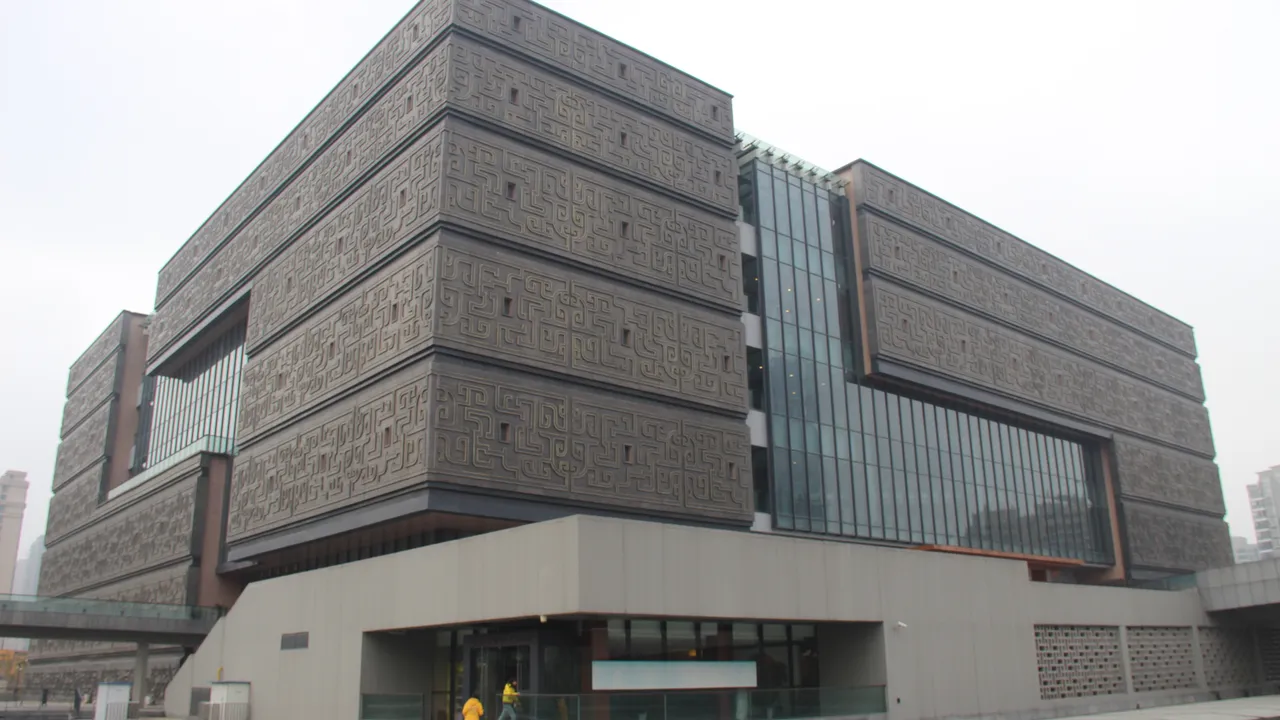
Itinerary at a glance
| D1 08:30 | The Anhui Museum: Three Hours to Read Anhui |
| D1 13:30 | The Anhui Celebrities Hall and Old-City History Gaps |
| D2 09:00 | Mingjiao Temple and the Crossbow Terrace: Where Three Kingdoms Hefei Begins |
| D2 10:30 | Li Hongzhang's Residence on Huaihe Road |
| D2 12:00 | The Temple Market: Old Hefei at Street Level |
| D2 14:00 | Bao Gong's Shrine and Tomb: Ground-Level Memory of an Honest Judge |
| D2 15:30 | Qingfeng Pavilion, Fuzhuang and Xiaoyaojin |
| D3 09:00 | Sanhe Ancient Town: Old West Street and a Water-Town Morning |
| D3 13:30 | One-Man Lane, Yang Zhenning's Residence and a Sanhe Lunch |
| D3 17:00 | The Crossing-the-Yangtze Museum: A Modern Full Stop for Three Days |
The route, stop by stop
The Anhui Museum: Three Hours to Read Anhui
Open the heritage run with the museum's whole morning. The Chu ding and the Ejun Qi gold tallies anchor the main hall; the Hui architecture gallery explains the timber logic behind white walls and dark tiles, and the scholar's-treasures gallery traces the Xuan paper and Hui ink craft chains. Anhui's historical geography gets its base map by noon.
Watch the special-exhibition hall's calendar, where Hui studies and Chu culture shows often surprise. An audio guide or scheduled docent talk doubles the information yield.
The Anhui Celebrities Hall and Old-City History Gaps
The afternoon gap-filler is the Anhui Celebrities Hall, arranging the province's lineage from Laozi and Zhuangzi through Bao Zheng, Li Hongzhang and Hu Shi, a people-line complementing the museum's chronology. The halls are compact, an hour plus, and the weight of the word Wan turns concrete.
Return to the old city by dusk for a stretch of the ring park, wall foundations and ginkgos lining the way, a reconnaissance for tomorrow's walking day.
Mingjiao Temple and the Crossbow Terrace: Where Three Kingdoms Hefei Begins
The walking day opens at the crossbow terrace, a rammed-earth platform said to be where Cao Cao drilled crossbowmen, crowned by Mingjiao Temple with unbroken incense for a millennium. The old well and steles feel older than the halls, and from the top the traffic of Huaihe Road compresses eighteen centuries into one glance.
Descend straight onto the pedestrian street, where Three Kingdoms relics and modern arcades meet without a seam, the old city's most singular picture.
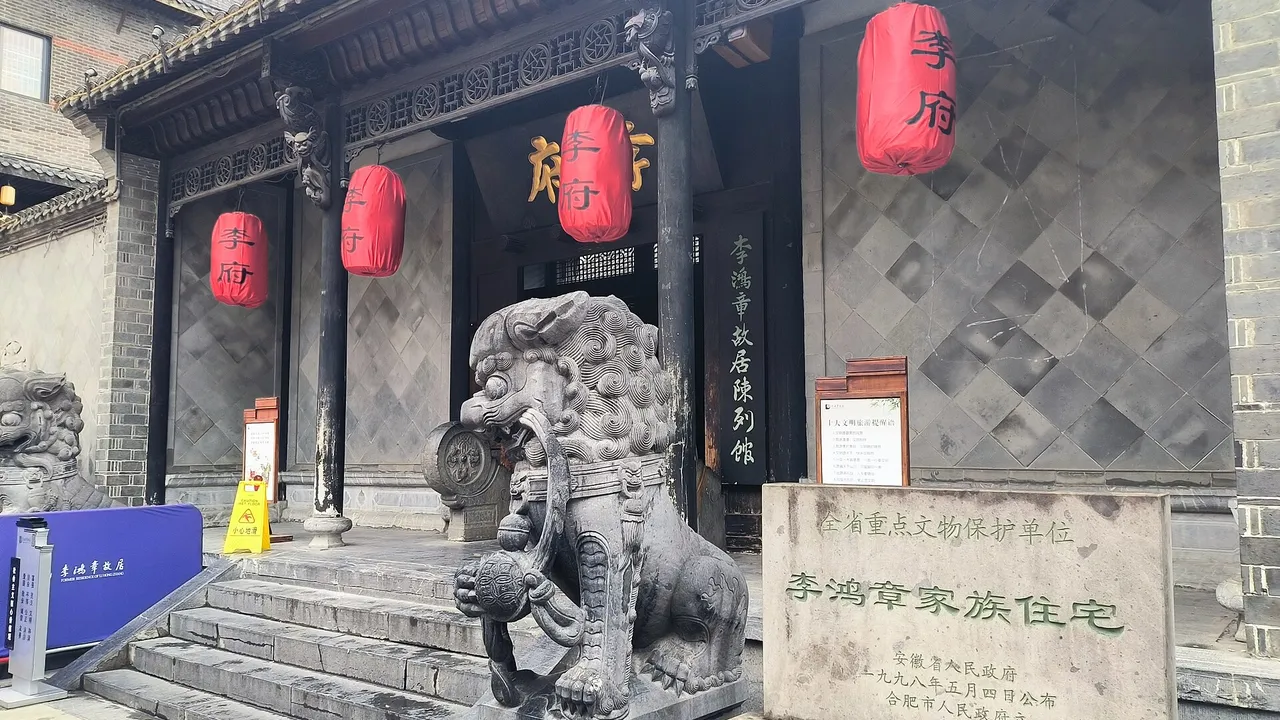
Li Hongzhang's Residence on Huaihe Road
Mid-street stands Li Hongzhang's residence, its Hui-style gate holding the Li family history and Self-Strengthening Movement materials. Four life stages, exams in youth, arms in prime, governorship mid-life, foreign affairs late, unfold across a few halls, with the controversies laid out candidly.
An hour inside, then keep walking Huaihe Road: between heritage names and new shops hide the growth rings of Hefei's commercial history.
The Temple Market: Old Hefei at Street Level
Lunch happens around the temple market, stalls and snack vendors circling a Taoist temple, the densest street-level corner of old Hefei. The heritage pastry shops of the four famous points stand here, and mah cake and honggao taste better fresh than in souvenir boxes.
Enter the temple for a look, incense voluntary. A pass-through stop, forty minutes to an hour.
Bao Gong's Shrine and Tomb: Ground-Level Memory of an Honest Judge
The afternoon belongs to Bao Park. The shrine stands on the Fragrant Flower islet in Bao Creek, its plaques and steles recording the structure's rises and falls; the tomb behind is a relocated cemetery, its carved approach solemn, forming two kinds of remembrance against the shrine's folk bustle.
Shrine plus tomb chain in ninety minutes, and the creek's threadless-lotus pun on selflessness deserves digesting at the water's edge. Deep shade makes even summer walkable.
Qingfeng Pavilion, Fuzhuang and Xiaoyaojin
Climb Qingfeng Pavilion for the creek and old-city panorama, rest a while in Fuzhuang's Jiangnan garden, then metro or cab a quarter hour to Xiaoyaojin, completing the Three Kingdoms line beneath Zhang Liao's statue. The walking day's last leg gathers the Bao and Three Kingdoms threads into one day.
An hour covers the park; exit north at dusk onto the metro, dinner on Huaihe Road or at Lei Street.
Sanhe Ancient Town: Old West Street and a Water-Town Morning
Day three heads south to Sanhe, the most completely preserved water town around Hefei, where the Fengle, Hangbu and Xiaonan rivers meet. Old West Street's flagstones and horse-head walls are quietest in the morning, shops shuttered, only locals' shopping footsteps sounding.
The town's sight logic is streets, lanes, houses and temples: West Street's shopfronts, the extreme narrowness of One-Man Lane, the courtyard of Yang Zhenning's former residence, and the stage of Wanniantai, walked in that order without backtracking.
One-Man Lane, Yang Zhenning's Residence and a Sanhe Lunch
One-Man Lane is Sanhe's calling card: a passage between two walls wide enough for exactly one person, one walk explaining how dear every inch of water-town land runs. Yang Zhenning's former residence stands here, the courtyard where the future physicist sheltered with his mother during the war still intact, an unexpected footnote linking the town to physics.
Lunch in town: rice dumplings best straight from the fryer, shrimp paste, crisp duck and farmhouse dishes at modest prices. Walk off lunch along the river, then head back.
The Crossing-the-Yangtze Museum: A Modern Full Stop for Three Days
Return via the lakeside new district, placing the campaign museum last. The five-pointed-star building faces the water, the million-troop crossing binding history tightly to Hefei's name, the final link from Shang-Zhou bronzes to the modern era.
Ninety minutes inside, then back downtown, the three-day line closed from the Chu ding to the crossing. End over dinner at Lei Street and raise one cup for the run.
| Getting around |
|
| Budget | Museums run free with booking; residence and town mini-tickets total roughly RMB 60-100 pp, combos priced apart. |
| Best time | Year-round; most venues close Mondays while the ancient town does not, a natural backfill. |
FAQs
How does Sanhe compare with Hongcun and Xidi, and is the detour worth it?
Different classes: Hongcun and Xidi are world-grade Hui villages, while Sanhe is a Yangtze-Huai water town a notch below in scale and refinement. Sanhe's edge is proximity, an hour from downtown, an easy half day. If southern Anhui already features in your trip, demote Sanhe to backup; otherwise it is the town of choice around Hefei.
Are three museums too repetitive, and how to choose?
They serve different functions: the museum for artifacts and chronology, the celebrities hall for people lineages, the campaign museum for a single event, not repetitive but dense. Under time pressure, pair the museum with the campaign museum and demote the celebrities hall to rain backup. On gallery fatigue, step out for ten minutes rather than grinding through.
Are both Li Hongzhang's residence and Yang Zhenning's Sanhe house worth visiting?
Yes, and they form the two ends of Hefei's notable-persons narrative: the residence on late-Qing self-strengthening and humiliation, the house on modern science amid wartime displacement, both exhibitions restrained. An hour each suffices; forced to pick, start with the residence for its denser materials.
How does the pace suit traveling with parents?
Friendly: only Sanhe and Xiaoyaojin demand over an hour of continuous walking, with seated exhibits and gardens carrying the rest. To ease elders' load, hire the town's electric carts for stretches, take a museum wheelchair as backup, and insert an hour's midday rest at the temple market on the old-city walking day.