
With a single day in Yili, spend it on Yining and old Huiyuan: the morning straightens out three thousand years of northern Xinjiang at the prefecture museum, noon lands inside the General's Office, the afternoon brings accordions on Six-Star Street, and dusk is kept for the Ili River turning gold. Short drives, an easy pace, and the whole face of the region in one pass.
Yili is vast; Nalati, Kalajun and Sayram Lake all sit two to three hours out, and forcing a grassland into one day only burns it in the car. Walk the city through, watch the river, fill the stomach. And remember Xinjiang runs roughly two hours behind the coast, so meals and sunsets slide late and the day can be planned generously.
Itinerary at a glance
| 09:00 | Yili Kazakh Autonomous Prefecture Museum: A Three-Thousand-Year Briefing |
| 11:30 | The Yili General's Office: A Qing Frontier Seal in Huiyuan |
| 14:30 | Six-Star Street: Accordion Afternoons in a Small City |
| 19:30 | The Yili River Scenic Area: Handing the Day to the Sunset |
The route, stop by stop
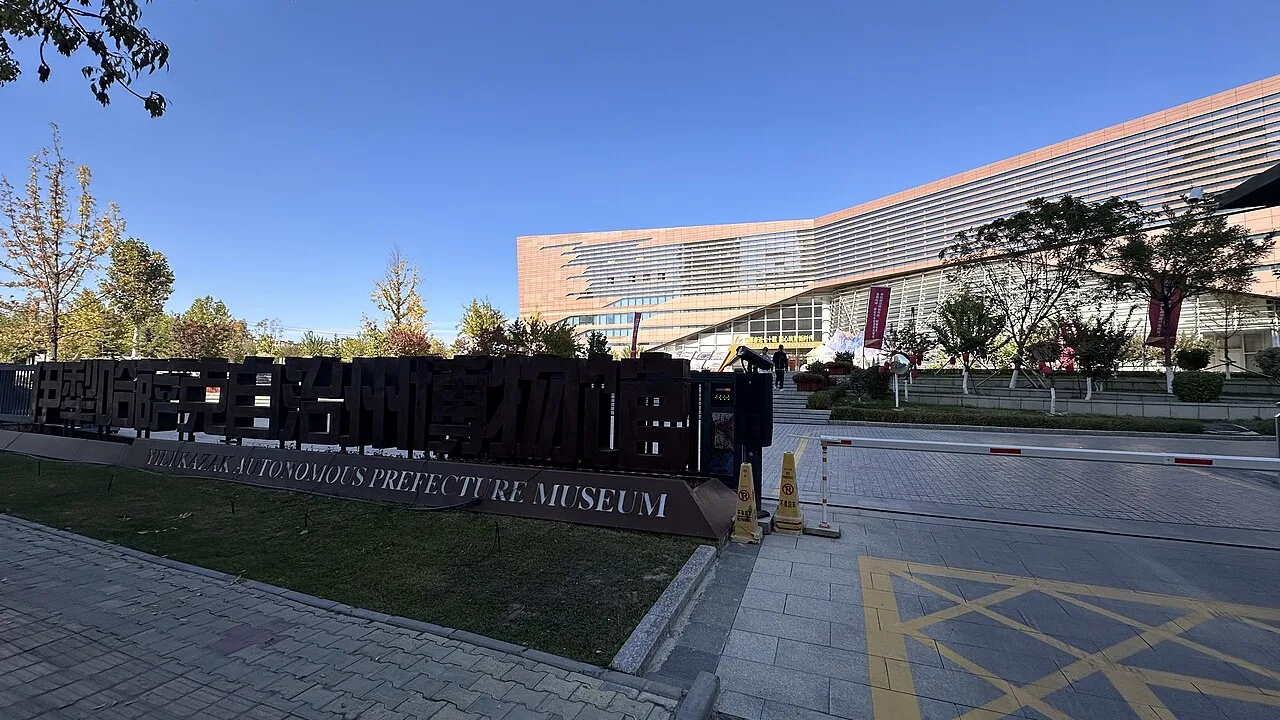
Yili Kazakh Autonomous Prefecture Museum: A Three-Thousand-Year Briefing
The museum is the fastest door into Yili: from Bronze Age steppe cultures through the Wusun, the Turks and the Dzungars to the frontier administration after the Qing appointed the Yili General, the two floors in sequence build the whole skeleton of the north. The stone men and deer stones photograph best, faces sanded blank by wind yet still standing tall.
Give the ethnography wing time: Kazakh yurt frames, embroidery and horse gear, the Xibe westward migration, Uyghur atlas silk, all hung side by side on one floor. Once these register, every craft you meet on Six-Star Street in the afternoon comes with a footnote.
The Yili General's Office: A Qing Frontier Seal in Huiyuan
Huiyuan sits thirty-odd kilometers south of Yining. In the Qianlong era the Qing posted the Yili General here to govern both sides of the Tianshan, and for a century Huiyuan was the political center of Xinjiang. The general's office survives as the yamen of that era, halls, pavilion and old elms intact, its hush inside the walls a world apart from the street outside.
The courtyard holds stelae from Huiyuan's rebuilding and Qing-era arms; from the drum tower you can sight the line of the Ili River. Lin Zexu, exiled here after the opium destruction at Humen, surveyed land and built canals, and locals still speak of him warmly; names from the textbook land differently in a small town.
Six-Star Street: Accordion Afternoons in a Small City
Six-Star Street dates to the 1930s: six lanes radiating from a central round like wheel spokes, a rare piece of urban planning in Xinjiang. Kazakh, Hui, Uyghur and Russian families have lived door to door here for generations, grapevines climb the courtyard walls, and the air mixes baking bread with flowers.
The core stop is Alexander's accordion museum, hundreds of vintage instruments from many countries covering the walls, the owner happy to play a tune when the mood takes him. Ice cream shops and honey workshops invite tasting; before dusk the light slants into the lanes and the blue gates and wooden window frames turn every snapshot into a postcard.
The Yili River Scenic Area: Handing the Day to the Sunset
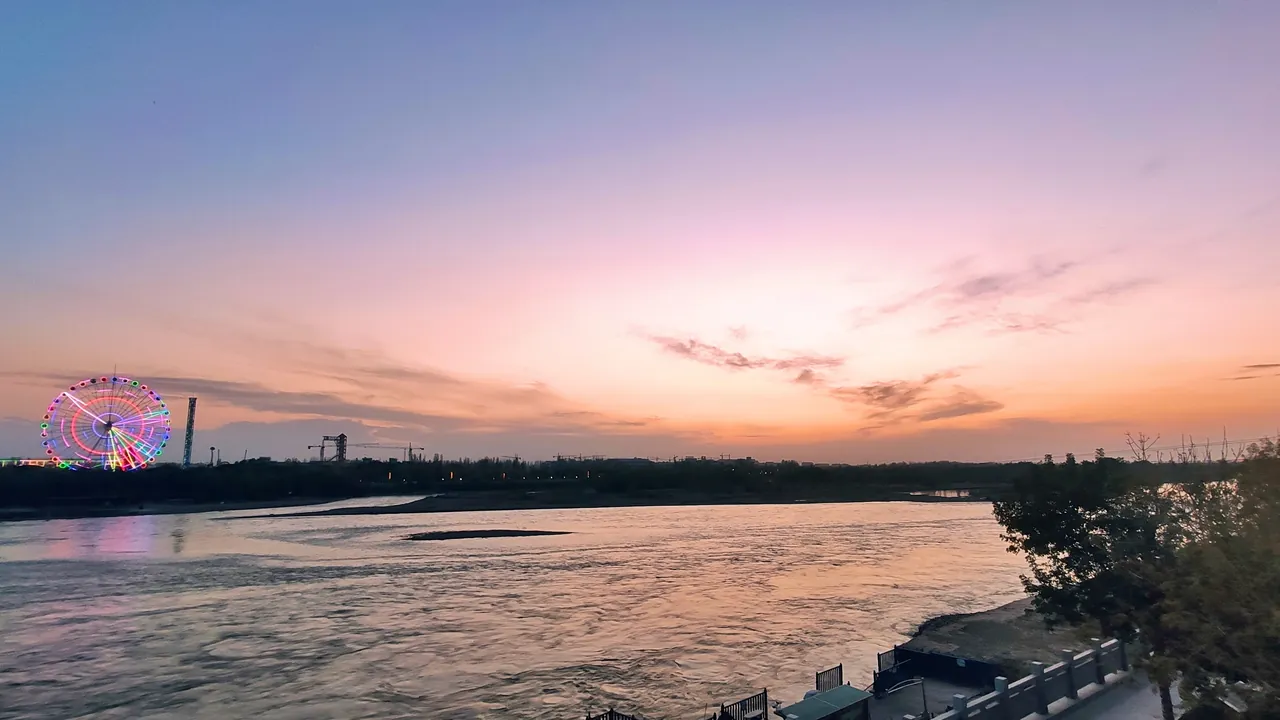
The Ili River closes the day and holds the city's heart. Flowing west into Kazakhstan, the valley fills with gold and red at dusk while watchers line the bridge and banks. The southern wetland shakes with reeds and waterfowl, the widest open ground near the city.
In summer the sun often drops past 9:30 pm, so do not rush: settle dinner at the riverside stalls first, grilled fish and skewers with a glass of kvass, and let the sky darken layer by layer. The river wind cuts a few degrees harder than town; carry a jacket and keep back from the soft banks when photographing.
| Getting around |
|
| Budget | Tickets and meals run about RMB 150-250 pp; a day car costs RMB 300-450, cheaper per head when shared. |
| Best time | May to September is the comfortable stretch; mid-June to early July, when Huocheng's lavender blooms and the grasslands green up, is the most photogenic window of the year. |
FAQs
With only one day in Yili, grasslands or the city?
Stay in town. Nalati and Kalajun each sit around three hours out, so a same-day return is mostly windshield time. This city line packs closely; give grasslands two or three days paired with Sayram Lake or the Xiate trail.
Do the museum and the General's Office need booking or tickets?
The museum is free but needs real-name booking, tight on holidays, so reserve a day or two ahead on the official account; the office sells on site for about RMB 30. Six-Star Street and the river cost nothing. Carry your ID, checks are frequent.
When is the best time to visit Yili?
May through September is comfortable; mid-June to early July brings the Huocheng lavender peak and greenest grass, while late September offers strong autumn color but fast cooling. Winter thins the steppe and closes mountain roads; skip this route then unless snow is the goal.
Any practical tips for Yining?
Life runs about two hours later than the coast: lunch at two or three, sunsets near ten, so plan on local time. UV is fierce, pack sunscreen and a hat; mornings and evenings swing cool, bring a layer. Mobile pay is everywhere, but keep cash for night markets and grasslands.