
These three days read how a frontier was run: day one in Yining, from the museum's chronology to the General's Office yamen, makes clear Yili's political weight since the Qing; day two moves to Tekes, to see how a town laid out on the eight trigrams houses ordinary life; day three heads toward Zhaosu and the Xiate ancient trail, standing below the pass the Wusun once crossed, history turning from text into altitude.
Pace runs loose then tight: day one is city walking, day two a cross-county drive, day three needs generous mountain time. Xiate and the hot springs both sit in the hills where weather flips fast, so schedule nothing unmissable on the last day; slack is a virtue in mountain itineraries.
Itinerary at a glance
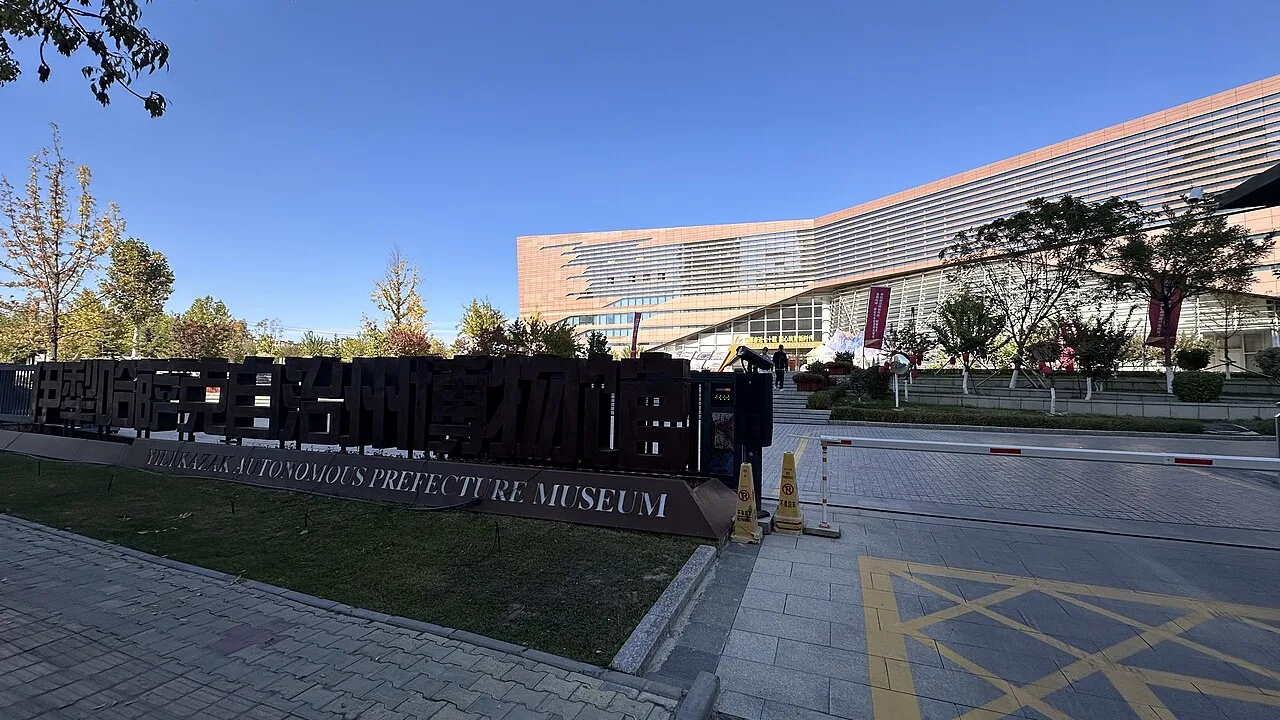
| 09:00 | Yili Kazakh Autonomous Prefecture Museum: Lesson One in Frontier History |
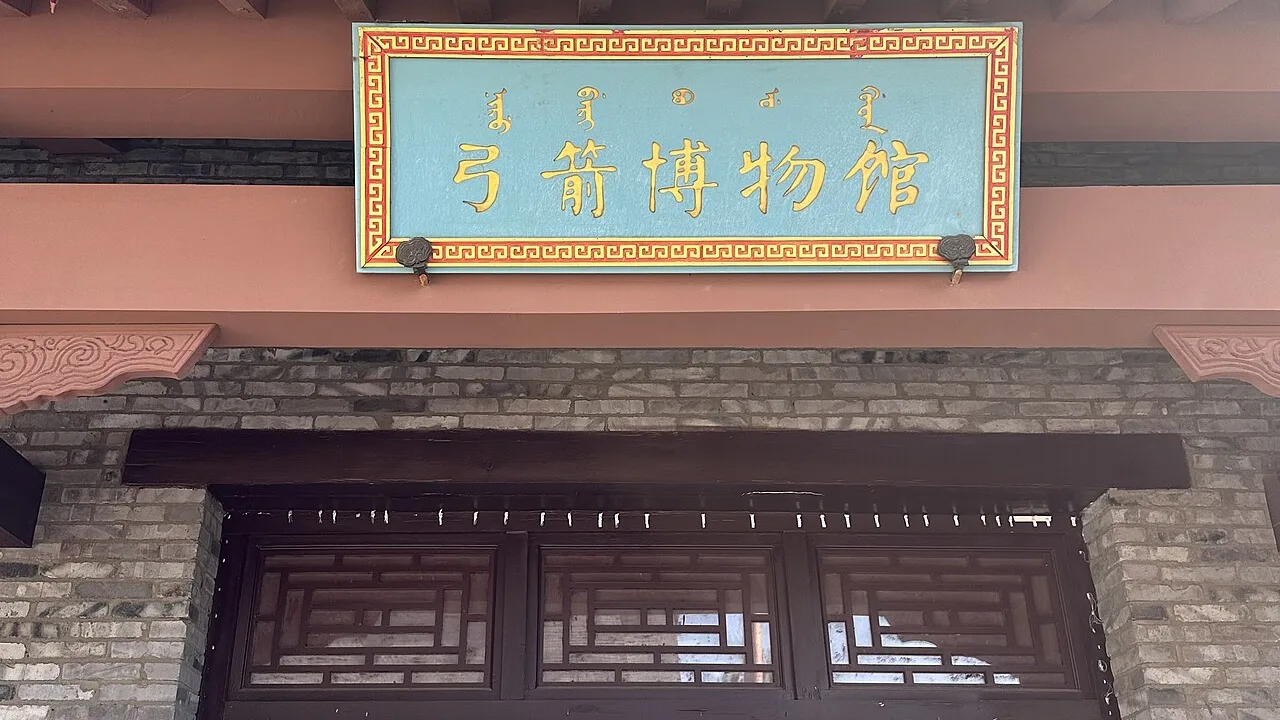
| 11:00 | The Bow and Arrow Museum: The Xibe Tradition of Shooting |
| 14:30 | The Yili General's Office: A Century of Frontier Rule inside the Yamen |
| 17:30 | Six-Star Street: A Neighborhood Heritage Still Alive |
| 20:30 | The Yili River Scenic Area: Reviewing Day One over a Sunset |
| 09:00 | The Arsilan Horse-Gear Heritage Workshop: A Craft Lesson before the Road |
| 13:00 | Tekes Bagua City: A County Town Built on the Trigrams |
| 19:30 | Tekes Li Street: The County Town's Artsy Night |
| 09:00 | Xiate Ancient Trail National Forest Park: The Pass the Wusun Crossed |
| 15:00 | Bulong Hot Spring Resort: A Steaming Full Stop for Three Days |
The route, stop by stop
Yili Kazakh Autonomous Prefecture Museum: Lesson One in Frontier History
The same museum reads differently on a heritage line: fasten on the Qing and Wusun galleries. The Qing rooms explain the Yili General's founding, Huiyuan's rank and the garrison-farming system; the Wusun rooms trace the steppe silk road's alignment, planting the seed for day three's Xiate trail.
Do not skip the modern gallery before the exit: from late Qing onward, the story of Yili's ports and border trade explains exactly why names like Khorgas and Huiyuan recur on this route. Two hours covers it; save the rest of your attention for the days ahead.
The Bow and Arrow Museum: The Xibe Tradition of Shooting
The Xibe were enrolled into the Eight Banners garrisons in the Qing era, their fame as archers traveling with them on the westward march to the Ili. The traditional horn bows here use the composite sinew-horn-wood craft, one bow passing through dozens of steps and months of slow drying, each stage written plainly on the labels.
Note the Qing-era arrowheads and thumb rings, their varied forms the technical fine print of the mounted-shooting system. On demonstration days, the pull needed to draw a traditional bow full earns new respect for the old archers.
The Yili General's Office: A Century of Frontier Rule inside the Yamen
The afternoon's anchor is Huiyuan. After the Yili General's post was created in the Qianlong era, the town governed both sides of the Tianshan for over a century, and the office's halls keep the full yamen layout. Standing in the courtyard, yesterday's institutional vocabulary acquires room dimensions.
Lin Zexu surveyed land and dug canals here during his exile, and the drum tower and old streets still carry the grid of Huiyuan's rebuilding. Two hours covers the core; climb the tower before leaving for a sightline down the Ili River, a rehearsal for tomorrow's crossing toward Tekes.
Six-Star Street: A Neighborhood Heritage Still Alive
Back downtown by dusk, read Six-Star Street as living heritage: the 1930s radial plan survives intact, and decades of neighboring courtyards across ethnic lines are themselves a page of urban frontier history. The Soviet-era accordions in the museum mark another kind of international exchange.
Eat dinner inside the quarter and watch locals stream home from work. The classic mistake with old districts is treating them as scenery; the right way here is to fold yourself into the evening's ordinary life.
The Yili River Scenic Area: Reviewing Day One over a Sunset
Close day one at the river. In the Qing frontier system the Ili was a waterway and a border river; now it is simply a fine evening walk, and that change of identity is itself history. The warm dusk light on the valley rewards eyes that spent the day in halls and yamens.
Tomorrow starts early with a cross-county drive, so do not linger late. After sunset, pack at the hotel and fix the morning departure with your driver; the run toward Tekes deserves a full three hours.
The Arsilan Horse-Gear Heritage Workshop: A Craft Lesson before the Road
Before the road, one more steppe craft lesson: Yili has bred fine horses since antiquity, and horse gear grew into a complete trade. Watch the master cut leather, stitch and chase brass; the parts list of one saddle reads like a heraldry roll, every piece named for a reason.
The visit takes half an hour to an hour, and mid-morning, as the workshop warms up, the benches look their best. After this stop, a herdsman's saddle on the grassland will tell you its quality at a glance; a traveler's eye is honed exactly this way.
Tekes Bagua City: A County Town Built on the Trigrams
Tekes county town is laid out on the eight trigrams: eight avenues matching eight directions, ring roads pushing outward, streets named in trigram terms. From the viewing tower the radial grid spreads below in one glance, a cityscape unmatched in the country.
The town is compact, two or three hours for the core. Afternoon light suits the streets' geometry, and life runs slower than Yining; sit a while in a roadside teahouse among card players and chat. The town's magic lies less in geomancy than in composure.
Tekes Li Street: The County Town's Artsy Night
Li Street is Tekes' new cultural quarter, old warehouses and courtyards remade into cafes, craft shops and small bars; when the string lights come on, the county night gains depth. The night-market stalls are cheap and honest, kebab and yogurt bowls portioned to local standards.
The right pace for Li Street is slow: buy a drink, sit, and listen to the neighboring table's languages, and tomorrow's base town becomes concrete. Stock water and trail food before turning in; resupply inside the mountains is thin.
Xiate Ancient Trail National Forest Park: The Pass the Wusun Crossed
Xiate was the staging point of the old post road from the Ili to southern Xinjiang; caravans and armies crossed the Tianshan through this valley, with the snow peaks of the Muzart glacier visible from the valley floor. Ride the scenic shuttle in, then walk the boardwalk or ride horseback as grassland, spruce and snow peaks trade scenes every twenty minutes.
The trail's sense of history comes from scale: the path underfoot carried caravans two thousand years ago, and the pass at its end remains a shortcut on the map. Know your limits, turn back at the boardwalk viewpoint, and save your legs for the hot springs.
Bulong Hot Spring Resort: A Steaming Full Stop for Three Days
A mountain soak is the digestion stop of three culture days. In the hot water the ache of muscles dissolves, and the boardwalks and drives of the day become worth their price. The resort is modest but the water is genuinely thermal, and a winter snowfall soak is its own flavor.
An hour of soaking suffices; after dinner return to Tekes or push on to Yining depending on the hour. The three-day frontier loop closes here: the museum's terms, the office's courtyards, the trigram streets and the trail's pass, all gathered into one pool of hot water.
| Getting around |
|
| Budget | Tickets total about RMB 250-400 pp; a car for three days runs RMB 1,200-1,800, with meals and lodging on top. |
| Best time | June to September is the safe stretch with mountain roads open; winter closes the Yining-Zhaosu road and mountain passes, so avoid deep winter here. |
FAQs
Can this route be done in three days without a chartered car?
Barely. The city part is fine, but buses toward Tekes and Zhaosu run rarely and end early, Xiate has no direct public transport, and the last leg needs ride-share or cab. For three or more people a chartered car is cheap per head and the default answer.
How do tickets work for Xiate and the hot springs?
Xiate entry plus shuttle totals about RMB 80, horse riding extra; the hot spring resort sells soak tickets and lodging separately in tiers, per posted notice. Neither needs long advance booking, though confirming by half a day helps on peak weekends.
Should these three days be swapped for a grassland route?
By taste: this line reads history at an easy pace with moderate driving; the grassland line chases scenery with longer drives and harder legs. First-timers drawn to frontier history get strong value here; those who have seen the museum and old towns should swap without hesitation.
What should I watch for on mountain roads?
Three things: check weather and road conditions before setting out, sections close after rain; refuel at half a tank, mountain-town stations are far apart; leave slack in driving times and never pack the last night. Winter closes some roads, so in deep winter stick to rail and trunk routes.