
In Yili's roster of landscapes, Sayram Lake, Nalati and Kalajun are the acknowledged top three, and this route gathers all three in three days. Day one drives north through Guozigou to the alpine lake with a night in a lakeside yurt; day two pushes east to Nalati's sky grassland, folding in the Qiaxi river-valley forest; day three belongs to Kalajun and the Koksu Canyon, closing on the curves of the human-body grassland.
The main cost is driving: three or four hours separate lake from grassland, making a chartered car the only sensible choice. The right posture is one focus per day; never stack two grasslands in a day, since scenery rushed loses to scenery sat with.
Itinerary at a glance
| 08:00 | The Yili River Scenic Area: Setting Out in Valley Morning Light |
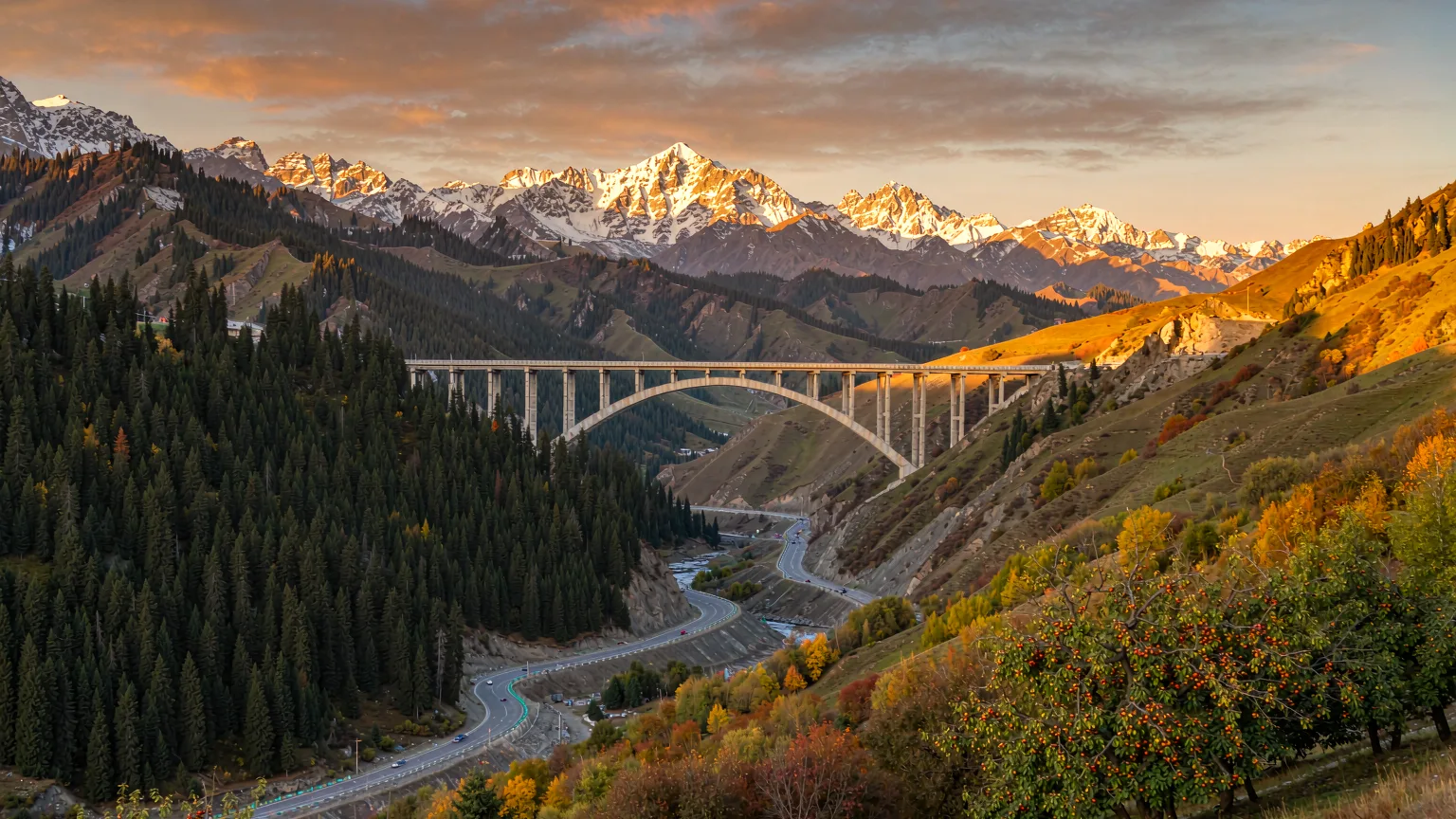
| 11:30 | Guozigou Valley: First Awe at the Bridge and the Pines |
| 13:30 | Sayram Lake: The Blue of the Western Shore |
| 20:00 | Yurt Camps on the Sayram Lakeshore: A Night beside the Water |
| 09:30 | Nalati Grassland: The Sky-Grassland Line |
| 16:30 | The Qiaxi Scroll Viewpoint: A River-Valley Forest in Gongliu |
| 08:30 | Kalajun Grassland: East Kalajun and the Flower Terrace |
| 13:30 | The Koksu Grand Canyon: The Human-Body Grassland and Crocodile Bay |
| 19:30 | Tekes Li Street: A Street-Food Full Stop to Three Grassland Days |
The route, stop by stop
The Yili River Scenic Area: Setting Out in Valley Morning Light
Walk the river for half an hour before setting out. At dawn the Ili has no tourists, only exercising locals and low-flying waterfowl, valley mist not yet burned off, the softest light of the day. This hour sets the tone for three days: go slower and Yili opens.
Pick up luggage in town and head north. Today's target is Sayram Lake, a mix of highway and mountain road with Guozigou as the appetizer. Eat breakfast downtown; mountain meal times are scarce, so stock fruit and water en route.
Guozigou Valley: First Awe at the Bridge and the Pines
Guozigou is Yili's northern gate, the canyon walls dense with spruce, and the Guozigou Bridge leaps the ridgeline, one of the country's rare gorge-spanning high bridges. When driving through, take the viewing-platform side; looking up from beneath and looking across from the hillside are two different shocks.
The gorge has viewing platforms and pull-offs, and forty minutes covers the essentials. Spring and summer bring slope-side wildflowers, autumn sets the forest ablaze, and winter snow on the bridge is a spectacle that demands careful driving.
Sayram Lake: The Blue of the Western Shore
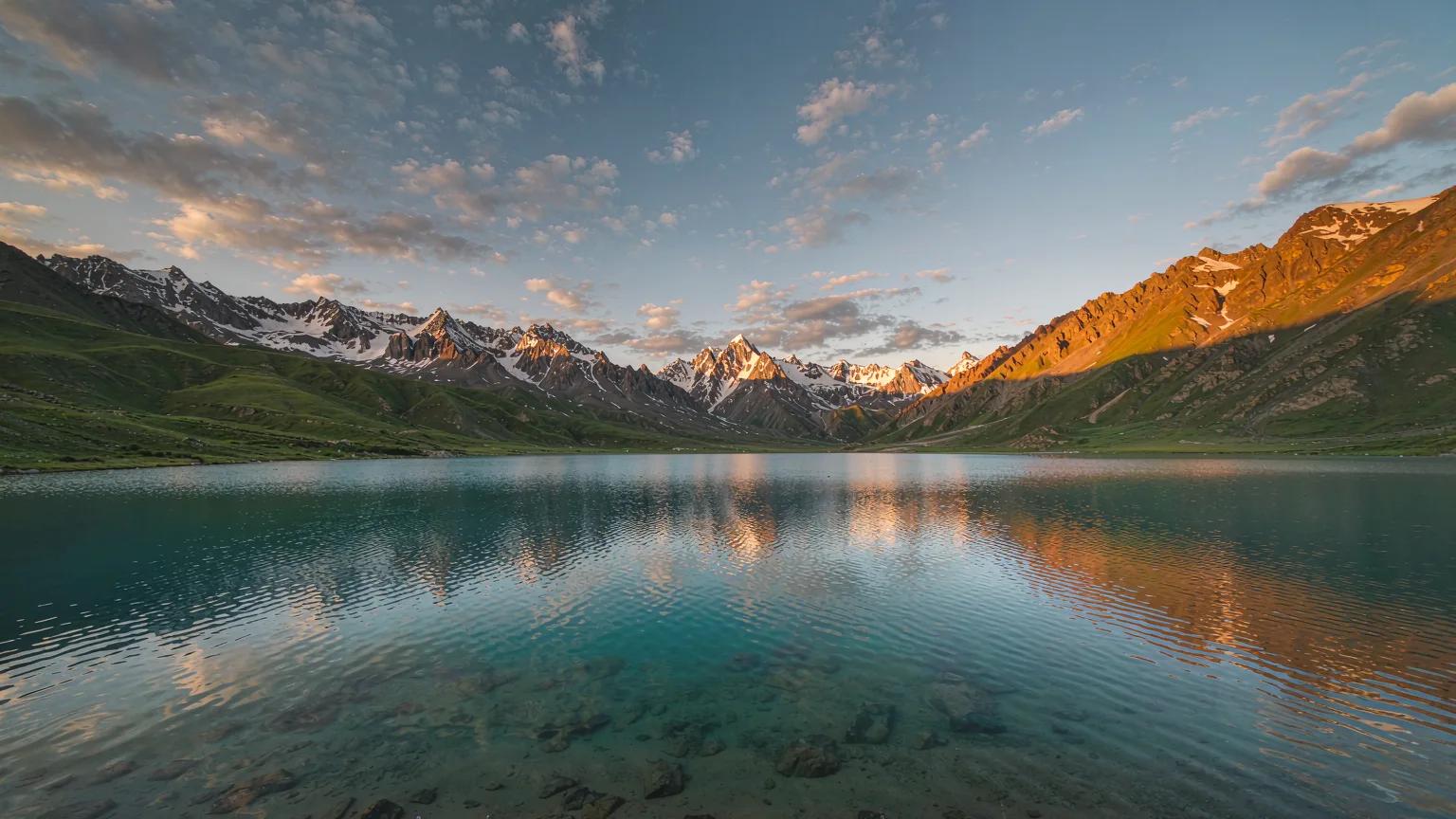
Sayram is Xinjiang's highest and largest alpine lake, its water blue in layers: translucent near the shore, deep blue farther out, a different lake under cloud than under sun. The circuit road follows the western shore as grassland, flower fields and snow peaks file past; the full loop runs about ninety kilometers, so do not rush it.
Wind off the lake cuts hard and the temperature sits seven or eight degrees below Yining's; sun protection and a jacket at once. The western-shore blooms peak mid-June to early July, buttercups and purple flowers running to the waterline; other seasons keep their own clean palette.
Yurt Camps on the Sayram Lakeshore: A Night beside the Water
The Kazakh yurt camps on the lakeshore are this route's lodging highlight. Inside, patterned felt covers the floor and a stove keeps the night warm; dinner is the herder's boiled meat and milk tea, and after dark the lakefront sky is nearly light-pollution-free, the Milky Way spilled like salt.
Morning at the lake is the day's climax: around sunrise the water shifts deep blue to silver-gray and back, with luck wrapped in drifting mist. Yurt conditions are plain, shared bathrooms and dry bedding the baseline; the fastidious bring a sleeping-bag liner.
Nalati Grassland: The Sky-Grassland Line
Day two drives east, about four hours, reaching Nalati near midday. The area splits into sky-grassland and river-valley lines; with limited time, choose the sky line: the shuttle climbs until meadow runs toward the snowline and Kazakh yurts dot the slopes, the concrete version of the sky-as-tent image.
The viewpoint opens wide, wildflowers densest in June and July, and herders offer horses, so settle price and route before mounting. When afternoon light rakes sideways, the light-dark seam on the slopes is the golden hour for photographs.
The Qiaxi Scroll Viewpoint: A River-Valley Forest in Gongliu
Heading west from Nalati toward Tekes, fold in Qiaxi. Here the grassland is sliced into color bands by spruce forest, the river bending between the trees, and from above it reads like an unrolled scroll, a name precisely earned. Crowds run far thinner than Nalati, right for a quiet closing scene.
With legs and hours to spare, walk a stretch of the forest trail; if spent, twenty minutes at the viewpoint suffices, then reach Tekes county town before dinner and bank energy for day three's Kalajun.
Kalajun Grassland: East Kalajun and the Flower Terrace
Day three's lead is Kalajun, a World Natural Heritage site whose name means vast rolling wilderness. Enter from the Tekes side and ride the shuttle into East Kalajun, where the hills run like frozen waves and a five-flowered carpet spreads to the horizon in June.
The Flower Terrace is the essential viewpoint, grass slopes layered on layer with snow peaks behind. Shuttles run hop-on hop-off, so step off whenever the eye catches; steppe beauty needs ten stationary minutes to develop, the great difference from itineraries of pure motion.
The Koksu Grand Canyon: The Human-Body Grassland and Crocodile Bay
Kalajun's other wing is the Koksu Grand Canyon, home to two famous scenes: the human-body grassland, where light draws soft curves on the slope like the outline of a reclining figure, and Crocodile Bay, where the river bends into a black-green deep pool beneath sheer cliffs.
Canyon viewing means descending to the boardwalks and platforms, about two hours round trip. After four in the afternoon the slanted light gives the curves maximum depth, so pressing this stop into the late afternoon is the route's finishing touch.
Tekes Li Street: A Street-Food Full Stop to Three Grassland Days
Down from the mountains, close three days with a night-market meal on Li Street: kebab, yogurt, baked buns and kvass in sequence, turning the grasslands and lakes of the past days into concrete flavors. The quarter's string lights and slow music suit the faint emptiness that follows great scenery.
Sleep in Tekes or drive back to Yining by night, as you prefer; the return runs about three hours and tires both driver and passengers, so if time allows, stay and leave in the morning.
| Getting around |
|
| Budget | Tickets and shuttles total about RMB 400-600 pp; a three-day car runs RMB 1,500-2,000, with yurt nights at RMB 150-300. |
| Best time | Mid-June to early July is the flower-and-grass peak, with early autumn color in September; steppe weather flips fast, so carry a jacket and rain gear in any month. |
FAQs
Can three grassland-grade parks fit in three days?
Yes, if you accept heavy daily driving. One focus per day: lake on day one, Nalati with a Qiaxi stop on day two, Kalajun on day three. Squeezing to two days turns the trip into a bus ride; not recommended.
What are yurt camps like, and are they safe for solo travelers?
Yurts are traditional felt dwellings, windproof but not soundproof, with shared bathrooms and bedding clean but plain. Camps run concentrated operations with night staff; solo travelers should pick a large camp and tell the front desk their plans. Bring earplugs and a liner, or stay at hotels outside the lake area.
Which season suits this route best?
Mid-June to early July is the full bloom: lakeshore flowers, meadow blooms and lavender all live, grass at its greenest; early September gives clean autumn color with fewer people and prices. July-August crowds and prices peak, while winter freezes the lake and thins shuttles, a different game.
How demanding is this route, and can kids handle it?
The bar is low: it is mostly riding plus viewpoints, with boardwalk walks of any length. For kids the challenge is car time and temperature swings, so motion sickness patches, snacks and warm layers. For horse activities mind age and coaching; young children do best with led-photo options only.