
Most memories of Jiuzhaigou are only water, yet the valley's human layer deserves three days: an old Bon school left its monastery here, the Amdo and Baima Tibetan branches keep distinct dress, song and food, Qiang craft crossed the ridges, and two resident shows stage it all.
The structure runs knowledge, body, stage: day one builds the frame with museums and the monastery, day two turns facts into muscle memory making thangka and incense in the ICH street, and day three closes with galleries, markets and two very different evening shows. Paired with the main valley, the best split is one day of lakes plus two of heritage, the human part after the hike when legs need rest anyway.
Itinerary at a glance
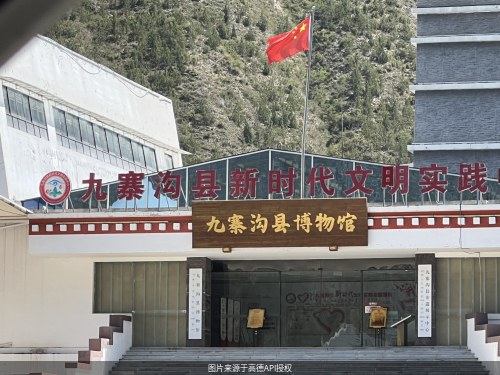
| 09:00 | Day 1, Jiuzhaigou County Museum: Building the Frame |
| 11:00 | Day 1, Zharu Monastery: Bon Wheels and Butter Lamps |
| 14:30 | Day 1, the Folk Culture Village: Dance and Family Tables |
| 09:00 | Day 2, ICH Street: Thangka and Incense Workshops |
| 14:00 | Day 2, the Tibetan-Qiang ICH Museum: Seeing the Whole Craft |
| 16:30 | Day 2, Jiafan Ancient Town: Dusk Towers and Dinner |
| 19:30 | Day 2, the Tibetan Mystery Grand Theatre: Roots Song and Dance |
| 09:00 | Day 3, the 678 Art Gallery and the Plateau Red Performance Center |
| 14:00 | Day 3, a Village Farewell and the Market Roundup |
| 19:30 | Day 3, the Romantic Show: The Heritage Finale |
The route, stop by stop
Day 1, Jiuzhaigou County Museum: Building the Frame
Heritage days start in the county seat, where the museum maps the human geography at once: the pastoral-farming line of Amdo Tibetans, the mask dances and white felt hats of the Baima, the arc of the Hui community, Qiang migration routes. The travertine hall downstairs also repays the later sightseeing, since knowing why the water is blue changes how you look at it.
Give it ninety minutes and fix on two things: the Caogai dance masks of the Baima and the braided hair-sheaths and silver of Amdo women. They recur across the village and the shows ahead, and having met the originals, everything later feels familiar.
Day 1, Zharu Monastery: Bon Wheels and Butter Lamps
Zharu is the core Bon monastery of the area, and Bon predates mainstream Tibetan Buddhism here, with its own turning directions and ritual details. The hall murals and applique thangka reward slow looking, and the butter lamps in the corner burn year-round, the lamp-keeper happy to let you sit a while.
The prayer circuit loops below the Mirror Cliff for forty minutes, best at dawn and dusk. The park ticket covers the monastery, so three-day ticket holders should slot it same-day; without a ticket, admire the golden roof from the gate area and give the hours to the afternoon village.
Day 1, the Folk Culture Village: Dance and Family Tables
Return to the folk village with a different eye: architecture and craft by day, performance and family dinner by evening. In the rebuilt Amdo courtyards the hearths, grain racks and flag positions follow rules, and guides honestly mark which beams are old and which restored, a candor that adds credibility.
The evening guozhuang circle welcomes visitors, its steps simple and repeating, learned in two laps. If a family banquet runs, the menu of butter tea, hand-torn yak, barley cakes and yogurt puts every food custom from the morning museum onto the table.
Day 2, ICH Street: Thangka and Incense Workshops
Day two belongs to craft. The morning thangka session starts with grinding pigment, azurite, malachite and cinnabar worked with hide glue, as the teacher ranks mineral against plant colors, then hands out small outlined canvases to fill. Two hours yields a piece to take home, modest in technique, real in reverence.
Lunch on the street, then the afternoon incense class: dozens of aromatics measured to a recipe, ground, kneaded, rolled and dried, the sticks leaving with you that day. Either class stands alone, but a full day of both, if the body allows, outlasts photographs as memory.
Day 2, the Tibetan-Qiang ICH Museum: Seeing the Whole Craft
After the hands-on classes the museum reads differently: the pigments you ground appear as full raw-material displays, the incense you rolled fronts a whole wall of recipes and tools, and the Qiang stitch samples match the teacher's hand gestures from class. Craftsmen work on site, silver chasing and paper making in plain view.
Hourly guided tours run about fifty minutes, worth following. Before leaving, buy a master-signed piece at the workbench, one layer of provenance beyond old-town stock at similar prices.
Day 2, Jiafan Ancient Town: Dusk Towers and Dinner
Return to Jiafan by dusk, the best light for buildings: stone joints, black-framed painted windows, rooftop flag arrays all gain depth in slant sun. Take the upper platform for a look toward the Ganhaizi meadows, then drop to the dining street.
Dinner calls for Tibetan hotpot or a small-share roast lamb with a pot of barley wine. No rush afterward, the town's night lighting stays restrained, the right table talk being tomorrow's two shows.
Day 2, the Tibetan Mystery Grand Theatre: Roots Song and Dance
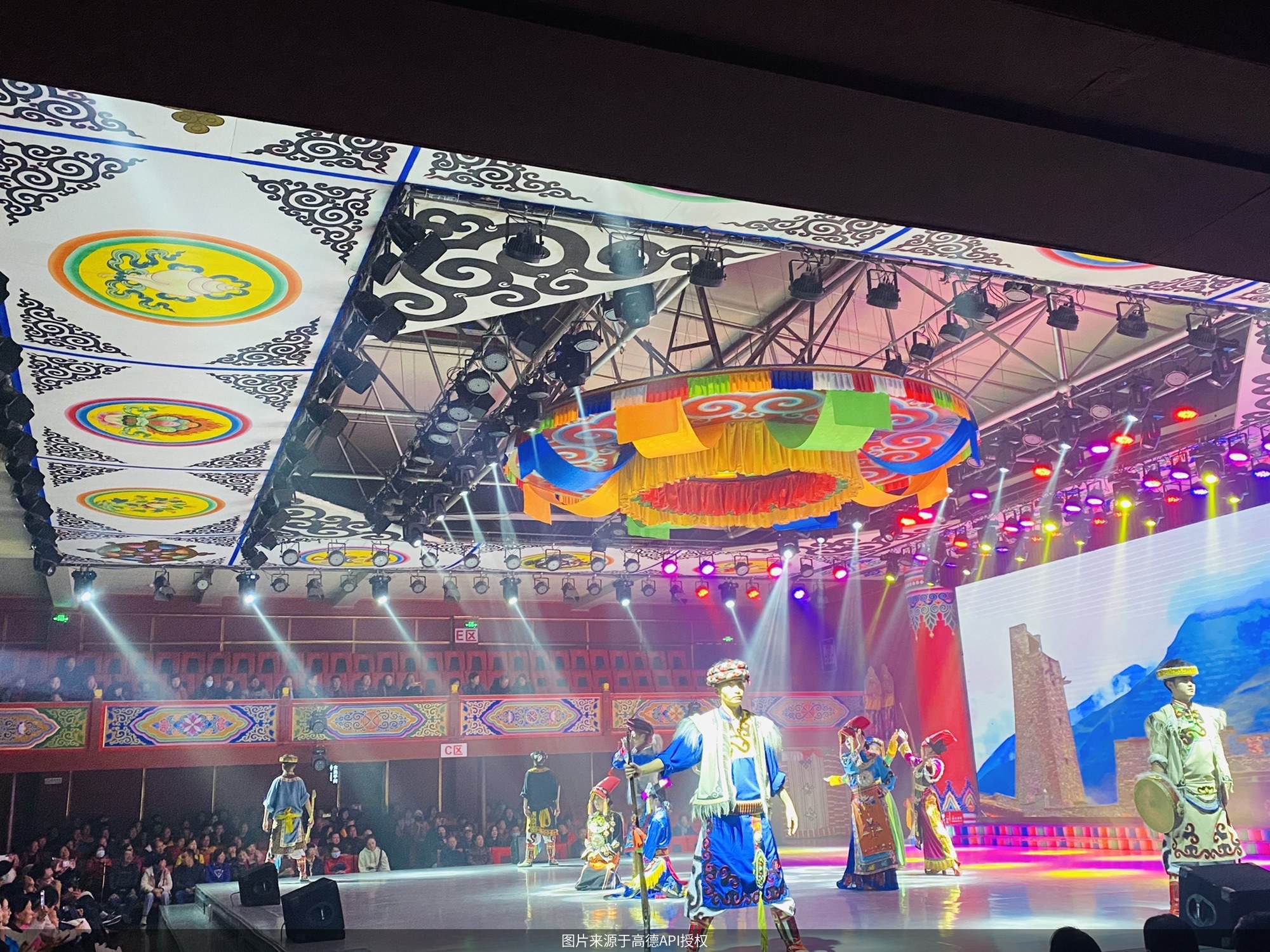
The Tibetan Mystery runs the roots route, a song-and-dance evening co-created by Yang Liping that strings Tibetan narrative singing, the xianzi lute and mask dances together, its power coming from performers rather than effects. Having seen the museum and workshops, every stage move now maps onto an object from the day.
The two shows differ sharply: this is a dance theater, the Romantic Show a plot-and-spectacle production. Watching both completes the picture, and the right order is Mystery first, Romantic second, mood rising from depth to celebration.
Day 3, the 678 Art Gallery and the Plateau Red Performance Center
The last morning stays light: start at the 678 Art Gallery in the Huamei resort for contemporary work on local themes, thangka grammar crossing into oil media, a modern footnote to two days of tradition. An hour covers it, plus a cafe sit.
Move on to the Plateau Red Performance Center for its daytime session or midday showcase, a training and resident base for local dancers and singers, where open hours reveal warm-ups and dress runs in the rehearsal halls, a backstage realism no evening show gives.
Day 3, a Village Farewell and the Market Roundup
Spend the afternoon back in the folk village filling gaps: workshops missed on day one, souvenirs unpurchased, one more lap of the guozhuang. A second visit doubles the detail, the old trick of bookending a trip with the same place.
Close at the night market: lay out the three days' haul, top up small wool goods, and if the evening holds a 19:30 Romantic Show, finish eating by then; without a show, sit until the stalls fold, a smoky ending a heritage trip deserves.
Day 3, the Romantic Show: The Heritage Finale
The Romantic Show closes the trip because it sums it up: earthquake, migration, wedding customs, the tea-horse road, every noun gathered over two days of museums, monastery and workshops finally gets images and a score. The lifting stage and rain-snow effects are the technical thrill, the real voices of Tibetan and Qiang performers the emotional one.
After the curtain, look back once at the totem column by the gate, and the three days click shut. Back at the hotel, brew a cup of Tibetan tea, check passports, tickets and tomorrow's plan, and heritage Jiuzhaigou is done.
| Getting around |
|
| Budget | Museums mostly free, workshops RMB 60-150 each, two shows about RMB 500-600; lodging and meals put three days at RMB 1200-1800 pp. |
| Best time | Year-round, with winter-spring low season giving the most generous access to masters and guides; show seats need booking two to three days ahead in peak season. |
FAQs
Is three heritage days without the main valley a waste?
Not a waste, but keep at least one day for the valley. A pure heritage trio suits two groups: repeat visitors and travelers using the area as a northwest Sichuan base with scattered time. First visit with three days? The best split is one valley day plus two heritage days.
If I only see one show, which one?
For spectacle choose the Romantic Show, plot, effects and lifting stage, strongest for first-timers and kids; for roots choose the Mystery, deep in pure song and dance, with a bonus for anyone who has toured the workshops and museums. Kids or first visit, take the Romantic; folk-art devotees, the Mystery; with budget, both.
Do workshops need prior skill? Can children join?
No skill needed, courses assume zero experience: thangka uses pre-outlined canvases rather than freehand drawing, and incense runs master-led step by step. Children over six generally manage, faster at thangka coloring, more bored at incense grinding. Tell the workshop about allergies in advance; masks are on hand.
What if half a day turns rainy?
The heritage trio is naturally rainproof: swap outdoor segments, the prayer circuit and town decks, with indoor ones, museums, workshops, shows, as weather dictates. Skip a wet prayer circuit, the stone steps turn slick, while museums and shows run regardless; in rain, protect the workshop slot first, since sessions are the scarcest.