
Jiuzhaigou spreads in a letter-shaped fork, three valleys meeting at Nuorilang, with the park floor between 2,000 and 3,100 meters. The sightseeing shuttle is the only vehicle inside, running like a bus line: main routes climb to the primeval forest or Long Lake, stopping on request. The whole craft of a one-day visit is choosing which valley climbs first, where to step off, and which stretches to walk.
The accepted play: spend the morning on Five-Flower Lake and Pearl Shoal in the Ritse valley, transfer at Nuorilang by noon, ride up to Long Lake and the Five-Color Pond in the afternoon, and leave the Shuzheng cascade for dusk, when tour groups withdraw and slanted light enters the terraced lakes at their most photogenic. Expect about 15,000 steps on gentle boardwalks; grippy soles are enough.
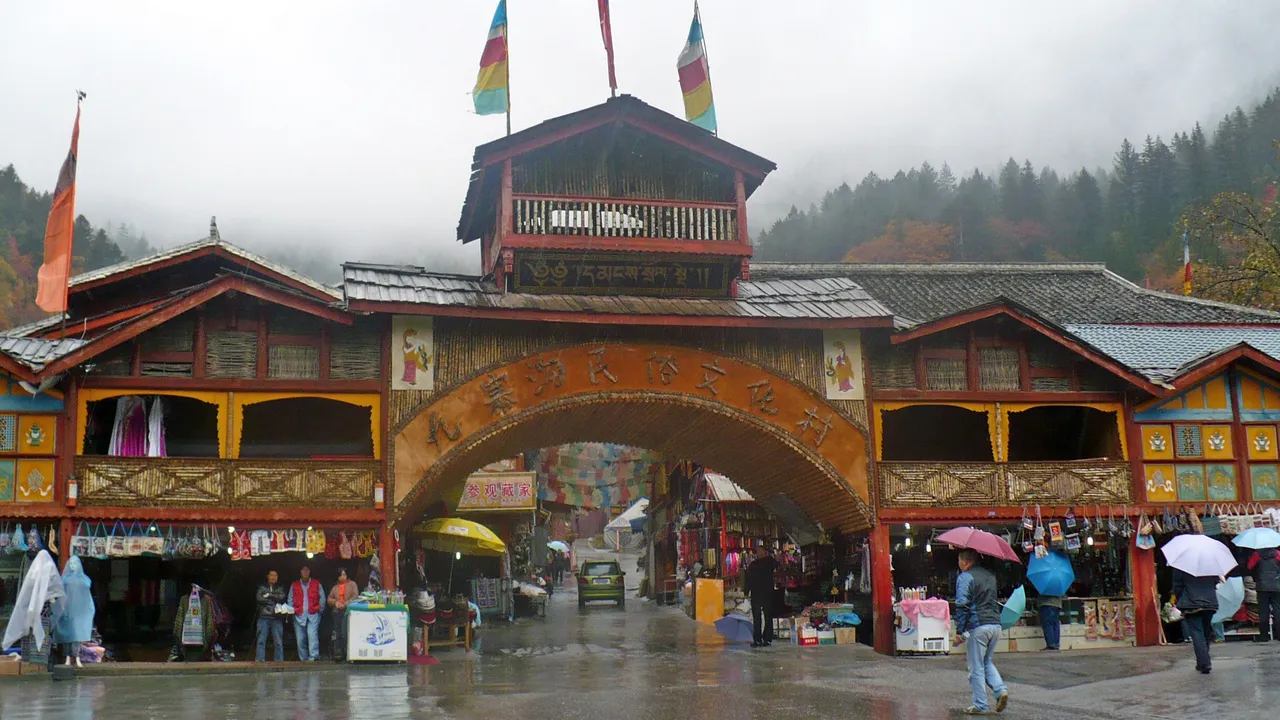
Itinerary at a glance
| 09:00 | Ritse Valley: Five-Flower Lake and Pearl Shoal Waterfall |
| 11:30 | Nuorilang Waterfall and the Visitor Center |
| 13:30 | Zechawa Valley: Long Lake and the Five-Color Pond |
| 16:00 | Shuzheng Valley: The Shuzheng Lakes and Rhino Lake |
The route, stop by stop
Ritse Valley: Five-Flower Lake and Pearl Shoal Waterfall
The shuttle climbs right past Nuorilang for about half an hour into the upper Ritse valley. Five-Flower Lake is the color ceiling of the whole park: travertine, algae and sunken logs stain one basin into a patchwork of peacock blue, jade green and pale yellow, best framed from the west deck looking down. Between 10 am and 1 pm direct sun saturates the colors, which is why this stop owns the morning.
Twenty minutes down the boardwalk from the lake lies Pearl Shoal, where water sheets across a tilted travertine terrace and shatters into strings of beads, then drops twenty-one meters as Pearl Shoal Waterfall, the one a famous 1980s TV series filmed. The boardwalk runs one-way downstream and ends at a shuttle stop, an easy walk.
Nuorilang Waterfall and the Visitor Center
Nuorilang Waterfall spans about 320 meters, the widest travertine fall in China, dropping in one unbroken curtain from a level ledge like a screen hung across the valley mouth. The viewing platform sits five minutes below the main road; linger briefly, since morning light flatters it and the afternoon puts it in shadow.
The Nuorilang center is the transfer hub of all three valleys, holding the restaurants, rest areas and toilets; lunch realistically happens here. The buffet runs about RMB 60 and is middling value, so seasoned visitors carry bread, braised eggs and chocolate and eat on the rest-area benches, saving both time and budget for the afternoon.
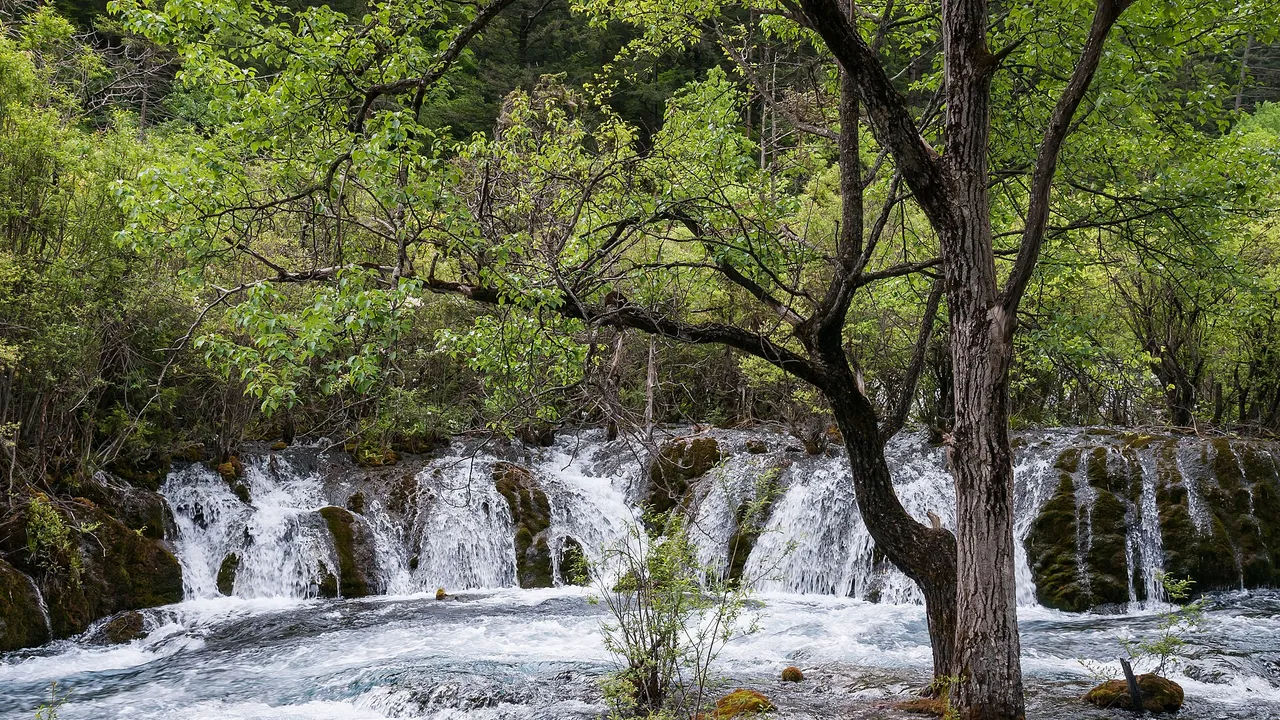
Zechawa Valley: Long Lake and the Five-Color Pond
Zechawa is the longest and highest valley, about forty minutes by shuttle to Long Lake at its end. It is the park's largest lake with no surface outlet, snowmelt and groundwater pooling into one deep-blue basin beneath southern peaks that mirror on windless noons like plate glass. The boardwalk crowds at the head; walk two minutes north and the space opens.
On the ride back, the Five-Color Pond is the smallest yet most saturated pool in the park, half an acre of unreasonable blue. Its level shifts with the seasons, fullest in the summer-autumn rains, still deeply colored when the winter-spring water drops. Stairs descend from the deck to the pond edge, twenty minutes round trip, and they are worth it.
Shuzheng Valley: The Shuzheng Lakes and Rhino Lake
Past Nuorilang the return shuttle swings into Shuzheng, the park's front parlor: nineteen terraced lakes step down in layers, with water mills, prayer-wheel houses and the flags of Shuzheng village scattered along the waterline. Get off at the Shuzheng lakes stop and walk forty minutes of boardwalk to Rhino Lake, camera-friendly water's-edge positions the whole way; the 4-to-5 pm slant light gilds the surface, the easiest prize shot of the day.
Rhino Lake is the largest in the valley and mirrors the mountains whole. When you finish, board at the Rhino Lake stop and ride straight out, comfortably ahead of closing. If legs remain, watch bonsai shoal and the reed lake from the window; they reward the ride more than a dedicated stop.
| Getting around |
|
| Budget | Peak-season entry RMB 169 plus shuttle RMB 90, with in-park meals around RMB 50-80; plan on RMB 300-350 pp for the day. |
| Best time | Mid-to-late October brings the famous red leaves with the year's biggest crowds; April to June offers clear water and thin queues, the best second window for a single day. |
FAQs
Is a same-day round trip from Chengdu realistic?
Very tight. The rail ride to Huanglong-Jiuzhai Station takes about two hours and the gate shuttle another hour plus, so a one-way runs four hours minimum and a round trip leaves under six hours inside. The sensible play is to overnight in Zhangzha town at the gate and give the valley one full day.
How does booking work, and what is the three-day ticket?
Entry uses real-name timed booking via the park's official account or website; peak slots often sell out two to three days ahead, and you enter with your ID or original passport. Under the current policy the full-price ticket allows re-entry within three days, with shuttle tickets bought separately per ride; confirm details against the day's official notice.
Can I only manage one valley in a day? Which one pays most?
The one-day answer is Ritse plus Shuzheng, which together cover most of the park's signature imagery; Zechawa's Long Lake and Five-Color Pond ride on car time and join if the schedule allows. Zharu valley, monastic and hiker-oriented, belongs to longer stays rather than day one.
Should I worry about altitude, and what should I wear?
The gate sits near 2,000 meters and Long Lake near 3,100; most people feel only mild breathlessness that pacing fixes, no need for preventive pills or oxygen. Weather swings fast and day-night gaps top ten degrees, so carry a windproof layer even in summer. Boardwalks get slick, wear grippy shoes, and seniors do well with a folding stick.