
Jiuzhaigou is famous for water, but the peoples behind it run just as deep: Amdo Tibetans herding and farming the valleys, Baima Tibetans keeping mask dances and painted faces, Qiang watchtowers and embroidery spreading down from the Minshan range. One day of museums, an old town and a stage show reads the people before the lakes.
The rhythm runs concrete to staged: two museums ground the facts in the morning, Jiafan Ancient Town turns them into buildings and life scenes by afternoon, and the evening show converts every daytime noun into light and sound. The three daytime stops stand alone if you skip the show, but with kids the performance is often how Jiuzhaigou gets remembered.
Itinerary at a glance
| 09:00 | Jiuzhaigou County Museum: Who Lives in This Valley |
| 11:00 | Jiuzhai Tibetan-Qiang ICH Museum: A Craft History in Objects |
| 14:30 | Jiuzhai Paradise Jiafan Ancient Town: An Afternoon in Tibetan Stonework |
| 19:30 | The Romantic Show of Jiuzhai: The Day's Lessons on Stage |
The route, stop by stop
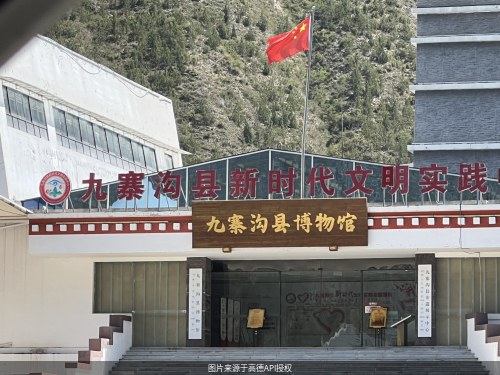
Jiuzhaigou County Museum: Who Lives in This Valley
The county museum is small but clearly ordered: the ground-floor nature hall explains the travertine chemistry, settling once and for all why the lakes are so blue, while the upstairs ethnography hall arranges Amdo Tibetan, Baima Tibetan, Hui and Han in sequence, with real garments, sutras and farm tools; the Baima masks and white felt hats headline.
Walk nature first, people second: first the chemistry of the water, then the migrations around it. Ninety minutes covers it and the audio guide earns its fee. Hours follow the posted notice and Mondays often close, so confirm before setting out.
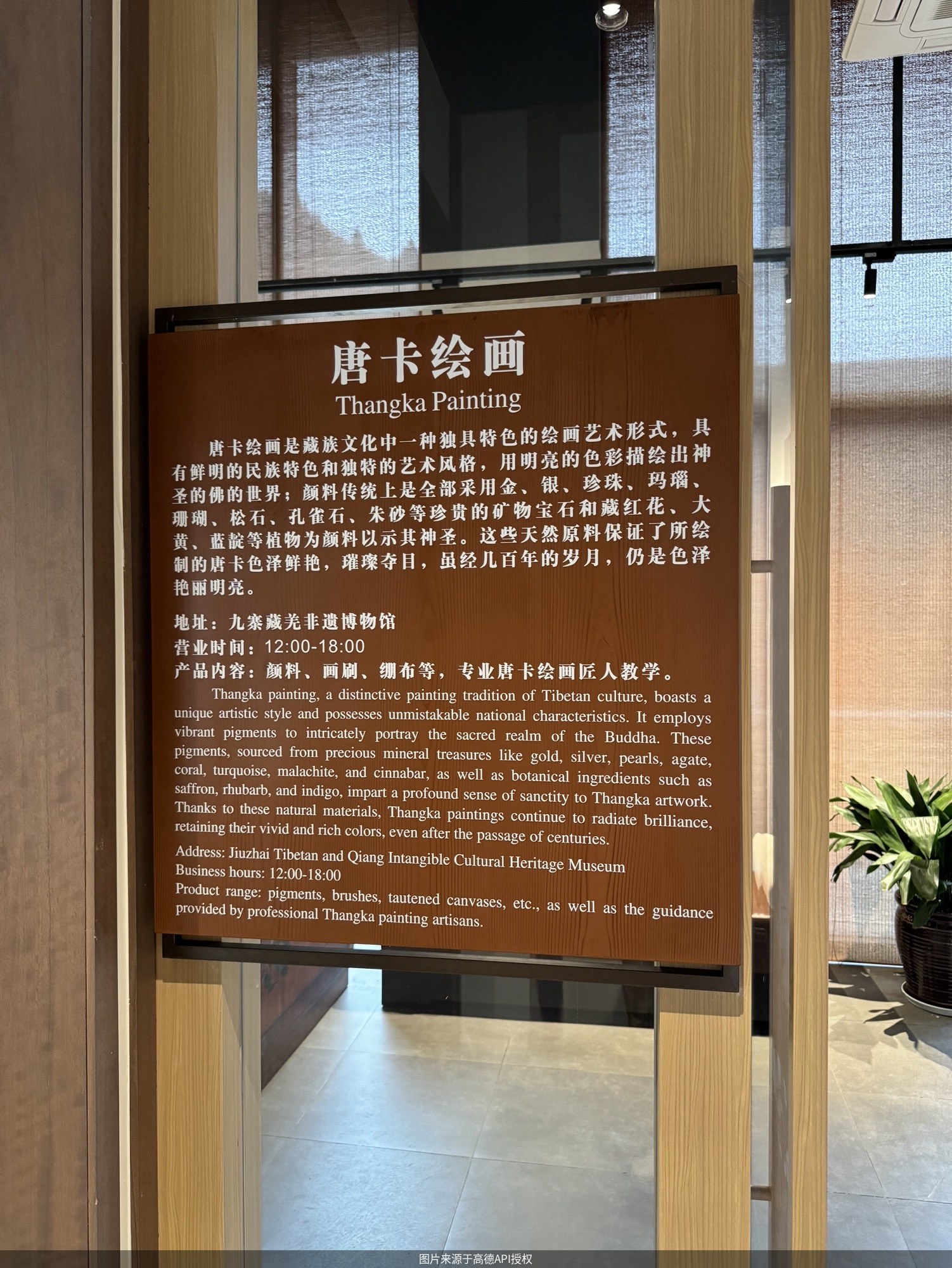
Jiuzhai Tibetan-Qiang ICH Museum: A Craft History in Objects
On the Zhangzha side, this museum treats heritage as living practice: mineral pigments for thangka, sample stitches of Qiang embroidery, genkle-root stock for Tibetan paper and chased-silver tools all lie open in cases, with working craftsmen beside them; ten minutes of watching embroidery beats ten photographs.
The route follows the craft process from raw material to finished piece, ending at a hands-on zone for booked sessions. Even without a workshop, a signed small piece from the master here carries better provenance than any gate-store standard item.
Jiuzhai Paradise Jiafan Ancient Town: An Afternoon in Tibetan Stonework
Jiafan Ancient Town is a hillside ensemble of Tibetan stonework, watchtowers, chapels and boardwalks turning a resort's commercial space into a browsable cultural streetscape. Afternoon light rakes the lanes and flatters the stone walls, and the upper deck frames the meadow line toward the love-sea grasslands.
Shops lean toward Tibetan ornaments, teas and design goods, far more distinct than the shopping center's assembly line. Find a window teahouse, order a pot of yak-milk tea, and watch the wind-horse flags turn under the eaves, the day's bridge from knowledge to body.
The Romantic Show of Jiuzhai: The Day's Lessons on Stage
The evening show compresses the valley's history into an hour: the earthquake that shook these mountains, Tibetan and Qiang wedding customs, the tea-horse road and the Jiuzhai that rose again. The masks, prayer wheels and towers you read in museums reappear on stage, which is exactly why the show closes a culture day.
Choose mid-rear seats for the full picture; the rain and snow effects wash over the whole house, so the front rows actually see less. Leave five minutes in your seat after the curtain while the crowd drains, and the ride home runs far smoother.
| Getting around |
|
| Budget | Both museums are free or cheap, the show runs about RMB 280-320; plan on RMB 300-400 pp before meals. |
| Best time | Year-round; museums feel calm and bright in the morning, and the 19:30 show carries the best atmosphere. |
FAQs
Will the two museums bore me with no background knowledge?
No, both are built for passing visitors: the county museum starts from why the lakes are blue, answering the most obvious question first, while the ICH museum is half working craftsmen. Rent the audio guide, cap each at ninety minutes, and the density stays digestible at your own pace.
How do I buy show tickets, and can I get them on site?
Buy online with real-name seat selection in advance; peak-season shows sell out two to three days ahead, and box-office tickets exist but with worse seats. Children under 1.2 meters usually enter free without a seat, subject to the day's box-office notice. Take the 19:30 show to keep the whole daytime free.
What is the smoothest timing across four stops?
Run the line from county seat into town: museum at 9, ICH museum at 11, ancient town at 14:30, show at 19:30. Staying in Zhangzha, hire a morning car to the county seat, lunch there, then return in time for the town and the evening show. Total drive time stays under an hour, an easy day.
Is the evening show suitable for seniors and kids?
Yes, the theater is climate-controlled and seated, the hour demands no stamina, the sound and light stay gentle on seniors and gripping for kids. Two notes: nights cool fast at altitude, so layer up at exit, and with sound-sensitive toddlers choose rear aisle seats so you can step out and return.