
Two forces shape Jiuzhaigou's tables: highland larders of barley, yak, butter and wild mushrooms anchor the Tibetan line, while passing palates of Sichuan chili and Hui beef noodles settle alongside. This day follows altitude and mealtime, lightest at dawn, heaviest at noon, a palate reset mid-afternoon, charcoal to finish.
Everything clusters around Zhangzha town and the gate, joined on foot or by minutes-long hops; the only management task is stomach capacity. Keep the Tibetan breakfast at sixty percent, let the copper pot own lunch, order small at the Hui kitchen, and save the last capacity for the market. Digestion slows at altitude, so leave two-plus hours between sittings.
Itinerary at a glance
| 08:30 | Jiuzhaigou Highland Barley Tibetan Restaurant: Breakfast in the Highland Time Zone |
| 12:00 | Gesanghua Copper-Pot Yak Beef: The Proper Noon Meal |
| 16:30 | Huixiangzhai Muslim Restaurant: The Afternoon Palate Reset |
| 19:30 | Jiuzhai Night Market: Closing on Charcoal and Yogurt |
The route, stop by stop
Jiuzhaigou Highland Barley Tibetan Restaurant: Breakfast in the Highland Time Zone
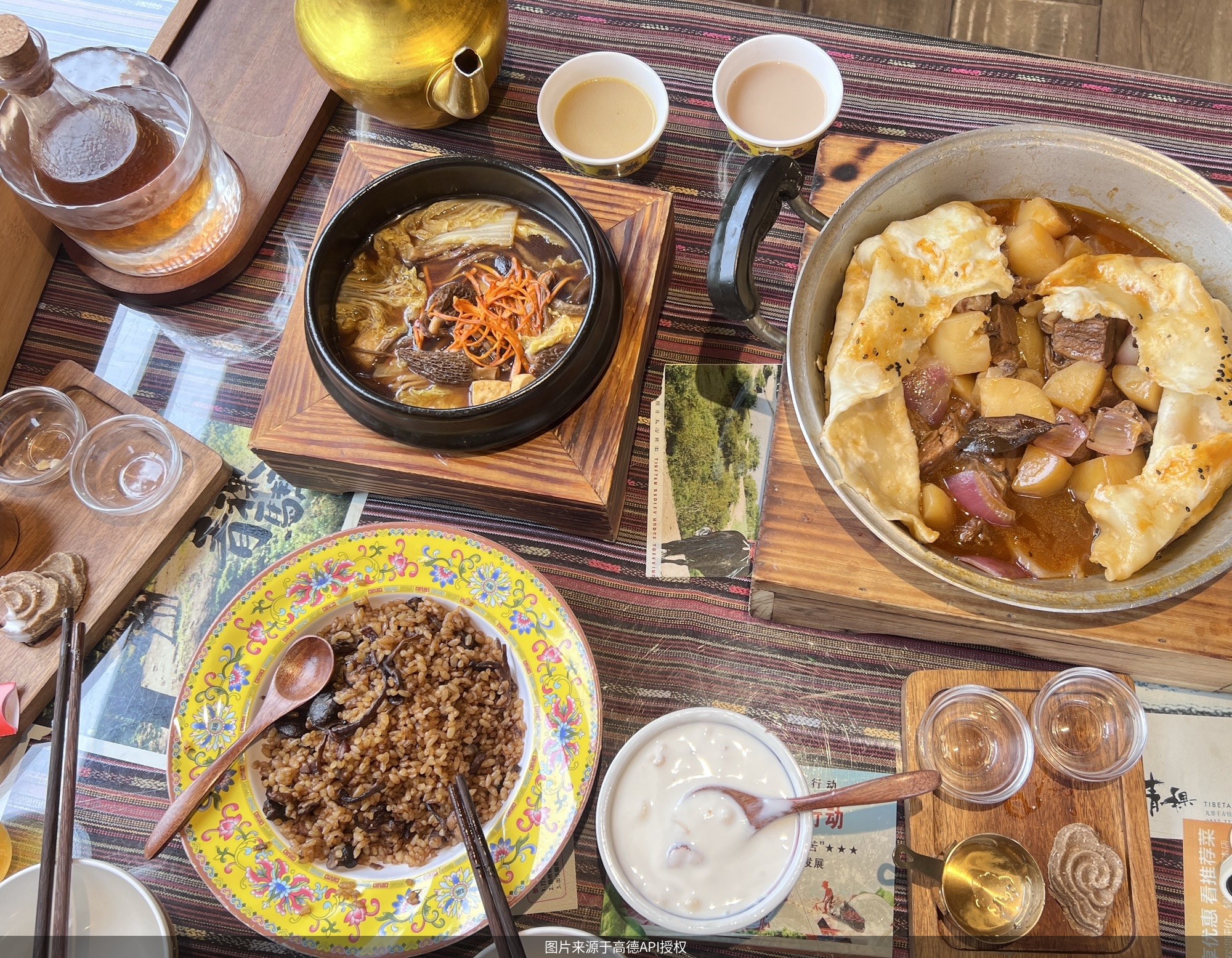
A Tibetan restaurant at breakfast is at its emptiest and most like a local family room. Butter tea runs salty, strange on the first sip and habit-forming by the third; tear the freshly griddled barley cake and dip it in, the canonical way. For substance, add a bowl of Tibetan noodles in yak-bone broth over hand-rolled strands.
It doubles as a window on barley itself: the owner will show how tsampa is kneaded and where sweet tea ends and butter tea begins. First-timers should order one pot of butter tea, one barley cake and one noodle bowl to split between two or three, the standard opening.
Gesanghua Copper-Pot Yak Beef: The Proper Noon Meal
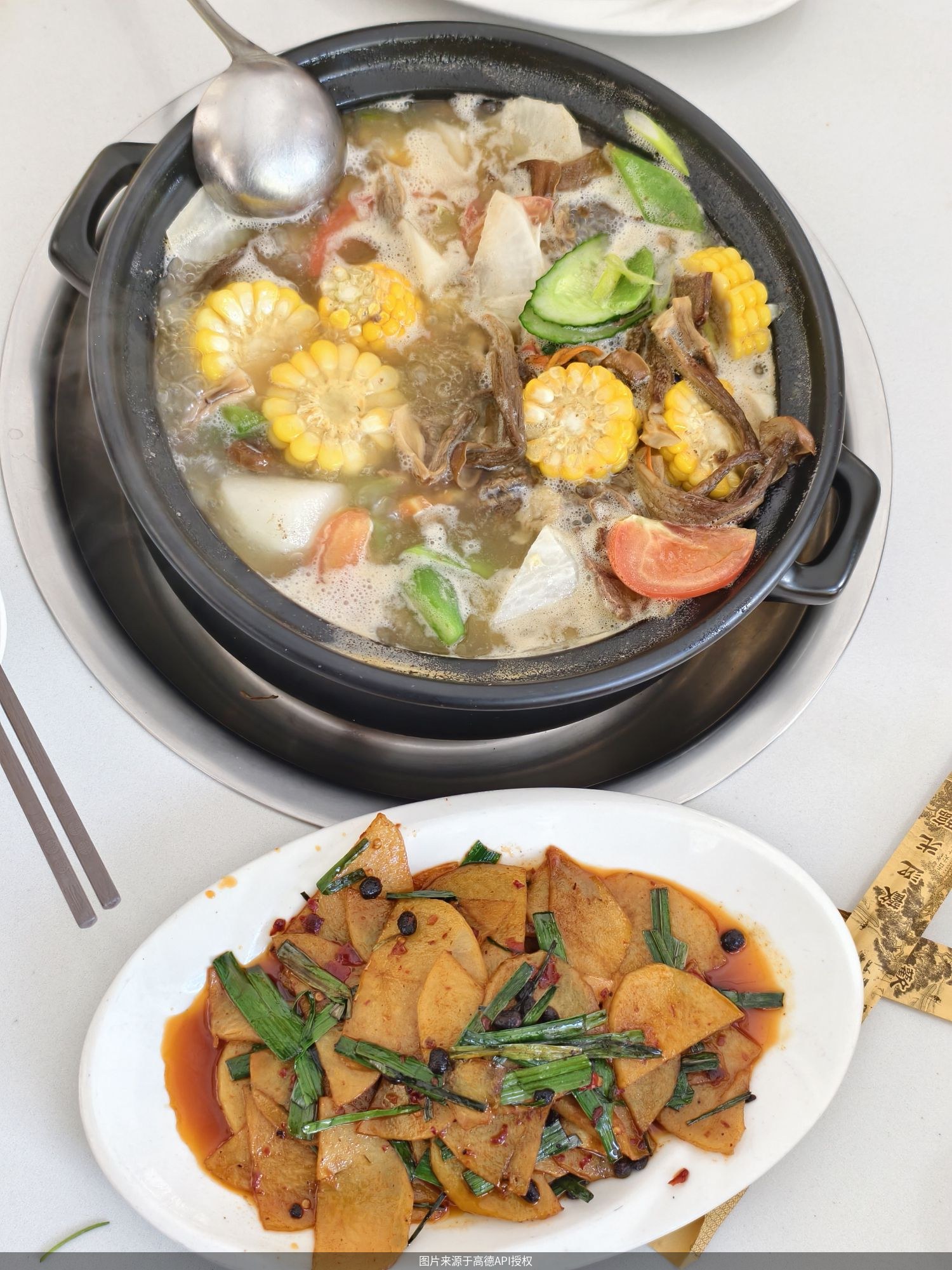
The copper-pot yak lunch owns Zhangzha: charcoal under a copper vessel of mushroom broth, thick-cut yak beef swished briefly alongside highland potatoes, wild fungi and greens. Yak's coarse fibers turn chalky if overcooked; two or three minutes in the pot is the standard, dipped in dry chili or straight broth. The soup concentrates as it simmers, closing with barley noodles or potato rice.
The place queues at noon even though the music-restaurant format peaks at night, so midday is calmer. A small pot feeds two comfortably; add a vegetable platter and a pot of sweet tea and eighty yuan a head eats respectably. The mushroom base beats the clear one for anyone wary of gaminess.
Huixiangzhai Muslim Restaurant: The Afternoon Palate Reset
After back-to-back yak, Huixiangzhai offers a clean reset: halal beef and wheat cooking in the northwest manner. The afternoon is quiet, so order the beef-over-flatbread or the big-plate chicken with belt noodles at half portions, framing this as a snack rather than a meal.
The place also reframes Jiuzhaigou's diversity: a local Hui community has lived here for generations, and the town's halal kitchens keep a steady standard. For chili-averse travelers this is the best exit between Tibetan and Sichuan cooking, with the soupy noodle dishes the most reliable output.
Jiuzhai Night Market: Closing on Charcoal and Yogurt
The market is the day's true finale: yak skewers hissing on charcoal, Tibetan yogurt buried in white sugar, roast potatoes halved and brushed with chili. The stalls hit harder than any restaurant, cooked to order and sold by the ten-stick handful. Pick stalls by where locals cluster; the plastic-stool crowds never lie.
Suggested order: yogurt first to line the stomach, skewers next, a final barley cake to clear the palate. Night cold drops fast at altitude, so eat hot and choose the indoor stalls with heaters if needed. Go easy on the barley wine; a hangover at 3,000 meters is not a souvenir worth keeping.
| Getting around |
|
| Budget | Four sittings run about RMB 120-200 pp; sharing one copper pot or soup pot between two is the smarter order. |
| Best time | Year-round; the Tibetan breakfast breathes best before 9:30 and the market fires up after 7 pm, so time both ends. |
FAQs
Is a dedicated eating day worth it if I skip the valley?
Yes, especially for two cases: the arrival day before the valley and the recovery day after. Post-hike stomachs want warm, calorie-dense local food, which is exactly this line. With only half a day, keep the copper-pot lunch and the night market and drop the Hui kitchen.
Do popular restaurants take bookings, and does the evening show clash with dinner?
Most town restaurants take no bookings and run on timing: seated before 11:45 at the copper-pot place and at the market after 19:00 usually beats the queues. If you hold a 19:30 Romantic Show of Jiuzhai ticket, finish dinner by 17:30; buy show tickets a day ahead online, and the market still waits for a post-show snack.
What options exist for no-chili or no-beef travelers?
The Tibetan side offers sweet tea, barley cakes, yogurt and mushroom broth with zero heat; Hui kitchens do unspiced stews and soup noodles; the market's roast potatoes, boiled corn and barley cakes are safe too. Skip yak by ordering the vegetarian platter in a mushroom pot. Kitchens will cut the chili on request, more readily than most expect.
What should stomachs watch for with days of meat and drink at altitude?
Three things: altitude slows digestion, so leave two-plus hours between meals; butter tea and sweet tea are heavy on fat and sugar, cap at two pots a day; and barley wine sneaks up, so go light the first two nights. Carry basic stomach remedies and glucose sachets, and remember warm water beats every folk remedy up here.