
Five days is the minimum for real depth in Lijiang: the first three anchor in Dayan, day one adjusting in the old town, day two on Jade Dragon Snow Mountain for the glacier and Blue Moon Valley, day three downshifting through Shuhe and Baisha; the last two cross the ranges to Lugu Lake, about four hours each way. The lake sits near 2,690 meters, its clarity ranks among the best of any Chinese lake, and the Mosuo villages and pig-trough boats exist nowhere else.
The budget skeleton: mountain entry about RMB 100, big cableway about 120, Lugu Lake ticket about 70, the RMB 50 Maintenance Fee, plus Mufu and the tower if tempted; five mid-range nights run roughly RMB 1000-1600 per person, meals at will. Two bookings matter early: the real-name cableway slots sell out two or three days ahead in season, and lakeview rooms at Lugu tighten just as fast. The mountain road to the lake bends hard, so carry motion-sickness tablets.
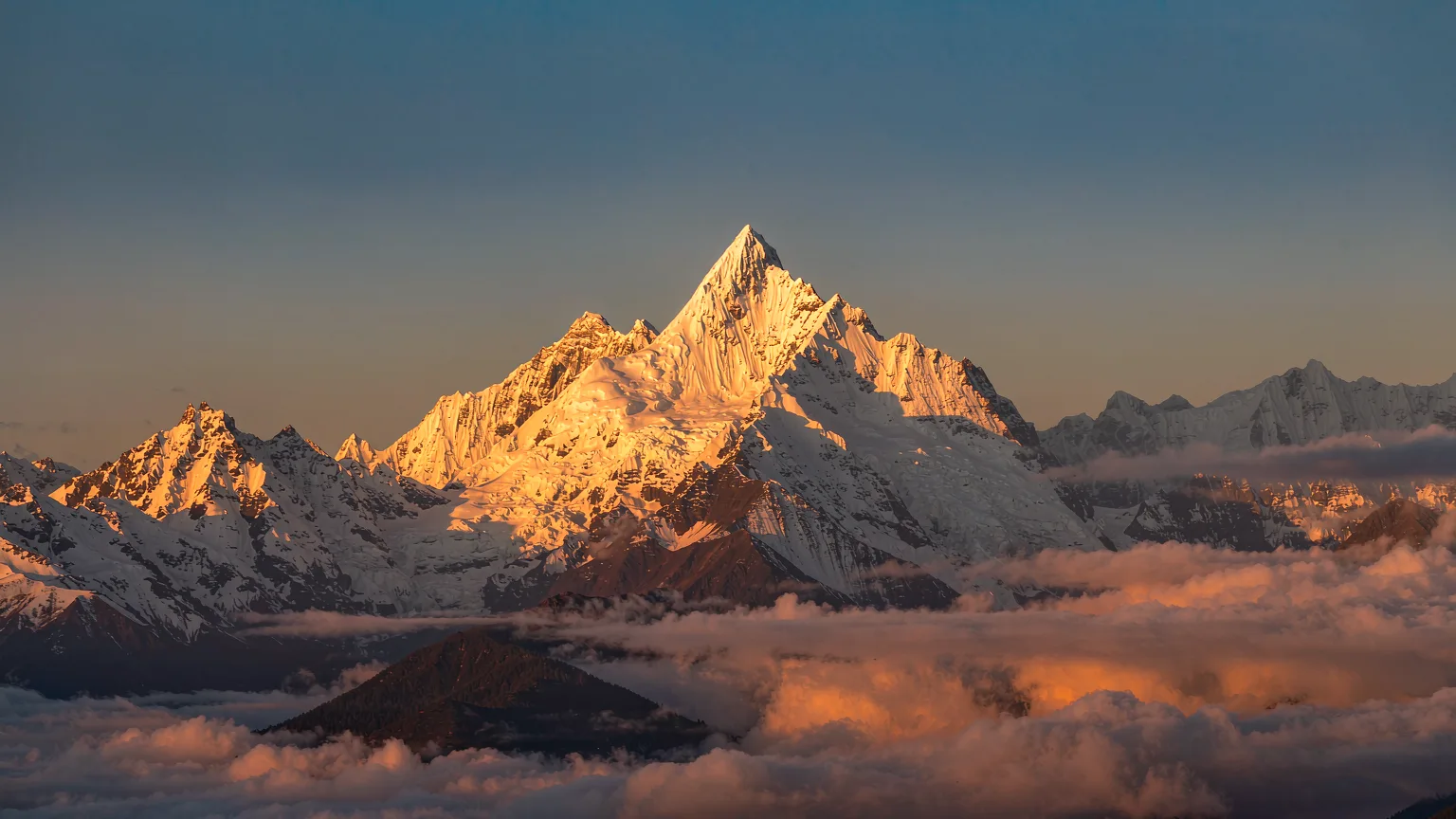
Itinerary at a glance
| DAY1 08:30 | Day One in Dayan: Sifang Street, Mufu Palace and Lion Hill |
| DAY2 07:30 | Day Two: The Glacier Cableway and Blue Moon Valley |
| DAY3 09:30 | Day Three: Shuhe and Baisha as the Soft Day |
| DAY4 08:00 | Day Four: Over the Mountains to Lugu Lake, Sunset at Lige |
| DAY5 09:00 | Day Five: Around Lugu Lake and Back to Lijiang |
The route, stop by stop
Day One in Dayan: Sifang Street, Mufu Palace and Lion Hill
Day one belongs to the old town and to altitude adjustment. Follow the canals from Sifang Street to the Big Stone Bridge in the morning, take Mufu Palace at ten (about RMB 40) with the free guided tour, lunch on chickpea jelly and baba along Wuyi Street, then climb Lion Hill (tower about RMB 35) to read the whole roofscape with the snow mountain on the horizon, early orientation for tomorrow.
Catch the evening circle dance at Sifang Street and close with a small rib hotpot, keeping the day to eight or ten kilometers and an early night. Handle the RMB 50 Maintenance Fee and keep the receipt for sites that check it. Three rules for a first highland day: slow your pace, drink water, skip alcohol; if your head already throbs on arrival, push the tower climb to day three.
Day Two: The Glacier Cableway and Blue Moon Valley
Leave before 7:30 for the Ganhaizi visitor center, forty minutes out. Entry is about RMB 100 and the big cableway about 120, rising to the 4,506-meter glacier park with boardwalks up to the 4,680 marker. Move slowly, shorten your stride, and descend at any real headache or breathlessness; oxygen canisters and rented down jackets wait at the base. Never ride up with an unresolved cold on the trip's highest day.
Come down at midday to Blue Moon Valley, where milky turquoise lakes string out along the White Water River; the shuttle costs extra or walk the ninety-minute loop. Add the Impression show (separate ticket) if staged that afternoon, otherwise rest back in town. Sleep long and stay dry that night, because day four brings four hours of mountain road.
Day Three: Shuhe and Baisha as the Soft Day
Day three is deliberately empty. Spend the morning in Shuhe, twenty minutes away: enter from the north gate, take Qinglong Bridge, the dragon pool and the old lanes, eat Naxi grilled fish in a courtyard at noon, and process three days of photos over coffee. Entry is free, crowds thin, and the town works as the pressure valve a long trip needs.
In the afternoon, add Baisha ten kilometers out (free): the murals (small ticket about RMB 30), the copper shops and dye yards of the Mu clan's founding village, then back to Dayan by evening. Tonight, split your luggage: store the big bag and carry one night's worth to Lugu Lake, where guesthouse standards vary widely, so confirm bathroom and heating arrangements when booking.
Day Four: Over the Mountains to Lugu Lake, Sunset at Lige
Leave at eight and cross the ranges to Lugu Lake, about four hours, with viewpoints over the Golden Sands gorge along the way. The lake ticket is about RMB 70, and the first look over the pass lands like a color correction: that saturated deep blue barely reads as real water. The surface sits near 2,690 meters, and the ring road straddles the Yunnan-Sichuan line.
Start circling in the afternoon: most visitors sleep at Lige peninsula or Daluoshui, and at Lige the lakeview rooms open straight onto the water. At dusk, take a pig-trough boat, the Mosuo dugout-style wooden craft, paddled by hand and silent along the surface, for sunset. Pack a heavy coat for the day-night swing, try the lake fish and a Mosuo family dinner, then sleep early; nights by the lake carry nothing but water sounds.
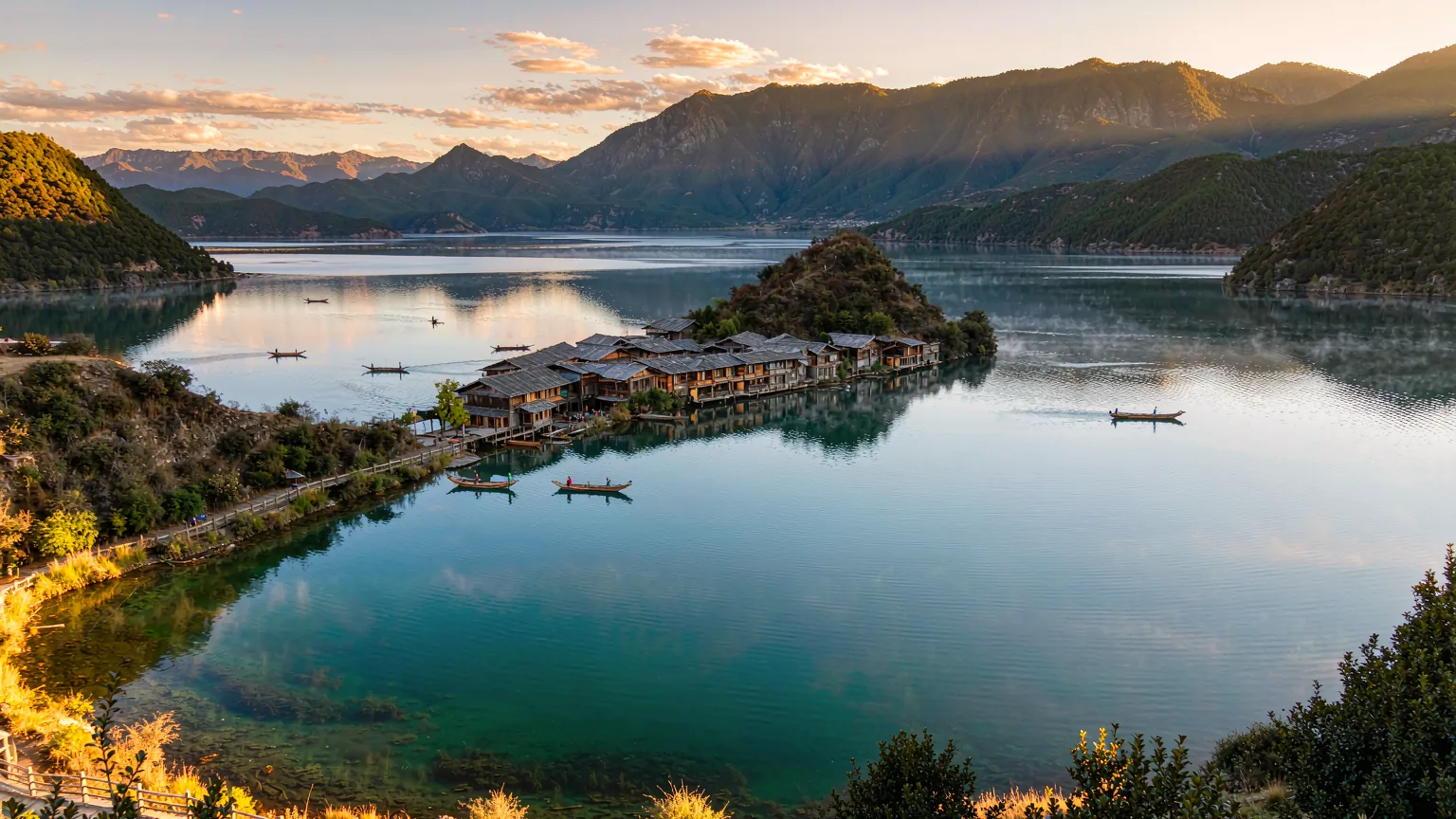
Day Five: Around Lugu Lake and Back to Lijiang
Rise for sunrise, morning mist peeling off the surface. The morning loop runs the eastern shore: the Walking-Marriage Bridge crosses the vast reed beds of Caohai, the signature landmark of Mosuo culture, and the ring road strings together Daluoshui, coves and viewpoints; a chartered loop of the main stops takes about three hours, while walking and cycling suit only short bayside stretches.
Wrap the loop before noon, lunch, and drive back to Lijiang, four hours, landing in time for the old town's night market and circle dance. With a morning flight tomorrow, sleep near the airport side or in the city tonight; the old town to the airport takes about forty minutes, so leave margin. Two days of mountain and lake around three of town: this is the most balanced way to open Lijiang.
| Getting around |
|
| Budget | Mountain entry about 100, big cableway about 120, Lugu Lake ticket about 70, maintenance fee 50, plus beds and meals: roughly RMB 1500-2500 pp over five days |
| Best time | Apr-Jun and Sep-Nov are prime; the Lugu leg is a winding mountain road, so watch landslide notices in the rains. Book the cableway and lakeview rooms three or four days ahead |
FAQs
Are two days enough for Lugu Lake, and which side should I stay on?
Two days covers the main loop plus one sunset and one sunrise. Lige peninsula lakeview rooms come first, Daluoshui second; for silence, try Nise with fewer dining options.
Is the mountain road to Lugu Lake dangerous?
The surface is good but the bends are relentless, and the rains bring occasional landslide closures. Licensed drivers know the road, night driving is best avoided, and passengers prone to carsickness should medicate and ride up front.
Does five days feel rushed, and can I cut a section?
The structure already alternates adjust, big and soft days, so no. If pressed, drop Baisha and merge the mountain and Shuhe days; never cut Lugu, it is the most differentiating stretch of the trip.
How high is the lake, and how cold are the nights?
The lake sits near 2,690 meters, slightly above the Lijiang basin, and bothers few people. Day-night swings often exceed ten degrees, so bring a heavy coat even in summer, and mind the wind in winter.