
Five days is Nyingchi's comfort solution: day one acclimatizing in Bayi while learning the city, day two finding lake rhythm at Basum, day three into the Grand Canyon with a Sosong night staked on sunrise, day four finishing the river and wetland in the morning with a show and rest at night, day five over the pass into Lulang. Every day's driving and altitude are calculated.
The design principle is buffer before climax: the canyon's hard day lands after the body has settled, while pass and forest sea close the trip at controllable intensity. Namcha Barwa gets three windows, the canyon platforms, Sosong's sunset and the pass angle, raising the odds sharply.
Itinerary at a glance
| 15:00 | Biri Sacred Mountain Ecological Area: Arrival Day's First Look |
| 19:00 | Whistling Arrow Square: Guozhuang on Night One |
| 09:00 | Basum Lake: Day Two Belongs to the Sacred Lake |
| 09:00 | The World King Cypress Garden Scenic Area: An En-Route Ancient before the Descent |
| 13:00 | The Yarlung Tsangpo Grand Canyon: Vertical Seasons in an Afternoon |
| 18:00 | Sosong Village: The Gorge's Night and Morning |
| 07:30 | Namcha Barwa: The Dawn Window of Gilded Summits |
| 11:00 | The Yani National Wetland Park: A Riverside Buffer on the Return |
| 19:30 | The Gongbu Happy Performing Arts Centre: Tibetan Dinner and Dance, Night Four |
| 09:00 | Sela Pass: Day Five's Altitude Test |
| 11:00 | The Lulang Forest Sea: The Green Ocean on the Way Down |
| 14:00 | Lulang International Tourism Town: The Five Days' Forest Period |
The route, stop by stop
Biri Sacred Mountain Ecological Area: Arrival Day's First Look
Begin the afternoon on the mountain, not at a sight. From the viewing belt read Bayi's layout and the Niyang valley whole, establishing bearings and snowline positions in one look, a reference frame for every drive in the four days ahead.
No running or jumping at the high platform, walk and look slowly. Down the hill by dusk for dinner and rest; day one schedules nothing rushed.
Whistling Arrow Square: Guozhuang on Night One
After dinner, Whistling Arrow Square is the fastest way to know this town: locals ring into Guozhuang circles, and when the music starts the whole city's evening converges here. Watch ten minutes from the outer ring, join if invited, two dances and a light sweat, and the first plateau night sleeps remarkably deep.
Halve your exertion at altitude, one dance then rest, step out when winded. Walk back to the hotel and resist the late hours.
Basum Lake: Day Two Belongs to the Sacred Lake
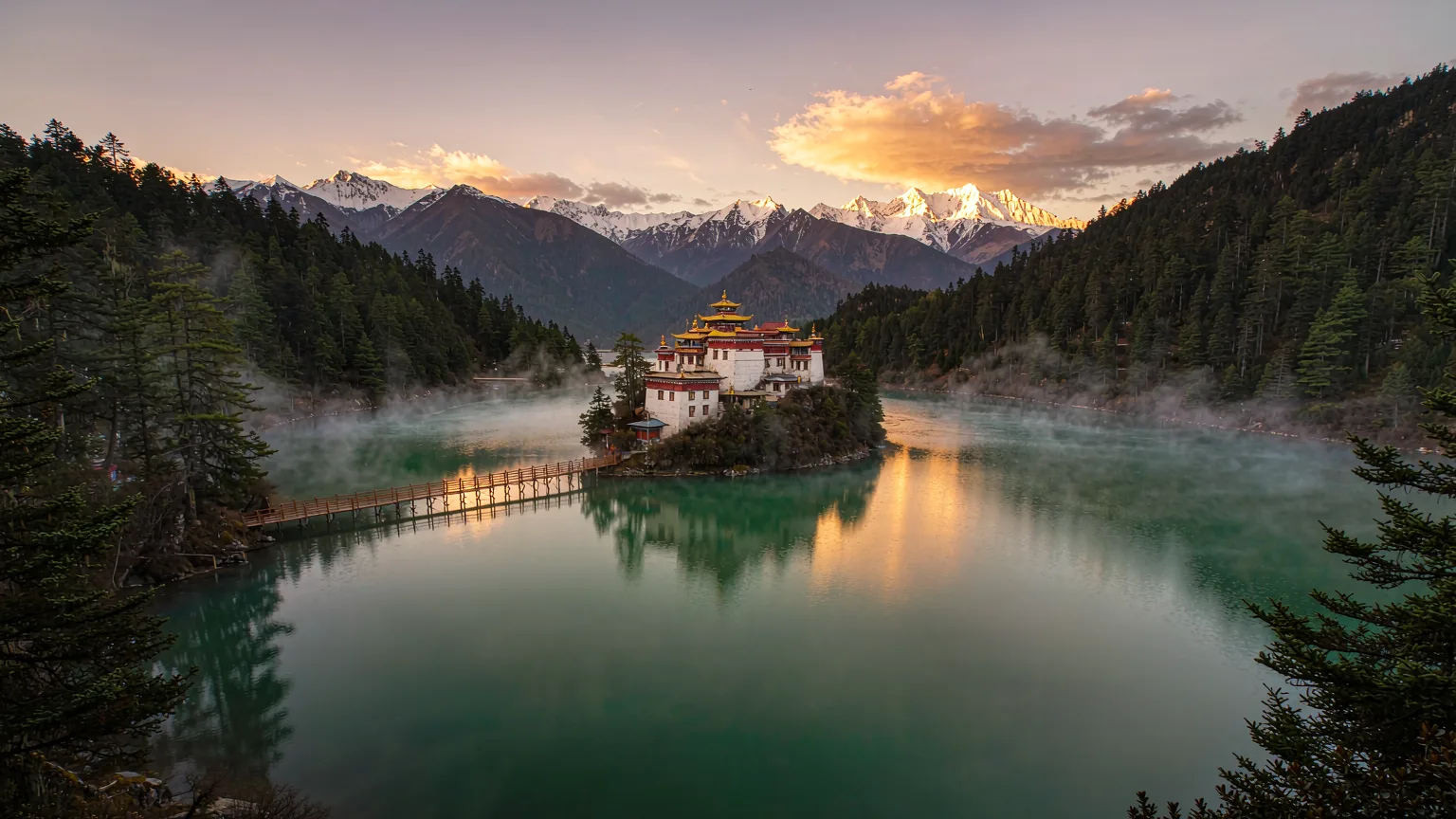
Day two goes wholly to Basum, the three-hour drive doubling as a test of your body's response to altitude and bends. The island temple, lakeside paths and the Sengo direction each hold sights, the water running translucent jade in fair weather.
The lake basin sits about five hundred meters above Bayi, so move gently and drink often. Lunch at the lake, back to town by evening, a foot soak and early sleep.
The World King Cypress Garden Scenic Area: An En-Route Ancient before the Descent
Day three descends to the Grand Canyon, the cypress king sitting en route out of town. An hour covers the 2,500-year-old giant and its grove of ancients, morning light through the leaves and its resin scent a fine launching rite.
Then straight to the canyon entrance, about two hours. Today is the trip's heaviest: eat a full breakfast and stock the car with snacks and water.
The Yarlung Tsangpo Grand Canyon: Vertical Seasons in an Afternoon
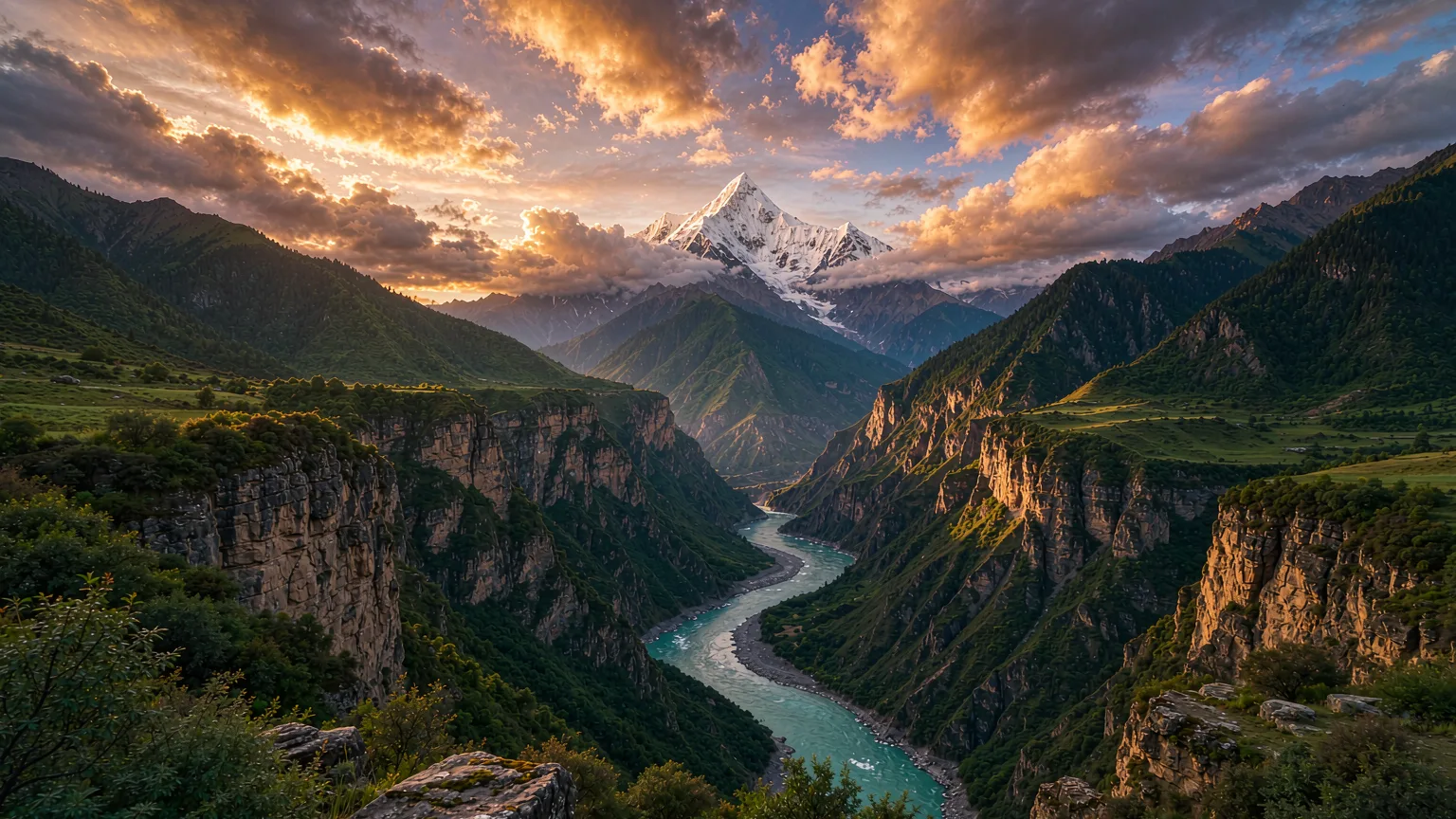
The shuttle follows the river inward, platforms calling one by one, the vertical bands from riverside shrub to snowline unrolling before you. Near Zhibai Village the angle faces Namcha Barwa's shoulder squarely, and after four the cloud-seam odds rise, patience being the only equipment.
Lunch inside the park. Confirm the last shuttle, though guests sleeping in the gorge run on their own clock.
Sosong Village: The Gorge's Night and Morning
Night three sleeps in Sosong, the five days' most important lodging decision: the village edge faces Namcha Barwa dead-on, delivering sunset, stars and gilded summits in one night. Stroll the lanes at dusk, sleep early, and hand the alarm to the sunrise.
Blossom season demands booking a week or more ahead; guesthouses run plain, confirm hot water and heating, and pack your own toiletries and warmth.
Namcha Barwa: The Dawn Window of Gilded Summits
The five days' highest-probability mountain moment is Sosong's dawn: be in position ten minutes before sunrise, the light gilding summit tips first and flowing down, gold pouring from peak to shoulder. Even under thick cloud, low morning cloud often parts a seam at mid-slope.
Shoot till about seven-thirty, back for guesthouse breakfast, check out and go. Miss this window and it does not return, worth every bit of the early alarm.
The Yani National Wetland Park: A Riverside Buffer on the Return
Day four's return stops at the Yani wetland, the Niyang and Yarlung braiding channels between sandbars, half an hour of water-watching from the platforms, the finest buffer between two heavy driving days.
Forty minutes to an hour, then lunch in Bayi; the afternoon runs free or as a nap, with the evening reserved for the show.
The Gongbu Happy Performing Arts Centre: Tibetan Dinner and Dance, Night Four
Night four stays in town for a dinner-show recovery: Guozhuang, whistling arrows and Gongbu costume in rotation over a Tibetan meal. The trip's only indoor evening, and the hour to replay the past days in your head.
Book a day ahead in season; sip the barley wine at most, for tomorrow crosses Sela Pass, and early sleep is the serious business.
Sela Pass: Day Five's Altitude Test
Day five crosses Sela Pass at over 4,700 meters, the prayer-flag arrays and the distant angle on Namcha Barwa both here. After four days of adaptation most people feel far lighter than day one, which is exactly why the pass sits last.
Twenty to thirty minutes, moving gently. Cloud sea with peaks shows best in the morning, so shoot promptly, then descend.
The Lulang Forest Sea: The Green Ocean on the Way Down
Over the pass lies the Lulang Forest Sea, platforms overlooking conifer and meadow flooding the valley, mist drifting through the treetops. The five days' final nature card shows best around midday when light runs clearest.
An hour at the platforms, then down into Lulang town for stone-pot chicken, the trip's most ceremonial meal.
Lulang International Tourism Town: The Five Days' Forest Period
After lunch, stroll Zhatang Lucuo to digest, the lake mirroring peaks, the town blending Tibetan and Gongbu styles in its buildings. Fed and rested, depart for Bayi, two hours back, arriving before dusk.
In town, pack luggage and loot, eat light, and if tomorrow's flight leaves from Mainling airport, confirm the transfer time early.
| Getting around |
|
| Budget | Tickets total about RMB 500-600, four days of charter RMB 2,000-2,800, with four nights and meals five days total roughly RMB 4,000-6,000 pp. |
| Best time | Late March blossoms and September-November foliage run best; keep day one for acclimatization and never open with the Grand Canyon. |
FAQs
What makes five days unhurried?
Three keys: day one only acclimatization and town strolls, the canyon day sleeping inside the gorge to avoid night re-crossing, the pass at trip's end where intensity runs lowest. Keep daily driving near three hours and leave an afternoon blank daily; the difference between rushed and restful lives entirely in those invisible blanks.
Are the Grand Canyon and Namcha Barwa one thing?
No, but tightly bound: the canyon is the landscape belt and the river, Namcha Barwa the snow peak at its end, and most in-park platforms aim at it. The ticket buys canyon access, the peak is a bonus. Holding this thought shrinks the weather obsession considerably.
Is the five-day line feasible with seniors?
Feasible and recommended, since the five-day buffering suits slow rhythms: short pass stops, controllable daily drives, and Sosong convertible to a day trip to cut bed changes. Three cautions: a pre-trip medical check, an oxygen cylinder in the car, and halved daily walking. The chartered car's freedom to stop anytime is the biggest asset.
Blossom season or foliage season?
Both earn their trip with different characters: blossom season, late March to early April, frames pink against snow peaks in a picture unique in China, at crowd-and-price cost; foliage season, mid-October into early November, brings high clear-sky odds, better peak sightings and clearer water. Photographers choose blossoms, peak-watchers and comfort choose autumn.