
Seven days read Nyingchi not by racing sights but by layers: two town days covering Gongbu culture, street life and acclimatization entirely, day three for temple and ancient tree, day four to Basum, days five and six into the canyon keeping vigil over Namcha Barwa with the Sosong night, day seven over Sela Pass into Lulang, the night market closing the trip. The buffers between layers are the seven days' real value.
The routing tells one river's full story: from the Niyang's town stretch to the two-river confluence, down the Yarlung into the gorge, then over the watershed into cloud-wrapped forest. Culture, lake, river, peak and forest each hold their own seat, and any bad-weather day carries a swappable substitute.

Itinerary at a glance
| 15:00 | The Niyang Pavilion (Southeastern Tibet Cultural Heritage Museum): The Seven Days' Overture |
| 19:00 | Whistling Arrow Square: Night One's Guozhuang Lesson |
| 09:00 | Biri Sacred Mountain Ecological Area: A Faith Lesson above the City |
| 14:00 | The Monpa-Lhoba Historical and Cultural Heritage Museum: The Gorge Peoples' Register |
| 09:30 | Lama Ling Monastery: Day Three's Living Faith Site |
| 13:30 | The World King Cypress Garden Scenic Area: An Afternoon 2,500 Years Old |
| 19:30 | The Gongbu Happy Performing Arts Centre: Culture Day's Banquet |
| 09:00 | Basum Lake: The Sacred Lake's Whole Day |
| 13:00 | The Yarlung Tsangpo Grand Canyon: Into the Gorge on Day Five |
| 18:00 | Sosong Village: The Night Staked on Sunrise |
| 07:30 | Namcha Barwa: The Gilded-Summit Morning |
| 12:00 | Sela Pass: Climbing the Watershed |
| 14:00 | The Lulang Forest Sea: A Green Ocean in the Mist |
| 16:00 | Lulang International Tourism Town: The Last Night in the Forests |
| 19:00 | The Nyingchi Night Market: Seven Days Closed in Street Fire |
The route, stop by stop
The Niyang Pavilion (Southeastern Tibet Cultural Heritage Museum): The Seven Days' Overture
Arrival day skips long roads and reads the ethnic map first: two hours across Gongbu, Monpa-Lhoba and Deng dress, implements and festivals, the pavilion's halls serving as the index for the next six days, every road-side encounter finding its entry back here.
Climb to the top floor for the Niyang, brightest on the water in afternoon sun. Then dinner in town and the square for a first look at the city's night life.
Whistling Arrow Square: Night One's Guozhuang Lesson
Night one starts at the square, watching locals ring into Guozhuang. The whistling arrow is Gongbu culture's emblem and gave the square its name; when the music starts, the line between visitor and local blurs into footwork.
Halve your exertion in the first plateau days, one dance one rest; join generously when invited, wrong steps shame nobody. Back at the hotel by nine, since acclimatization sleep is the most valuable sleep.
Biri Sacred Mountain Ecological Area: A Faith Lesson above the City
Day two's morning climbs the sacred mountain to read the Bon faith's everyday form: pilgrimage paths, mani heaps, prayer flags and the dawn panorama over town. City and sacred hill sit fifteen minutes apart, the first key to Nyingchi: nature and faith here never file separately.
Taxi straight to the viewing belt, thirty gentle minutes of path. Dawn pilgrims abound, yield and let them pass, gesture before shooting.
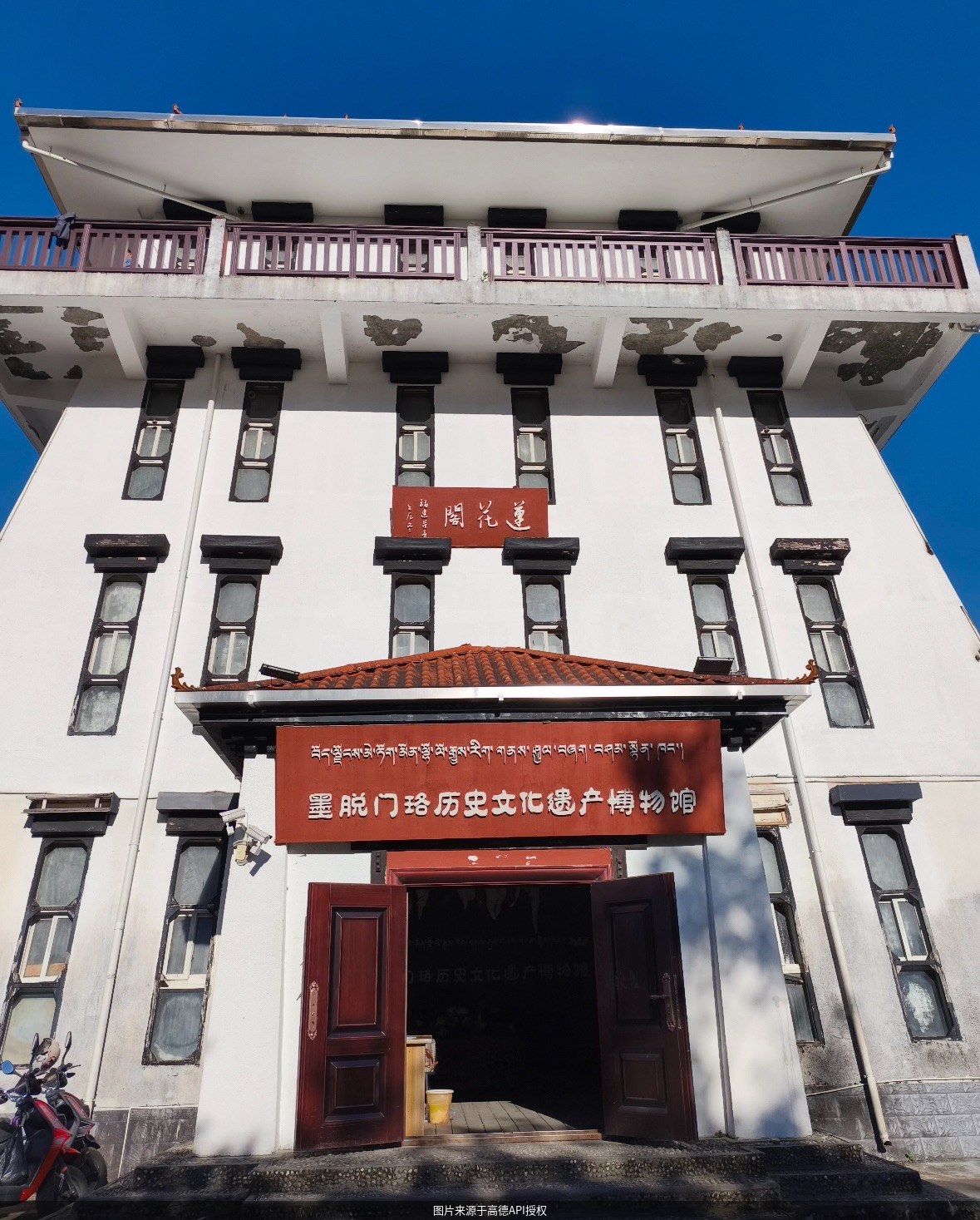
The Monpa-Lhoba Historical and Cultural Heritage Museum: The Gorge Peoples' Register
The afternoon reads the Monpa and Lhoba: migration histories, the transport wisdom of rattan bridges and rope crossings, hunting tools and woven patterns, loading the gorge's human threads into memory two days before you enter it, so the day-five landscape carries an extra layer of story.
Note where the rattan-craft and woven-band halls sit for a quick second pass before leaving. Free entry, two hours reads it thoroughly.
Lama Ling Monastery: Day Three's Living Faith Site
Day three's morning visits the old Nyingma temple in Bujiu's forests. The Guru Rinpoche statue, mandala murals and the uncommon one-site arrangement of monks and nuns are the three headliners, butter lamps burning on even in daylight, the halls hushed.
Walk the kora clockwise, move slowly and quietly through halls. Lunch on the way back, then the cypress garden in the afternoon.
The World King Cypress Garden Scenic Area: An Afternoon 2,500 Years Old
The afternoon reads trees. The giant cypress and its grove form a Bon sacred stand, prayer flags and juniper smoke lending the garden its own ceremony, dappled light under the canopy making the seven days' quietest hour.
An hour covers the grounds; return to town and rest, upgrading the evening from having seen Gongbu culture to having joined it.
The Gongbu Happy Performing Arts Centre: Culture Day's Banquet
Night three's dinner-show stages every noun from the daytime: Guozhuang, whistling arrows, Gongbu costume in rotation over a Tibetan set meal. The background built in museums and temples across two days cashes out fully in these two hours.
Book one or two days ahead in season; sip the barley wine at most, since day four goes to Basum and early sleep is serious business.
Basum Lake: The Sacred Lake's Whole Day
Day four goes wholly to Basum, about three hours out. Tsozong Temple on the lake's island sets Nyingma faith at the water's exact center, the lakeside loop and the Sengo spur each holding sights, the water translucent jade with complete peak reflections in fair weather.
The basin sits around 3,400 meters, move gently and drink often; lunch at the lake, back to town by evening, a foot soak and early sleep.
The Yarlung Tsangpo Grand Canyon: Into the Gorge on Day Five
Day five drives south into the gorge, the shuttle working upstream with platforms in sequence. The river's shift from calm to torrent reads with the naked eye, the Zhibai area framing water and Namcha Barwa together, vertical bands running shrub to snowline before you.
Lunch inside the park and confirm the last shuttle; guests sleeping in the gorge run free of that clock and own the dusk.
Sosong Village: The Night Staked on Sunrise
Night five sleeps in Sosong, the village edge facing Namcha Barwa. Sunset gilds the mountain, night brings stars over river sound, dawn delivers the golden summits, three shoots in one night, the seven days' best lodging value.
Blossom season, late March into early April, demands booking a week or more ahead; guesthouses run plain, confirm hot water and heating, pack your own kit.
Namcha Barwa: The Gilded-Summit Morning
The seven days' highest-probability window is Sosong's dawn: be in place before sunrise, light gilding summit tips first then pouring gold down the face. When the full view opens, the village edge holds one second of silence before the shutters erupt.
Shoot till seven-thirty, guesthouse breakfast, check out. The trip's entire peak-watching budget rides on this one morning, worth it.
Sela Pass: Climbing the Watershed
Day six leaves the gorge direction and climbs Sela Pass at over 4,700 meters, where the Niyang and Yarlung systems part ways. The pass's flags and cloud sea serve as six days' farewell; look back and the gorge already lies beneath the clouds.
Twenty to thirty minutes, moving gently at altitude; morning holds the best cloud-sea odds, shoot then descend promptly.
The Lulang Forest Sea: A Green Ocean in the Mist
Down into the forest sea, platforms overlooking conifer and meadow flooding the valley, cloud moving through the treetops, skies opening around midday. The seven days' last natural form, in dramatic contrast to the gorge's dry heat.
An hour at the platforms, lunch in Lulang town below, stone-pot chicken stewing six days' fatigue into broth.
Lulang International Tourism Town: The Last Night in the Forests
Night six sleeps in Lulang town, a digestive loop of Zhatang Lucuo on the boardwalk, the lake mirroring peaks. The town sits slightly above Bayi's altitude and stays quiet at night, the seven days' most forested night.
Flying out next morning? Swap to returning to Bayi tonight instead; both arrangements are sound, decided by your exit transport.
The Nyingchi Night Market: Seven Days Closed in Street Fire
Day seven rests and shops by daylight, then closes at the night market: roast yak, Tibetan noodles, fried potatoes and yogurt, replaying the week's scenery through taste. In matsutake season, July and August, check the day's prices while there.
Stalls run fullest after six-thirty; sensitive stomachs keep to hot food; return to the hotel and pack, exiting unhurried tomorrow morning.
| Getting around |
|
| Budget | Tickets total about RMB 500-600, five days of charter RMB 2,500-3,500, with six nights and meals seven days total roughly RMB 5,500-8,500 pp. |
| Best time | Late March blossoms run grandest, with peak-sighting odds best around October; the first two days must go to acclimatization and town. |
FAQs
Do the seven days waste two days on buffering?
Buffer days are not empty days: the first two pack town, sacred hill, museums and the square, the densest information of the week at deliberately low intensity. The real slack is each afternoon's blank space for rest and digestion, and that blankness is exactly how seven days hold together without burnout.
Is the culture-to-nature ratio right?
It now runs two and a half culture days against four and a half of nature, leaning natural. Heritage lovers stretch day three into a full day with the cooperative and folk park; pure scenery fans drop one museum. The point of the structure is trimmability: seven days is a frame, not a set meal.
How does the winter edition swap?
Skeleton holds, modules swap: Basum runs through winter with harsh lakeside wind, the gorge's peak odds actually improve, the forest sea becomes its snow edition, and the market and shows continue. The caution is ice stretching drive times, so pad two hours daily and obey pass controls as they come.
Where does a seven-day budget concentrate?
Cars and lodging take about sixty percent: five charter segments around RMB 2,500-3,500, lodging swinging from guesthouse to lake-view hotel. Tickets and shows are a hard RMB 800-1,000; food swings widest at RMB 100-200 a head daily. Save via early booking and carpooling, never on insurance or onboard oxygen.