
Mohe's one-day line has a single spine: finding north. About an hour from downtown lies Beiji Village, first for the northernmost post office and the Shenzhou Beiji Monument, then upstream along the Amur to Beihong Village, and finally the northernmost-point stone at Wusuli Shoal. The loop runs some two hundred kilometers, the classic and smoothest charter day, winter and summer merely swapping the scenery.
Transport holds no suspense: from Gulian Airport or Mohe Station, charter straight away, about RMB 450-600 for the loop. Winter starts at minus twenty to thirty and can reach minus forty, so pack to the coldest standard; summer's late sunsets squeeze in extra stops.
Itinerary at a glance
| 09:00 | Beiji Village: The Shenzhou Beiji Monument and China's Northern Village |
| 11:00 | China's Northernmost Post Office: A Postcard with Coordinates |
| 13:30 | Beihong Village: The Rawer Village Even Further North |
| 16:00 | Wusuli Shoal: The Stone at China's Northernmost Point |
The route, stop by stop
Beiji Village: The Shenzhou Beiji Monument and China's Northern Village
Beiji Village is the first stop and the geographic heart: the Amur bends gently at its edge with a Russian village across. The Shenzhou Beiji Monument stands by the river, twin in fame to Hainan's ends-of-the-earth stone, the cover shot of every find-north trip, best taken in morning light.
The lanes stay quiet, log and brick houses mixed, snow-loaded eaves in winter and wildflowers along the roads in summer. The China Arctic Point marker and riverside park flow together, and half an hour of easy walking covers the village's best, seniors and children included.
China's Northernmost Post Office: A Postcard with Coordinates
The northernmost post office sits by Beiji Village's main street, its green mailbox and coordinate plaque the local calling card. A postcard mailed here carries China's northernmost postmark, the one souvenir that never misses: a kindness for friends, a letter to your future self, all at posted postal prices with no games.
Small neighbors like the northernmost house and the old supply co-op deserve a quick pose en route, nothing deeper. Lunch on the main street, farmhouse dishes and river-fish rooms alike, banking calories for the long afternoon.
Beihong Village: The Rawer Village Even Further North
Up the Amur from Beiji Village about ninety minutes lies Beihong Village, by coordinates China's true northernmost administrative village. It carries almost no commercial makeover: stacked-log houses, firewood in the yards, old boats by the river, a rhythm several beats slower than Beiji.
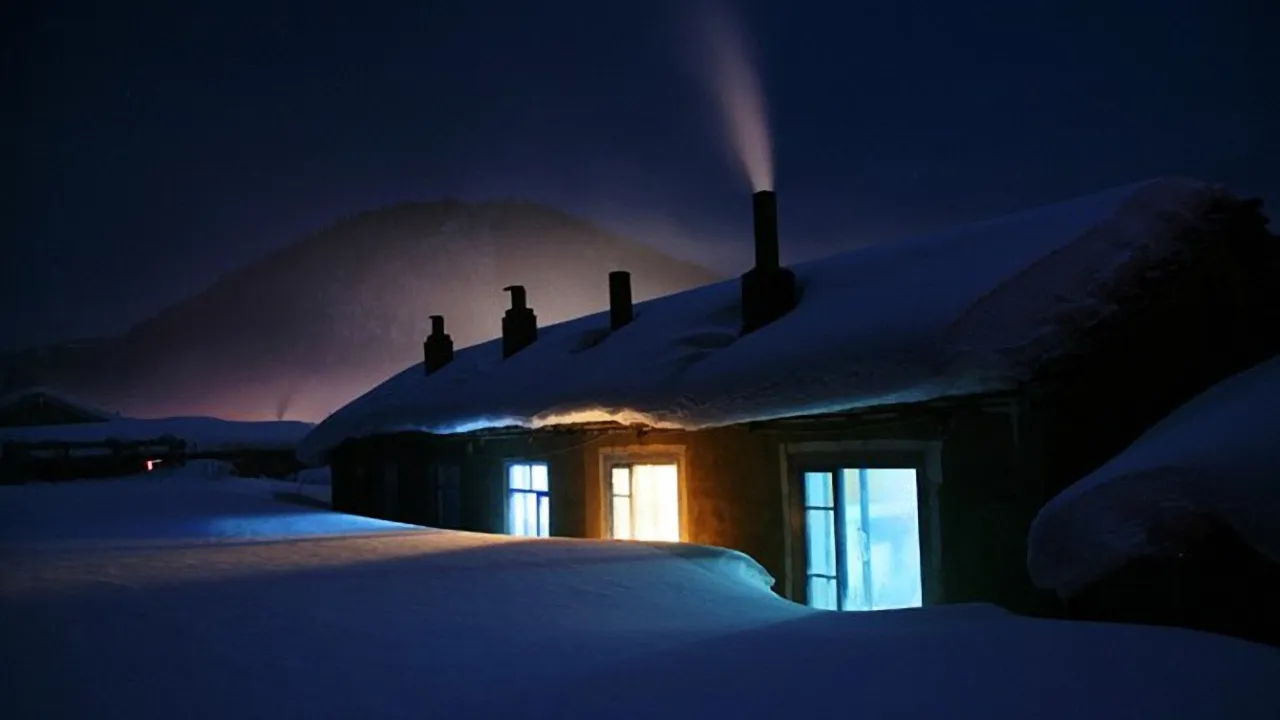
The village itself is the sight: watch the Russian hills shadowed across the water, villagers splitting wood and feeding chickens on the main street. In winter this is where the deepest north-snow texture lives, eaves capped half a meter deep, a photographer's favorite.
Wusuli Shoal: The Stone at China's Northernmost Point
Wusuli Shoal holds China's northernmost point, its stone carved with latitude coordinates, the Amur flowing past, Russian forest across. Stand before it and your phone's location honestly confirms: this is further north than Beiji Village.
The shoal is open and far windier than the villages; in winter the river freezes solid and locals sometimes walk onto the ice, but only after asking them to confirm conditions. This is the ceremony ground of China's north, where most people save their final photograph.
| Getting around |
|
| Budget | A day charter runs RMB 450-600 per car, Beiji Village entry about RMB 68; the whole day about RMB 350-500 pp for two sharing, meals aside. |
| Best time | Summer brings the border river and white nights, winter the snowfield and frozen Amur; white nights peak around the summer solstice, aurora is pure luck, so never stake the day on it. |
FAQs
Can one day cover both Beiji Village and Beihong?
Yes, this is the standard charter loop: Beiji Village at 9 for the monument and post office, Beihong at 13:30, Wusuli Shoal at 16, back in Mohe town before 19:00. Total driving runs about four hours; winter's early dark compresses each stop, and around the summer solstice's white nights you can even add the Longjiang First Bend.
How do Beiji Village tickets work, any winter deals?
Beiji Village entry is about RMB 68, buyable on site or online, with online skipping the queue in season; winter brings cheaper snow passes or combos with route sights, per posted prices. Students and seniors get reductions with ID. Wusuli Shoal and neighbors sell standalone or in combos, and a good charter driver can usually purchase on your behalf.
Winter or summer for a Mohe day?
Depends what you want. Winter offers the minus-forty experience, the frozen Amur and the northernmost snowfield at the cost of cold-weather expense and short days; summer offers a green border river, marathon daylight and white nights in comfort. Aurora is a low-probability event in both seasons, treat it as a bonus, never a goal, and photographers will find each season worth its own trip.
What is the kit list for a minus-forty day?
Three layers up: quick-dry base, fleece, long down coat; snow boots with non-slip soles and thick felt insoles; ear-covering hat, touchscreen gloves, neck gaiter. Tape six to eight heat packs around waist and boot soles, keep your phone against a heat pack to stop cold shutdowns, and carry two spare camera batteries against your body. Never stay out continuously past two hours, rewarming in farmhouses or the car between stops.