
Mohe's human story runs three layers deep: the town's tale (a great fire and a city reborn), the villages' tale (frontier daily life around the northernmost post office and villages), and the river's tale (the border water fixing every northernmost coordinate). The three days map onto them: day one stays in Mohe town, day two belongs to Beiji Village, day three gathers Beihong and the northernmost point along the river.
The line's sight density runs low but its aftertaste long: an hour in the memorial, one postcard at the post office, a single main street in Beihong, all closer to Mohe's core than any checklist. Winter demands cold gear and early highlights under short days; summer's white nights stretch the dusk and loosen the pace.
Itinerary at a glance
| 09:00 | The May 6 Fire Memorial: The Fire as Mohe's Prologue |
| 10:30 | Songyuan Park: The Survivor's Green |
| 14:00 | Polar Star Square: The Reborn Town from Above |
| 09:00 | Beiji Village: The Northernmost Village Opens Its Day |
| 11:00 | China's Northernmost Post Office: A Lesson in Frontier Mail |
| 14:00 | The Shenzhou Beiji Monument: An Afternoon of Stone and River |
| 16:00 | The Christmas Village: A Modern Footnote to Frontier Imagination |
| 09:00 | Beihong Village: The Northernmost, Unremade |
| 11:30 | Wusuli Shoal: The Human Line's Geographic Full Stop |
| 14:00 | The Longjiang First Bend: The River Signs Off the Human Line |
The route, stop by stop
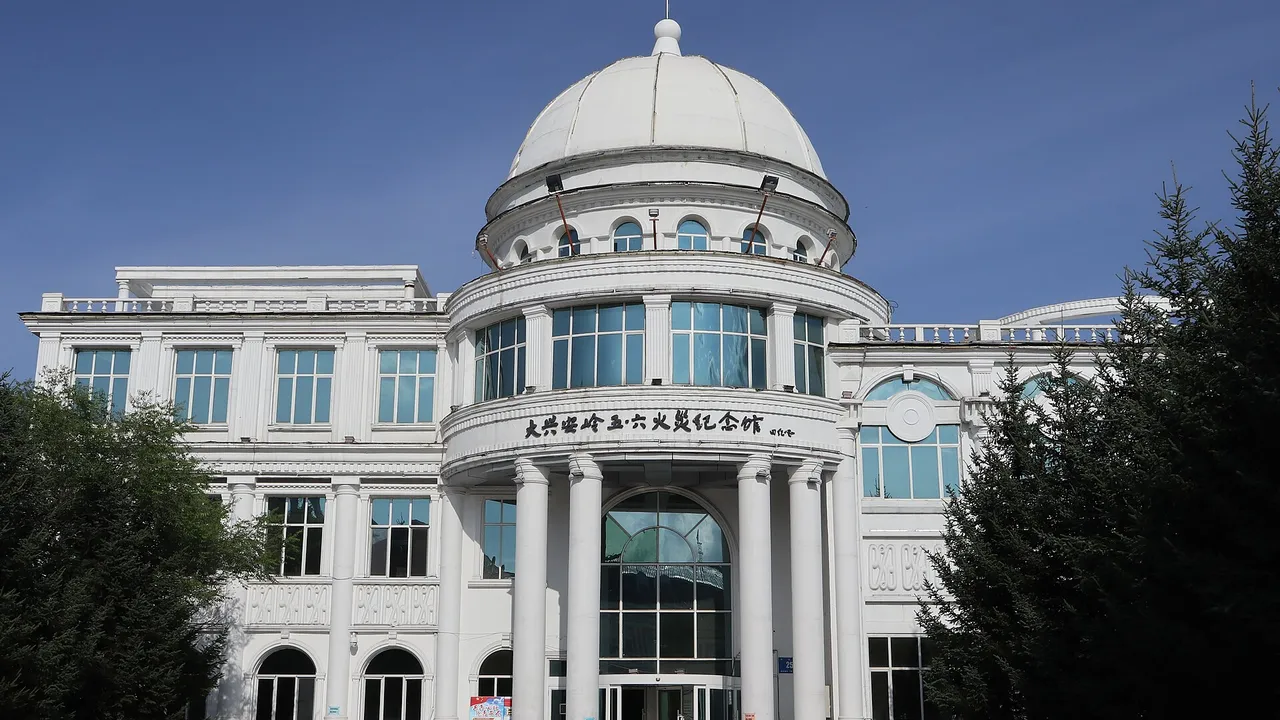
The May 6 Fire Memorial: The Fire as Mohe's Prologue
Starting the heritage days at the memorial is the right order: the fire of May 6, 1987 burned most of Mohe's urban core and reshaped the city's character. Photographs, artifacts and rebuilding models unfold on a timeline from ignition and spread to rescue and rebirth, restrained and complete.
An hour covers all halls, focusing on reconstruction and the fire-prevention chapters, since today's Mohe obsession with fire safety was born here. Once seen, the next two days of Songyuan, orderly streets and village log houses all gain their soundtrack.
Songyuan Park: The Survivor's Green
Ten minutes on foot from the memorial, Songyuan's primeval Mongolian Scots pine survived the fire whole, treasured by locals as the city's blessed ground and guardian. Scorch marks still show on some trunks while the grove itself thrives, disaster and survival made concrete as a few minutes' walk.
The trail runs half an hour, rime in winter and pine scent in summer. In cultural terms this is Mohe's most important green: the city's memory, folklore and morning exercises all overlap here.
Polar Star Square: The Reborn Town from Above
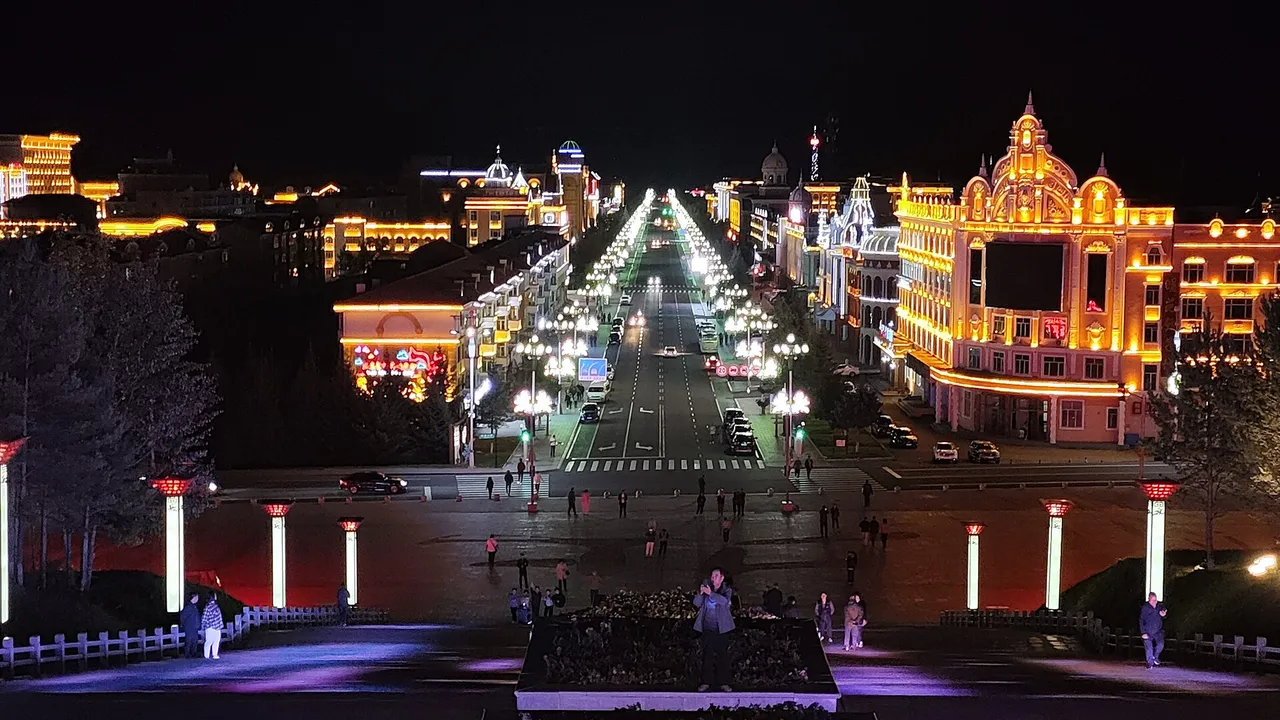
The afternoon climbs Polar Star Square to inspect the memorial's rebuilding story with your own eyes: streets laid ruler-straight, new districts orderly, forest farms and hills framing the town's edge. The North Star sculpture at the top is Mohe's landmark, the city announcing its own coordinates.
The steps take ten minutes, chains to hold when iced. Lights come on in sequence at dusk, the right close for the day: a city re-laid neat upon its ruins deserves one look from above.
Beiji Village: The Northernmost Village Opens Its Day
Day two charters an hour into Beiji Village, quietest in the morning: log and brick houses along the main street, mist still on the river. The village's human sights run through the northernmost series, the northernmost house, supply co-op and police station, geography lived as daily routine.
Walk the riverside park where the Shenzhou Beiji Monument stands on the Amur's bank with Russian forest across. Morning light runs with you at the trip's most important cover frame.
China's Northernmost Post Office: A Lesson in Frontier Mail
The post office anchors the village's human line: the little green house ends China's postal map and has run for decades without pause. A postcard under the northernmost postmark, paper leaving latitude 53 north, is this line's most concrete ritual.
Chat with the staff; in season they stamp hundreds a day. The polar stamps and commemorative covers at the counter reward a look at fair prices, and philatelists may not leave.
The Shenzhou Beiji Monument: An Afternoon of Stone and River
Return to the riverside in the afternoon, this time without chasing angles, giving the hour to the stone and the border water itself. The Shenzhou Beiji Monument answers Hainan's ends-of-the-earth stone, a paired full stop in China's geography. Sit on the embankment facing the Russian hills and understand what border concretely means.
The embankment wind is hard, a layer needed even in summer. In white-night season the sun still hangs high at four, and this is the slot to slow down: photographs, idleness, watching the river crumble the light.
The Christmas Village: A Modern Footnote to Frontier Imagination
The pre-dusk Christmas Village reads as the human line's easy footnote: Nordic cabins, reindeer sleds and Christmas sculptures on the border river, the highest-latitude Christmas park a fairy tale contemporary Mohe wrote for itself. Its very existence rewards thought, how a border town talks to the far bank and the world through imagination.
Forty-five minutes covers the grounds, reindeer photos the resident ritual. Winter lighting answers the snow; summer turns the park into a quiet river viewpoint.
Beihong Village: The Northernmost, Unremade
Day three runs upriver to Beihong Village, by coordinates China's true northernmost administrative village, carrying almost no commercial makeover: stacked-log houses, yard firewood, old boats by the river. Here the human line shows the border village's unwrapped daily life.
The main street walks out in twenty minutes, and the sight is life itself: villagers splitting wood, dogs at the gates, horses drinking at the river. The farmhouse lunch is the trip's most authentic table, arranged with the host ahead.
Wusuli Shoal: The Human Line's Geographic Full Stop
Afternoon reaches Wusuli Shoal, the northernmost-point stone on the Amur's bank. Three days of human narrative meet their geographic full stop here: the town's rebirth, the villages' mail, the river's coordinates, all landing on a stone carved with latitude.
The open shoal blows hard, so layer up for photographs. The shot with the northernmost stone is the three days' truest keepsake, more accurate than any cultural trinket.
The Longjiang First Bend: The River Signs Off the Human Line
The last stop goes to the Longjiang First Bend: the Amur swings a near-three-sixty horseshoe, wholly embracing a green island. Eight hundred-plus boardwalk steps, twenty minutes up, and at the top the three days' layers, town, villages and river, close into one curve.
After descending, Mohe town is about two hours back, so set evening trains or flights after 18:00. The right way through this human line is slow: give every stop its idle time.
| Getting around |
|
| Budget | Three-day charter RMB 1350-1800 per car, tickets RMB 200-300 combined, two nights RMB 300-700; the whole trip about RMB 1200-1800 pp for two sharing. |
| Best time | Year-round; winter's frozen river carries the strongest frontier air, summer's white nights add color, and the human content holds across seasons. |
FAQs
Heritage or nature line, do they overlap?
The two lines share a skeleton, both containing Beiji Village and the border river, but differ in flesh: the heritage line keeps an extra town day for the memorial, Songyuan and the post office narrative, while the nature line swaps in Nine Bends and the birch forest and leans scenic. Choose one when time is short; with five days, stitch them together, since the only repeats are Beiji Village and the northernmost point, each worth a second look at a different hour.
Do spots like the memorial and post office close in winter?
The memorial opens normally in winter with ID registration, Monday closures following posted notice; the northernmost post office runs all year, with mailing peaks before holidays and in season. The safest check is a quick call via your lodging or driver to confirm the day's status, since extreme-cold snaps can shorten hours, and the door notice always rules.
What is the smartest lodging split for three days?
Night one in Mohe town, so the morning charter starts clean, with more hotel choice and lower prices; night two in Beiji Village, keeping the misty river and quiet lanes to yourself. In the peaks, July-August and the winter snow season, book Beiji Village three to five days ahead, farmhouses RMB 150-300 with breakfast and town hotels RMB 150-300; never gamble on walk-in rooms late.
How should the pace adapt for senior travelers?
The heritage line is already low-intensity; tune three more things: between the memorial and Beiji Shoal pick the memorial, flat throughout; treat the First Bend's eight hundred steps as optional, since the base viewpoint still shows the curve's outline; and in winter cap each outdoor stretch at twenty minutes with a hot lunch rewarm at noon. Keep the driver with you all day so cold bodies can return to the car at will, the most practical insurance for senior travel.